
Magna-Tiles review: are the original magnetic building tiles still worth the premium?
Magna-Tiles have spent years proving that a square with magnets in it can be far more absorbing than it has any right to be. They are tactile, brilliantly open-ended and reassuringly sturdy, but the sizeable cost means choosing the right set matters more than simply grabbing the first colourful box you see.
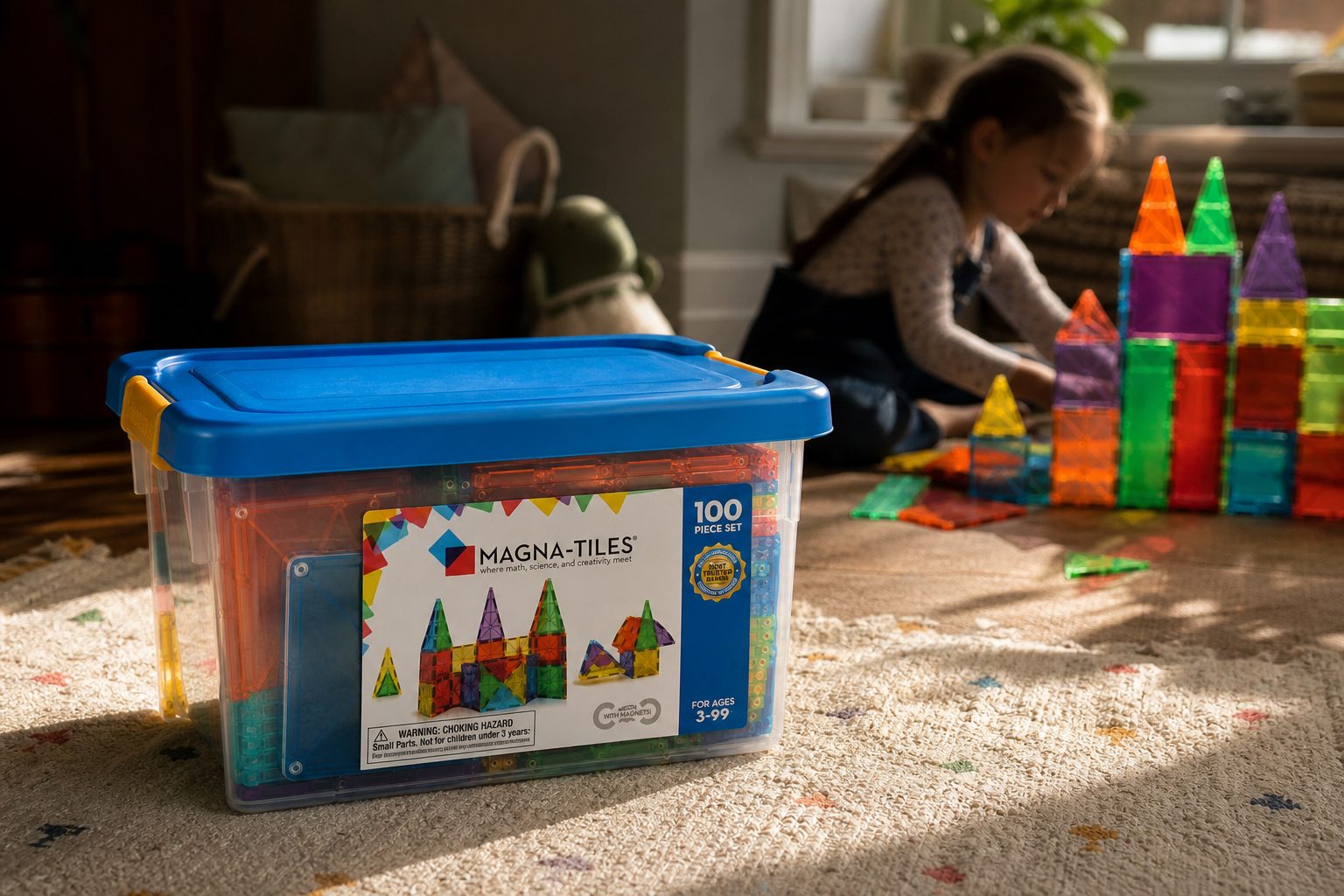
Magna-Tiles’ translucent geometric pieces turn a patch of floor into a tower, a garage, a castle or an unexpectedly ambitious dinosaur hospital.
What are Magna-Tiles, exactly?
There are toys with a very clear job description. A train goes round a track. A puzzle ends in one particular picture. Magna-Tiles are gloriously less obedient. They are translucent plastic geometric shapes with magnets embedded around their edges, and they snap together to form flat patterns, cubes, houses, tunnels, rockets and all manner of structures that make complete architectural sense to a three-year-old.
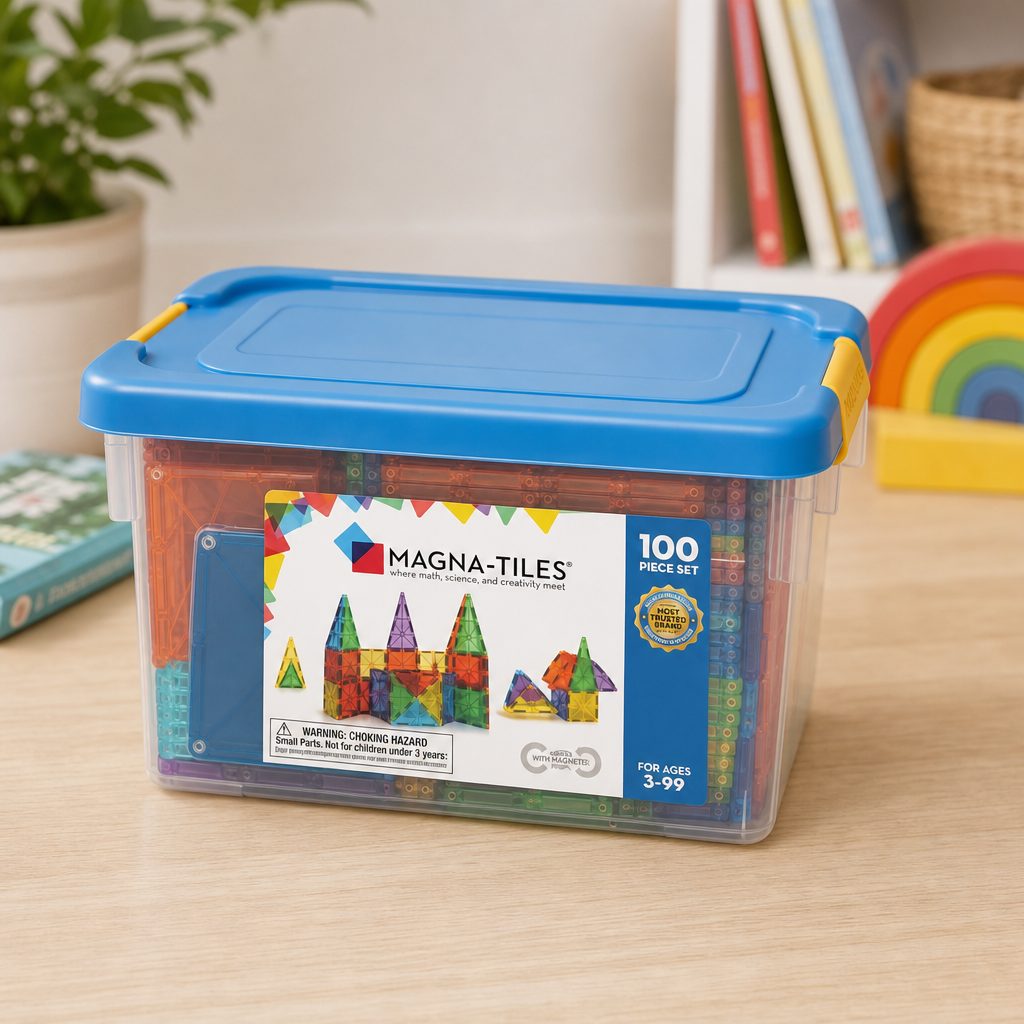
Whether the final creation is a carefully planned castle or a wildly impractical animal rescue centre, Magna-Tiles make the process the real reward.
That simplicity is the point. A child does not need to learn a rule set, charge a battery or wait for an adult to assemble something. They pick up two pieces, feel the magnetic click, and the idea arrives shortly afterwards. Sometimes it arrives in the form of a symmetrical palace. Sometimes it is a flat “pizza garage” with one wheel. Both are valid. Magna-Tiles have long been one of the most approachable ways to introduce construction play without making it feel like homework dressed in primary colours.
The core Classic sets are the evergreen part of the range: 32, 37, 74 and 100 pieces. Beyond them, Magna-Tiles has expanded into travel-sized microMAGS, letters and numbers, themed animal sets, vehicles, castles, ball tracks and elaborate sets such as Metropolis. It is a substantial ecosystem now. Happily, the pieces are designed to work together, so an early basic set does not become redundant when a child’s interests turn towards cars, dinosaurs or city planning.
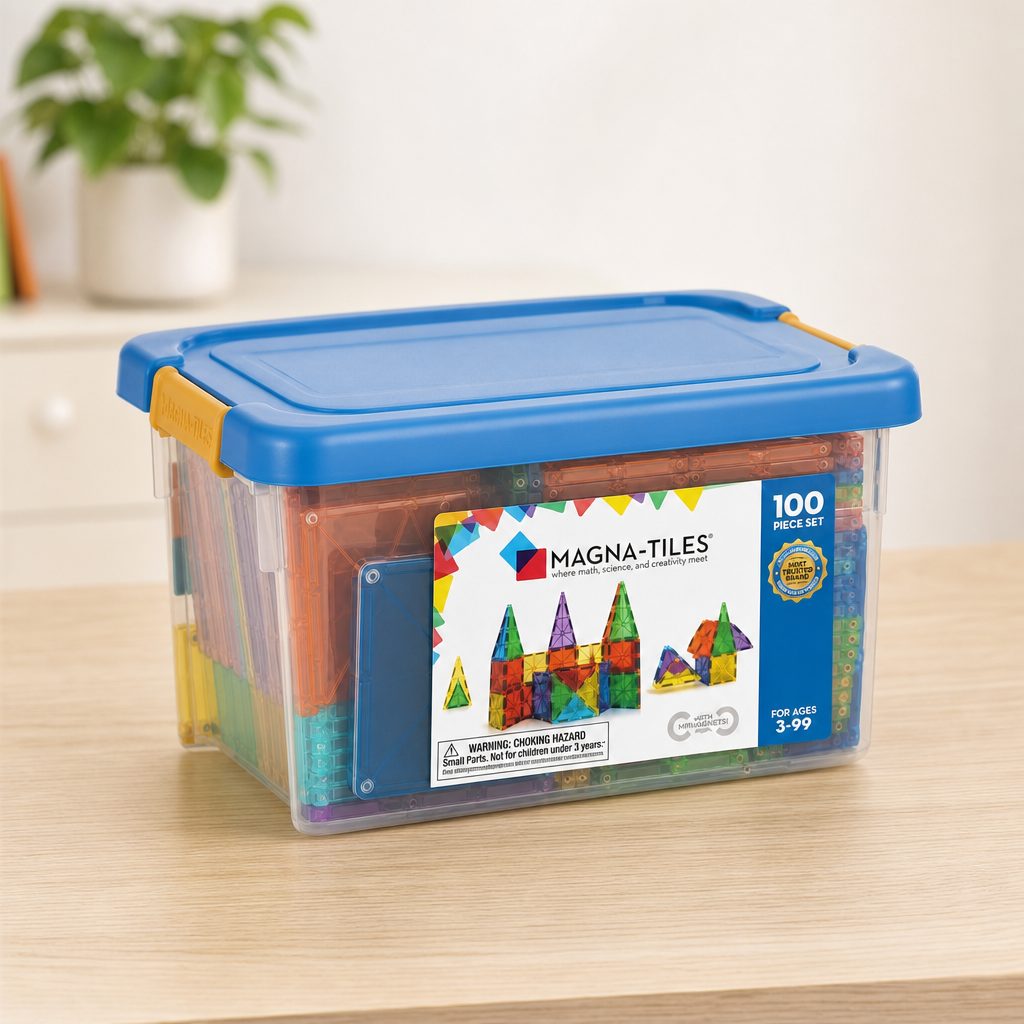
A Classic set gives children the familiar square-and-triangle vocabulary that underpins nearly every Magna-Tiles creation.
Design and build quality
The appeal starts with the physical design. Magna-Tiles have a satisfyingly substantial feel without being cumbersome for small hands. The translucent panels catch window light beautifully, which is one reason they remain popular on light tables and near a sunny patio door. A simple cube can look rather special when six different colours are glowing through it. No app required. Frankly, that is a welcome sentence in 2026.
The company uses food-grade, non-toxic MABS plastic that is free from BPA, phthalates and latex. More importantly for everyday ownership, the tile construction has been thought through. Magna-Tiles use fastening rivets to help keep the magnets secure, while the signature internal lattice is intended to resist cracking. Those are not glamorous features to put on a birthday wish list, but they are exactly the sort of details that distinguish a toy expected to survive years of being trodden on from one that becomes landfill after a fortnight.
Easy for small hands
There are no fiddly clips or narrow pegs to line up. The magnets do the joining work, leaving children to concentrate on the shape of their idea.
Translucent creative play
The clear coloured panels add another layer of sensory interest, especially when children stack, overlap and hold structures up to the light.
Safety-led construction
Riveted corners and the lattice design are practical reassurance in a toy category where secure magnets are not optional.
Built to grow
Every Magna-Tiles set is compatible with the others, so a modest first box can become the foundation of a much larger collection.
How Magna-Tiles feel in play
The magnets make a clear, pleasant clack as tiles meet. This is one of those toys that invites repeated experimentation because failure is mercifully cheap: a wall falls down, a child makes the base wider, and they are back in business. It does not punish them with a scattered pile of tiny bricks or an instruction booklet that has somehow vanished behind the sofa.
Magna-Tiles are especially good at delivering an immediate reward. Young children can make a two-dimensional pattern in seconds, then discover that lifting the sides creates a proper three-dimensional object. Older children tend to move into bigger structures, symmetry, enclosures, bridges and storytelling. The best sessions often weave all of these together. A tower becomes a veterinary clinic, then a car park, then a prison for a toy crocodile. This is not a flaw in the design. It is the design working.
Magnetic construction does have physical limits. Tall, narrow towers can wobble, and large builds need a broad, sensible base. That is not a weakness unique to Magna-Tiles; it is simply gravity continuing its long and stubborn career. The magnets are strong enough for confident building, but they do not turn a lightweight panel construction into a skyscraper made of steel.
In comparative building experience, Magna-Tiles and PicassoTiles were very similar when making tall towers, wide towers, sturdy bases and deliberately flimsy constructions. That is useful perspective. Magna-Tiles are not magic. They are a very polished version of a simple, effective format.
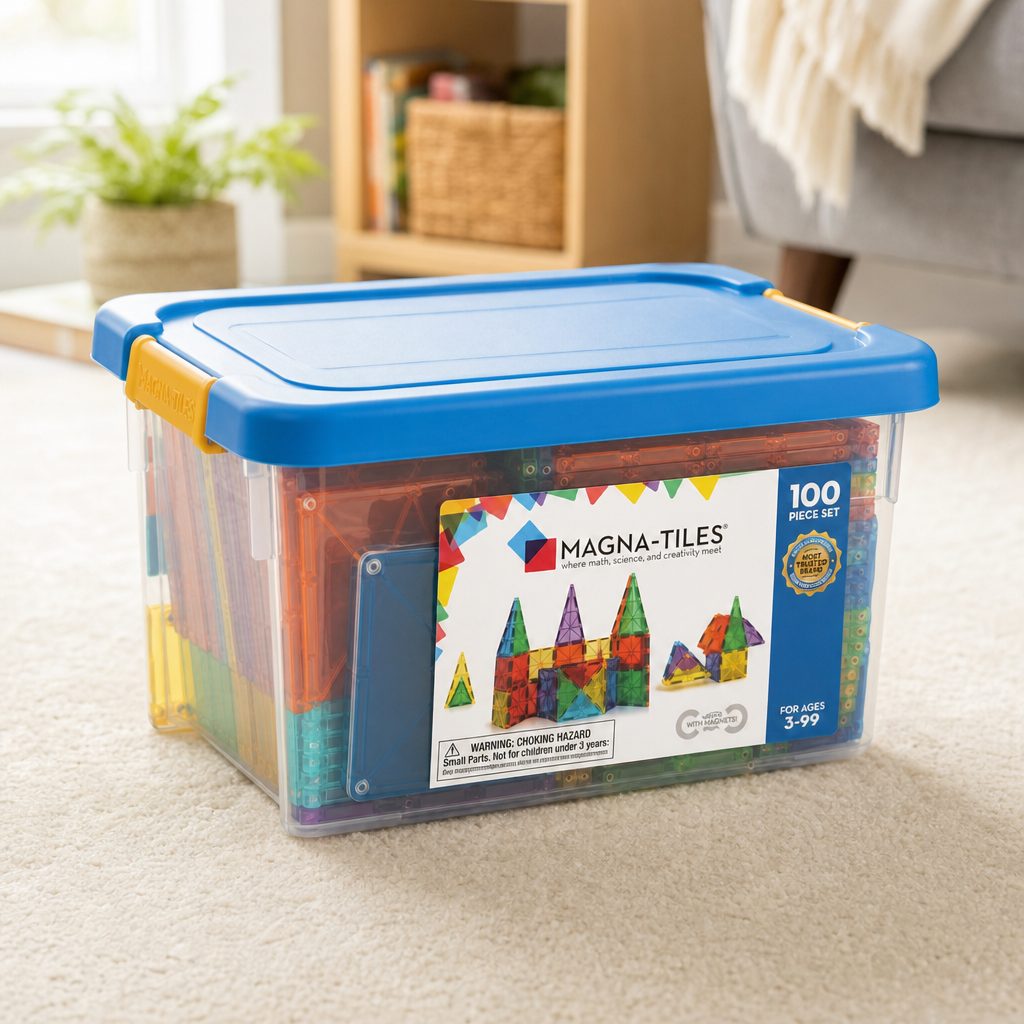
The strongest Magna-Tiles builds start with a broad base; an engineering lesson arrives before anyone has called it one.
Learning value without the lecture
Magna-Tiles are certified as a STEAM toy, and the label is deserved so long as nobody turns playtime into a PowerPoint presentation. The obvious learning is geometry: children encounter squares, equilateral triangles, right triangles and isosceles triangles through their hands long before they need to recite the terminology. They learn which shapes can make a roof, why a cube needs six faces, and why a triangle is such a useful little structural show-off.
There is more going on beneath the surface. Placing tiles accurately develops fine motor control. Holding a model steady with one hand whilst adding a piece with the other supports bilateral coordination. Planning a bigger build exercises executive functioning: what do I need first, what will hold the wheels, how do I stop the zoo collapsing on the penguins? These are all real skills, but the child experiences them as play. That distinction matters.
A better way to introduce a new set
Start with a handful of pieces rather than tipping every tile onto the floor at once. Make a cube together, then a roof, then leave the child to change it. Magna-Tiles reward discovery far more than adult-led perfection.
The microMAGS LEARN Letters and microMAGS LEARN Numbers sets extend this idea into literacy and numeracy, each with 56 pieces. They may appeal to families looking for a direct learning hook, but the ordinary geometric sets are arguably the more enduring purchase. They do not prescribe a lesson, so they can be everything from a colour-sorting activity for a preschooler to a design challenge for an older sibling.
Durability and magnetic safety
Authentic Magna-Tiles have an excellent durability reputation. The riveted construction and internal lattice are designed to withstand the knocks, drops and casual floor collisions that construction toys inevitably receive. There have been no official reports of magnets coming loose from authentic Magna-Tiles, which is a meaningful point when considering a product used by children from age three upwards.
That does not mean the tiles are invincible, nor should any parent treat a magnetic toy casually. Give pieces a quick glance during routine tidying, particularly if a tile has been subjected to an unusually dramatic encounter with a tiled floor or a very determined dog. It takes seconds. A toy that is inspected and stored sensibly is likely to remain a fixture rather than a short-lived novelty.
Magna-Tiles are recommended from age three. As with any magnetic construction set, keep them away from children below the stated age range and remove any damaged piece from play immediately.
There is one practical criticism: the tiles can be noisy. A child enthusiastically emptying a box, building a tower and watching it collapse will create a succession of hard plastic clacks. It is not unbearable, and it is a more wholesome soundtrack than many electronic toys, but it is worth knowing if you live in a flat or work from home beside the playroom.
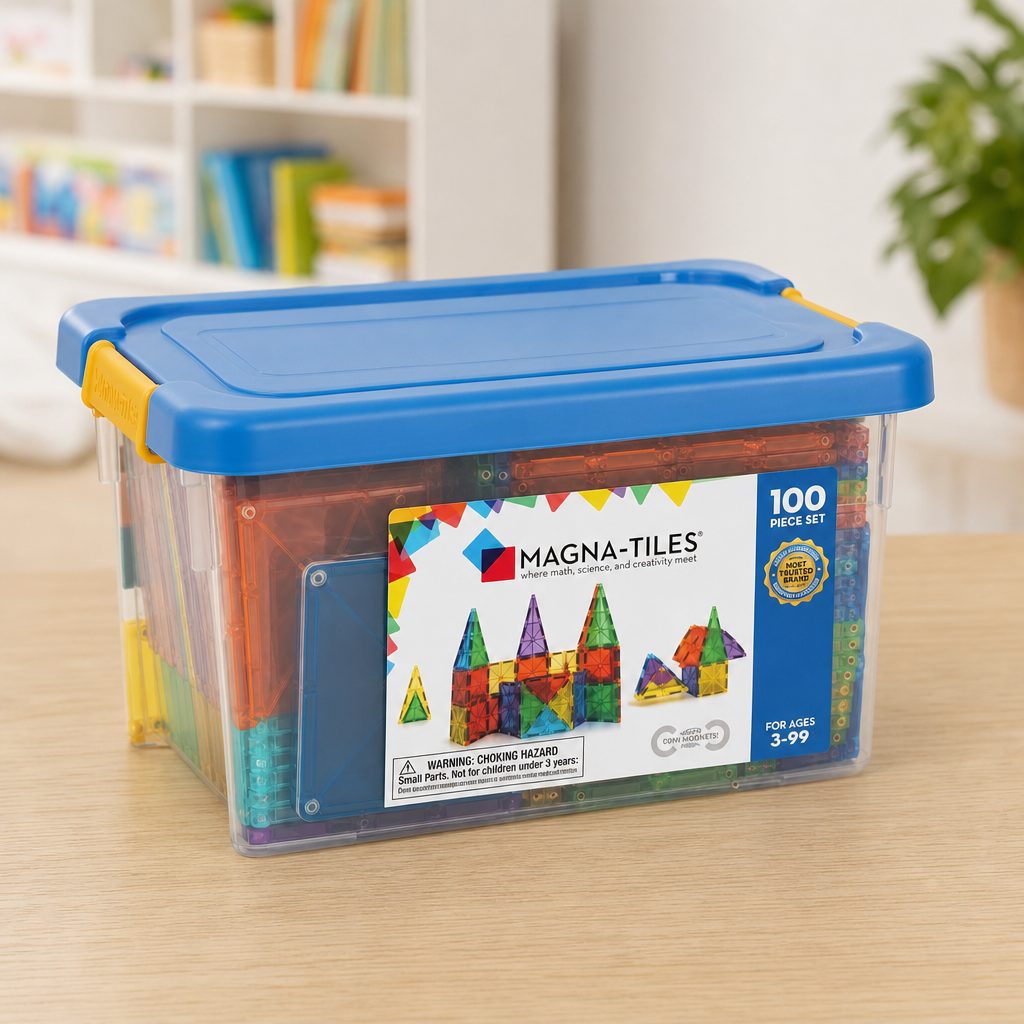
The riveted corners and internal lattice are central to Magna-Tiles’ long-standing reputation for tough, family-proof construction.
Magna-Tiles Classic 100 Piece Set and the rest of the range
For a first meaningful collection, the Classic 100 Piece Set is the sweet spot in terms of creative headroom. It contains 100 translucent shapes in six colours: four large squares, 50 small squares, 20 equilateral triangles, 11 right triangles and 15 isosceles triangles. That spread is important. A large piece count is useful, certainly, but a healthy mix of shapes is what lets children make roofs, ramps, walls and more interesting structures rather than an army of cubes.
The Classic 32 Piece Set is a sensible smaller introduction. It includes two large squares, 14 small squares, eight equilateral triangles, four right triangles and four isosceles triangles. It is enough to establish whether the magnetic-building bug bites, and it travels around a living room rather more discreetly. However, two children sharing 32 pieces may quickly encounter the ancient domestic dispute known as “you have all the squares”.
The 37-piece, 74-piece and 100-piece Classic sets provide stepping stones for different budgets. Elsewhere, the 110-piece Metropolis set adds wheels and is recommended for ages three to nine, making it a natural choice for children who want their buildings to move rather than simply stand there looking municipal. The 26-piece microMAGS Travel set is designed around portability and includes a travel tin case. It is a thoughtful option for holidays, cafés and grandparents’ houses, where having a quiet hands-on activity can feel like winning the lottery.
Prices and value for UK families
Magna-Tiles are premium-priced, and there is no point pretending otherwise. The UK prices below show why parents often pause before buying. Yet value here depends less on the box’s first-day excitement and more on how many years and how many different ages it remains in use. Few toys comfortably serve a newly confident three-year-old, a six-year-old making a fortress and an older child constructing a maze for figures.
Magna-Tiles Builder 32 Pieces
A compact starting point for one child.
Magna-Tiles Clear Colors 100 Pieces
Best room for ambitious, long-term building.
Magna-Tiles Ball Track 33 Pieces
For children drawn to movement and cause-and-effect play.
Magna-Tiles Pet Playhouse
A themed option for story-led builders.
Other listed UK options included Castle Deluxe 25 Pieces at £50.00 and Castle Deluxe 48 Pieces at £60.56. In the United States, the Classic line was priced at $49.99 for 32 pieces, $59.99 for 37, $99.99 for 74 and $119.99 for 100. That makes the 100-piece Clear Colors set at £71.25 a particularly persuasive UK proposition if you know Magna-Tiles will see regular use.
Discounts can be uncommon because retail pricing is controlled by the company. So instead of waiting endlessly for a dramatic sale, I would choose the set that gives enough pieces for the household from day one. A too-small starter box can be false economy if it simply leads to a second purchase after the first rainy weekend.
Magna-Tiles vs PicassoTiles vs Connetix
Magna-Tiles no longer have the magnetic-tile category to themselves. PicassoTiles offer a close alternative, whilst Connetix has become another prominent name for families who want very sturdy tall builds. The important thing is not to assume that a higher price automatically transforms the experience. All three approaches can produce engrossing construction play.
| Feature | Magna-Tiles | PicassoTiles | Connetix |
|---|---|---|---|
| Magnetic strength | Strong for tall structures | No significant difference in direct comparison | Strong for tall structures |
| Tall and wide build experience | Very similar to PicassoTiles | Very similar to Magna-Tiles | Suited to tall structures |
| Safety-focused construction | Riveted corners and lattice design | Not compared here | Not compared here |
| Known range compatibility | All Magna-Tiles sets work together | Not compared here | Not compared here |
Testing found no significant difference in magnetic strength between Magna-Tiles and PicassoTiles, and their building performance was closely matched. Connetix and Magna-Tiles were both noted as having stronger magnets better suited to very tall structures, whilst PicassoTiles were slightly weaker but still reliable. In plain English: if a child is making normal houses, animal pens and garages, any of these can do the job. If they are forever attempting a tower that threatens the ceiling light, Magna-Tiles and Connetix have an advantage.
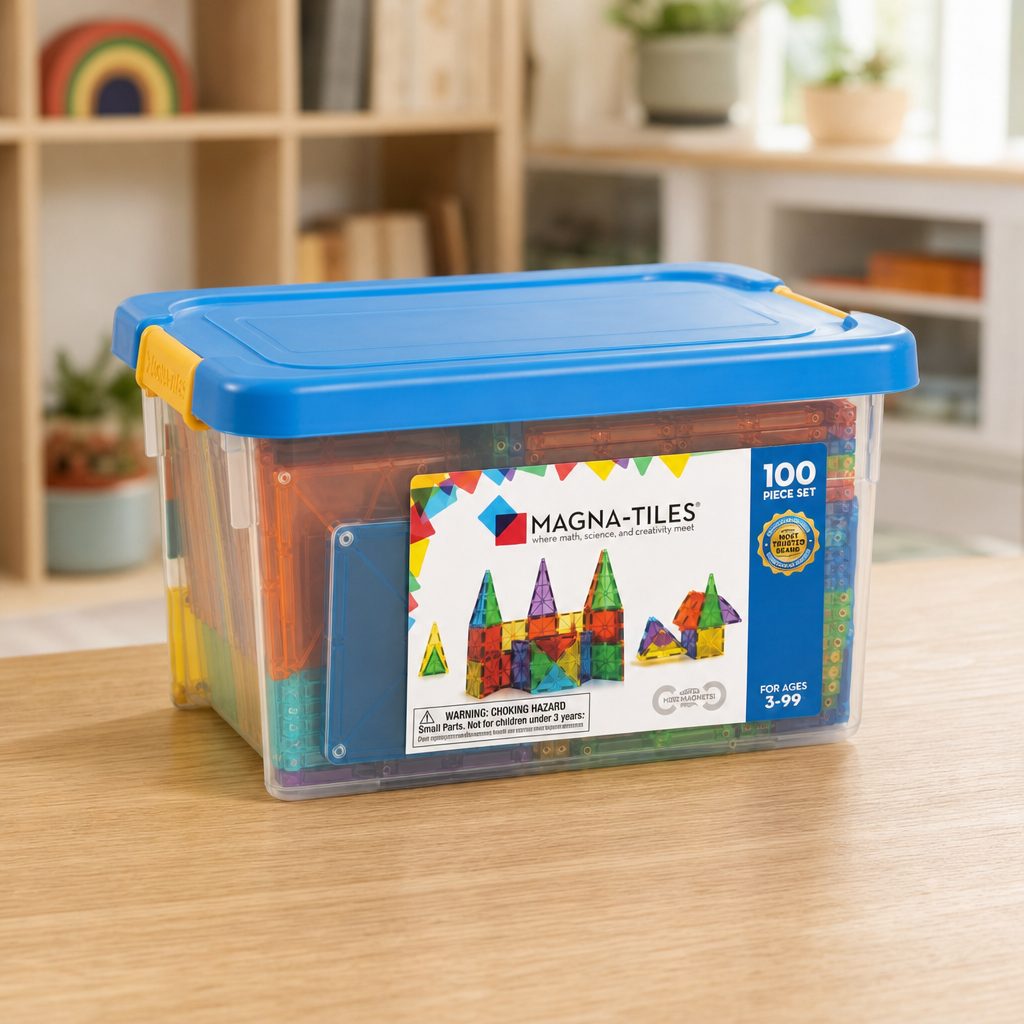
Magna-Tiles remain compelling for families building a collection over time, thanks to compatibility across the brand’s classic, themed and travel-focused sets.
Pros
- Excellent open-ended play from a very young age.
- Strong magnets support satisfying three-dimensional builds.
- Food-grade MABS construction is BPA-, phthalate- and latex-free.
- Every Magna-Tiles set works with the rest of the range.
- Classic sets have genuine longevity rather than a single gimmick.
Cons
- They are an expensive entry into magnetic construction play.
- Smaller sets can feel restrictive when siblings build together.
- Hard plastic tiles make a noticeable clatter during enthusiastic play.
- Very tall builds still need careful bases and realistic expectations.
Who should buy Magna-Tiles?
The great strength of Magna-Tiles is that they are not a niche toy. They suit children who love vehicles, animals, castles, patterns, pretend play and simply knocking down their own creation before breakfast. The right purchase depends on how many children are likely to build at once and whether you want a foundational open-ended set or a themed addition to an existing collection.
Best smaller starting point: Magna-Tiles Builder 32 Pieces
Shop Magna-Tiles Builder 32 Pieces on Amazon UK
Best for one child aged three or over who is new to magnetic tiles and needs the core shapes before anything more elaborate.
Best all-rounder: Magna-Tiles Clear Colors 100 Pieces
Shop Magna-Tiles Clear Colors 100 Pieces on Amazon UK
The strongest choice for a family’s main set, with enough variety and volume to keep larger ideas from running out of pieces.
Best for moving builds: Magna-Tiles Metropolis 110-Piece Set
Shop Magna-Tiles Metropolis 110-Piece Set on Amazon UK
Ideal for children aged three to nine who want to build a city, then put it in motion with the included wheels.
Best for travel: microMAGS Travel 26-Piece Set
The portable tin case makes this the practical pick for journeys, restaurants and keeping a small creative activity to hand.
I would be cautious about buying an elaborate themed set as a child’s only Magna-Tiles experience. Themes are wonderful once an interest is established, but the Classic pieces are the universal language of the system. They leave more room for the child to lead, which is rather the entire point.
Everyday use, storage and the glorious lack of batteries
Magna-Tiles are a refreshingly low-maintenance toy. There is no battery compartment, no charging cable, no software update and no soundtrack that will lodge itself in your brain during the washing-up. They are ready whenever a child is. That makes a difference in the real world, where the best toy is often the one that can bridge the awkward twenty minutes before dinner without needing adult technical support.
Daily use is straightforward: spread them on a rug or a hard floor, build, collapse, repeat. They are also easy to mix into other types of play. Small figures can inhabit a tile house. Toy animals can have pens. Cars can drive through a tunnel. The tiles become scenery rather than the whole activity, and that is a sign of a genuinely versatile toy.
Storage is largely a question of household tolerance. A lidded bin makes sense because it keeps the set together and allows children to scoop pieces away quickly. Magna-Tiles offers 15% off a Storage Bin when purchased with a set, which may be useful for a first-time buyer. The only storage rule I would insist on is keeping all magnetic tiles together and checking pieces as you tidy. It is simple good practice, not a chore.
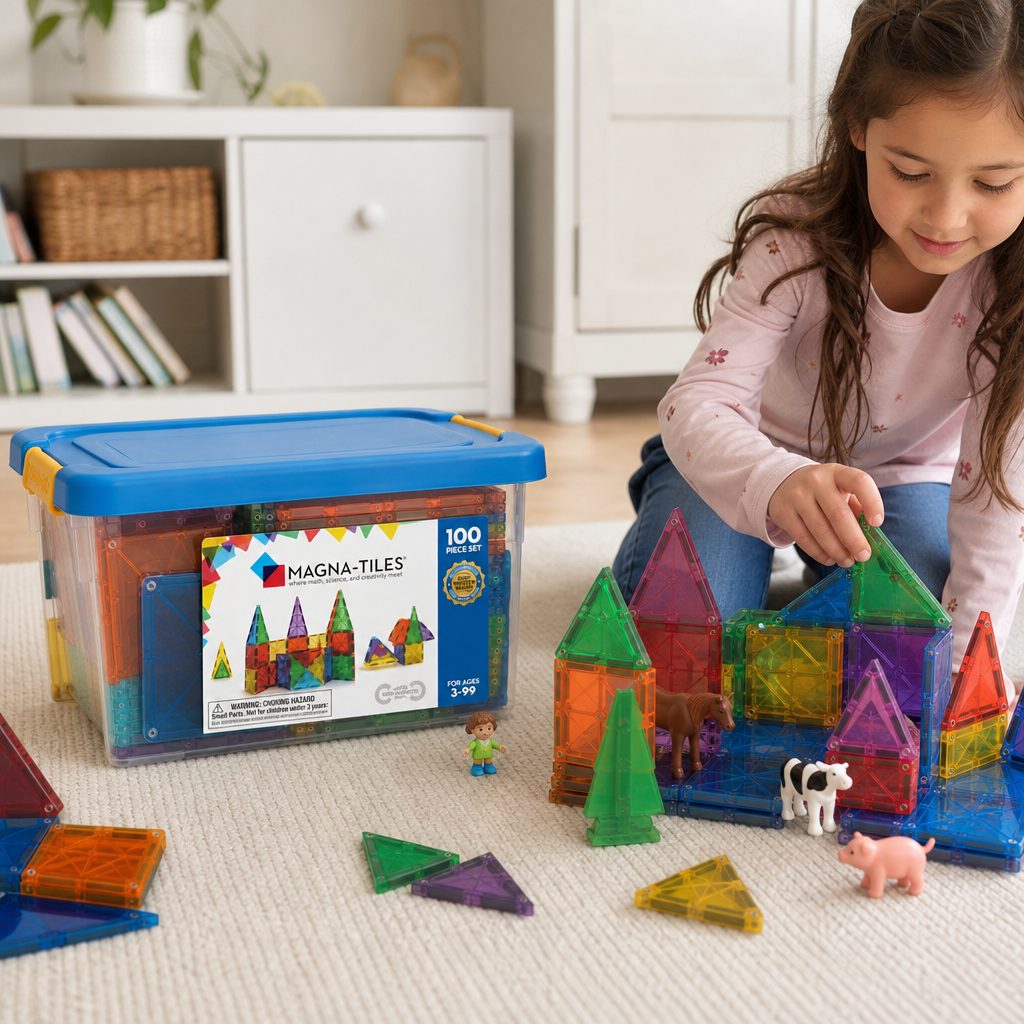
Magna-Tiles work just as well as part of imaginative small-world play as they do in a focused building session.
Magna-Tiles rating
This is not a cheap toy, and that keeps Magna-Tiles from a perfect score on value alone. But it is one of the rare premium preschool purchases that can justify itself through sheer repeat play. The materials, secure construction approach, magnetic performance and open-ended nature make it far more than a colourful one-trick building set.
Magna-Tiles frequently asked questions
Magna-Tiles are recommended for children aged three and above. Their easy magnetic connection makes them accessible for preschoolers, while the scope for bigger structures keeps them engaging for older children too.
The Classic 32 Piece Set is the practical small introduction, particularly for one child. For a family set with more longevity, the Classic 100 Piece Set gives far more freedom to build substantial structures and share pieces.
Yes. Magna-Tiles states that all its pieces are compatible with and complementary to every other Magna-Tiles set. This makes it easy to add a travel, vehicle or themed set later.
Direct comparison found no significant difference in magnetic strength between Magna-Tiles and PicassoTiles, with very similar experiences building tall and wide structures. Magna-Tiles and Connetix were both noted as stronger choices for very tall builds.
They use food-grade MABS plastic that is free from BPA, phthalates and latex. The tiles also use riveted corners and an internal lattice construction to help keep the magnets secure. As with every magnetic toy, damaged pieces should be removed from use.
No. They are entirely passive magnetic toys. That means no charging time, battery replacement or electronic setup; children can begin building immediately.
They can be, particularly if you want a durable, open-ended set that will be used for several years and by more than one child. The premium is harder to justify for occasional play, but regular builders are likely to get substantial use from them.
Final verdict: Magna-Tiles remain a brilliant long-term building toy
Magna-Tiles have earned their standing the old-fashioned way: by being simple, robust and consistently absorbing. The magnetic connections are satisfying, the translucent shapes invite experimentation, and the system supports everything from first shape recognition to detailed imaginative worlds. They also avoid the trap of becoming obsolete once the novelty wears off. A child simply finds a new way to use them.
The price is the main obstacle, especially for a small set that may be shared between siblings. If the budget stretches, though, the Magna-Tiles Clear Colors 100 Pieces set is the most convincing all-round choice. It has the piece count and shape variety to become a genuine household staple rather than a toy-box cameo.
ToyScout score: 9.1/10 — premium-priced, but one of the most reliably creative toys you can buy for a child aged three and up.