Original Nintendo Switch Family to Leave UK Shelves by February 2027
Nintendo will stop supplying the Switch, Switch Lite and Switch OLED to retailers from mid-February 2027, driven by incoming European battery regulations.
What you need to know
- Nintendo will stop selling the Switch, Switch Lite and Switch OLED to retailers and via its own Nintendo Store from mid-February 2027
- The withdrawal is driven by incoming European battery regulations requiring user-replaceable batteries, not a standard product discontinuation
- All three consoles will continue to be manufactured and widely available across Europe throughout 2026; existing owners are unaffected
Nintendo has confirmed it will stop supplying the original Nintendo Switch, Nintendo Switch Lite and Nintendo Switch – OLED Model to retailers across the UK and Europe from mid-February 2027, bringing the curtain down on a console family that launched nearly a decade ago. The move is not a typical end-of-life announcement: it is being forced by incoming European battery regulations that the existing hardware cannot meet.
What Nintendo has said
According to Nintendo's official UK support page, the company "will no longer offer the above-named products on Nintendo Store after mid-February 2027," and will simultaneously cease supplying the three consoles to third-party retailers. That means high-street and online shops — wherever you currently buy Nintendo hardware — will not receive new stock after that point. Whatever remains on shelves will be the last of it.
Nintendo's support page frames the cutoff clearly: "From mid-February 2027, almost ten years after Nintendo Switch launched in March 2017," the consoles will no longer be placed on the European market. It is a tidy, if bittersweet, milestone for a platform that became one of the best-selling games consoles of all time.
Why is this happening?
The trigger is regulatory rather than commercial. Nintendo's support page states the decision has been taken "in preparation for upcoming changes in European battery regulations coming into effect in mid-February 2027." Those rules require that batteries in consumer electronics be user-replaceable — something the current Switch hardware was never designed to accommodate. Rather than redesign the entire original Switch family to comply, Nintendo has chosen to withdraw it from the European market at that point.
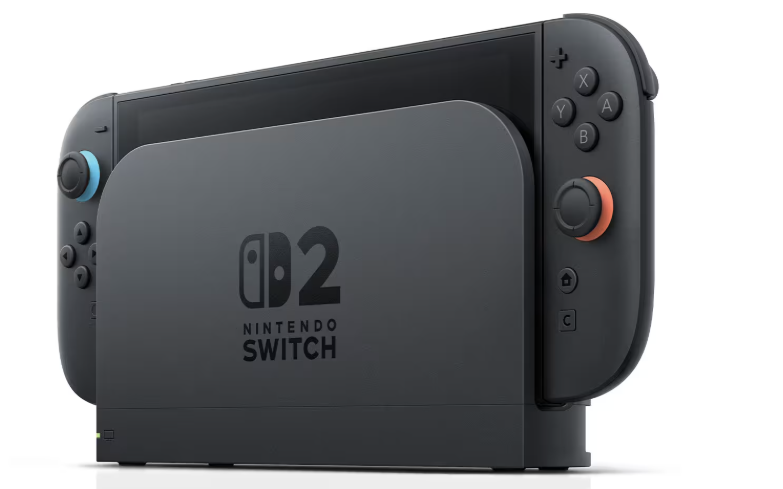
Crucially, Nintendo is not simply abandoning compliance altogether. According to HotHardware, "Nintendo is making a revision to the Switch 2 to be in compliance with the new regulations," meaning the company's next-generation hardware will be updated to meet the battery rules rather than face the same fate as its predecessor.
Who is affected — and who isn't
If you already own any of the three consoles, Nintendo is clear that you have nothing to worry about. The company's support page states: "The upcoming changes in European battery regulations coming into effect in mid-February 2027 don't affect products sold before that time." Your existing Switch will continue to work exactly as it always has. Online services, software updates and repairs are not mentioned as being affected by this change.
The withdrawal is also specific to the UK and European market. Nintendo has not announced a global discontinuation, and the original Switch family is expected to continue selling in other regions beyond February 2027.
Plenty of time — but not forever
Nintendo has been careful to point out that shoppers are not about to find empty shelves tomorrow. The company's support page confirms that all three consoles "will all continue to be manufactured in 2026, and should be widely available in Europe all year." That means stock will be flowing to retailers right through the Christmas 2026 season, and quite possibly into early 2027 as existing inventory sells through.
What is less clear is exactly how long retailer stock will last after Nintendo stops supplying new units in mid-February. No sell-through deadline has been announced, and individual retailers have not publicly confirmed when they expect to run dry.
A timeline of a remarkable console
The original Nintendo Switch launched in March 2017, introducing a hybrid design that let players switch between handheld and docked TV play. The Switch Lite followed as a handheld-only variant, and the Switch – OLED Model arrived with a larger, sharper screen. Together, the three consoles defined Nintendo's most successful hardware generation in years.
- Nintendo Switch – the original hybrid console, launched March 2017
- Nintendo Switch Lite – handheld-only, more compact and affordable variant
- Nintendo Switch – OLED Model – upgraded screen, enhanced kickstand and wired LAN port in dock
What to do if you're considering a purchase
If you have been sitting on the fence about buying any of the original Switch models — whether as a gift, a secondary console or a budget-friendly entry into the Nintendo ecosystem — the window to buy new is narrowing. Stock should remain healthy for the Christmas period, but mid-February 2027 is the last point at which Nintendo itself will be supplying fresh units to the market. After that, availability will depend entirely on whatever retailers have left.
For those who are happy to invest in Nintendo's current generation, the Switch 2 is set to continue in Europe with a battery revision to meet the new regulations — so the platform itself is not going anywhere. But if it is specifically the original Switch family you want, the clock is now firmly ticking.
Why it matters
For UK shoppers, this marks a firm deadline: once retailer stock sells through after mid-February 2027, the original Switch family will effectively disappear from new sale. That makes the coming months — including the Christmas 2026 season — the last realistic window to pick up any of the three models at standard retail prices. It also signals that Nintendo's upgrade path in Europe is squarely focused on the Switch 2, which the company is revising with user-replaceable batteries to comply with the same rules the original hardware cannot cost-effectively meet.