
PS5 Blackout protest kicks off 23 Aug over Sony disc decision
Consumer rights group DoesItPlay is calling on PlayStation owners to go dark for a week in protest at Sony's plan to end physical game discs from January 2028.
What you need to know
- DoesItPlay has called a "PSBlackout" from 23–30 August, urging players to log off PSN, stop playing and make no purchases
- Sony confirmed on 1 July that new PlayStation game releases will go digital-only from January 2028
- A petition to reverse the decision has passed 345,000 signatures; antitrust lawsuits have been filed in the Netherlands and Mexico
Players urged to power down consoles from Sunday as #PSBlackout gets under way
A coordinated consumer protest targeting Sony's PlayStation Network kicks off this Sunday, 23 August, with game preservation and consumer rights group DoesItPlay asking players to spend a full week offline, controller down, and wallets shut. The action, organised under the hashtag #PSBlackout, runs through 30 August and is a direct response to Sony's announcement that physical disc production for new PlayStation games will end in January 2028.
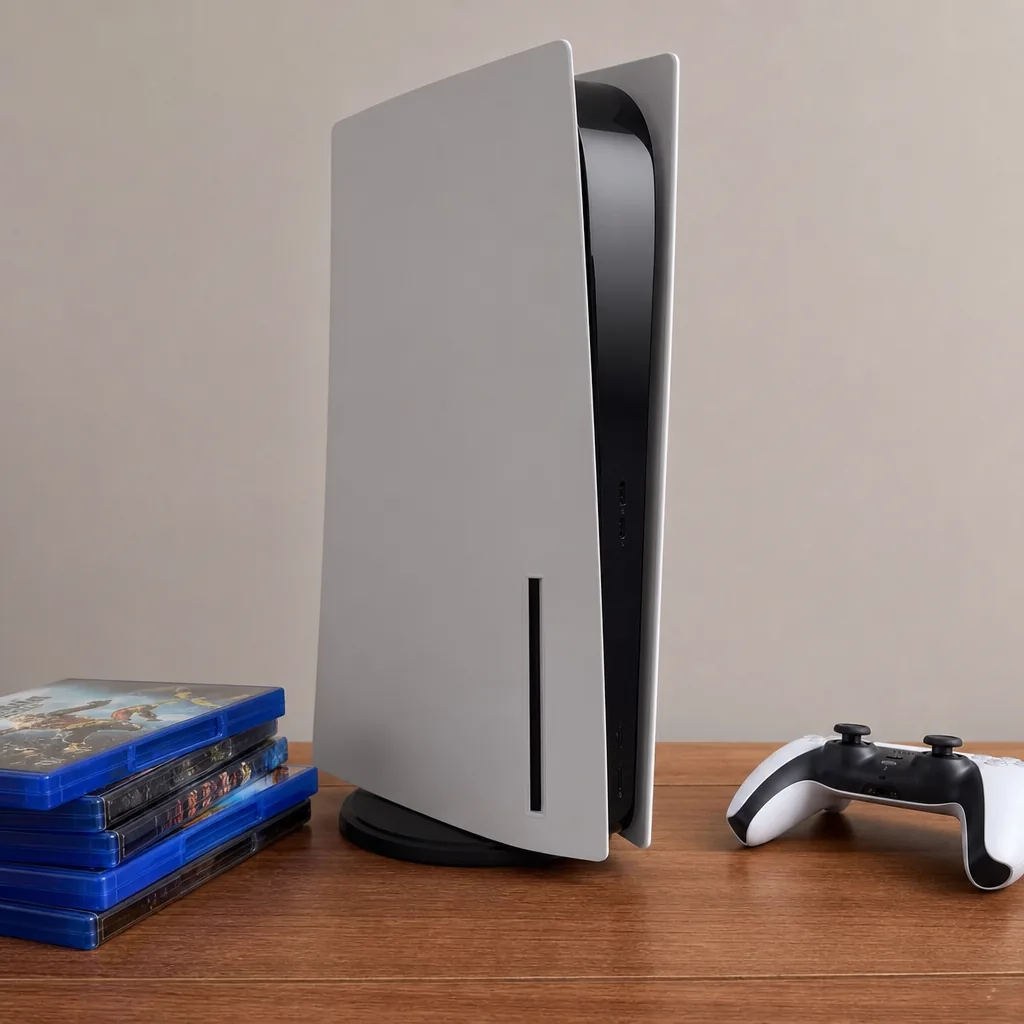
DoesItPlay announced the boycott on 26 July, describing it as an "economic and gameplay blackout." Participants are being asked to refrain from logging into the PlayStation Network, playing any games, and making any purchases on Sony's platforms for the full seven days. The group's post on X put it plainly: "No logins, no play sessions, no purchases on any of Sony's platforms."
The statement accompanying the call-to-action was pointed about the broader frustrations driving the protest: "PlayStation has never felt more disconnected from its community," DoesItPlay wrote, citing studio closures, Sony's push into live-service gaming, and what the group described as neglected franchises. On the specific disc decision, the statement added: "Ending physical discs in 2028 feels like the last straw." It also acknowledged limits to its own argument: "We understand there is only so much SIE can control, but with the decisions that are within its control, the company continues to mismanage the strong position it inherited from the PS4 era."
What Sony actually decided — and when
On 1 July 2026, Sony published an official PlayStation Blog post confirming that physical disc production for all new PlayStation titles — first-party and third-party — will cease from January 2028. Games already released before that cutoff will continue to be available on disc and playable on existing hardware. After that date, new titles will be sold through the PlayStation Store or via an as-yet-unspecified physical retail format, with Sony suggesting code-in-box or card-based options as possibilities.
Sony's official rationale, authored by Sid Shuman, Senior Director of Sony Interactive Entertainment Content Communications, stated:
"This is a natural direction for Sony Interactive Entertainment to adapt to consumer trends as the general preference for digital media significantly outpaces physical discs."
Context backs that claim up to a point. According to Sony's own earnings data, digital downloads now account for 82% of full-game software sales across PS4 and PS5. Physical packages make up just 3% of total gaming revenue, down from 6% when the PS5 launched in 2020. According to Mat Piscatella, Executive Director at market research firm Circana, only seven PlayStation games have sold more than 100,000 physical copies in the US in 2026. When Sony does sell a physical copy, distribution and manufacturing costs reduce its revenue share to around 65%; on the PlayStation Store, it keeps the full amount.
Protest will clash with major game releases
Participants will be asked to sit out some significant gaming moments. The Call of Duty: Modern Warfare 4 Open Beta — free to all players — is due to begin at 10AM PDT on 28 August and run through 1 September. (An Early Access Beta for pre-order customers on PC, PS5 and Xbox Series runs from 21 to 25 August.) Metal Gear Solid: Master Collection Vol. 2, Resonance: A Plague Tale Legacy, and Star Wars Zero Company are also scheduled to release during the blackout window. DoesItPlay has described the protest as "surgical," targeting Sony's engagement metrics rather than the studios that make the games.
Petition, warning stickers, and legal action
The #PSBlackout is not the only pressure Sony is facing. A "Don't Kill The Disc" petition linked by DoesItPlay had gathered over 345,000 signatures by 27 July, up from roughly 120,000 on 6 July. Sony has not reversed its policy.
From around 6 August, Sony began shipping PS5 consoles with a warning sticker on the box. It reads: "IMPORTANT NOTICE: From Jan. 2028, newly released games on PlayStation will be available for purchase on PlayStation Store and at retailers in digital format only. Discs for games released before Jan. 2028 can continue to be played on this console." The same wording appears on European Amazon listings, likely to satisfy consumer protection requirements in the region, though it remains unclear whether all PS5 models and all markets have received the updated packaging.
Legal challenges are also building. In the Netherlands, consumer group Stichting Massaschade & Consument filed a $457 million lawsuit on behalf of 1.7 million Dutch PlayStation users, arguing Sony's 30% PlayStation Store commission will inflate prices once physical alternatives disappear. The Dutch case cleared its first hearing on 29 June at the District Court of Midden-Nederland. In Mexico, Senator Luis Donaldo Colosio and Federal Representative Iraís Reyes filed an antitrust complaint with COFECE, Mexico's competition regulator. According to TechTimes, six active antitrust cases are now under way across the US, UK, Netherlands, Portugal, Mexico and the EU, with the new PS5 warning sticker reportedly being used as documentary evidence.
Lucia Melcherts of the Dutch consumer group stated: "The end of physical discs removes the last place where a PlayStation game could still be bought and sold at a competitive price. No discs means no second-hand market and no alternative to the PlayStation Store, so from 2028, Sony alone decides what a game costs and even how long you are allowed to use it."
Sony says it's not worried — experts are sceptical the boycott will work
During a Q&A session with investors following Sony's earnings call, Sony Group CFO Lin Tao said the disc decision had "no impact" on current operations and was not expected to cause negative effects in future. Tao acknowledged that Sony had received "categorical opinions" from the gaming community and said the company "understands these emotions," but framed the move as part of a broader content digitisation strategy across all of Sony's businesses. The policy has not changed.
Industry analyst Dr. Serkan Toto, CEO of game consultancy Kantan Games, told IGN that a protest of this kind is unlikely to reverse Sony's direction. Given that physical sales represent such a small slice of PlayStation's overall revenue, the commercial leverage available to boycotters is limited — even a meaningful dip in PSN logins for a week is unlikely to shift a decision driven by years of declining disc sales.
The PSBlackout begins on Sunday. Whether it changes anything or not, the disc era for new PlayStation games has a firm end date — and it is now less than 18 months away.
Why it matters
For UK PlayStation owners, the end of physical discs means no pre-owned market for new titles from January 2028, removing one of the most effective ways to manage gaming costs. Without a disc to resell, lend or buy second-hand, players will be entirely dependent on the PlayStation Store — where Sony sets the price and, ultimately, controls access. Antitrust cases in the Netherlands and Mexico, and the presence of six active cases across multiple territories including the UK, suggest regulators and courts may yet have something to say about whether that concentration of pricing power is lawful.