Switch 2 vs Xbox Series X: Two Very Different Ways to Play
Nintendo Switch 2 brought big-screen Nintendo games into a portable hybrid, whilst Xbox Series X remained a powerful living-room machine built around 4K performance, a deep back catalogue and subscription gaming. For families and lapsed gamers in 2026, the better choice depended less on a spec-sheet victory and more on the sort of evenings, journeys and weekends you actually wanted to play.
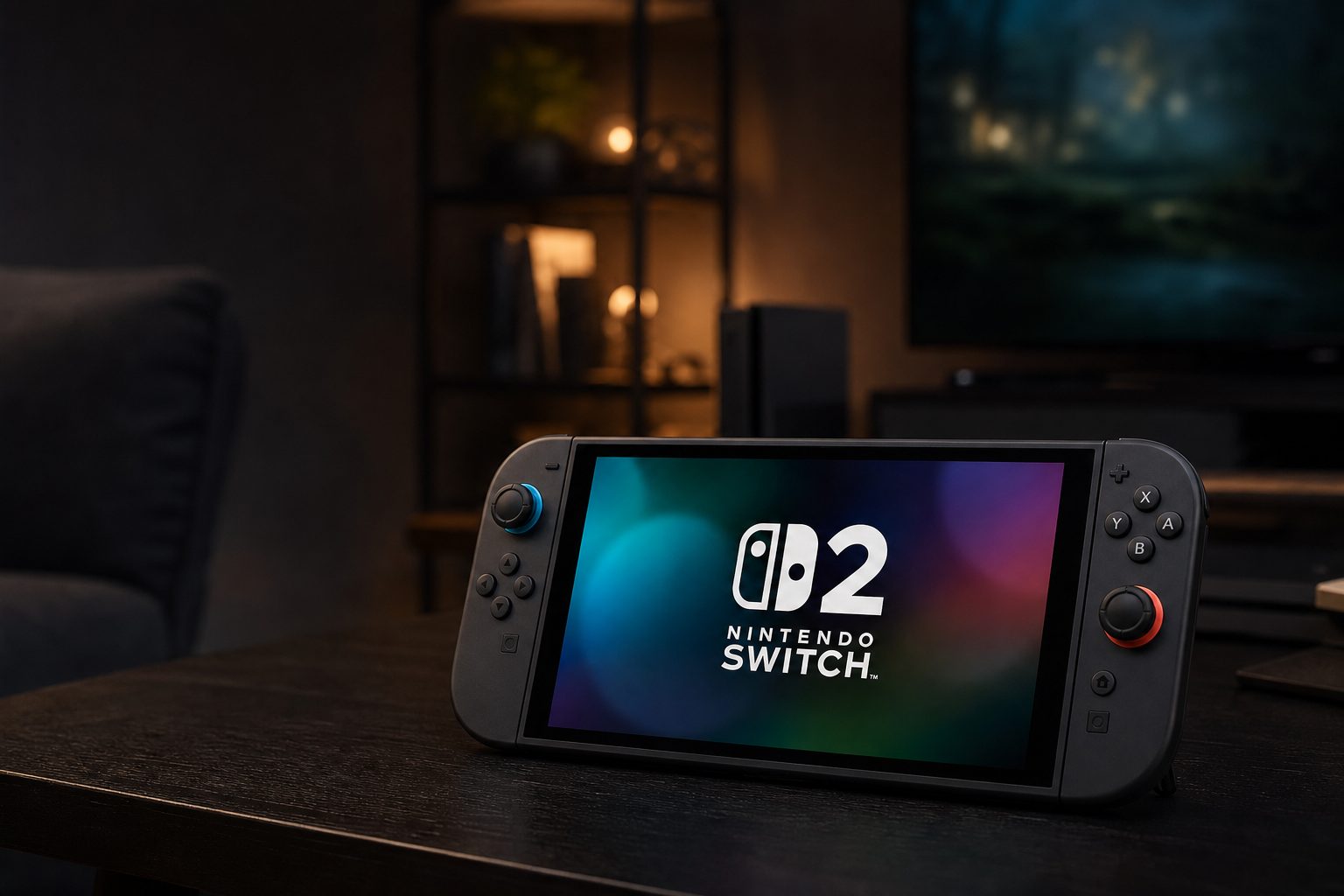
Nintendo Switch 2 and Xbox Series X shared the same broad purpose, but they solved the question of where and how to play in dramatically different ways.
Nintendo Switch 2 vs Xbox Series X: the short answer
These are not really rivals in the old-fashioned sense. They sit under the television, accept controllers and play enormous games, certainly. Beyond that, though, Nintendo Switch 2 and Xbox Series X represented two very different ideas about a console.
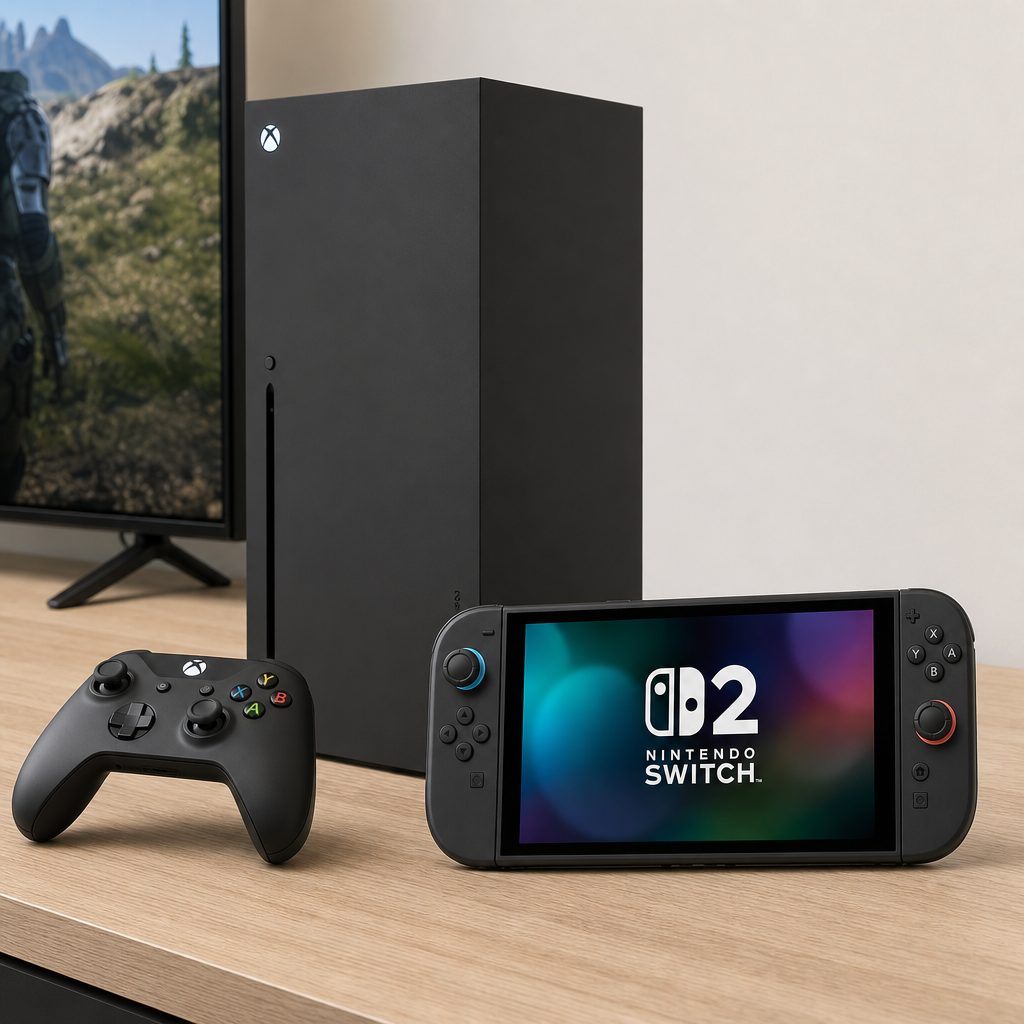
Switch 2's 7.9-inch display made it a self-contained gaming machine, whilst Xbox Series X depended on a television or monitor but delivered considerably more rendering power.
Nintendo Switch 2 was the easy recommendation for a household that wanted games to move around with family life. It worked in handheld mode, on a table with the kickstand, or in a dock connected to the TV. One minute somebody could be playing in the lounge; the next, the console could be travelling to grandparents or quietly occupying a train journey. It was gaming built around flexibility.
Xbox Series X was the better fit for somebody who wanted a dedicated home-console experience: more raw power, 4K HDR gaming at up to 120fps, ray tracing, a 4K UHD Blu-ray drive and a formidable backwards-compatible Xbox library. It was not going in a backpack unless you had a very large backpack and a rather odd definition of "portable".
The most useful way to choose
Ask where your family plays most often. If the answer is "everywhere, depending on who has the television", Switch 2 made immediate sense. If the answer is "on one excellent TV, usually in the evening", Xbox Series X made a much stronger case.
At-a-glance specifications
The headline numbers made the gap fairly plain. Switch 2 had a 7.9-inch 1080p LCD screen, 256GB of internal storage and a quoted battery range of roughly two to 6.5 hours. Xbox Series X had a 3.8GHz AMD Zen 2-based CPU, a 12-teraflop AMD RDNA 2 GPU, 16GB of memory and a 1TB NVMe SSD. It was a sizeable advantage for the Xbox on sheer horsepower; Nintendo's cleverness lay in making a genuinely capable machine that could also leave the room.
| Feature | Nintendo Switch 2 | Xbox Series X | Why it matters at home |
|---|---|---|---|
| Core design | Portable hybrid console | Stationary home console | Switch 2 can move between handheld, tabletop and TV play; Series X stays connected to a screen. |
| Built-in screen | 7.9-inch LCD, 1920 × 1080 | No built-in screen | Switch 2 is ready wherever you have a seat; Xbox needs a TV or monitor. |
| TV output | Up to 4K at 60fps; 1080p/1440p at 120fps | 4K HDR up to 120fps; targets 8K | Series X is better suited to a high-end 4K television. |
| Storage | 256GB internal; microSD Express expansion | 1TB NVMe SSD; Storage Expansion Cards | Xbox begins with much more room for large modern games. |
| Weight | 399g with controllers attached | 4.4kg | The difference between taking it on holiday and finding a sturdier TV unit. |
| Wireless | Wi-Fi 6 | Dedicated dual-band Xbox Wireless radio | Switch 2 benefits from newer Wi-Fi 6 networking; Series X supports wired Ethernet too. |
| Physical media | Switch game cards | 4K UHD Blu-ray drive | Series X also serves as a UHD Blu-ray player for film collections. |
| Backwards compatibility | Original Switch games | Xbox One, Xbox 360 and Original Xbox titles | Both respected older libraries, but Xbox reached further back through Xbox history. |
Design, portability and the battle for the television
The Switch 2 advantage began before you even switched it on. At 271.8mm wide, 114.3mm tall and 13.9mm thick, it was a substantial handheld but still a handheld. With Joy-Con 2 attached it weighed 399g. That was enough to feel reassuringly solid, rather than like a toy you might accidentally snap during a competitive sofa scramble.
The magnetic Joy-Con 2 attachment was a welcome practical change from the old rail arrangement. Nintendo also made the sticks and SL/SR buttons larger, whilst supported games could use a Joy-Con 2 as a mouse. That last feature was not a reason to buy the console alone, but it gave developers another tool and made the controllers feel more versatile than their tiny size suggested.
Xbox Series X was an elegant black tower measuring 30.1cm tall and 15.1cm wide and deep. It remained compact by gaming-PC standards, but at 4.4kg it was very definitely furniture. The upside was that it had an internal power supply, a carefully arranged split motherboard cooling design and none of the compromises required to keep heat, battery life and weight under control in your hands.
Switch 2 travelled properly
Handheld mode made the console useful on holidays, in bedrooms, on a commute or whenever the television was needed for something less heroic than saving a galaxy.
Series X owned the living room
Its size was a limitation only if you wanted portability. In a fixed setup, the sturdy console and straightforward HDMI 2.1 connection were wonderfully uncomplicated.
Joy-Con 2 offered unusual control options
Mouse-style use in compatible games added an extra layer of flexibility, particularly for games that benefited from pointing or cursor control.
Xbox included wired networking
Series X had Gigabit Ethernet alongside its wireless connectivity, useful for a stable download and online-play setup near the router.
Performance: Xbox Series X won the numbers game
Shop Xbox Series X won the numbers game on Amazon UK
If you wanted the blunt answer, Xbox Series X was the more powerful console by a very large margin. Its 12-teraflop RDNA 2 GPU, 16GB of memory and 3.8GHz AMD Zen 2-based processor were designed for demanding home-console games. DirectX ray tracing enabled richer dynamic lighting, shadows, reflections and acoustics. This was the box for someone with a 4K television who noticed fine detail and who enjoyed a game running as smoothly as possible.
Switch 2 used a custom Nvidia processor, with an ARM Cortex A78C CPU reaching up to 1.7GHz in docked mode. Nintendo had not tried to match Series X component for component. It had instead used Nvidia AI upscaling technology to help it reach 4K at 60fps when docked in appropriate games. That distinction matters: a 4K output signal is not automatically the same thing as the native rendering workload an Xbox Series X can sustain.
Real-world results showed the difference clearly. In demanding Split Fiction scenes, Switch 2 rendered at around 900p to 1080p dynamic resolution and ran at 30fps. Xbox Series X sustained dynamic 4K at 60fps. That was not a tiny quibble for people who care about fluid action, especially on a large TV. It was a different class of presentation.
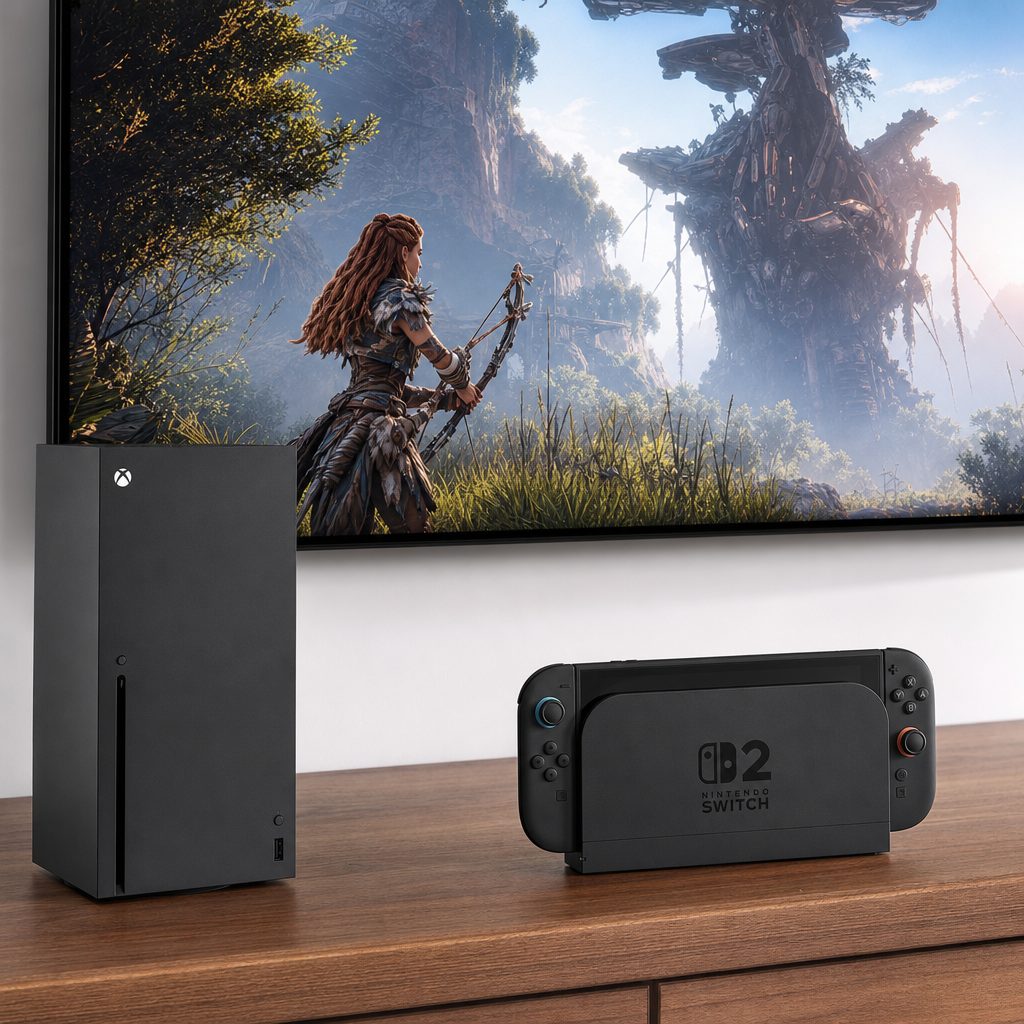
On a large 4K HDR television, Xbox Series X had the technical headroom for higher resolutions, smoother performance targets and ray-traced effects in supported games.
Display quality: built-in flexibility versus big-screen spectacle
Switch 2's screen was one of its strongest reasons to exist. The 7.9-inch LCD panel delivered 1920 × 1080 resolution, HDR10 support and up to 120Hz with variable refresh rate. For handheld play, that was a meaningful step up in space and sharpness. A child could play a favourite game without claiming the main television; an adult could carry on whilst somebody else watched a programme. Domestic peace is not listed on the box, but it should be.
Docked, Switch 2 could output up to 4K at 60fps, or 1080p and 1440p at 120fps. Metroid Prime 4: Beyond demonstrated the potential particularly well, with docked modes reaching either 4K at 60fps or 1080p at 120fps. That gave players a genuine choice between detail and speed rather than pretending every game had to chase the same target.
Series X had no screen of its own, so its quality depended heavily on the television or monitor you already owned. With a suitable HDMI 2.1 display, though, it supported 4K HDR at up to 120fps. For the person rebuilding their gaming habit after years away, this could be properly impressive: fewer loading compromises, richer lighting and a far more premium picture than the consoles of a decade ago.
Do not buy Xbox Series X purely because it can target 8K. For most households, its meaningful benefit was excellent 4K HDR performance at up to 120fps. Switch 2, meanwhile, made more sense when the ability to play away from the TV was as valuable as the TV image itself.
Battery life: Nintendo Switch 2's unavoidable compromise
A portable console always had to answer the battery question, and Switch 2's answer was sensible rather than miraculous. Its 5,220mAh battery was rated for approximately two to 6.5 hours, with charging taking around three hours in Sleep mode using the official power cable or dock.
The spread was important. Big AAA games could deliver around two to 2.5 hours, moderate 3D titles roughly 2.5 to 3.5 hours, and lighter 2D games around four to 6.5 hours. For a short journey, a relaxed evening in bed or a child's turn in the back seat, that was generally useful. For a long-haul flight or an all-day gaming session, it required planning and a charger.
There were also reports of substantial overnight standby drain, with some consoles falling from full charge to around 59% after eight or nine hours in Sleep mode. Background Wi-Fi activity and Nintendo Switch Online syncing were linked to the issue. It did not make Switch 2 unusable, but it was a reason not to assume a console left sleeping in a bag would be ready the next morning.
Xbox Series X had no battery because it was mains powered. That sounds almost too obvious to mention, but it was also a luxury. When it was connected, it was ready for a long session without watching a battery symbol creep towards disaster at the most inconvenient possible moment.
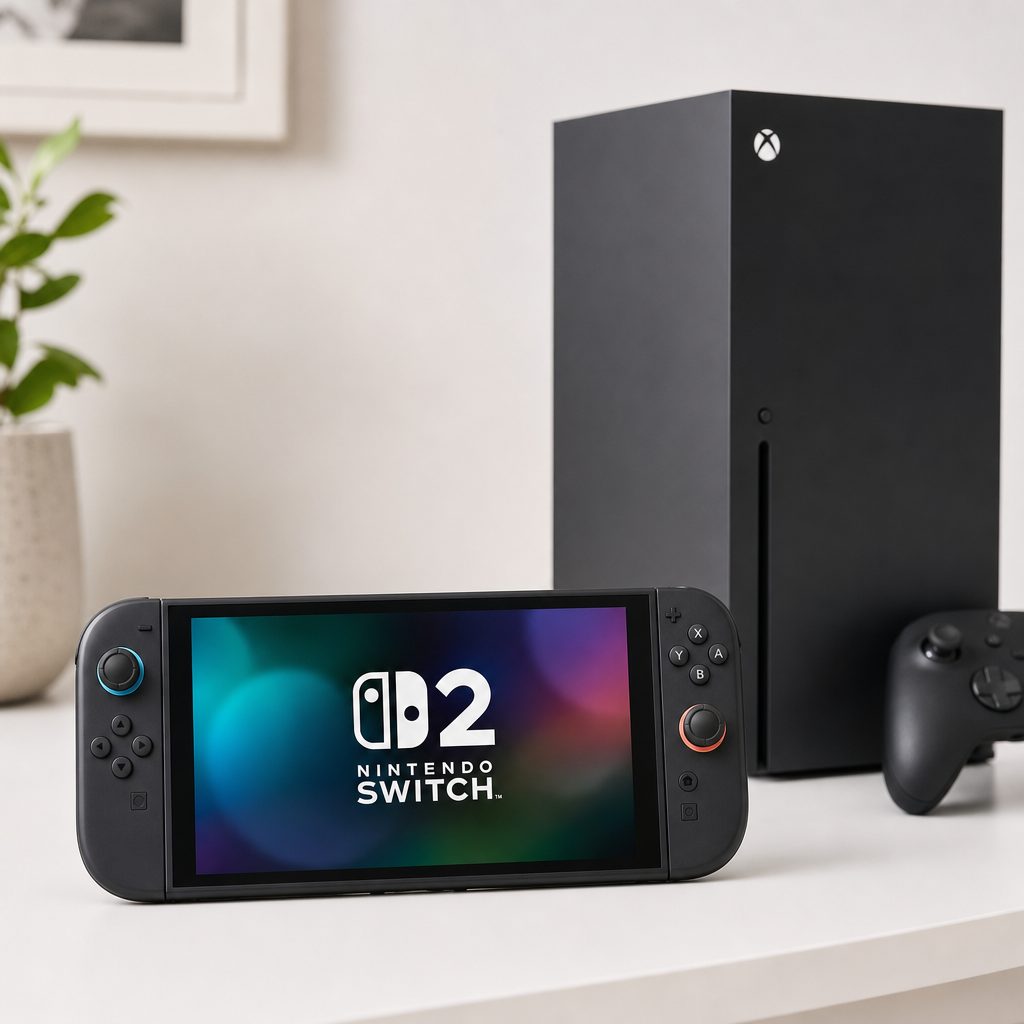
Handheld play was Switch 2's superpower, though demanding games could reduce battery life to roughly two to 2.5 hours before a recharge was needed.
Games and exclusives: the heart usually decides this one
Specifications were useful, but exclusives were where many buyers made their real decision. Nintendo's greatest strength was that its games felt distinct from the broader console market. If your household loved Nintendo characters, inventive local multiplayer and games that worked for children without talking down to them, Switch 2 was the natural home. It also retained backwards compatibility with original Switch games, which gave existing Nintendo households an immediate library rather than an empty dashboard.
Xbox Series X had a different kind of appeal. It was the machine for players who wanted a broad, more technically ambitious catalogue, with a long backwards-compatible history spanning Xbox One, Xbox 360 and original Xbox titles. Many of those older games played better than they had on their original hardware. For a lapsed gamer with a box of old favourites or fond memories of earlier Xbox generations, that was a genuine emotional advantage.
The key question was not "which has better games?" That question was a small trap, like asking which biscuit is objectively superior. The answer depended on the person holding it. Nintendo was often better for shared family play and unmistakable first-party charm. Xbox was often better for the player who wanted a deeper technical showcase, mature action games and access to older Xbox eras.
Nintendo Switch 2 strengths
- Portable hybrid design fitted around busy family routines.
- Original Switch game compatibility gave existing owners a valuable head start.
- Joy-Con 2 could be shared for local play and offered mouse-style control in supported titles.
- Its first-party gaming identity remained unlike anything on Xbox.
Nintendo Switch 2 limitations
- AAA battery life could be only around two to 2.5 hours.
- 256GB filled more quickly than a 1TB console once several large games were installed.
- Demanding third-party games could make considerable resolution and frame-rate compromises.
- Sleep-mode battery drain reports made charging habits more important.
Subscriptions and the value of a larger library
For lapsed gamers, subscription value deserved serious attention. Buying a new console and then discovering that every interesting game demanded another purchase could make the hobby feel rather less welcoming. Xbox's subscription proposition was one of its defining advantages, particularly for somebody returning to games after a long break and wanting to sample genres rather than committing to every new release blindly.
Xbox Series X also had the storage and performance profile to support that broad, download-heavy style of ownership. Its 1TB NVMe SSD started with nearly four times the internal storage of Switch 2's 256GB. That did not mean storage worries disappeared; modern games were quite capable of eating into a terabyte with the confidence of a teenager near an open fridge. But it gave Xbox a much more relaxed starting point.
Nintendo's subscription appeal was more closely tied to its own ecosystem and the comfort of its classic catalogue, online services and family-friendly software. If your household already knew exactly which Nintendo games it wanted, that focused approach could feel more valuable than an enormous menu of things nobody actually played. Value is not just quantity. It is also whether the game gets launched again after Tuesday.
Storage, discs and everyday convenience
Switch 2 began with 256GB of internal storage and used microSD Express cards for expansion. It had two USB-C ports, one on top and one on the bottom, plus a headphone jack. Those details mattered in handheld use: the top port made charging whilst playing more practical, and a proper headphone jack remained useful for family travel and late-night gaming.
Xbox Series X offered a 1TB NVMe SSD, three USB 3.2 ports, HDMI 2.1, Ethernet and a dedicated expansion storage slot. Its Storage Expansion Cards offered a straightforward route to more space. It also included a 4K UHD Blu-ray drive, making it the clear winner for households that still bought physical films as well as disc games. Switch 2's game cards were compact and convenient, but the Xbox gave a second life to a film shelf.
Neither approach was automatically better. Switch 2 was the tidier, lighter and more personal device. Xbox Series X was the better media hub and the more capacious digital library machine. One slipped into a travel case. The other became part of the entertainment centre.
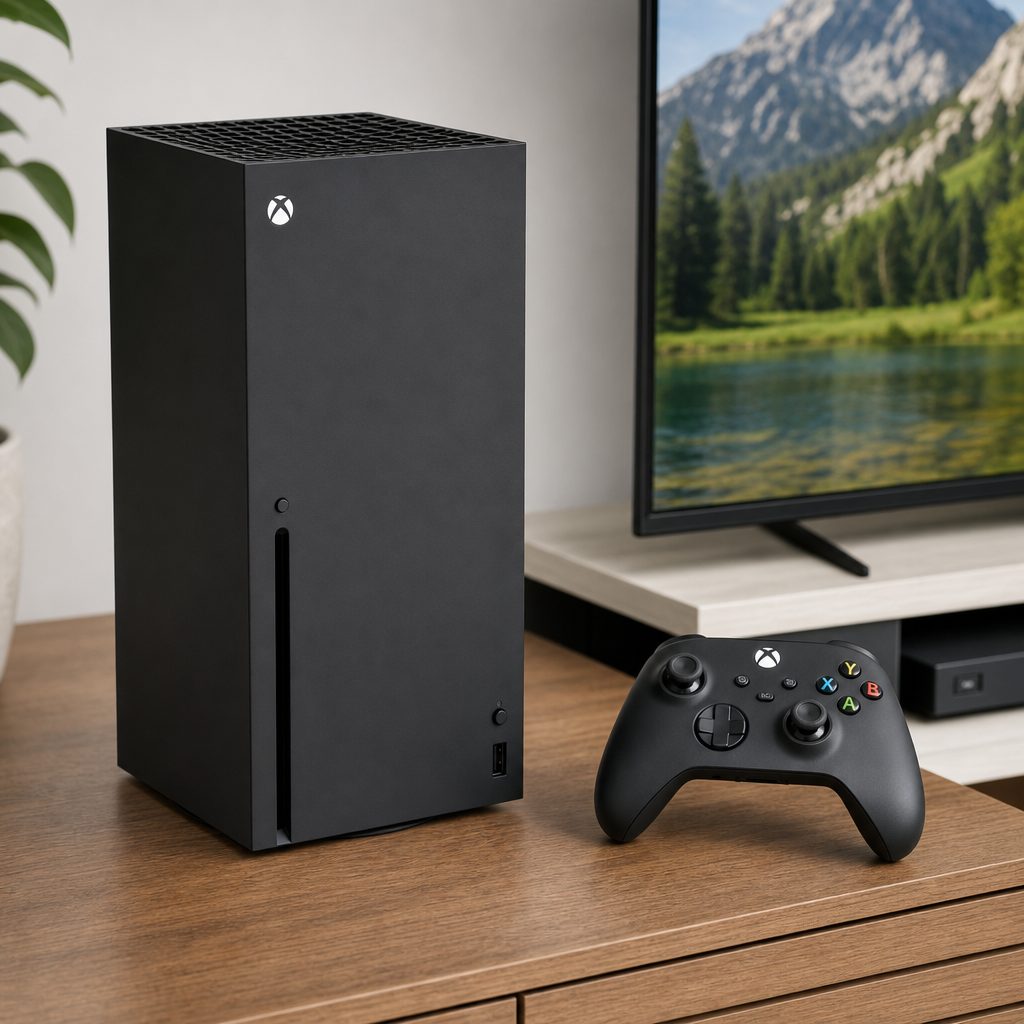
Xbox Series X's 1TB NVMe SSD, expansion slot, Ethernet port and 4K UHD Blu-ray drive made it the more traditional all-in-one living-room console.
Price and value after the Xbox Series X rise
Shop Price and value after the Xbox Series X rise on Amazon UK
Value became more complicated in 2026 because both hardware prices were under pressure. Nintendo Switch 2 remained at £395.99 in the UK and $449.99 in the US through 31 August 2026. From 1 September 2026, its UK price was due to rise to £429.99, whilst the US price was due to become $499.99.
Xbox Series X became substantially more expensive. Its 1TB model price increased on 1 August 2026 to $799.99 in the US, following a $150 rise. UK and European prices also rose on that date, by up to £170 and €200 respectively. The 2TB Series X model was being sunsetted, so buyers looking at the range had less reason to wait for that version to become a better-value alternative.
This changed the recommendation. Series X still justified its position for somebody who truly wanted its 4K performance, disc drive, storage and Xbox ecosystem. But it was no longer the obvious "more power for a little more money" purchase. Switch 2 was markedly easier to justify for families who valued portability and Nintendo games, particularly before its scheduled September increase.
Nintendo Switch 2
UK price through 31 August 2026.
Nintendo Switch 2
UK price due from 1 September 2026.
Xbox Series X 1TB
US price from 1 August 2026.
Best pick for every kind of buyer
There was no need to force a single winner here. Choosing well meant being honest about the household, the television and the games that would actually be played once the launch-week excitement had faded. The best console was not necessarily the fastest one. It was the one that became part of your routine instead of collecting dust beneath the TV.
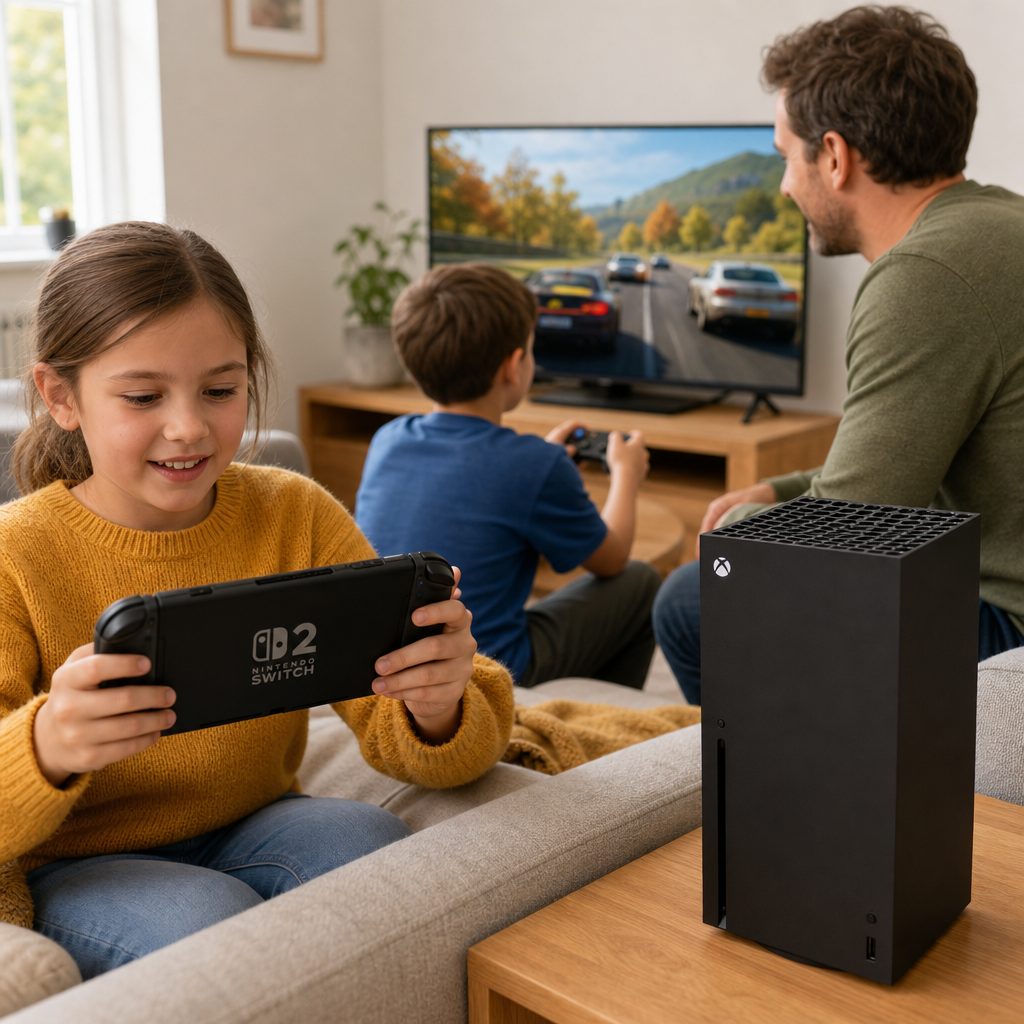
For many families, the deciding factor was not a processor chart but whether gaming needed to fit around school runs, shared televisions and several people wanting a turn.
Best for families: Nintendo Switch 2
Shop Nintendo Switch 2 on Amazon UK
Its handheld, tabletop and docked modes made sharing the television much less of a negotiation. Backwards compatibility also helped families moving from an original Switch.
Best for travel: Nintendo Switch 2
At 399g with controllers attached, it was the only real choice for holidays, long car journeys and gaming away from a TV. Bring the charger for demanding games.
Best for 4K performance: Xbox Series X
Shop Xbox Series X on Amazon UK
Its 12-teraflop GPU, 16GB memory, ray tracing and 4K HDR support up to 120fps were built for a good modern television or monitor.
Best for lapsed Xbox players: Xbox Series X
Shop Best for lapsed Xbox players on Amazon UK
Compatibility with Xbox One, Xbox 360 and original Xbox titles made it a particularly appealing route back into a familiar library.
Best value for most homes: Nintendo Switch 2
The Xbox price rise made Switch 2 the less financially daunting premium console choice, especially for people who would genuinely use portability.
Best for disc films: Xbox Series X
The 4K UHD Blu-ray drive gave Series X a practical advantage for physical-media households as well as game collectors.
Frequently asked questions
No. Xbox Series X had considerably more raw performance, including a 12-teraflop RDNA 2 GPU, 16GB of memory and a 3.8GHz AMD Zen 2-based CPU. Switch 2's strengths were portability, its integrated screen and Nintendo's flexible hybrid design.
Yes. Switch 2 supported backwards compatibility with original Switch games. For a family with an established Switch collection, that was a major practical advantage because the new console did not begin with an empty library.
Yes. Xbox Series X supported compatible Xbox One, Xbox 360 and original Xbox titles. Many older games benefited from the newer hardware, making the console especially attractive to players returning after several years away.
Nintendo quoted approximately two to 6.5 hours. In real-world terms, demanding AAA games could last around two to 2.5 hours, moderate 3D games around 2.5 to 3.5 hours, and lighter 2D games around four to 6.5 hours.
Yes. Xbox Series X included a 4K UHD Blu-ray drive. That supported physical Xbox games and made the console useful for watching compatible UHD Blu-ray films, something Switch 2 did not offer.
For most families, Switch 2 was the simpler answer because it could be played away from the TV, its controllers could be shared more readily and Nintendo's game catalogue had broad family appeal. Xbox Series X was still excellent for older children and teenagers who wanted high-end performance and a bigger Xbox catalogue.
Switch 2 was £395.99 in the UK through 31 August 2026 and was due to rise to £429.99 from 1 September 2026. Xbox Series X's 1TB US price became $799.99 on 1 August 2026 after a $150 increase, while UK pricing also rose by up to £170.
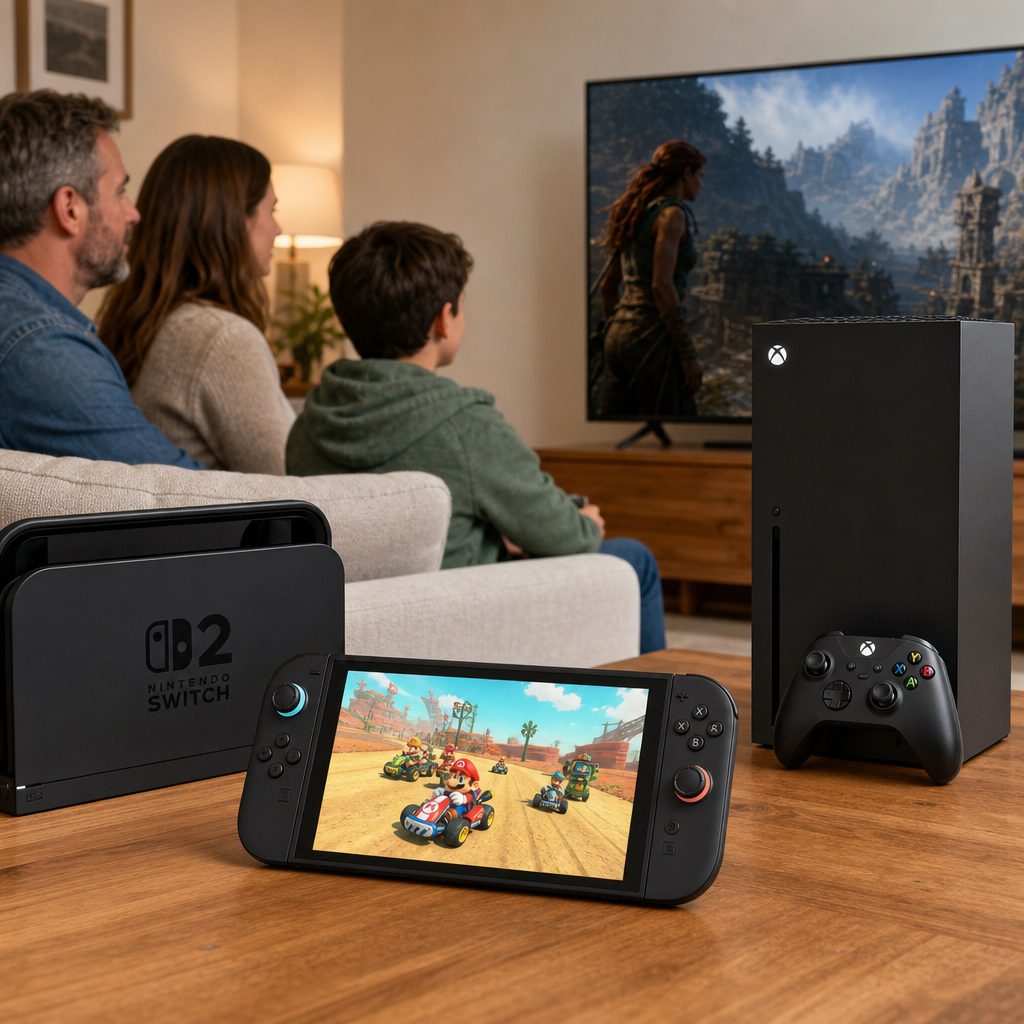
The right choice came down to lifestyle: Switch 2 made gaming easier to fit into everyday family life, while Xbox Series X made the living-room session feel more cinematic.
Verdict: choose the console that matches your life
Nintendo Switch 2 was the better buy for most families, Nintendo fans and anyone who needed gaming to be flexible. It was not as powerful as Xbox Series X, and its battery life in demanding games required a little realism, but its 7.9-inch display, three ways to play, original Switch compatibility and compact 399g design made it uniquely easy to use often. That is worth more than a theoretical frame-rate win when the television is constantly occupied.
Xbox Series X remained the better buy for performance-focused players, 4K TV owners, Xbox veterans and physical-media households. Its 12-teraflop GPU, 1TB SSD, ray tracing, UHD Blu-ray drive and deep backwards compatibility gave it enormous living-room appeal. The August 2026 price rise made it a more considered purchase than before, however, and the lack of portability was not a small detail.
In short: buy Nintendo Switch 2 if you want the console that goes wherever the family goes. Buy Xbox Series X if you want the console that makes a great television earn its keep. Two very different ways to play, and happily, two very good answers.