Toniebox 2 review: the screen-free player finally grows up a little
Toniebox 2 took the deliberately uncomplicated audio-player formula children already understood and gave it better sound, more storage, Bluetooth headphones and screen-free games. It was a meaningful update rather than a reinvention — which, for a toy designed to survive toddler logic, was exactly the point.
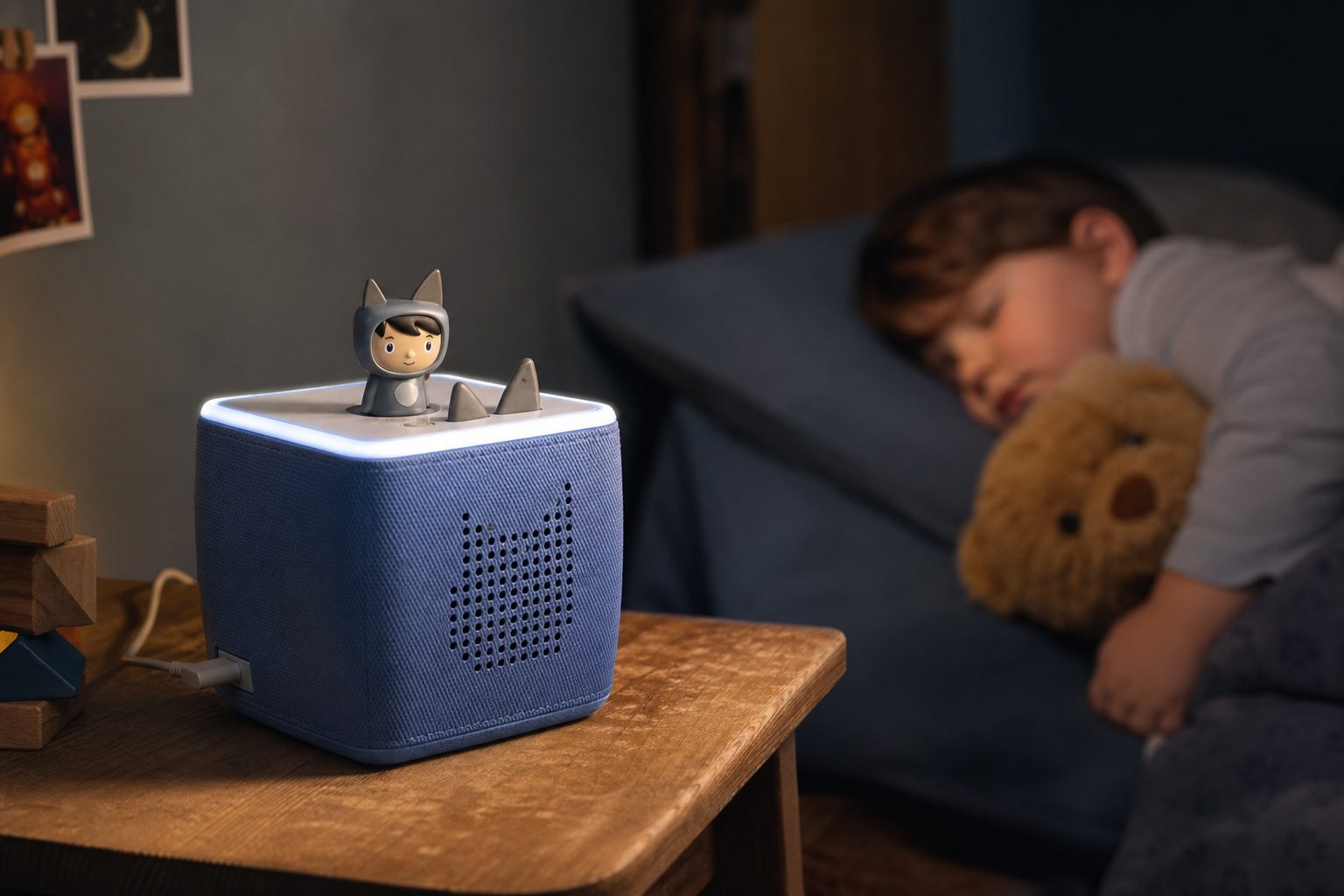
The Toniebox 2 retained the wonderfully simple cube-shaped idea, but added a light ring, USB-C charging and more room for a growing audio collection.
What is the Toniebox 2?
The original Toniebox made a very persuasive argument that young children did not need another screen in their lives. Put a character on top, hear a story or some songs, take the character off, stop listening. No menus. No adverts. No tiny fingers accidentally buying twelve episodes of something at 6.14am. It was a small bit of domestic magic.
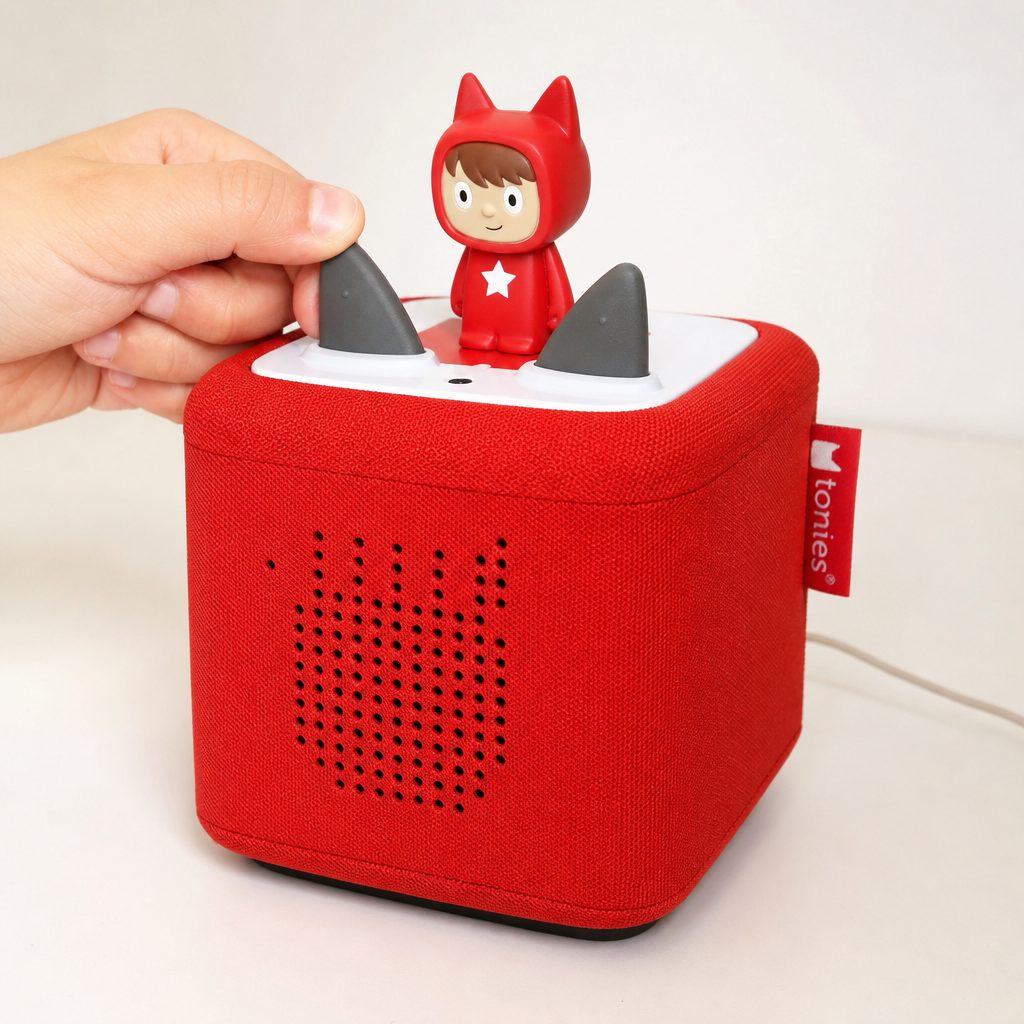
The flexible silicone ears are the volume controls — a wonderfully obvious solution for children who are not remotely interested in menus.
Released on 5 October 2025, the Toniebox 2 was the second-generation version of that idea. It remained a soft-sided audio player that used physical Tonie figures to start content, but it was no longer merely a story box. Tonies expanded the concept with Tonieplay, a range of screen-free audio games controlled through physical accessories, alongside a new sleep timer, sunrise alarm, Bluetooth 5.2 and a noticeably larger 32GB internal storage capacity.
It is intended for children aged one and upwards, with the broader range stretching to ages nine and beyond depending on the Tonies and games you choose. That matters. A traditional lullaby player can become redundant rather quickly; Toniebox 2 had a better chance of moving from first songs to longer stories, quizzes and choose-your-own-adventure-style play.
The basic rule has not changed: Wi-Fi is needed for initial setup and the first play of a piece of content. Once it has downloaded to the Toniebox 2, it can be played offline — which remains one of the strongest reasons to take it on holiday, in the car or to a grandparent's house.
At a glance: Toniebox 2 specifications
This was still a reassuringly substantial children's device rather than a dainty portable speaker. At 13 x 13 x 12.6cm and approximately 815g, it had enough weight to feel planted on a bedside table, whilst remaining manageable for a young child to carry from room to room with great ceremony.
Design and build: made for real children, not showroom children
The Toniebox 2 looked friendly because it was meant to be handled. Its outer fabric combined PVC and cotton, used vegan raw materials and carried Oeko-Tex Standard 100 certification. The coloured top platform was polycarbonate, with an ABS frame underneath, while the two large ears were flexible silicone. There was a lot of considered, child-focused material choice here.
That construction matters more than a glossy finish ever would. Small children do not treat an audio player as a precision instrument. It gets carried by one ear, parked on a duvet, nudged off a low shelf and introduced to the floor with the kind of enthusiasm normally reserved for a toy fire engine. Tonies has always understood this, and the second-generation box kept that tactile, robust character.
Controls remained splendidly low-tech. Press an ear to alter volume. Tap a side to move between tracks. Place a Tonie on top to begin. It sounds almost too simple when written down, but that is why it works. A toddler can learn the relationship between figure and audio quickly, and a parent does not have to become unpaid technical support every time a nursery rhyme ends.
The Light Ring was the most visible new flourish. It glowed in rainbow colours as children swapped figures or played games, and it acted as a battery indicator when the box was plugged in. It gave the device some useful feedback without becoming a distracting miniature display. That balance was well judged. There is enough light to make the interaction feel special, but not enough to turn bedtime into a nightclub.
Sound quality: clearer stories, fuller songs
Sound was one of the clearest practical improvements over the first Toniebox. The revised speaker and internal acoustics gave Toniebox 2 a wider frequency range, more bass and clearer voices. Stories came through with greater definition, while songs sounded fuller and less thin. It could also reach a higher maximum volume than the original model.
That does not mean this was suddenly a hi-fi speaker for the living room. It was still designed around children's audio, spoken-word storytelling and sing-along music, rather than trying to shake the ornaments off the mantelpiece. But it was a more convincing speaker than its cheerful soft-box appearance suggested. For audiobooks in particular, clear voices are far more valuable than showy bass, and Toniebox 2 improved the thing parents actually notice after the fiftieth repeat of the same tale.
The higher maximum volume was useful in a kitchen, playroom or car-adjacent packing scramble, but it also reinforced the value of the large, immediate ear controls. The child could manage the basics, whilst adults could intervene before a cheerful mouse, bear or Gruffalo took over the entire house.
Battery life and charging in daily use
Battery anxiety is not a phrase anyone wants to associate with a bedtime story. Toniebox 2 quoted up to 10 hours of continuous play, a worthwhile step up from the approximate seven hours of the original Toniebox. In practical family terms, that was enough for multiple stories, a day of songs and the odd long car journey without turning charging into another job on the household list.
Charging moved to USB-C, a welcome dose of common sense. A full charge required at least three hours, but the quick-charge claim was more useful than it first sounded: ten minutes of charging could provide up to 45 minutes of playback. That is precisely the sort of rescue feature that saves a trip after a child has announced, from the back seat, that the one particular Tonie they need is flat.
Tonies recommended a certified USB charger using a 5–15 watt supply at 5V, with a maximum 1.5A. It is worth following that guidance rather than treating every random cable-and-plug combination in the kitchen drawer as a science experiment. The player's daily routine was otherwise admirably simple: charge it, download content once at home and let it get on with being an offline companion.
A genuinely useful bedtime upgrade
The Sleep Timer with Light allowed parents to choose when Toniebox 2 powered down, gently fading the sound and glow. The sunrise alarm, set through the app, paired a gradual light effect with wake-up tunes. Neither feature is revolutionary on its own, but both make much more sense here than on a phone or tablet in a child's bedroom.
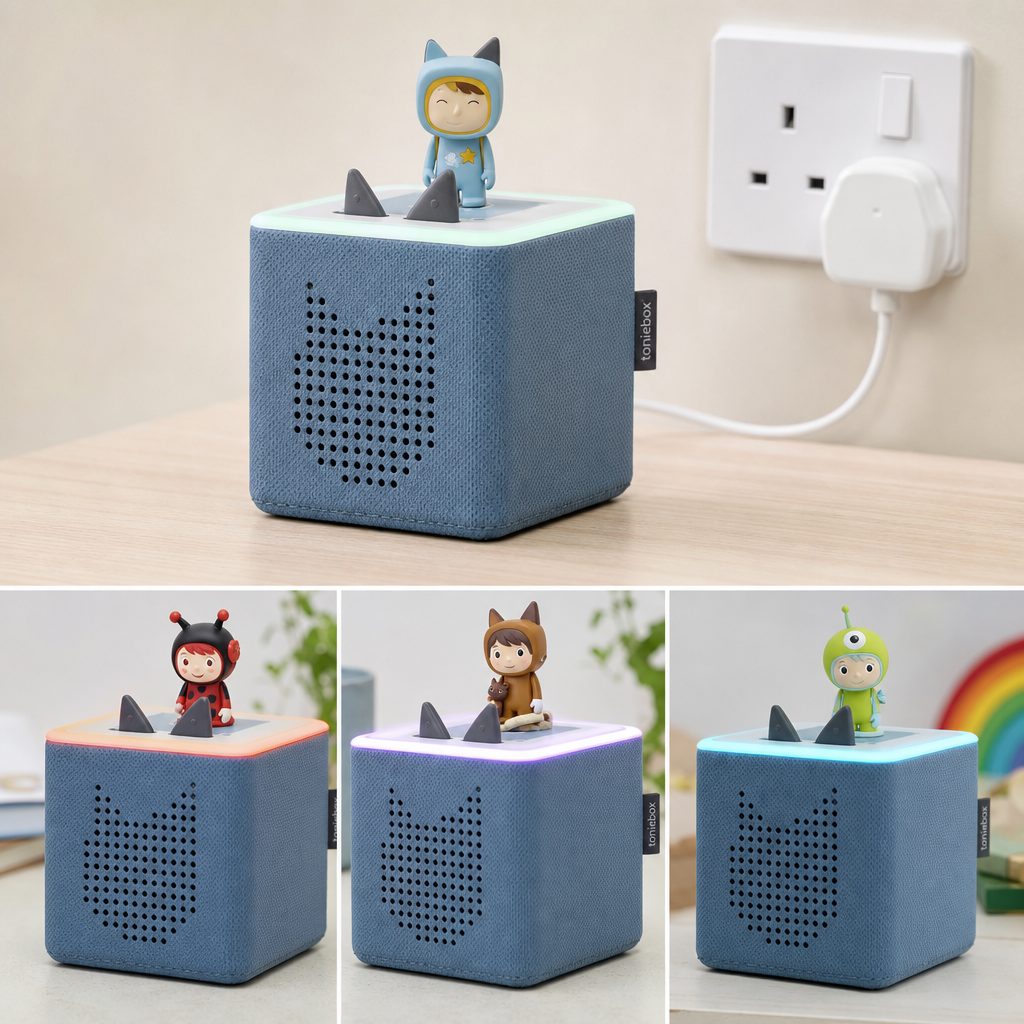
The Light Ring adds gentle visual feedback for charging, figure changes and Tonieplay without introducing a distracting screen.
Tonieplay: where Toniebox 2 became more than a story player
Tonieplay was the feature that made the second-generation box feel like an expansion of the whole Tonies idea rather than a specification refresh. These were screen-free games using audio prompts and physical controls, built around quizzes, treasure-hunt-style challenges, stories and interactive adventures. Think less handheld console, more a lively narrator directing a family game from the middle of the kitchen table.
Examples included Disney Quiz Kingdom, Winnie the Pooh: Tigger's Mix-Up Fix-Up and Gabby's Cat-Tastic Scavenger Hunt. The appeal was obvious: children could participate rather than simply listen, yet the activity retained the comparatively calm, imagination-led quality that drew many parents to Tonies in the first place.
There was a sensible age-range benefit too. A one-year-old might be perfectly happy placing a familiar character on top for music. An older sibling could find that routine a bit babyish. Tonieplay gave the box a route forward without asking them to graduate immediately to a screen-based device. It did not turn Toniebox 2 into a games console, and it should not be bought expecting one. It was a small, focused interactive system. But for the right child, that was rather the charm.
One important caveat: Tonieplay needed compatible games and a controller, and those were separate purchases. Toniebox Lite was also not compatible with Tonieplay, so families comparing Tonies devices needed to be clear about which experience they wanted before buying.
Bluetooth headphones
Bluetooth 5.2 brought wireless headphone capability to the Toniebox line, making private listening far more practical for travel and shared rooms.
Offline after download
Wi-Fi handled setup and first playback, but downloaded Tonie content remained available without an internet connection.
Physical interactive play
Tonieplay added quizzes, adventures and scavenger-hunt-style games without putting a screen in front of the child.
Room routine features
A fade-out sleep timer and app-set sunrise alarm made the box more useful at the two ends of a child's day.
Toniebox 2 versus the original Toniebox
If you already owned an original Toniebox that was working happily, there was no need to panic-buy a replacement. The first model's simple physical interaction remained excellent. Toniebox 2 was not a case of the old product becoming suddenly unusable; it was a case of the new one addressing a few limitations that families had quietly learned to live with.
The biggest upgrades were storage, battery endurance, Bluetooth and Tonieplay. The jump from 8GB to 32GB was substantial, giving four times the internal storage. The move from around seven hours to up to ten hours of continuous playback was equally welcome. Add clearer sound and USB-C charging, and the newer box was the more complete long-term purchase for a household starting fresh.
| Feature | Toniebox 2 | Original Toniebox |
|---|---|---|
| Release position | Second-generation model, released 5 October 2025 | First-generation model |
| Internal storage | 32GB | 8GB |
| Continuous battery life | Up to 10 hours | Approx. 7 hours |
| Bluetooth | Bluetooth 5.2 | No Bluetooth |
| Sound | Wider range, fuller bass and clearer voices | Earlier speaker design |
| Tonieplay compatibility | Yes | No Tonieplay feature |
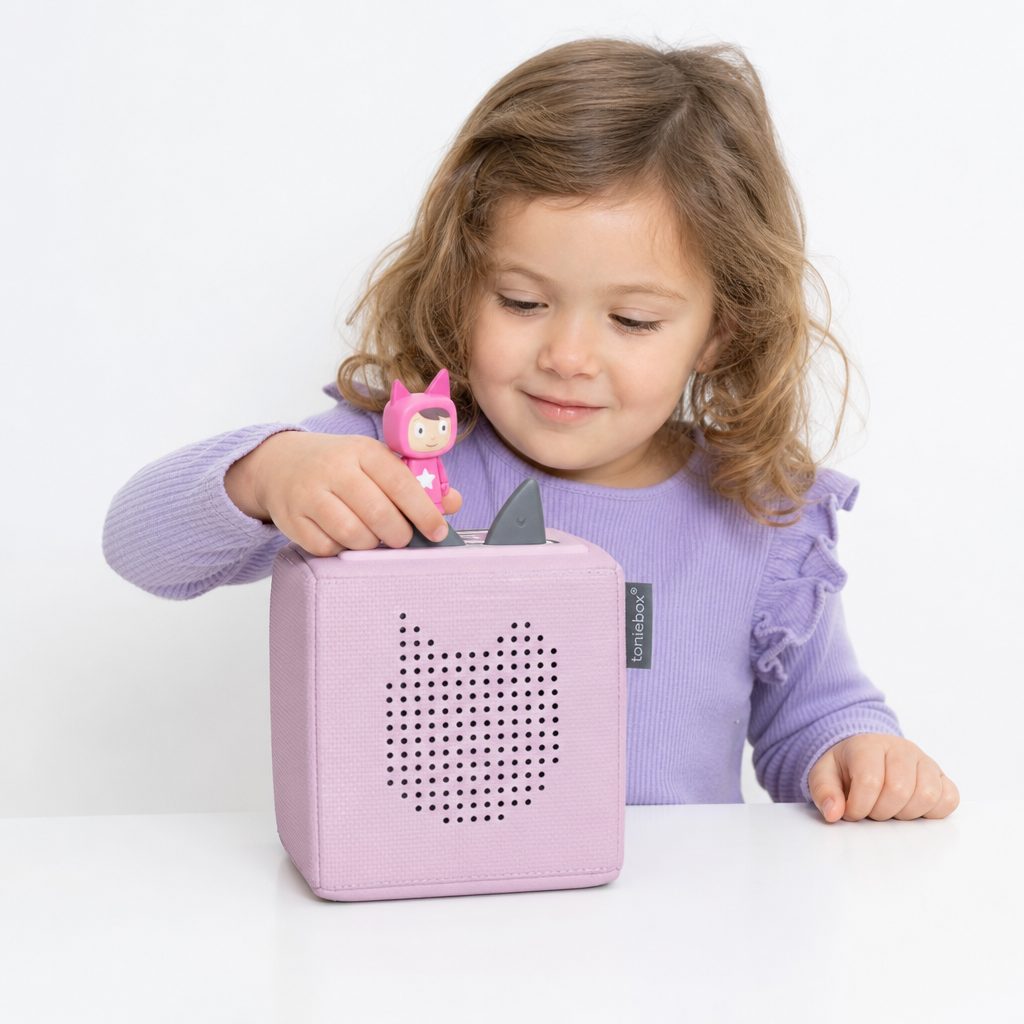
Tonie figures remain the heart of the experience: physical characters that let even very young children choose what they want to hear.
Price and the cost of building a collection
The Toniebox 2 had a UK recommended retail price of £95 for the unit on its own. That is a premium price for a child-focused audio player, and it is important to be honest about what it does not include: the figures and Tonieplay games that make the ecosystem interesting were additional purchases unless you found a bundle.
Tonieplay games started at £16.99, while the Tonieplay Controller cost £12.99. A Toniebox 2 Starter Set with four Julia Donaldson Tonies had been seen at £138.97 on special offer. The maths can add up quickly if you are buying for more than one child or trying to build a huge library immediately.
On the other hand, the collection model is part of the appeal. Grandparents, relatives and friends can understand a Tonie as a gift without needing a spreadsheet. The better approach is to start with a small selection that the child genuinely loves, then add to it gradually. You do not need twenty figures on day one. In fact, given the repeat-listening habits of most children, you may discover that three favourites do almost all the work for months.
Toniebox 2 unit
Box only; Tonies and games are separate.
Tonieplay game
Screen-free interactive game content.
Tonieplay Controller
Required accessory for Tonieplay interaction.
What Toniebox 2 did brilliantly — and where it still asked for compromise
This was a polished product, but it was not magic. Its main strength was that it made listening independent for children without making the device confusing. Its main weakness was that the entry price was only the beginning if you wanted the fullest Tonies experience.
Pros
- Exceptionally intuitive physical controls for very young children.
- Up to 10 hours of playback and a helpful 10-minute quick-charge option.
- Clearer, fuller audio than the original Toniebox.
- 32GB storage gave far more breathing room for downloaded content.
- Bluetooth 5.2 made headphone listening possible.
- Tonieplay extended the appeal beyond passive stories and songs.
Cons
- £95 was a sizeable starting cost before buying content.
- Tonieplay games and controller added further expense.
- Initial setup and first content playback still required Wi-Fi.
- The growing Tonie collection could become costly very quickly.
- Tonieplay was unavailable on the smaller Toniebox Lite.
Who should buy Toniebox 2?
The Toniebox 2 made most sense as a family's first entry into the Tonies ecosystem, or as an upgrade where Bluetooth headphones, better endurance and interactive games would make a genuine difference. It was less compelling as a replacement for a perfectly healthy original box used only for occasional bedtime stories.
Best for young independent listeners
For children from around one who want to choose music and stories themselves, the physical Tonie system remained wonderfully clear and satisfying.
Best for travel and offline use
Download content at home, then take the box into the car, on holiday or to family visits without relying on Wi-Fi.
Best for screen-free play
Families wanting quizzes and interactive stories without handing over a tablet should look closely at Tonieplay.
Best for upgrading households
It was the sensible upgrade for original Toniebox owners who wanted Bluetooth, longer battery life and four times the storage.
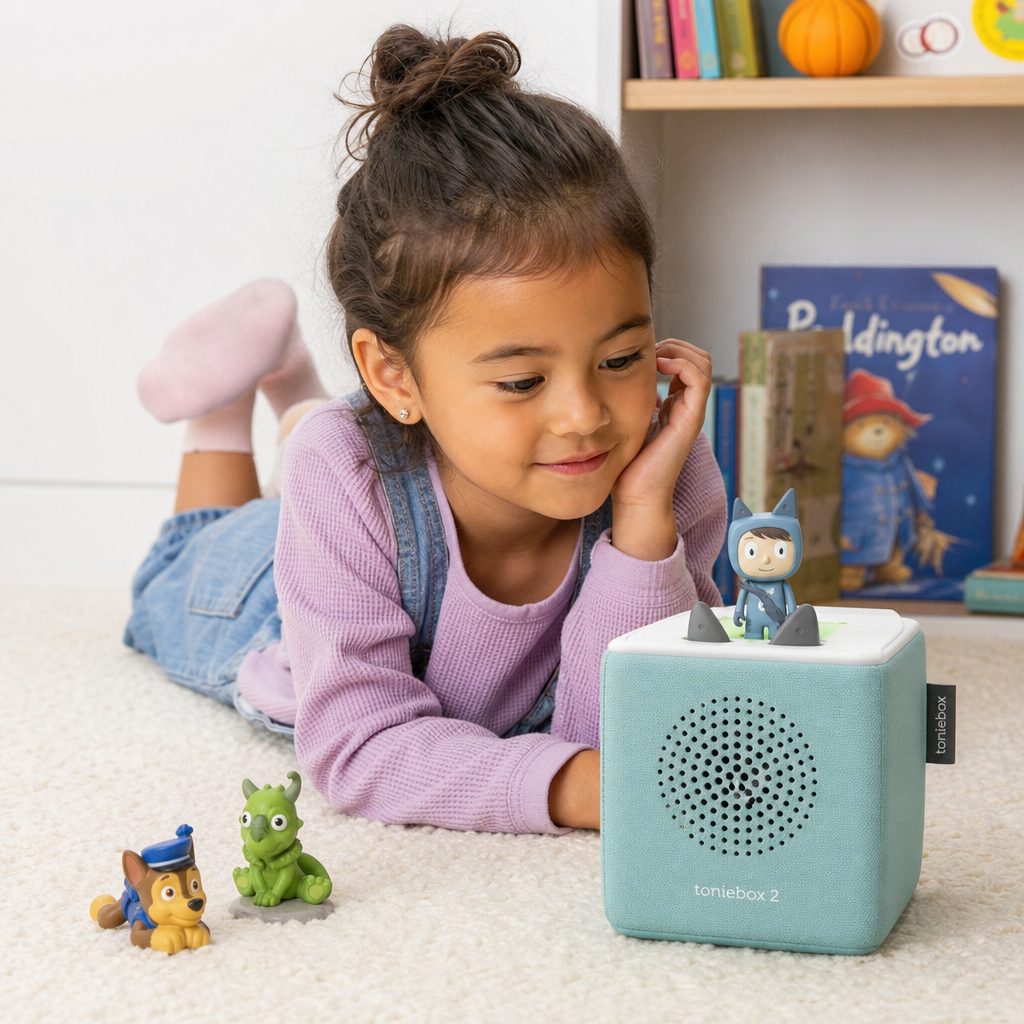
Tonieplay broadened the audience with audio-led quizzes and interactive adventures, keeping the focus on listening and imagination.
Our Toniebox 2 rating
It is easy to be cynical about a toy ecosystem, especially one involving collectable figures. Yet Toniebox 2 earned its place because the core product was so well thought through. It did not ask children to navigate software before they could hear a story. It did not depend on a screen. And it had enough useful evolution to justify its second-generation status.
Toniebox 2 frequently asked questions
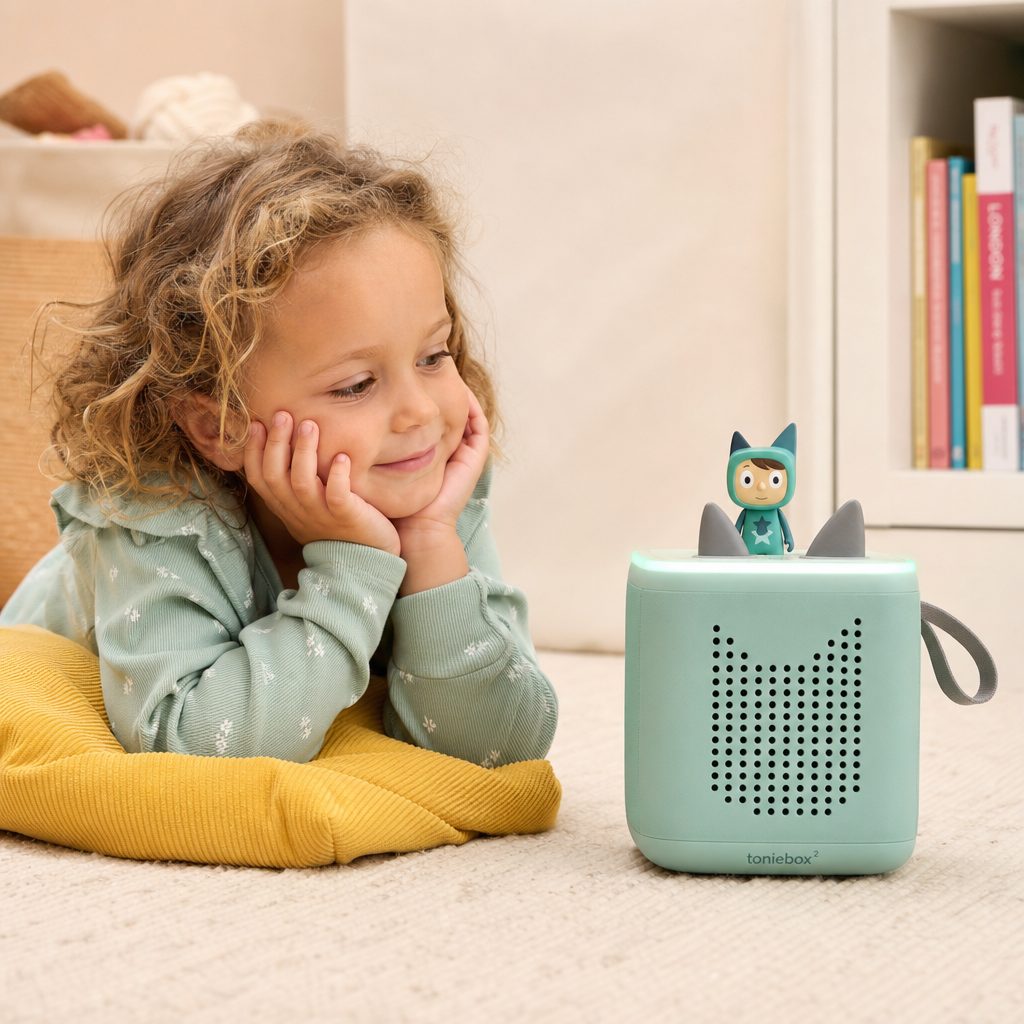
For families who value independent, screen-free listening, Toniebox 2 is at its best as part of a calm daily rhythm rather than another gadget demanding attention.
Toniebox 2 verdict
Toniebox 2 was one of the strongest screen-free audio players for young children. It preserved the original's tactile, gloriously straightforward experience, then fixed several of the practical niggles: battery life improved to up to 10 hours, storage rose to 32GB, charging moved to USB-C and Bluetooth headphones became an option. Better sound and the gentle bedside features were welcome bonuses.
Tonieplay was the bigger strategic addition. It gave the box more life as children grew, without abandoning the no-screen philosophy that made the Tonies system appealing in the first place. The cost was the sticking point: £95 for the box, then further spending on figures, games and accessories, was not trivial. But for families prepared to build a collection steadily rather than all at once, Toniebox 2 was a charming, durable and genuinely useful piece of children's tech.