
Best Roguelite Games If You Loved Splatoon Raiders

The best post-Raiders roguelites do not merely repeat the run-and-upgrade loop; they give it a new rhythm, a new combat language and, ideally, one more go before bedtime.
Raiders made the case for repeatable runs wonderfully well: dive in, make a messy little build, scrape through a difficult encounter and come back wiser. These are the roguelites to try next when you want that same "just one more run" pull, but with fresh worlds, weapons and reasons to keep experimenting.
Why Raiders fans are so well served by roguelites
There is a particular kind of game satisfaction that only a good roguelite seems able to provide. You start a run believing you have a sensible plan. A few minutes later you have picked up an odd upgrade, changed direction completely, and are somehow relying on a build that would have sounded ridiculous at the start. Then it works. Not elegantly, perhaps, but it works. That is the magic.
Players who enjoyed Splatoon Raiders' run-based progression are not necessarily looking for a carbon copy. In fact, they probably should not be. The best next game is often the one that keeps the rewarding cycle of short-term risk and long-term improvement whilst changing the feel of the moment-to-moment play. Some of the picks below are all about quick reactions. Others reward careful positioning, planning, teamwork or an alarming willingness to open one more suspicious door.
For this roundup, I have favoured games where failure is useful rather than merely annoying. A good roguelite lets you learn something every time: perhaps a boss tells you where your positioning went wrong, perhaps an item combination reveals a new strategy, or perhaps you simply discover that charging directly at a room full of enemies was not, in hindsight, the tactical masterstroke you thought it was.
A quick distinction worth making: a roguelite usually carries some form of persistent progress, unlockable options or lasting knowledge from run to run. That is why it suits players who liked Raiders' sense of building towards something, even when an individual attempt came unstuck.

A great roguelite gives every run its own little story: the risky choice, the lucky upgrade and the final encounter where everything either clicks or spectacularly does not.
How to choose your next run
Do not begin by asking which game is "the best" in the abstract. Begin with what you most enjoyed about Raiders. If you liked reacting quickly under pressure, you want a game with responsive action and readable chaos. If you liked shaping a build from whatever the run gave you, look for layers of upgrades and meaningful choices. If the social side was the hook, cooperation matters more than an enormous list of possible items.
For immediate action
Choose a game where movement, aiming, dodging or close-range timing carries most of the excitement. These are the picks that feel good before you know every system.
For clever builds
Choose a game that makes upgrades talk to one another. The pleasure is less about reflexes and more about spotting the route to an unexpectedly potent setup.
For shared calamity
Choose cooperative play if you want a run to include shouted warnings, accidental rescues and the occasional debate over who picked up the useful thing.
For deliberate play
Choose a more tactical roguelite if you enjoy pausing to weigh risk, map routes and resources rather than relying entirely on your thumbs.
The sensible starting point
If you are new to the wider genre, start with a pick whose basic combat makes sense immediately. Deep systems are lovely, but they land better once the first few runs already feel fun rather than like homework in a very colourful dungeon.
The ranked picks
The order here reflects how naturally each game follows on from the appeal of Raiders, not a claim that every player will enjoy them in exactly the same way. A fast-action player may reasonably put a shooter at the top. Someone who lives for build experiments may find the deckbuilding pick becomes their entire personality for a fortnight. Both are valid. Slightly concerning, but valid.
1. Hades — Best for an all-round action roguelite
Hades is the most straightforward recommendation for a Raiders fan who wants a polished, energetic game built around repeated attempts. Its great strength is that the run loop never feels separate from the wider experience. A failed escape attempt still moves conversations, relationships and the sense of place forward, so returning to the beginning carries far less of that "right, here we go again" feeling that weaker roguelites can produce.
Combat is immediate and mobile, with room for both sharp reactions and thoughtful experimentation. The changing boons encourage you to adapt rather than pursue one rigid recipe every time. That matters if you enjoyed Raiders because each session felt like an opportunity to improvise. You may begin intending to play carefully, then receive choices that reward a much more aggressive approach. Hades is very good at making those pivots feel like your decision.
It is also an unusually welcoming choice for somebody who worries that roguelites are inherently punishing. You will still lose. You will probably lose to something that seemed completely manageable a moment ago. Yet the game is generous with feedback, personality and a reason to press on.
Pros
- Fast, readable combat that rewards movement and timing.
- Runs feel connected to a larger story rather than disposable attempts.
- Build choices encourage adaptation without becoming impenetrable.
Cons
- Its theme is much darker than Raiders' playful energy.
- Players seeking cooperative chaos should look elsewhere.
- The pace can feel demanding for those wanting a calmer tactical game.
2. Risk of Rain 2 — Best for escalating co-op chaos
Risk of Rain 2 is for the Raiders player who loved the feeling that a run could become gloriously out of hand. It takes the roguelite idea into a three-dimensional action space, where movement, enemy awareness and collecting the right items all matter. The result is an experience that can begin with modest skirmishes and turn into a frantic effort to remain upright whilst the screen fills with threats and effects.
The key appeal is escalation. You can feel the run gathering momentum, for better and worse. More tools become available, enemies become more dangerous, and decisions about whether to explore further or push onward become increasingly uncomfortable. That tension is excellent in company, because no group is ever entirely agreed on whether they are ready for the next step. Somebody always thinks the team needs one more item. Somebody else is already being chased by half the level.
It is less immediately cosy than Hades and can be visually busy, particularly once a build starts firing off several effects at once. But that is part of the charm for the right audience. It captures the "we made this weird setup work" feeling beautifully.
Pros
- Wonderful sense of a run escalating into a proper event.
- Co-op suits groups who enjoyed shared Raiders sessions.
- Item choices create memorable, unpredictable builds.
Cons
- Busy battles can be difficult to parse at a glance.
- New players may need time to understand item effects.
- Less ideal if you want a tightly authored narrative thread.
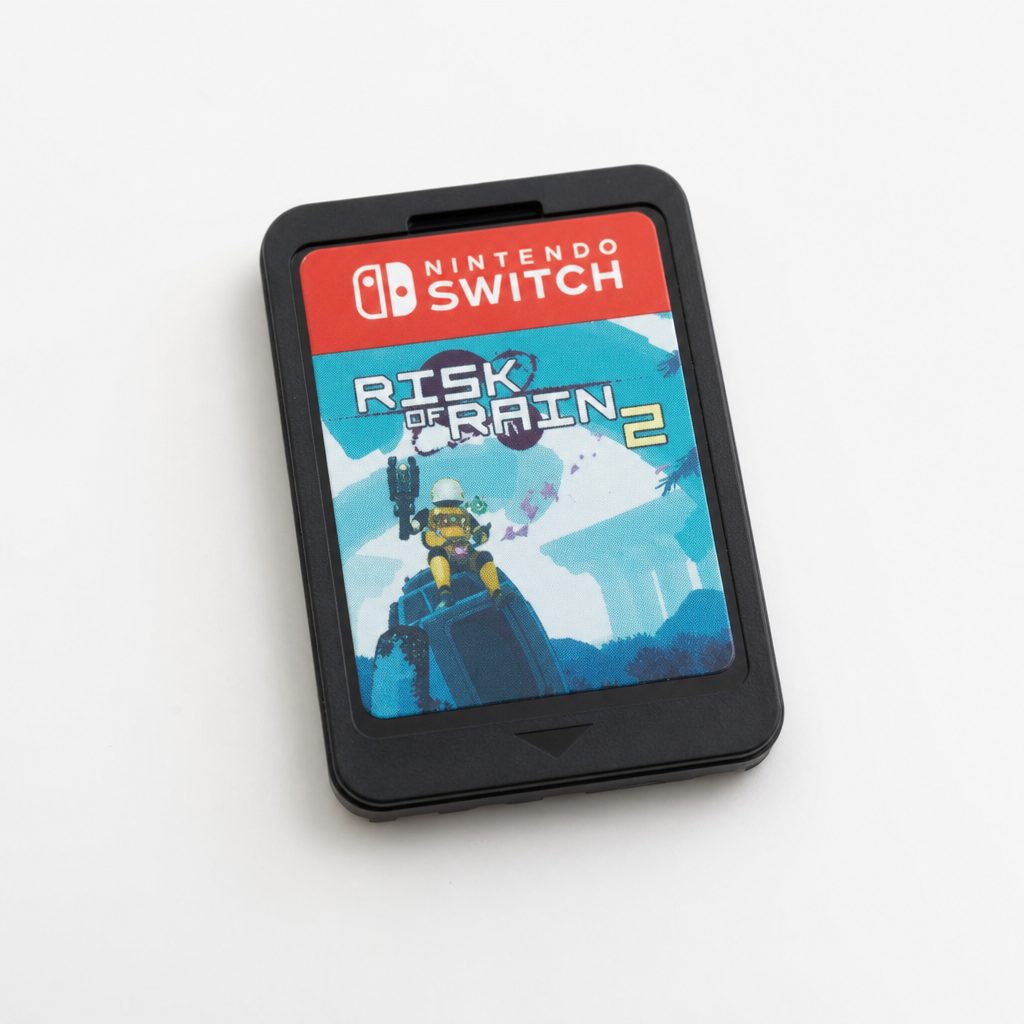
Risk of Rain 2 is the pick for players who want their carefully assembled run to become a joyful, screen-filling mess with friends.
3. Dead Cells — Best for players who want precision
Dead Cells is a superb fit if the part of Raiders you enjoyed most was getting better at the game itself. This is a roguelite where your personal improvement is always visible. Cleaner movement, better timing, smarter use of space and greater confidence with a weapon all transform a run. It never feels like you are merely waiting for the game to hand you enough upgrades to succeed.
Its action has a snappy, exacting quality that makes a well-played encounter enormously satisfying. The changing equipment and route choices ensure that repetition does not become routine, but the core pleasure is mastery. You learn how to read a room, how much risk you can take, and when your enthusiasm has temporarily exceeded your actual skill.
That focus makes it a strong choice for a player happy to meet a game halfway. It asks attention of you. In return, it gives you a very direct relationship with improvement. If a run ends badly, you usually understand why. That can sting, naturally. It is also the point.
4. Vampire Survivors — Best for low-pressure build experiments
Vampire Survivors looks deceptively simple, which is one of its cleverest tricks. It removes some of the demands of traditional action games and puts the emphasis on movement, survival and the steady accumulation of upgrades. The result is an approachable loop where the fun lies in turning a modest starting setup into something increasingly ridiculous.
For a Raiders fan, the connection is the pleasure of progression within a run. You begin with limited options. Then a choice appears, then another, and suddenly you are managing a build that behaves nothing like the one you started with. There is something very relaxing about the clear cause-and-effect of that process. Pick an upgrade, see what it changes, adjust your path. No fuss.
It is particularly good for players who want the roguelite rhythm without the pressure of highly technical aiming or complicated controls. That does not mean it is empty. The real decisions are in how you shape the run, what you prioritise and how you survive the inevitable point where the game starts looking deeply offended by your continued existence.
Pros
- Very accessible route into build-led roguelite play.
- Upgrades make each attempt visibly evolve.
- Excellent for short sessions or an easy-going evening.
Cons
- Less hands-on combat than action-first alternatives.
- Players who love precise shooting may miss direct control.
- Visual clutter is part of the experience, not a bug to be tidied away.
5. Slay the Spire — Best for strategic run planning
Slay the Spire is the recommendation for Raiders players who found themselves thinking about choices between encounters as much as the encounters themselves. It takes the roguelite structure and shifts it into a card-driven strategy game, where every addition to your deck can improve a plan, dilute it, or quietly wreck an idea that was looking rather promising.
The joy is in building something coherent from imperfect options. You do not need lightning-fast reactions; you need to recognise a useful opportunity, understand the risks ahead and avoid taking cards merely because they seem powerful in isolation. This is where Slay the Spire becomes almost comically compelling. "One more run" becomes "I only need to see whether this defensive build can survive that next encounter." It is a dangerous hobby.
Its measured pace makes it a good palate cleanser after a very hectic action game. It also has enormous replay value for people who enjoy systems. There are always fresh decisions, and rarely a completely safe one.

Slay the Spire swaps twitch reactions for map choices, card combinations and the deeply satisfying business of making a scrappy deck behave itself.
6. Enter the Gungeon — Best for shooter fans
Enter the Gungeon is the closest match here for somebody who wants a roguelite that foregrounds shooting, dodging and quick decision-making. Its rooms are built around patterns, positioning and a willingness to keep moving even when the situation has become extremely silly. The gunplay is the main event, but the changing arsenal gives every run a sense of discovery.
The game has a playful sense of humour and an enormous affection for its own absurdity, which helps it sit nearer the spirited side of the genre. That tone can make a difficult game easier to return to. You are not just entering another dungeon; you are seeing what strange tool, weapon or situation the game is going to throw at you next.
It is demanding, though. Raiders fans who want a relaxed progression loop may find its early challenge abrupt. Stick with it if the shooting clicks. The satisfaction of weaving through a crowded room without panicking is hard to beat, and the variety means that repetition rarely feels flat.
7. Cult of the Lamb — Best for players who want a bigger routine
Cult of the Lamb is a slightly different branch of the family tree. Its runs are important, but they sit alongside a broader management loop. You venture out, gather resources and make progress, then return to a base that asks for attention of its own. That structure will appeal to Raiders players who liked the ongoing sense of developing something rather than simply chasing a better score.
The central attraction is the switch in pace. One moment you are dealing with dangerous encounters and trying to keep a run alive; the next you are making decisions about your growing community. It gives the game a more domestic rhythm, if domestic is the right word for an organisation with rituals and very strong opinions about loyalty.
This is not the ideal pick for somebody who wants uninterrupted combat. The management side is a genuine part of the package. For players who enjoy tending to a longer-term project between bursts of action, however, it makes failure and success feel connected to a wider world.
Pros
- Combines run-based action with a satisfying ongoing base loop.
- Strong choice for players who like variety between expeditions.
- Its unusual tone gives it a distinctive identity.
Cons
- Management tasks will not suit everyone.
- The split focus may feel less pure than a combat-only roguelite.
- Its macabre humour will be a matter of taste for families.
8. Spelunky 2 — Best for fearless explorers
Spelunky 2 is for the player who sees a dangerous route and immediately wonders what is down there. Its runs are built around exploration, platforming, traps and consequences. Lots of consequences. It is one of the most rewarding choices for players who enjoy learning a game's rules through experience, experimentation and the occasional preventable disaster.
Unlike games that shower you with power, Spelunky 2 makes small decisions feel substantial. Do you risk a route for a reward? Do you rescue something that might complicate the next room? Do you take an obvious shortcut when the floor is covered in hazards? Every choice can produce a story, including the story where you make a sequence of perfectly reasonable decisions and still end up in a very avoidable hole.
It is not the softest landing after Raiders. It asks for patience and accepts no argument that you were "basically fine". But for determined players, it delivers one of the clearest forms of roguelite satisfaction: learning enough that a place once terrifying becomes familiar, then discovering that it still has fresh ways to surprise you.

Spelunky 2 rewards curiosity, but it also treats curiosity as a mild character flaw. That is precisely why committed explorers adore it.
At-a-glance comparison
There is no universal route through this list, so use the table as a shortcut rather than a leaderboard carved into stone. The most useful column is the "Raiders connection": it identifies the part of that run-based appeal each game carries forward most clearly.
| Rank | Game | Best suited to | Primary play feel | Raiders connection | Commitment level |
|---|---|---|---|---|---|
| 1 | Hades | Most players | Fast action and evolving builds | Rewarding repeated attempts | Easy to begin, deep to pursue |
| 2 | Risk of Rain 2 | Co-op groups | Escalating action chaos | Wild run-to-run combinations | Best shared with patient friends |
| 3 | Dead Cells | Skill-focused players | Precise platform action | Visible personal improvement | Demanding but direct |
| 4 | Vampire Survivors | Casual experimenters | Survival and upgrade selection | Rapid build evolution | Very approachable |
| 5 | Slay the Spire | Strategists | Deckbuilding and route planning | Meaningful choices between fights | Thoughtful and absorbing |
| 6 | Enter the Gungeon | Shooter fans | Dodging and weapon variety | Reactive, repeatable combat | Challenging from the outset |
| 7 | Cult of the Lamb | Players who like variety | Action plus management | Progress beyond each expedition | Broader, less combat-only |
| 8 | Spelunky 2 | Explorers | Platforming and risk assessment | Learning through each attempt | High patience required |

Choosing a roguelite is less about finding the biggest pile of upgrades and more about choosing the kind of decisions you enjoy making under pressure.
Which game matches your Raiders habit?
There are a few reliable ways to narrow the field. First, think about the reason you restarted after a failed Raiders run. If you immediately wanted to prove you could do better, Dead Cells and Spelunky 2 are compelling. If you wanted to see what odd combination might happen next, Hades, Risk of Rain 2 and Vampire Survivors are stronger fits. If you enjoyed deciding what to prioritise, Slay the Spire offers the richest tactical food for thought.
Want an easy recommendation?
Start with Hades. It balances accessibility, action and a satisfying sense that each attempt matters.
Want something social?
Choose Risk of Rain 2 if shared runs, frantic recoveries and group decisions are the main attraction.
Want to think more?
Try Slay the Spire. It rewards careful planning without requiring quick reflexes.
Want a gentler start?
Vampire Survivors makes the upgrade loop easy to understand and immediately enjoyable.
Best-for awards: the quick answer
If you have reached this point with several tabs open and the faint look of somebody trying to organise a school trip, here is the short version. These are the strongest matches for common kinds of player.
Best all-rounder: Hades
Choose this if you want action, personality and run-based progression in one very approachable package.
Best for co-op: Risk of Rain 2
Choose this for a group that wants every successful run to feel like a shared rescue mission.
Best for a simple start: Vampire Survivors
Choose this if you want the build-making satisfaction without committing to demanding controls from the first minute.
Best for Raiders-style run momentum: Hades
Its mix of changing boons, responsive combat and purposeful repeat attempts makes it the clearest next stop.
Best for strategy: Slay the Spire
Choose this when the choices around the action interest you as much as the action itself.
Best for mastery: Dead Cells
Choose this if you want every improved dodge, route and weapon choice to feel properly earned.
What makes a roguelite worth sticking with?
In my experience, longevity in this genre comes from clarity. The game does not need to explain every possibility immediately, but it should make you understand why an attempt succeeded or failed. When you can connect a loss to a choice, a missed dodge, an untested strategy or a risky route, the next run feels inviting. When a loss feels completely opaque, the "one more go" spell breaks rather quickly.
Variety matters too, but it needs shape. A game can have a mountain of upgrades and still feel repetitive if the choices do not meaningfully alter how you play. The strongest picks in this list let you recognise a run's personality. Perhaps this was the run where you relied on mobility. Perhaps it was the run where an unlikely card combination carried the day. Perhaps it was the run where the entire team agreed never to take that route again. Until the next time, obviously.
Do not judge too early
Roguelites often become more enjoyable once you have seen a few different run shapes. Give a promising game enough time to show you its choices, rather than deciding after one unlucky attempt that the genre has personally wronged you.

The real prize in a roguelite is not simply a win. It is the moment you understand why your strange, improvised build is suddenly working.
FAQ: Roguelite games after Splatoon Raiders

The right post-Raiders game is the one that makes failure feel like information, success feel earned and the next run feel impossible to resist.
The bottom line
Hades is our best overall pick for players who loved Splatoon Raiders. It understands the core attraction of a great roguelite: every run should feel exciting on its own, whilst also feeding a larger sense of progress.
Choose Risk of Rain 2 for co-op escalation, Dead Cells for hard-earned action mastery, Vampire Survivors for relaxed build experimentation and Slay the Spire for thoughtful tactical runs. The genre is far broader than it first appears. The good news is that whatever part of Raiders hooked you, there is another wonderfully moreish rabbit hole waiting nearby.