
How to Choose the Right LEGO Set by Age and Interest
Piece counts, age ratings, licensed themes and the classic gift-giving pitfalls — a plain-English walkthrough to help you buy a LEGO set that actually gets built, loved and kept. No jargon, no guesswork.
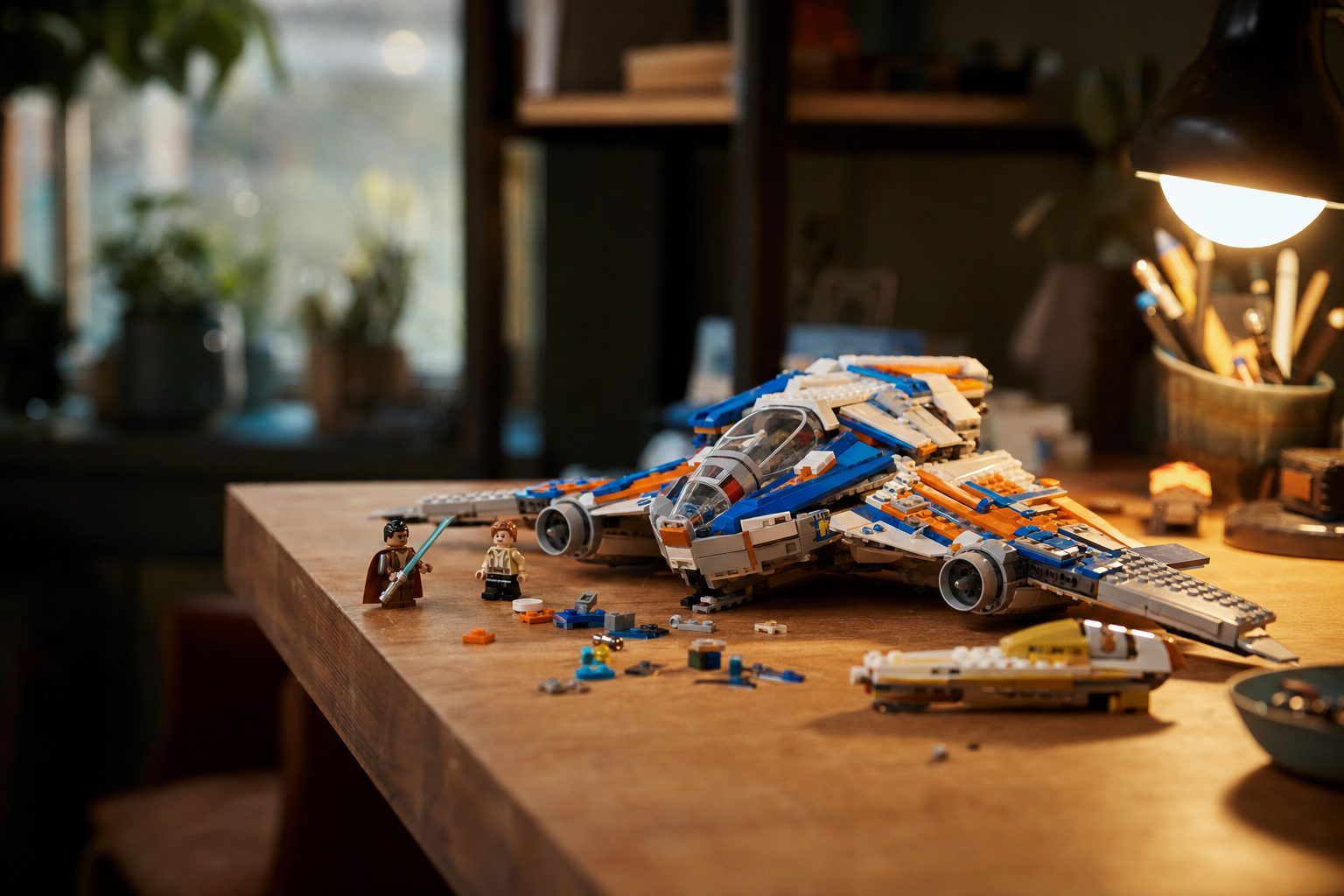
Matching the right LEGO set to a child's age and interests is the single biggest factor in whether it gets built and loved — or abandoned half-finished.
Standing in a toy aisle — or scrolling endlessly through an online shop — staring at hundreds of LEGO boxes is genuinely overwhelming. There are numbers on the front (some say "6+", some say "18+"), there are wildly different piece counts, there are franchises you half-recognise and franchises you've never heard of, and the prices swing from pocket-money to properly eye-watering. If you've ever bought a set that ended up frustrating a child to tears, or been given "the look" by a teenager who found their gift far too babyish, you already know that choosing LEGO well is a skill.
The good news is that it's a learnable skill, and once you understand what those box numbers actually mean, how piece counts map to real difficulty, and how to weigh a child's interests against their age, you'll never buy blind again. I'll walk you through the whole thing the way I'd explain it to a friend over a coffee — step by step, honestly, and with all the little traps flagged so you can dodge them.
The Quick Reference: What the Box Numbers Really Mean
Before we go deep, here's the at-a-glance version. LEGO organises virtually everything it makes around an age recommendation printed on the front of the box, and there are sets available for almost every age group, starting at around 18 months old. Those numbers aren't marketing fluff — they're a genuinely useful shorthand for build complexity, piece size and the kind of dexterity a set demands.
Notice that these overlap and shade into each other — there's no hard wall between a 6+ and a 9+ set. That's deliberate, and it's exactly why interests matter as much as birthdays, which we'll get to. But the age tier is your anchor point. Get roughly the right tier and you're most of the way to a set that fits.
The age on the box is a guide to building difficulty and safety, not a strict rule about who's "allowed" to play. A confident builder can happily punch above their age band, and a set that's too far below can feel insultingly easy. Treat the number as a starting suggestion, not a verdict.
Step 1: Understand the Age Tiers From the Ground Up
Let's properly unpack each tier, because knowing what changes as you climb the ladder is the foundation of every good LEGO decision. The jump from one band to the next isn't just "more pieces" — it's a change in piece size, building technique, instruction complexity and expected patience.
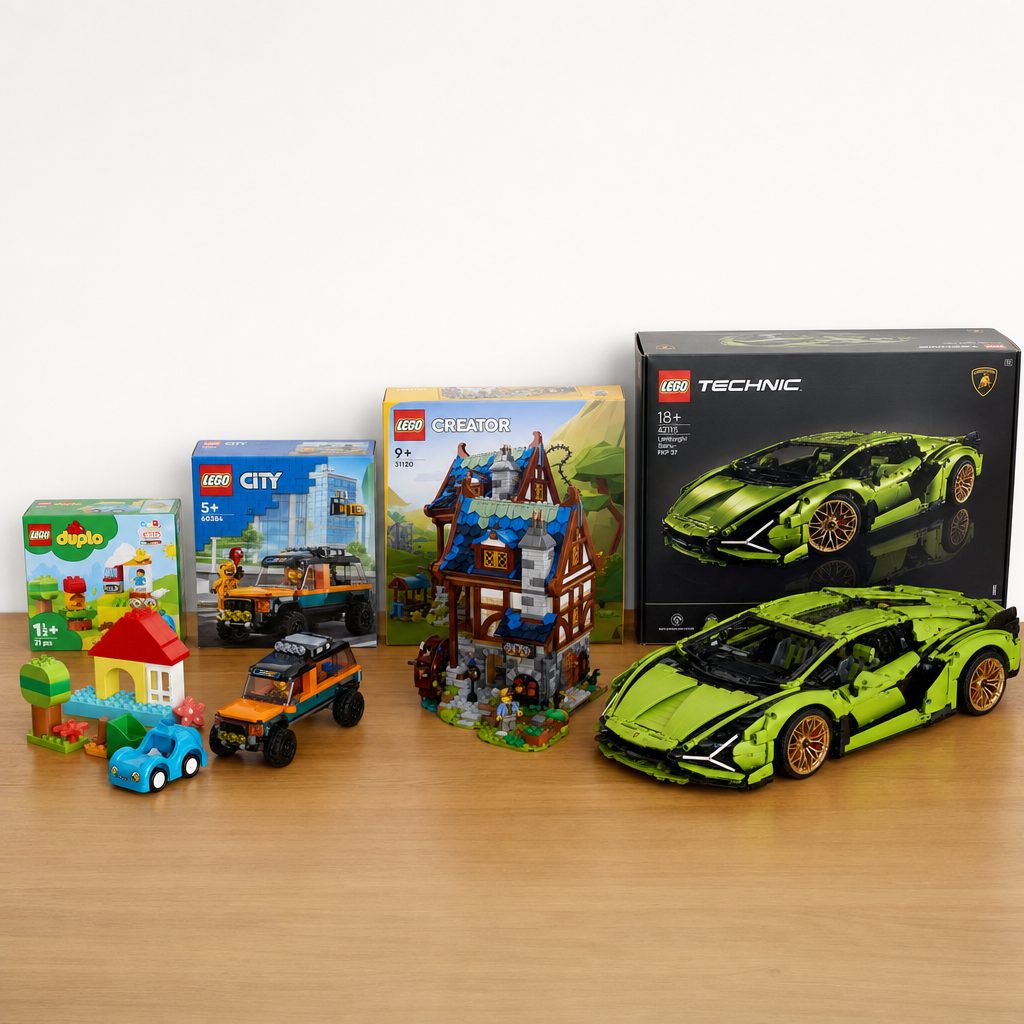
From chunky DUPLO bricks for toddlers up to intricate expert display models, LEGO's age tiers describe a genuine progression in complexity and piece size.
DUPLO (Ages 1.5–5)
LEGO DUPLO is designed specifically for the youngest builders, roughly ages one to five. The defining feature is scale: DUPLO pieces are twice the size of regular LEGO bricks, which makes them far easier for small, still-developing hands to grip, place and pull apart. That larger size is also the whole point from a safety perspective — bigger bricks are much harder to swallow.
DUPLO sets lean into recognisable, chunky subjects: farm animals, trains, vehicles, houses, simple figures. The builds are quick, forgiving and hugely repeatable — a toddler will demolish and rebuild the same little train dozens of times, and that's exactly what you want at this stage. Don't overthink it here; pick a subject the child already lights up about.
4+ / Juniors (Ages 4–7)
This is the crucial bridge tier. The old "LEGO Juniors" line was discontinued back in 2018, and its role was folded into sets now labelled "4+". These are aimed at children between four and seven with big imaginations and a love of storytelling, and they're brilliant for building confidence and creative thinking.
The key thing that changes at 4+ is that the DUPLO-sized bricks are replaced with standard-size LEGO bricks — but the builds are engineered to be simple, with larger sub-assemblies, chunky base plates and pre-built elements that reduce fiddliness. So a child gets the "grown-up" LEGO look and feel without being thrown in at the deep end. Confidence is the whole design goal.
6–8 Years: The Elementary Sweet Spot
This is where LEGO really opens up. Sets in the 6–8 band typically have 200 to 500 pieces, introduce more varied building techniques, and take somewhere between 30 and 60 minutes to complete. A child at this stage can follow a proper instruction booklet largely on their own, which is a huge milestone for their sense of achievement.
Many of the enormously popular LEGO Ninjago sets sit around this age range. Ninjago's ninja theme was introduced in 2011 and went on to become one of LEGO's longest-running and most successful lines — with a whole animated universe behind it, it's a reliable win for kids who love action and characters.
9–12 Years: Where It Gets Genuinely Interesting
This is the band where, in my experience, LEGO stops being a toy and starts being a hobby. Sets have 500 to 1,500+ pieces, combine multiple building techniques, and can take several hours to complete — sometimes across more than one sitting. The models are more detailed, the instructions are meatier, and the sense of accomplishment when it's finished is real.
This is prime territory for the big licensed sets — Star Wars, Harry Potter, Marvel, Minecraft — as well as LEGO Technic's more approachable mechanical builds. A child who's been building for a few years will thrive here, but a newcomer of the same age might find a top-end 1,500-piece set daunting, which is exactly the sort of nuance we'll dig into.
12+ and 16+/18+: Advanced and Expert
From 12+ upwards, you're into advanced building techniques, intricate detail and a level of patience that not every young person has. The 16+ and 18+ sets are a different animal again: extremely detailed models built for experienced hands, frequently designed as display pieces rather than play toys. These are the sets adults buy for themselves as much as for teenagers — think architectural landmarks and sprawling showpieces measured in thousands of pieces.
Rule of Thumb
Every step up the tier ladder roughly doubles the demand on patience and dexterity, not just the piece count. If you're unsure between two tiers for a specific child, the safer error is usually to pick the lower tier of a theme they adore rather than the higher tier of a theme they're lukewarm about.
Step 2: Decode Piece Counts (They Matter More Than You Think)
Piece count is the single most useful number on the box after the age rating, because it's a direct proxy for build time and complexity. As a general principle: the higher the count, the longer the build and the greater the complexity. But you need a feel for what the numbers actually translate to in the real world, so here's the ladder mapped out.
Under 50 pieces — Starter builds
Tiny sets, quick wins, ideal for very young builders or as impulse add-ons and stocking fillers. Built in minutes.
Under 200 pieces — 4–6 years
Larger elements, simpler builds, forgiving construction. The sweet spot for confidence-building at the younger end.
200–500 pieces — 6–8 years
Varied techniques, roughly 30–60 minutes of building, and a proper sense of "I made this myself".
500–1,500+ pieces — 9–12 years
Multiple techniques, several hours of building, sometimes spread over more than one session. A genuine project.
3,000+ pieces — Expert territory
Serious display builds demanding real time, space and patience. The largest sets soar into five figures.
To put that top end into perspective: LEGO's Eiffel Tower set runs to 10,001 pieces, and the Sagrada Família — the largest set by piece count as things stand in 2026 — comes in at 12,060 elements. These are not toys you hand a nine-year-old; they're multi-day, sometimes multi-week undertakings for dedicated adult builders.
Piece count and age don't always move in lockstep. A 4+ set might have relatively few large pieces, while a Technic model of the same physical size can pack in far more small components. Always read the age and the count together — one without the other only tells half the story.
Step 3: Match the Theme to the Child's Real Interests
Here's the bit people underrate most: interest matters every bit as much as age. You can nail the age tier and piece count perfectly and still buy a dud if the theme leaves the child cold. Conversely, a set that's a little too advanced but built around something they're obsessed with will pull them through the tricky bits on sheer enthusiasm.
When you match the set to what a child genuinely cares about, you're actively encouraging deeper, longer engagement. So before you look at a single box, ask yourself what this child is currently into. Let their obsession lead.
Animal lovers
Wildlife and farm-themed sets are a natural draw. DUPLO and City both offer strong animal-led builds.
Superhero fans
Marvel and DC collections are the obvious home. Perfect for the child who lives in a cape.
Storytellers
LEGO Friends and LEGO Minecraft let kids recreate favourite tales or invent entirely new ones.
Vehicle and city fans
LEGO City delivers general construction, emergency services, trains and everyday vehicles by the bucketload.
Franchise devotees
Harry Potter, Star Wars, Lord of the Rings and Super Mario turn a build into a piece of a world they already love.
Budding engineers
LEGO Technic focuses on mechanical function — gears, pistons, steering — for the kid who takes things apart.
Licensed vs Unlicensed: The Price Trade-Off
One thing to flag honestly: licensed sets cost more. A Star Wars or other licensed set is more expensive than an unlicensed set of similar size, because LEGO pays royalties to the franchise owner and that cost gets passed on. So a 500-piece Star Wars build will typically sit above a 500-piece City build.
That doesn't mean licensed is a rip-off — for a true superfan, the branding is precisely the value. But if a child likes building for building's sake and isn't wedded to a franchise, unlicensed lines like City, Creator, Friends and Technic give you more brick for your money. It's worth deciding which camp your recipient falls into before you spend.
Licensed sets shine when…
- The child is a genuine, vocal fan of the franchise
- You want instant "wow" recognition on unwrapping
- Character minifigures are a big part of the appeal
- It's a milestone gift where the theme carries emotional weight
Licensed sets fall short when…
- Budget is tight and you want maximum pieces per pound
- The child enjoys building itself more than any theme
- You're not certain the franchise obsession will last
- You'd rather the money went on a bigger, more involved model
LEGO Creator 3-in-1: The Value Wildcard
Worth a special mention: LEGO Creator sets are the multi-build "3-in-1" range, where the same pile of bricks can be built into three different models. For a child who loves the creative, open-ended side of LEGO — or where you genuinely can't predict their tastes — a Creator set stretches further than most, because it's effectively three toys in one box and quietly teaches kids that bricks can become anything.
Step 4: Take Safety and Small Parts Seriously
This one isn't optional, particularly for younger children. It's important to pay attention to the age recommendation, because younger children can be overwhelmed by complex sets — and, more seriously, smaller pieces can pose a choking hazard.
The single biggest safety reason those age tiers exist is small parts. Anything rated below 4+ deliberately uses larger pieces because of safety regulations around small components — which is exactly why DUPLO bricks are double-sized. And part of what defines a 4+ set is that DUPLO-sized pieces are swapped for standard bricks, so 4+ is genuinely the threshold at which small-part-sized elements start appearing.
If there's a younger sibling in the house, factor them in too. A perfectly age-appropriate 9+ set for the eldest child creates a floor full of tiny, swallowable pieces that a crawling toddler will find within minutes. Age-rate to the household, not just the recipient.
The practical takeaway is simple: never buy below the stated age rating for the youngest child likely to get their hands on the set, and treat that lower boundary as a firm line rather than a suggestion. Upward flexibility is fine; downward flexibility on the safety end is not.
Step 5: Sidestep the Classic Gift-Giving Pitfalls
Now for the traps. These are the mistakes I see people make again and again, and every one of them is avoidable once you know it's there.
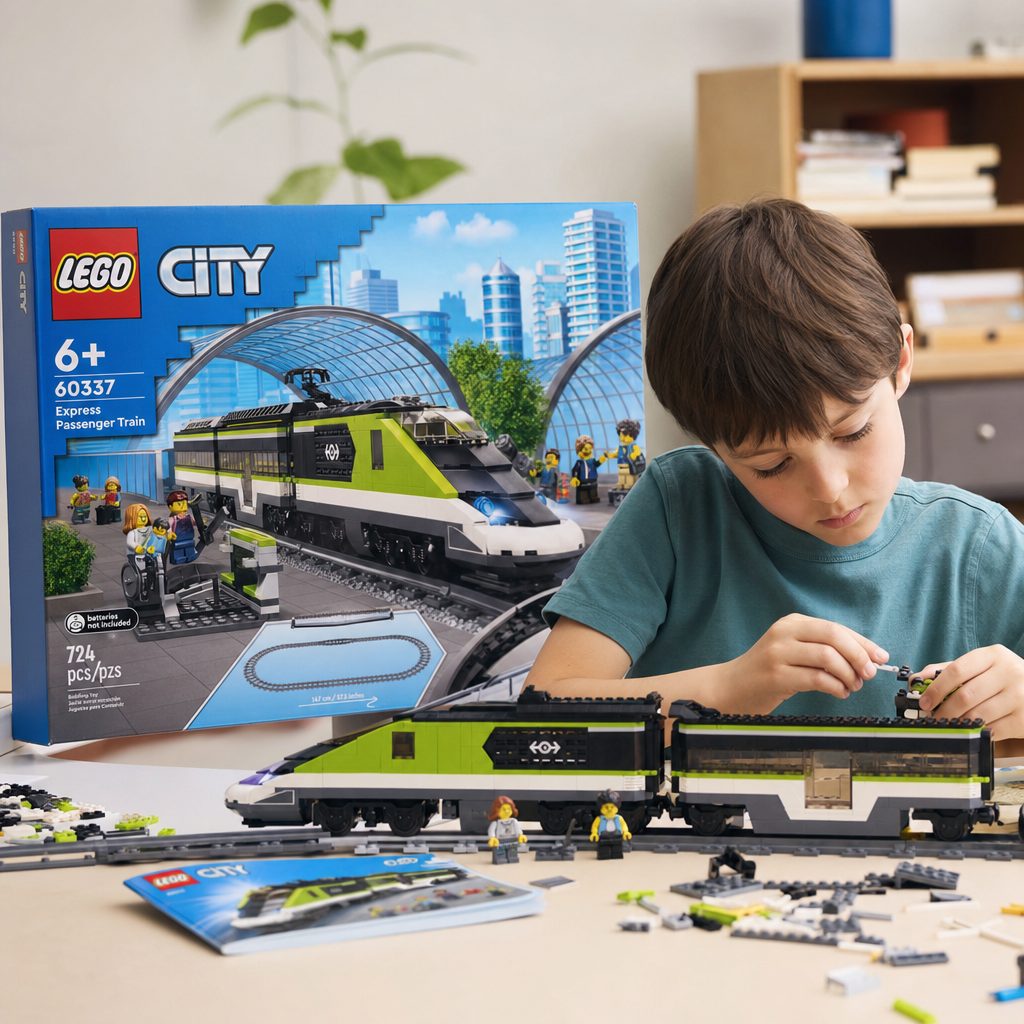
The commonest LEGO gifting mistake isn't buying the wrong theme — it's ignoring the gap between a child's actual building experience and the number printed on the box.
Pitfall 1: Ignoring Actual Experience Level
The box has no idea whether your child has built fifty sets or this is their very first. A seven-year-old who's been building since they could walk has wildly different skills from a seven-year-old opening their first-ever box — yet both share the same "7" on the packaging. Before you buy, honestly assess how much LEGO this specific child has actually done, and adjust up or down from the age rating accordingly.
Pitfall 2: Letting the Age Rating Override a Genuine Passion
Sometimes you should ignore the age number almost entirely. If you're buying a display set destined for a shelf, or a set based on a beloved franchise — a seven-year-old Star Wars superfan will happily power through a 10+ set — or if the child is neurodivergent with a deep, specific interest in building and engineering, then their motivation more than compensates for the "official" difficulty. Passion is a genuine skill multiplier.
Pitfall 3: Complexity Mismatch and Frustration
This is the Goldilocks problem. Too simple and a child gets bored quickly; too complex and frustration overshadows the fun entirely, sometimes to the point of tears and an abandoned model. The aim is a build that stretches them just enough to feel rewarding without tipping into overwhelming. When in doubt, err towards a set that plays slightly to their strengths rather than one that gambles on stretching them.
Pitfall 4: Underestimating Attention Span and Build Time
Here's a subtle one: age has surprisingly little to do with attention span. Some children adore the slow, meditative challenge of a 2,000-piece build; others want instant gratification and a finished model in twenty minutes. Neither is wrong — but if you buy a marathon build for a sprinter, it'll stall half-finished on a shelf. Think about how this particular child likes to play, not just how old they are.
The Two-Question Shortcut
Before buying, ask: (1) How much LEGO has this child actually built? and (2) Do they prefer a long, absorbing project or a quick, satisfying finish? Those two answers correct for almost every mismatch the age rating alone can cause.
Comparing the Main Age Tiers Side by Side
To pull it all together, here's how the tiers stack up across the factors that actually drive your decision. I've lined up the three bands you're most likely to be choosing between for a child, so you can see at a glance where a given set will land.
| Factor | 4+ / Juniors (Ages 4–7) | Early Elementary (Ages 6–8) | Mid Elementary (Ages 9–12) |
|---|---|---|---|
| Typical piece count | Under 200 | 200–500 | 500–1,500+ |
| Piece size | Standard bricks, larger sub-assemblies | Standard bricks, more small parts | Standard bricks, many small parts |
| Approx. build time | Minutes to half an hour | 30–60 minutes | Several hours, sometimes multi-session |
| Building techniques | Simple, confidence-focused | More varied | Multiple, more advanced |
| Best for | Newer, younger builders and storytellers | Independent elementary builders | Experienced builders wanting a project |
| Popular themes | City, Friends, licensed juniors | Ninjago, City, Friends, Minecraft | Star Wars, Harry Potter, Marvel, Technic |
Read across a row to sanity-check your choice. If you're eyeing a 9–12 set for a six-year-old newcomer, the "several hours, multi-session" build time and abundance of small parts should give you pause. If you're eyeing a 4+ set for an experienced nine-year-old, the "minutes to half an hour" build time tells you they'll likely find it too slight.
Choosing by Recipient: Who Should Buy What
Everyone's shopping situation is a little different, so here's a quick sort by who you're buying for. Find the card that matches you.
The Toddler's Grown-Up
Stick firmly to DUPLO for the 1.5–5 crowd. Choose a subject they already adore — animals, trains, vehicles — and don't worry about piece count. Repeatable, chunky, safe.
The First-Timer's Gifter
For a child new to LEGO regardless of age, drop a tier below their years. A 4+ or lower-count 6+ set builds confidence fast without frustration.
The Superfan's Buyer
Let the franchise lead and flex the age up. A devoted fan will power through a set rated above their years on enthusiasm alone. Marvel, DC, Star Wars, Harry Potter deliver instant delight.
The Budding Engineer's Sponsor
Head straight for LEGO Technic. Its mechanical focus — gears, steering, working functions — is catnip for kids who love how things work.
The Adult Treating Themselves
The 18+ display sets are made for you. Landmark builds like the 10,001-piece Eiffel Tower or 12,060-element Sagrada Família are absorbing, showpiece projects.
The "I've No Idea What They Like" Buyer
A Creator 3-in-1 set is your safest bet — three models from one box hedges against unknown tastes and rewards open-ended play.
Pricing and Where to Buy
LEGO pricing swings enormously — from pocket-money starter sets under fifty pieces right up to the four-figure territory of the biggest expert display models — and it shifts with retailer, season and any bundle deals running at the time. The one reliable rule is that licensed sets carry a premium over unlicensed sets of comparable size, so factor that in when you're comparing options for a fixed budget.
Impulse / Stocking Filler
Quick builds and add-ons for the youngest or as small extras
The Everyday Sweet Spot
The 6–8 band — enough to feel substantial without overwhelming
The Big Project
Serious builds for experienced 9–12s and hobbyist teens
Because prices and bundles change so often, it's always worth checking the current cost of any specific set before you commit — the same box can vary noticeably between retailers and across the year.
Check the latest price and any current bundles on Amazon before buying — LEGO deals move around a lot, and a set that looked pricey one week can appear in an offer the next.
Frequently Asked Questions
The Bottom Line
Choosing the right LEGO set comes down to four honest questions asked in the right order. First, what age tier fits — from DUPLO's double-sized bricks for toddlers up through 4+, the 200–500-piece elementary sweet spot, the 500–1,500-piece projects for nine-to-twelves, and the intricate 18+ display models. Second, what does the piece count mean for build time and complexity. Third, and just as important, what does this child genuinely love — because a theme they adore will carry them through a build that's a shade too hard, whilst a mismatch leaves even a perfect-difficulty set gathering dust.
Fourth and finally, correct for the things the box can't know: their actual building experience, their appetite for a long project versus a quick win, and the safety reality of small parts around younger siblings. Nail those four and you'll never hand over a frustrating, ignored or unsafe set again. The age number is your anchor — but a child's passion, experience and play style are what turn a good guess into the perfect gift.
LEGO's enormous range is a blessing once you know how to read it. Start with the age tier, sanity-check the piece count against the child's patience, lead with what they love, and respect the safety floor. Do that and you'll consistently pick sets that get opened with genuine excitement and built right through to the last brick — which, in the end, is the only test that matters.