LEGO Pokémon SMART Play: How the Interactive Smart Bricks Actually Work
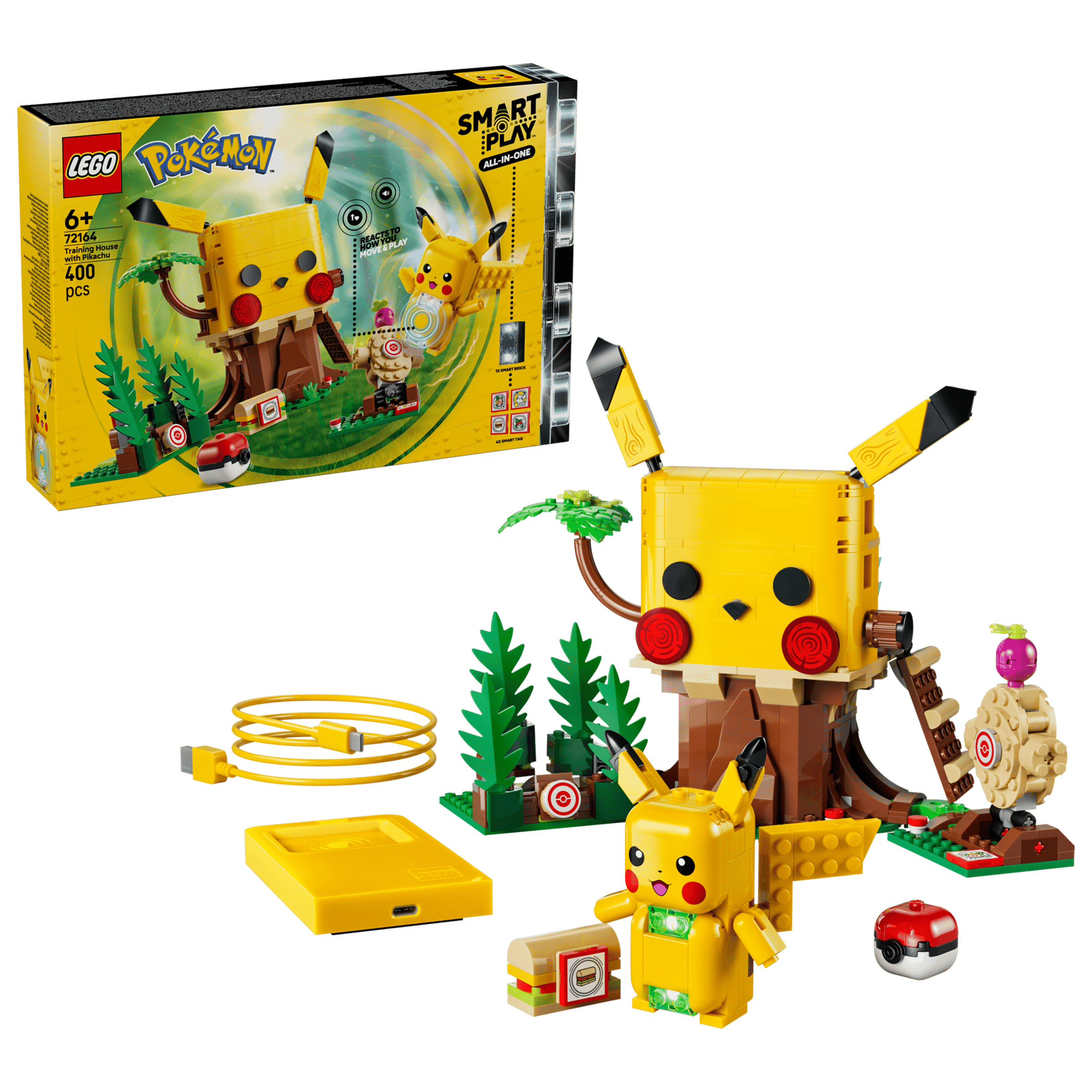
LEGO Pokémon SMART Play's central idea is not simply a glowing brick: the SMART Brick moves between builds and turns physical play into a small, hands-on Pokémon battle system.
The pre-launch chatter promised Pokémon LEGO sets that could hear, move, light up and apparently take a hit from a tiny plastic potion. The 1 August 2026 launch has now happened, so this is the useful bit: separating the early rumours from what the SMART Brick system actually does, which sets include it, and where the cleverness still has some very human-sized limits.
The rumour round-up that became a real product
There are toy rumours, and then there are toy rumours that make parents quietly reach for a calendar. LEGO Pokémon had been an obvious dream collaboration for years. Add the suggestion of a new interactive brick, however, and the conversation became much more interesting. The early claims described a system called SMART Play, built around electronics that could be placed inside Pokémon figures and scenery, recognise accessories, respond to movement and connect with other bricks. It sounded either brilliant or like the sort of thing that would require a degree in tiny wizardry before breakfast.
As of Saturday 15 August 2026, the important date is no longer a whisper on a fan forum: LEGO Pokémon SMART Play launched on 1 August 2026. That means the original "ahead of the drop" speculation has had to meet the slightly less glamorous business of actual pieces, actual charging, and actual children attempting a charged attack with the enthusiasm of someone who has just discovered the sofa is an arena.
The broad leak was right. SMART Play is an interactive system rather than a single novelty set, and the first range has two all-in-one sets containing SMART Bricks alongside ten compatible expansion sets. The core concept is pleasingly LEGO-ish. Rather than asking children to stare at a screen, it places the technology inside the build and has them trigger actions by moving Pokémon, presenting tags, changing the scene and physically staging a battle. The electronics are there to react to play, not replace it.
The date correction matters: reports ahead of 1 August naturally treated SMART Play as an unreleased prospect. That launch date passed two weeks ago. The details below distinguish the early claims from the features and launch-set contents that were established once the range arrived.
It is also worth keeping the scale in perspective. This is not a full video game hidden in a brick, and it does not turn every LEGO model into an independently animated robot. The SMART Brick is a compact reactive module with sensors, lights, sound and wireless communication. Its job is to give a child's pretend battle a response: health colours change, a Pokémon reacts, a tagged object triggers an effect, and another connected brick can recognise that something happened nearby. That is more grounded than the wildest pre-release guesses. It is still rather clever.
SMART Brick at a glance
The first concrete detail that cut through the speculation was the brick itself. LEGO had already released SMART Bricks on 1 March 2026, before the Pokémon range used them as a full play system. The Pokémon sets therefore build on an existing platform rather than debuting an entirely unknown electronic format. That is reassuring for anyone who has been burned by a toy that felt wonderfully futuristic for one Christmas and mysteriously unsupported by Easter.
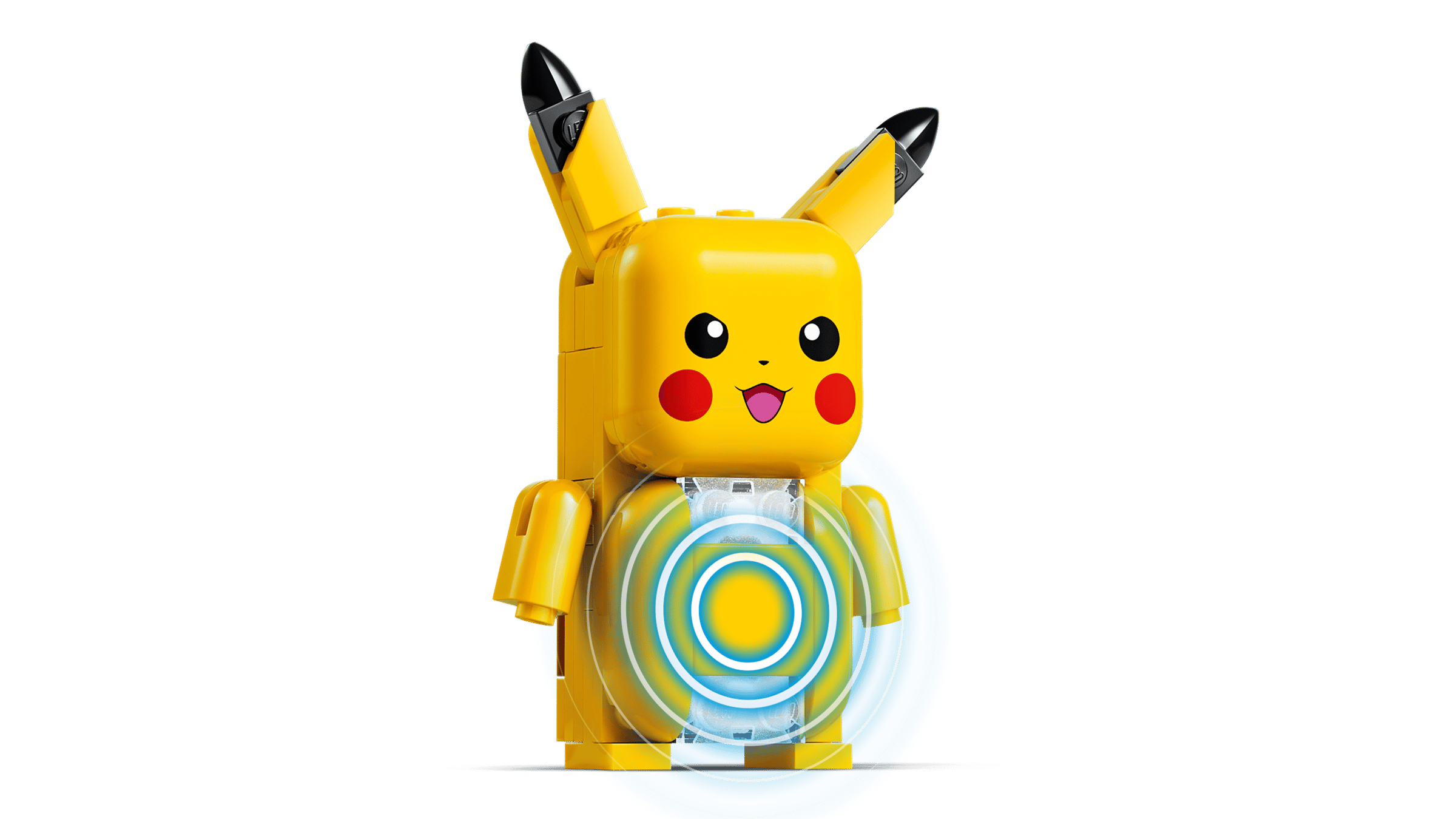
At five plates high, the SMART Brick is taller than a standard three-plate LEGO brick, which measures 9.6mm. That extra height is not merely an awkward lump in a build; it is the room needed for the chip, speaker, LEDs and sensor hardware. The practical consequence is that the Pokémon models have dedicated spaces for it. You are not expected to wedge it into an ordinary wall, wonder why a Pikachu now has a suspiciously rectangular back, and hope for the best.
Inside sits a 4.1mm custom ASIC chip, smaller than a single LEGO stud, plus an accelerometer, microphones, LED array, miniature speaker and magnetic-field sensors. The system also uses light and sound sensing. It is a remarkably dense list for something that has to survive being handled by six-year-olds, transported under cushions and occasionally subjected to whatever counts as a "special move" in your household.
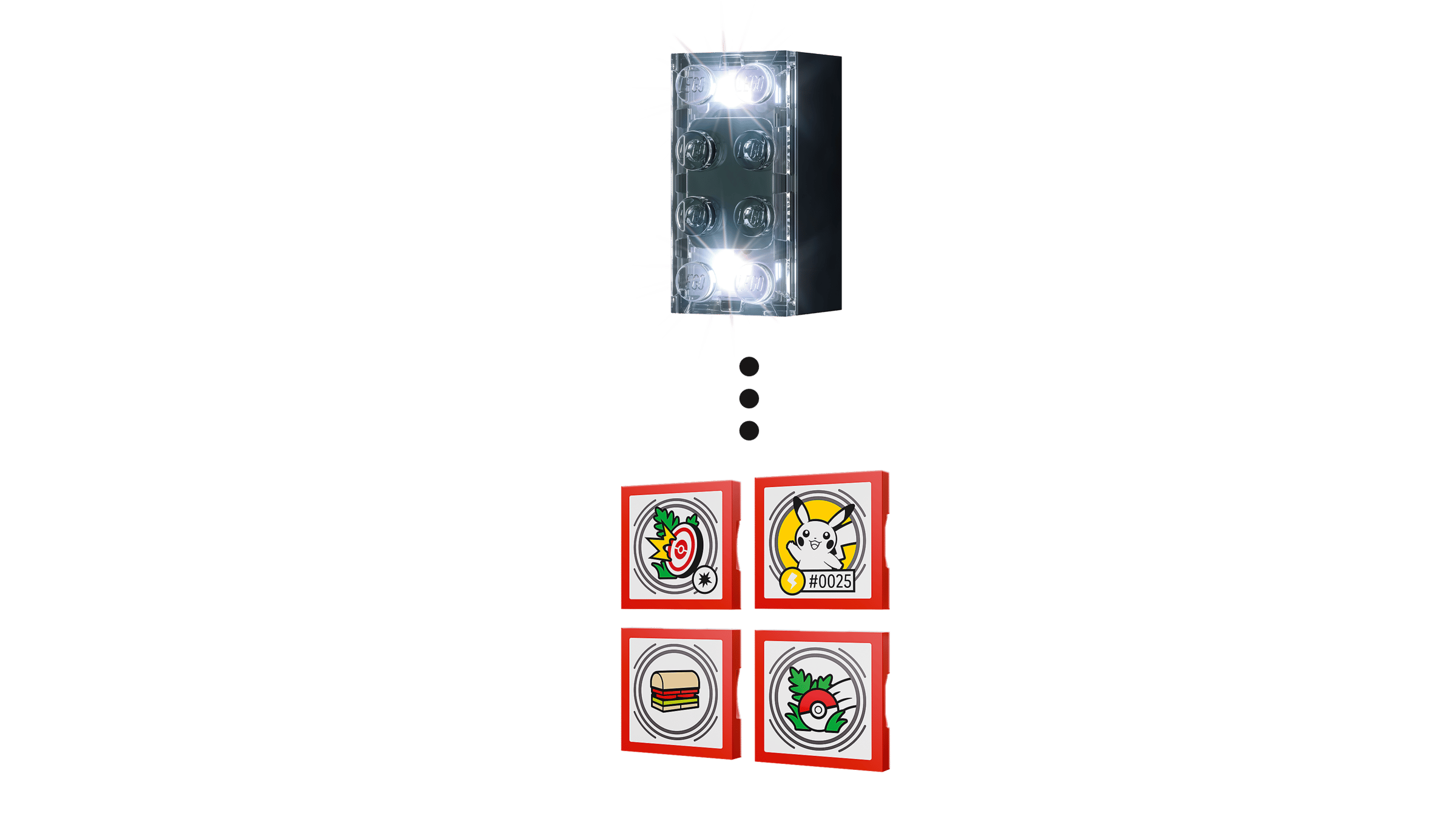
The SMART Brick is taller than an ordinary LEGO brick because it houses the sensors, speaker, LEDs and wireless technology that make the Pokémon builds respond.
What the early SMART Play leaks got right
The clearest early claim was that SMART Bricks would be modular rather than permanently married to one model. That turned out to be the heart of the range. Two launch sets included the bricks and chargers needed to begin, whilst the other sets were designed to work with a SMART Brick already owned. It gives the line a proper system-led structure: a child might start by training Pikachu, then move the brick into a different Pokémon build and bring that figure into another scene.
Reports also suggested that movement would matter. Again, correct. Battle actions are not chosen from a menu or pressed via a tiny button. A sharp forward motion represents a quick attack. Moving away from an opponent creates a dodge. Waggling at a distance and then moving inward performs a charged attack. It is intentionally theatrical. You do the move, and the brick interprets the move. For Pokémon, a franchise built on children shouting attack names at increasingly dramatic volumes, this is not a bad fit at all.
The tag claim also survived contact with reality. SMART Tags use Near Field Communication, commonly shortened to NFC, so the brick can identify tagged accessories and characters. The Pokémon system can recognise red, green and blue, too. Colours, tagged objects, sound and movement become the physical vocabulary of the game. You are not just holding a toy near another toy and begging it to understand the emotional stakes. There is a defined way for the system to know what is happening.
The clever bit is the physical language
SMART Play does not ask children to memorise a digital control scheme. A lunge becomes an attack, a retreat becomes a dodge, and a tagged healing item restores health. The rules are simple enough to understand by doing, which is exactly where a good LEGO play feature ought to live.
Some pre-launch discussion inevitably ran ahead of the evidence. There was plenty of assumption about elaborate character voices, deep app-first campaigns and a huge roster of exclusive digital effects. The actual system is more modest and, honestly, more plausible. It provides responsive sounds, lights, motion-based battle recognition and connected play. That is substantial without promising a console-quality Pokémon adventure from a brick that is 16mm tall. Expectations are useful things. They stop disappointment arriving dressed as a surprise.
How BrickNet links a LEGO Pokémon battle
BrickNet is the Bluetooth-based networking protocol behind multiple SMART Bricks recognising one another and operating together. This is the feature that makes the larger battle set more than two separate electronic figures shouting into the void. Where two SMART Bricks are in use, they can take part in the same battle exchange, with each Pokémon responding as the other acts.
That distinction is important. A single interactive figure can be entertaining, particularly for younger children, but two linked figures create a shared activity. One child can control Charizard and another Jolteon. One can attack, the other can dodge, and both can react to the effects of the encounter. It turns the basic question from "what noise does mine make?" into "did I actually land that?" There will, naturally, be negotiations. Pokémon battles have rules. Children have interpretations of rules. Both are powerful forces.
Motion-led attacks
A sharp forward movement registers as a quick attack, so battle input starts with the child rather than a screen prompt.
Dodge recognition
Moving a Pokémon away from its opponent triggers a dodge action, giving defensive play a physical gesture of its own.
Charged attacks
Waggling at a distance before moving in signals a larger charged hit. It is a small bit of performance, and that is the point.
Visible health state
The SMART Brick changes light colour to indicate Pokémon health, then responds when a potion is held close.
NFC accessory recognition
SMART Tags allow objects and SMART Minifigures to trigger relevant responses without requiring a separate controller.
Connected Pokémon
BrickNet lets multiple bricks recognise each other, which is what gives two-Pokémon battles their shared reaction layer.
Bluetooth can make some adults instantly imagine account setup, pairing failures and the sentence "it worked yesterday" arriving before 8am. SMART Play does have firmware updates through a smartphone app, but the essential interaction is built into the brick-and-tag system. That matters. The app provides the route for updates, whilst the play pattern itself remains centred on the physical model. It is not a case of building a lovely LEGO set only to discover it has become a phone accessory with a decorative plastic shell.
Two SMART Bricks can communicate through BrickNet, giving Charizard-versus-Jolteon play a shared battle response rather than two isolated sound toys.
Health, healing and the battle rules in plain English
The battle loop is one of the most understandable parts of SMART Play. Each Pokémon has three actions: quick attack, dodge and charged attack. You perform the action with the figure, the SMART Brick senses the movement, and its lights and sounds provide the feedback. As a Pokémon takes hits, the brick's light colour changes to show its health state. A healing item, held near the brick, replenishes health.
The Charizard vs. Jolteon Ultimate Battle set specifically includes a SMART Tag-enhanced healing spray. Holding that close restores health during a battle. This is a nice example of LEGO and Pokémon working in the same direction. In a game, a healing item is often a menu selection. In a toy, it becomes a prop you have to pick up and use. That is not sophisticated simulation, but it does make the action legible to younger players and gives scenery a reason to exist beyond looking nice on a shelf.
It also helps avoid one of the old interactive-toy problems: electronic effects that happen randomly and become background noise. Here, the child has an understandable cause and effect. Move forwards sharply, get a quick attack. Pull away, dodge. Bring the potion close, recover. There is still room for imaginative storytelling around those actions, but the system supplies enough structure to make a battle feel like it has a beginning, middle and end.
What it does not do is replace the social side of play. It cannot settle whether a charged attack was "definitely legendary" because the person holding Charizard says so. It cannot persuade a seven-year-old that their favourite Pokémon is allowed to lose. Nor should it. SMART Play provides feedback, not a tiny authoritarian referee. It is there to make the battle feel alive, whilst the children provide the drama, tactical nonsense and extremely confident commentary.
Charging, battery life and the very real sofa problem
Any interactive toy lives or dies a little by whether it is ready when a child is. SMART Bricks charge wirelessly, and the SMART Charger can accommodate two bricks simultaneously. Charging one SMART Brick takes approximately two and a half hours, with another measurement putting it at around two hours. The difference is best read as a reminder that charging experience varies with use and conditions rather than a promise that every brick will hit exactly the same minute.
Continuous play time is approximately 45 minutes. The alternative real-world measurement reached the same result with extremely thorough use, meaning lights and sounds being used continuously. That is useful because "up to" figures can be wonderfully optimistic things. Forty-five minutes of energetic interactive play is not an all-afternoon endurance result, but it is also not a ten-minute novelty. It suits a focused battle session, a constructed story sequence, or a playdate that has a natural pause for snacks and international peace talks.
The brick enters sleep mode after three minutes of inactivity to preserve power. That is sensible, but there is one behaviour worth knowing before a birthday morning turns into a troubleshooting session. If a SMART Brick has been asleep for more than 13 hours, it needs to be placed on the charger to restore active status. In plain terms, do not hide it in a finished model for a day, expect it to wake instantly, and conclude that Pikachu has become emotionally unavailable.
For families, the best habit is very simple: charge the bricks after a longer play session rather than waiting until the next one begins. The dual-brick capacity of the charger particularly suits Charizard vs. Jolteon Ultimate Battle, which includes two SMART Bricks. It does not make the battery limitation vanish, but it makes maintaining a two-player battle setup much less fiddly.
Wireless charging is central to SMART Play ownership: the supplied charger can take two SMART Bricks at once, useful for keeping a two-Pokémon battle ready.
LEGO 72164 Training House with Pikachu: the smaller all-in-one start
Shop LEGO 72164 Training House with Pikachu on Amazon UK
LEGO 72164 Training House with Pikachu is the entry all-in-one route into SMART Play. It contains one SMART Brick, one SMART Charger, four SMART Tags and a Pikachu figure. With 400 pieces and a 6+ age recommendation, it is the more approachable foundation set in both complexity and price. The finished model measures 20cm high, 27cm wide and 11cm deep, so it is a substantial play scene without needing its own postcode.
The build's interactions show the system at its most story-led. Pikachu can train with a training dummy. A Poké Ball can hit a target and reveal Pokémon in tall grass. Feeding a Pokémon a sandwich activates responsive sounds and lights. None of that needs two connected bricks or an opponent. It is about teaching a younger builder that the model responds when they use the physical accessories as intended.
This is the set that makes most sense if the household wants to understand SMART Play before committing to the more expensive battle box. Pikachu is a friendly guide into the premise. The scenario is familiar, compact and built around small actions rather than head-to-head competition. It is also the sensible place to check whether the charging pattern and electronic response suit the child in question. Some children will happily replay a training scenario for ages. Others will immediately ask where the enormous dragon is. Both positions are defensible.
LEGO 72167 Charizard vs. Jolteon Ultimate Battle: the full BrickNet showcase
LEGO 72167 Charizard vs. Jolteon Ultimate Battle is the set that explains why BrickNet exists. It includes two SMART Bricks, four SMART Tags, one SMART Charger and Pokémon figures for Charizard and Jolteon. Charizard stands 18cm tall, whilst Jolteon reaches 12cm, and the box contains 751 pieces with an 8+ age recommendation.
Putting a SMART Brick into each Pokémon unlocks the distinct sounds and interactive responses for the battle. This is not just a larger version of the Pikachu set. It is designed around the relationship between two figures: quick attacks, dodges, charged moves, health changes and recovery through the tagged healing spray. If the Training House introduces the grammar of SMART Play, Charizard versus Jolteon is the conversation.
There is an interactive training target here as well, which helps ensure the figures have something to do outside a direct match. Still, the set's greatest strength is obvious. It arrives with the complete two-brick proposition in one place. No need to move one brick back and forth between roles, no need to explain that someone has to be the scenery today. It is a proper centrepiece, especially in a household where Pokémon battles are a shared activity rather than a solo pastime.
| Feature | LEGO 72164 Training House with Pikachu | LEGO 72167 Charizard vs. Jolteon Ultimate Battle | LEGO 72163 Mewtwo's Lab Break |
|---|---|---|---|
| SMART Bricks included | 1 | 2 | None |
| SMART Charger included | 1 | 1 | None |
| SMART Tags included | 4 | 4 | Requires separate SMART Brick |
| Pieces | 400 | 751 | Not listed here |
| Recommended age | 6+ | 8+ | Not listed here |
| UK price | £59.99 | £109.99 | £59.99 |
| Standout play role | Training and discovery | Two-Pokémon battle | Compatible expansion scene |
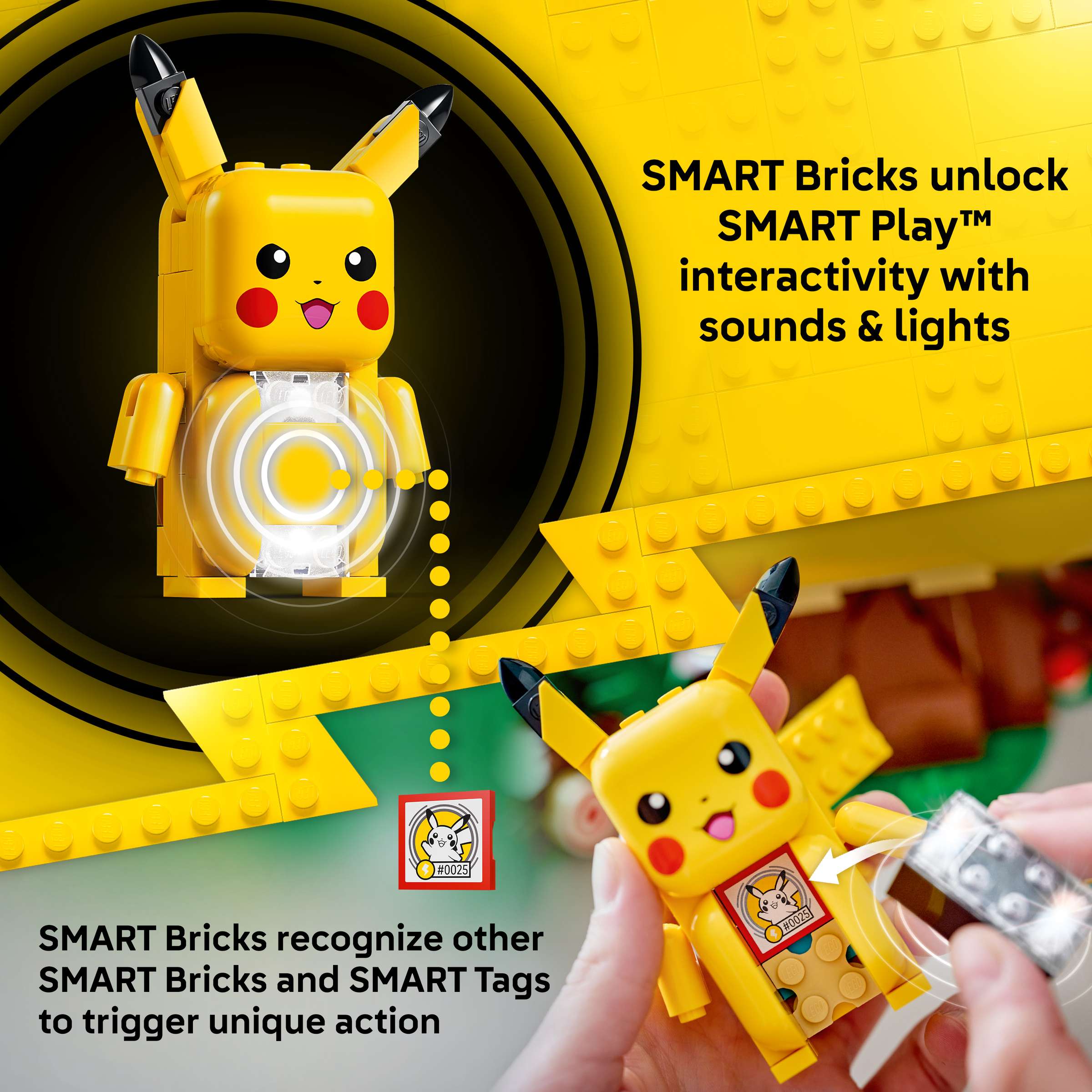
Charizard vs. Jolteon Ultimate Battle is the launch set that demonstrates the point of BrickNet, with two SMART Bricks ready for linked play.
The compatible LEGO Pokémon SMART Play sets
The two all-in-one sets are the gateway, but they are not the entire story. Ten other launch models are SMART Play compatible and require a separate SMART Brick. That wording is important. These are not dead displays without a brick; they are part of the same play ecosystem. But the interaction depends on already owning the hardware from Training House with Pikachu, Charizard vs. Jolteon Ultimate Battle, or another SMART Brick source.
The compatible group has a useful spread of themes. LEGO 72155 Berry Bash with Bulbasaur and Bidoof, LEGO 72156 Trainer's Buggy Adventure with Squirtle and LEGO 72157 Charmander and Geodude's Cavern Clash sit towards the more affordable end. LEGO 72158 Sprigatito, Fuecoco and Quaxly Battle offers a starter-focused scene, whilst LEGO 72159 Jigglypuff Concert sounds built for a child whose Pokémon stories contain more performance than punching. Entirely valid. Not every battle needs a dramatic beam attack.
Further up the range are LEGO 72161 Drone Search for Mythical Mew, LEGO 72162 Eevee and Lapras's Treasure Hunt and LEGO 72163 Mewtwo's Lab Break. Mewtwo stands 19cm tall in the Lab Break set, which gives that model genuine shelf presence as well as its role in play. Then there are the larger battle-focused LEGO 72165 Umbreon vs. Garchomp Championship Battle and LEGO 72166 Cubone and Gengar's Spooky Showdown. Gengar measures 11cm high, 12cm wide and 13cm deep in the latter.
There is also LEGO 40887 Ditto as Squirtle: Movie Night, a SMART Play-compatible gift-with-purchase set. It is a nice little reminder that the line's technology is meant to travel through themes and scenes, not simply remain in a single prescribed arena. The collecting temptation is obvious. So is the sensible advice: begin with one all-in-one set, see what kind of Pokémon stories actually happen on your floor, then choose compatible expansions that support those stories.
UK prices and what each launch tier means
Prices make the range's structure unusually clear. The all-in-one sets cost more because they include the electronic hardware and charger. The compatible sets can be much cheaper because they assume the SMART Brick already exists in the home. That is good for gradual collecting, but it also means a £12.99 set and a £12.99 complete interactive experience are not the same thing. The distinction needs to be made before wrapping paper enters the equation.
LEGO 72159 Jigglypuff Concert
Compatible set requiring a separate SMART Brick.
LEGO 72155 Berry Bash with Bulbasaur and Bidoof
Compatible set requiring a separate SMART Brick.
LEGO 72156 Trainer's Buggy Adventure with Squirtle
Compatible set requiring a separate SMART Brick.
LEGO 72158 Sprigatito, Fuecoco and Quaxly Battle
Compatible set requiring a separate SMART Brick.
LEGO 72164 Training House with Pikachu
Includes one SMART Brick, charger and four SMART Tags.
LEGO 72167 Charizard vs. Jolteon Ultimate Battle
Includes two SMART Bricks, charger and four SMART Tags.
Other confirmed UK prices include £44.99 for Drone Search for Mythical Mew, £54.99 for Eevee and Lapras's Treasure Hunt and £59.99 for Mewtwo's Lab Break. Umbreon vs. Garchomp Championship Battle carries a regular £109.99 price, whilst Cubone and Gengar's Spooky Showdown has a regular £79.99 price. Those larger compatible sets make the most sense for a family already committed to the system, because their appeal rests on the model, characters and interactive possibilities rather than included SMART hardware.
For a first SMART Play purchase, Training House with Pikachu is the straightforward lower-cost route because it supplies the necessary brick, charger and tags. Charizard vs. Jolteon is the higher-cost route, but it includes two bricks and is the only one of the two to deliver a ready-made linked battle straight from the box. There is no trick answer here. It depends whether the child primarily wants to play a Pokémon story alone or has a regular opponent who is willing to take a Jolteon defeat with dignity.
The compatible line ranges from compact character scenes to larger display-worthy models, but each requires a SMART Brick already owned elsewhere in the collection.
Best SMART Play set for each sort of Pokémon fan
There is no single "best" SMART Play box because the range is split between entry hardware, bigger battles and companion sets. A sensible pick is less about collecting every recognisable Pokémon and more about matching the set to the way it will be used. That sounds obvious. It is also the advice most likely to be ignored when Charizard is staring at you from a box.
Best starting point: LEGO 72164 Training House with Pikachu
Best for younger builders and solo play. It includes a SMART Brick, charger and four tags, then explains the system through training, discovery and feeding interactions.
Best premium pick: LEGO 72167 Charizard vs. Jolteon Ultimate Battle
Best for families wanting the full linked battle experience immediately. Two SMART Bricks allow two Pokémon to participate without sharing hardware.
Best lower-cost compatible add-on: LEGO 72159 Jigglypuff Concert
At £12.99, it is the least expensive listed compatible set for a household that already has a SMART Brick and wants to broaden its play scenes.
Best for a bigger villain display: LEGO 72163 Mewtwo's Lab Break
Best for fans drawn to Mewtwo's imposing presence. The Mewtwo figure stands 19cm tall and works as a compatible expansion for an existing system.
The limitations worth knowing before collecting
SMART Play is more imaginative than a conventional sound brick, but its electronics do impose a rhythm on play. The most obvious limitation is battery duration. Around 45 minutes of continuous play is enough for a session, but not enough to forget charging forever. If the toys are regularly used hard, charging will become part of the routine. Some families will barely notice that. Others will regard it as another small device joining the household's queue for electricity.
There is also the question of ownership structure. Most of the launch range is compatible rather than self-contained. That is not inherently bad; in fact, it lowers the cost of expanding once you own a brick. But it does mean the smaller sets work best as additions rather than standalone gifts. A child receiving only a compatible set without a SMART Brick would have the LEGO build and Pokémon figures, but not the interactive layer that defines the SMART Play branding.
The app-based firmware updates are a practical point too. The physical play does not become app-led, but updates require a smartphone app. For most families that will be manageable. For households trying to keep toys completely device-free, it is worth recognising that the system is not entirely detached from a phone. The brick itself is still the star, thankfully, but the phone is part of its longer-term maintenance.
What SMART Play gets right
- Motion-led actions make battle input intuitive and satisfyingly physical.
- BrickNet gives two-Pokémon play a genuine shared response system.
- NFC tags and colour recognition allow accessories to matter in play.
- Training House with Pikachu supplies brick, charger and tags in one 6+ set.
- The compatible range supports gradual collecting after the initial hardware purchase.
The compromises
- Continuous interactive play lasts about 45 minutes before charging is needed.
- A SMART Brick asleep for more than 13 hours needs the charger to reactivate.
- Most launch sets require a separately owned SMART Brick.
- Firmware updates use a smartphone app.
- The taller five-plate brick requires purpose-built spaces in models.
The final limitation is a creative one. SMART Play is most successful when children enjoy acting out battles and stories. A collector who wants immaculate, untouched Pokémon display models may see the brick, seams and dedicated compartments as a compromise. A child who prefers freeform building may eventually want to use the figures in ways the electronic system cannot recognise. Neither reaction means the toy has failed. It simply means this is designed as guided imaginative play, not a universal solution for every LEGO or Pokémon fan.
Privacy, microphones and the grown-up questions
The presence of microphones in a children's electronic toy understandably raises eyebrows. In this case, the microphone is used for sound detection rather than recording. The system includes enhanced encryption and privacy controls intended to protect user data. That will not stop every parent asking sensible questions, nor should it. It does, however, place SMART Play in a different category from devices designed to capture or store voice interactions.
The real lesson is that this is an interactive sensing system, not a conversational assistant. It listens for sound as one possible input alongside motion, light, colour, magnetic fields and NFC tags. It does not need a child to narrate their whole life story into Pikachu's ear to make a potion work. Frankly, Pikachu has enough on already.
BrickNet's Bluetooth basis is also part of the overall design, allowing SMART Bricks to recognise one another. The range is not built around broadcasting gameplay to strangers or forcing online competition into a child's toy box. The interaction that matters happens between the physical models in front of the child. That is a much healthier starting point than many parents might fear when they hear "Bluetooth" and "app" in the same sentence.

SMART Play's microphone is used for sound detection rather than recording, while the main play loop remains physical: movement, light, colour and tagged accessories.
Why LEGO Pokémon SMART Play feels different from an ordinary electronic toy
Traditional electronic toys often have a very short joke. Press the button, hear the sound, press the button again because the first time was funny, then gradually discover that the button has become a tiny nuisance living in the toy box. SMART Play has more staying power because its feedback sits inside an activity. The light and sound are consequences of what the child did with the figure, not merely a performance that happens on command.
That is where the LEGO element matters. Building the model gives the electronics a place and a context. The training dummy, tall grass, Poké Ball target, sandwich and healing spray are not just bits of scenery. They create reasons to interact. The system has rules, but the models create the fantasy around them. A Pikachu can be training one day, looking for a hidden Pokémon the next, and joining some entirely home-made crossover adventure after that. LEGO has always been good at providing a prompt rather than a script.
There is a sensible limit to the comparison, though. SMART Play cannot offer the immense character roster, detailed battle statistics or long-form progression of a dedicated Pokémon game. It does something different. It gives children a tactile way to perform the broad strokes of Pokémon play: choose a character, face an opponent, attack, dodge, heal and make a great deal of noise about the outcome. For the right age group, that is not a lesser version. It is its own sort of fun.
Frequently asked questions
LEGO Pokémon SMART Play launched on 1 August 2026. As of 15 August 2026, that date had passed, so the original pre-launch rumours can now be judged against the released system.
LEGO 72164 Training House with Pikachu includes one SMART Brick, one SMART Charger and four SMART Tags. LEGO 72167 Charizard vs. Jolteon Ultimate Battle includes two SMART Bricks, one SMART Charger and four SMART Tags.
The compatible sets are designed to require a separately owned SMART Brick for their SMART Play interaction. They remain LEGO builds and Pokémon scenes, but the responsive electronic play layer depends on having the brick.
A sharp forward movement is a quick attack. Moving the Pokémon away from its opponent is a dodge. Waggling it at a distance and then moving inward creates a charged attack. The SMART Brick uses its motion sensing to recognise those actions.
A SMART Brick provides approximately 45 minutes of continuous play. Charging one brick takes around two to two and a half hours, and the supplied SMART Charger can charge two SMART Bricks simultaneously.
The brick enters sleep mode after three minutes of inactivity to conserve battery life. If it remains asleep for more than 13 hours, placing it on the charger restores it to active status.
No. The microphone is used for sound detection only, not recording. SMART Play also uses movement, light, colour, magnetic fields and NFC-tagged accessories as inputs.
For a younger child or a first look at the system, LEGO 72164 Training House with Pikachu is the simplest start because it includes the SMART Brick, charger and tags at £59.99. For immediate two-player battles, LEGO 72167 Charizard vs. Jolteon Ultimate Battle is the more complete choice because it includes two SMART Bricks.
Verdict: a clever brick with the right kind of ambition
LEGO Pokémon SMART Play is not magic, and that is a compliment. The early rumours could have pointed towards an overcomplicated app toy wearing a LEGO costume. What arrived instead is a physical interaction system that understands the appeal of both brands: build a scene, move a character, use a recognisable accessory, and let the lights and sounds make your idea feel more real.
The SMART Brick's 45-minute continuous-play figure and charging routine mean it will not suit every family. Compatible sets also make far more sense after buying an all-in-one box. But the core design is strong. Training House with Pikachu is the sensible gateway, whilst Charizard vs. Jolteon Ultimate Battle is the standout for children who want their Pokémon fights to involve two people, two bricks and a great deal of serious-looking arm movement.
Most importantly, SMART Play keeps the child's hands on the toy. In an era when "interactive" too often means "please hand over the tablet", that feels like a very good evolution indeed.