Nintendo GameCube Review: The Little Purple Box That Still Wins Hearts
A quarter of a century on, is Nintendo's chunky, handle-topped cube worth adding to your collection in 2026? I've put the whole range under the microscope.
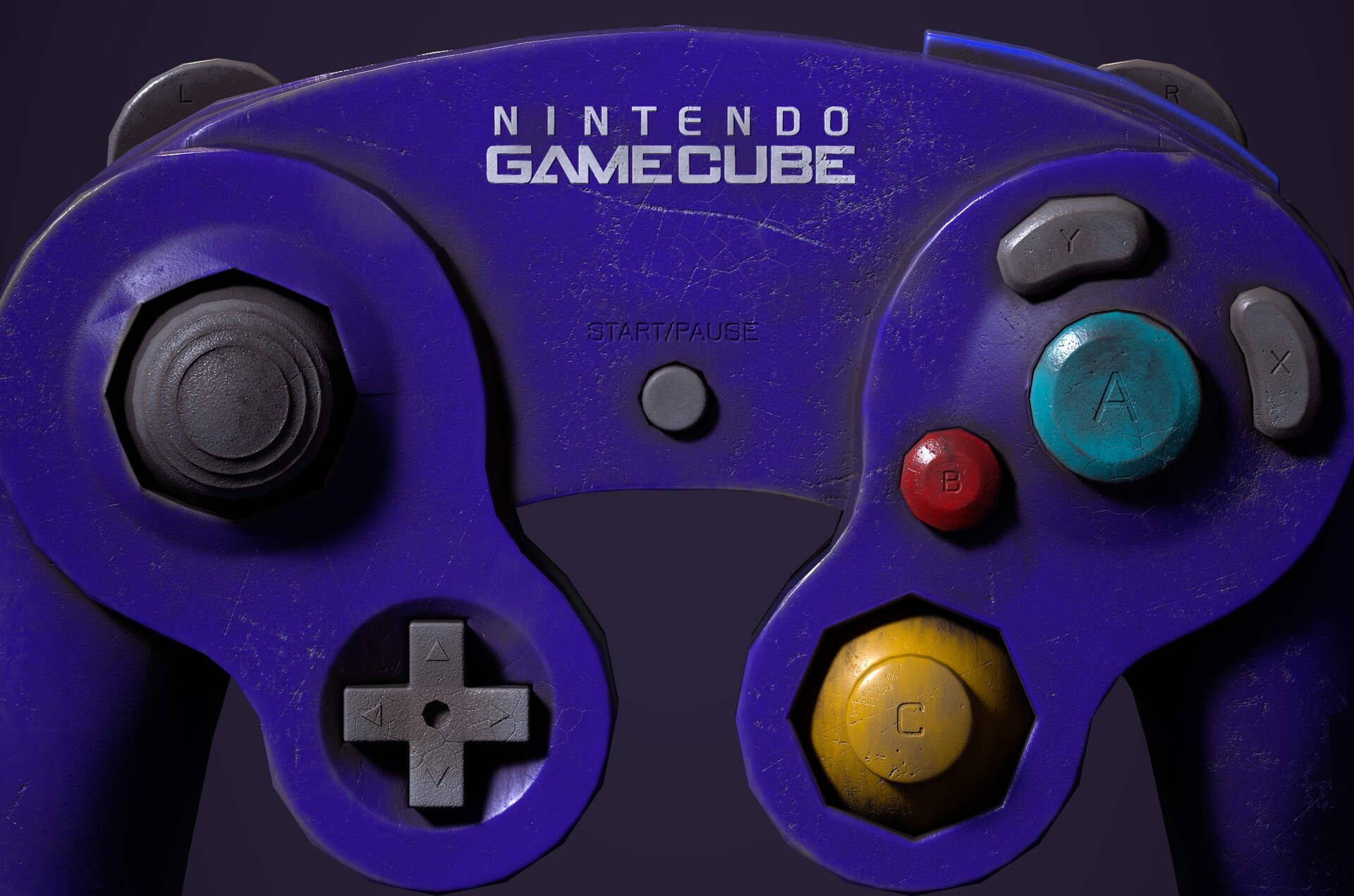
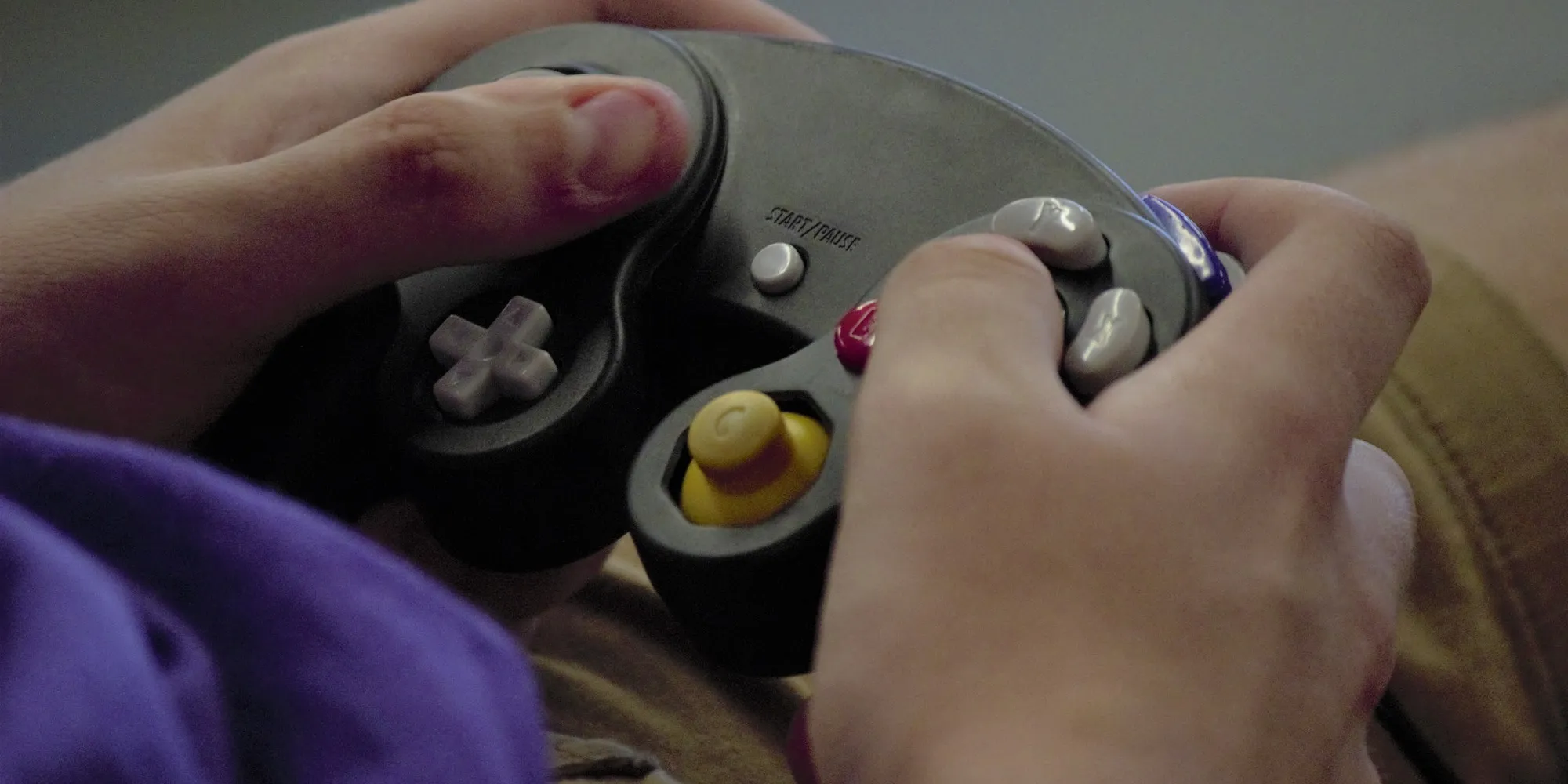
The GameCube controller's distinctive button layout — with its oversized A button — remains a fan favourite decades later.
There are few consoles as instantly recognisable as the Nintendo GameCube. That squat purple box with the little carry handle on the back has become something of a design icon, and I'll happily admit it's one of my favourite pieces of gaming hardware ever made. It arrived at a moment when Sony and Microsoft were busy chasing living-room dominance with DVD playback and hard drives, and Nintendo cheerfully went its own way — a tiny, purpose-built games machine that ran mini-DVDs and prioritised playing brilliantly over doing everything.
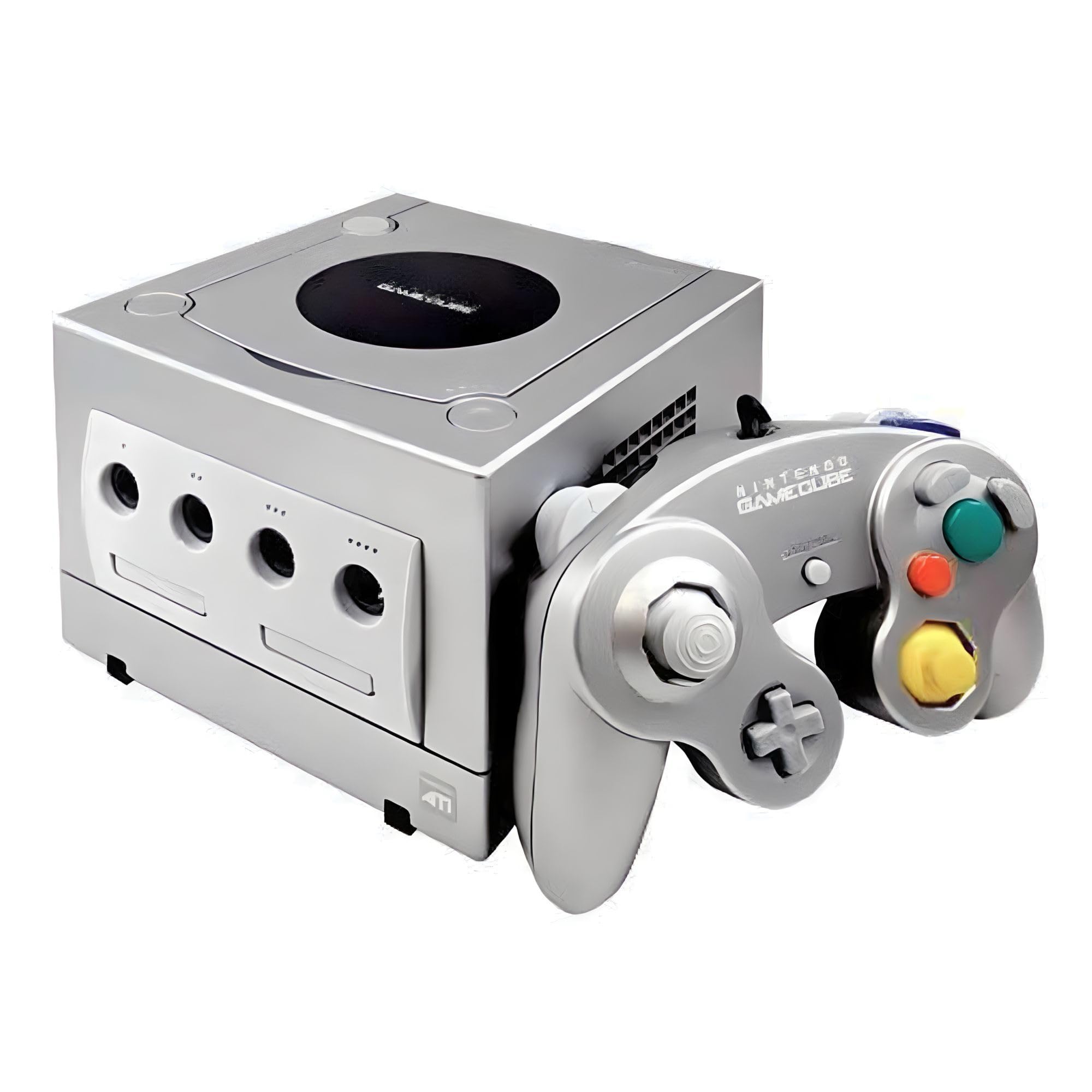
Released on 14 September 2001 in Japan and 18 November 2001 in North America, the GameCube launched at $199. It reached Europe on 3 May 2002 at €199, and Britain at £129 — a markdown of roughly 24% from the previously announced £129 figure quoted at earlier stages. That aggressive pricing made it the cheapest of the big three at launch, and in hindsight it set the tone for a console that always felt like tremendous value for what it delivered.
In this review I'll walk you through the whole range, the specifications, how it actually performs against the PlayStation 2 and original Xbox, what daily use is like in 2026, and — crucially — who should still be buying one today. Whether you're a nostalgic thirty-something, a parent introducing the kids to proper local multiplayer, or a first-time retro collector, there's plenty here to chew on.
The GameCube Range at a Glance
Whilst most people picture a single console, the GameCube actually shipped in a few meaningfully different variants, and knowing which one you're buying matters more than you might expect. The core hardware is identical across the standard models, but there are important differences in the ports.
DOL-001 (Original, 2001–2004)
This is the launch model and the one enthusiasts tend to seek out. Its trump card is the Digital AV Out port sitting alongside the standard Analog AV Multi Out. That digital port supported 480p component video through an official component cable that Nintendo produced in very limited quantities. If you care about the sharpest possible picture on a modern display via component or a digital-to-HDMI solution, the DOL-001 is the model to hunt down.
DOL-101 (Revision, mid-2004 onwards)
From May 2004, Nintendo shipped a cost-reduced revision. The internal hardware is identical, but the Digital AV Out port was removed. Crucially, the DOL-101 also cannot output 480p progressive scan at all — the 54MHz clock connection required for progressive mode simply isn't present on this board, so every DOL-101 output is interlaced. That doesn't make it a bad console by any stretch; it just means that if progressive-scan output is important to you, this isn't the one.
Panasonic Q (Japan Exclusive, 2001)
Here's the curio of the range. Released in December 2001 in Japan at approximately $439, the Panasonic Q was manufactured by Matsushita (Panasonic's parent) under licence from Nintendo. It combined full GameCube hardware with a proper full-size DVD drive in a gorgeous silver brushed-metal chassis, complete with a front LCD, Dolby Pro Logic II audio, MP3 playback and S-Video output. It plays GameCube mini-DVDs, DVD-Video and audio CDs. It's a beautiful and desirable machine, but it's rare, expensive and region-locked to Japan by default.
Colours: The GameCube launched in Indigo and Jet Black, with Platinum (silver) following in 2002. Spice Orange started out Japan-only before appearing elsewhere in limited numbers, and North America received a Platinum Pokémon XD: Gale of Darkness console in 2005 with a custom faceplate.
Design and Build Quality
Let's talk about that iconic shape. The GameCube is unapologetically a cube — a chunky, rounded plastic box with a lid that flips open to accept those endearing little mini-DVDs. On the rear sits the famous carry handle, a genuinely thoughtful touch that made the console a doddle to lug round to a friend's house. At roughly 1.4 kg without a disc or accessories, it's light enough that a child can carry it without complaint, and it takes up a fraction of the shelf space that a PS2 or original Xbox demands.
The four controller ports live on the top face of the console rather than the front, which was a slightly unusual choice but one that makes perfect sense once you've used it. All four are exposed and easy to reach, and with two memory card slots tucked beside them, everything you interact with regularly is right there on top. It's a console designed around the sofa, around four people crammed together for a Mario Kart session, and it shows.
The Carry Handle
Moulded into the rear, it turned the console into a genuinely grab-and-go machine — a rarity for its generation and still a delight today.
Four Top-Mounted Ports
Simultaneous four-player gaming straight out of the box, no adapters or hubs required. Perfect for party titles.
Dual Memory Card Slots
There's no internal storage, so saves live on removable memory cards — but two slots give you flexibility for swapping between collections.
Serial & Parallel Ports
High-speed serial and parallel ports on the underside opened the door to peripherals like the Game Boy Player and network adapters.
Build quality is genuinely excellent. These consoles were built like tanks, and it's part of the reason so many survive in working order today. The plastics are thick, the disc lid feels reassuringly solid, and the whole thing has a density to it that belies its small footprint. Twenty-five years on, a well-kept GameCube feels every bit as robust as it did new, which is more than can be said for a lot of hardware from that era.
The Controller: Nintendo's Best?
I could write an entire review just about the GameCube controller, because it might be the finest pad Nintendo has ever produced for a home console. The layout is unmistakable: an enormous, dominant green A button, a smaller red B button curled beside it, and the X and Y buttons arranged like kidneys around them. It sounds chaotic on paper, but in the hand it's astonishingly intuitive — your thumb naturally falls where it needs to be.
The analogue sticks are octagonal-gated, which gives lovely tactile feedback for precise inputs, and the analogue triggers with their satisfying click at the bottom of the pull were ahead of their time. Anyone who's played a fighting game or a Melee-era Smash Bros. will tell you the GameCube pad has a devoted following that persists to this day.
Collector's Tip
If you're serious about wireless freedom, seek out the WaveBird Wireless Controller. It was Nintendo's first proper wireless pad and remains highly sought after. Just remember it's RF-based and doesn't feature rumble, so purists sometimes keep a wired pad handy for the vibration.
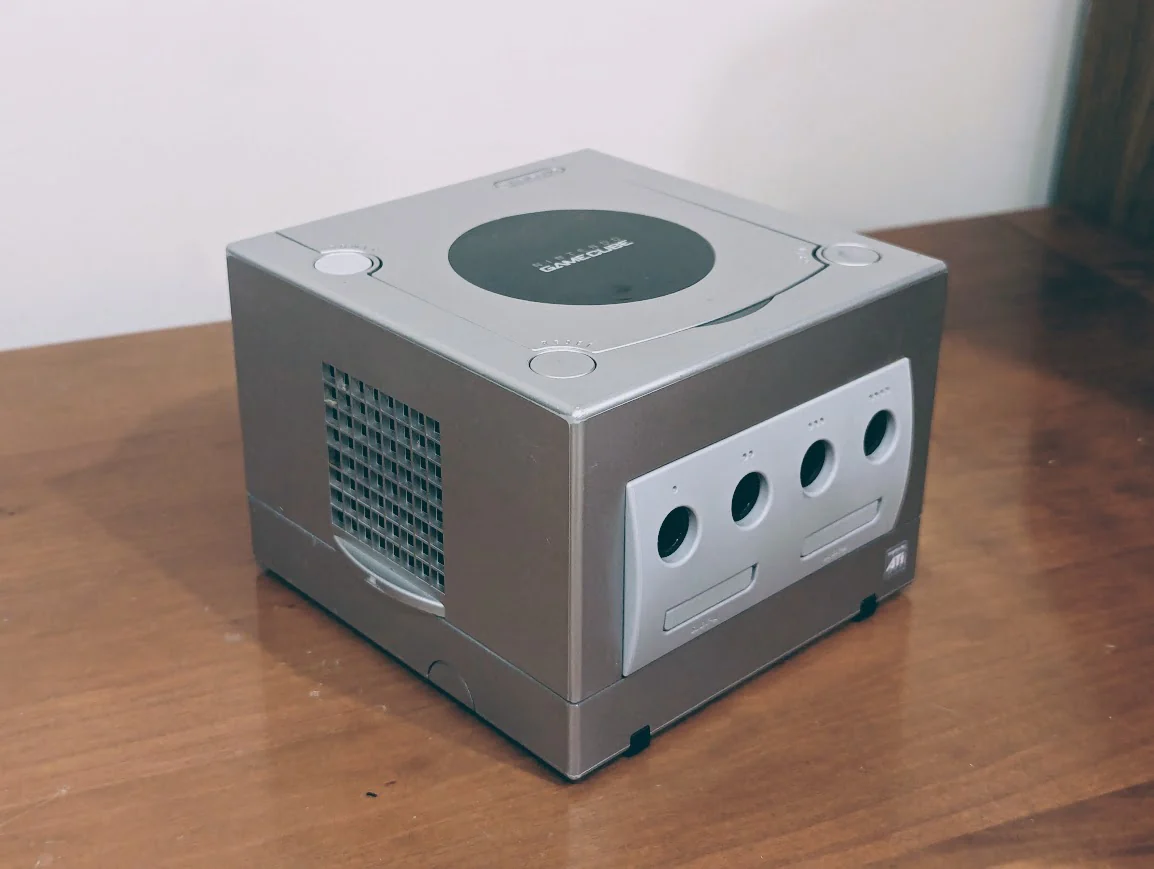
The GameCube's compact chassis weighs around 1.4 kg without a disc inserted — properly portable by console standards.
Performance: How Powerful Was the GameCube Really?
This is where the GameCube quietly surprises people. It's easy to dismiss a machine this small and this cheap as underpowered, but the reality is quite the opposite. At its heart sits the IBM PowerPC 'Gekko' microprocessor, built on IBM's 0.18 micron Copper Wire technology and clocked at 485 MHz. Feeding it is the ATI/ArtX-designed Flipper GPU running at 162 MHz, which handled geometry, lighting and rendering with dedicated hardware for texture environment mapping and anti-aliasing.
The memory arrangement is clever too: 24 MB of fast 1T-SRAM as the main pool, backed by 16 MB of dynamic A-RAM with normal access times. That 1T-SRAM gave the GameCube excellent memory bandwidth for local scene rendering, which is exactly why so many of its games hold up beautifully today — the machine was genuinely good at pushing polygons and keeping frame rates stable.
The CPU turns in 1125 Dmips on the Dhrystone 2 benchmark. On paper and in practice, the GameCube matched or exceeded the PlayStation 2 in raw graphical capability. When it launched, it was much more powerful than the PS2, whilst sitting slightly below the original Xbox — which is precisely where you'd expect it to land, given the Xbox arrived with a beefier feature set and desktop-class hardware. Its architecture delivered solid real-time 3D performance for the era, with particular strengths in polygon throughput and the memory bandwidth needed for detailed local rendering.
In real-world terms, this translated into some of the best-looking games of the sixth console generation. A handful of titles even output 480p natively — F-Zero GX and Star Wars Rogue Leader among them — which on the right hardware and cabling looked genuinely crisp. Just remember that 480p is only available on the DOL-001 revision with the appropriate component cable; the later DOL-101 is interlaced only.
Audio and Sound Design
The GameCube's audio duties fall to a 16-bit DSP designed by Factor 5 — the studio behind the visually and sonically stunning Rogue Squadron games. It offers roughly 255 sound channels of raw output, with Nintendo's official spec sheets quoting 64 3D channels, all running at a 48kHz sampling rate for CD-quality audio.
In everyday play the results are excellent. Games like Rogue Leader and the Zelda titles use the hardware to deliver rich, layered soundtracks and punchy effects. The standard console outputs through the analog multi-out, and if you own the Japan-exclusive Panasonic Q you also get Dolby Pro Logic II decoding for a genuine surround experience. For most players, though, the stock audio is more than good enough to do these classics justice.
Daily Use and Living With It in 2026
So what's it actually like to own and use one today? Reassuringly straightforward, in my experience. Power comes from an external AC adapter that converts mains to 12 V DC at 3.25 A. The adapters are region-specific — 100–120 V at 60 Hz for North American and Japanese models, or 220–240 V at 50 Hz for European and Australian variants — so UK buyers must make sure they get a PAL/European-spec power brick, or a suitable step-down solution if they're importing a Japanese unit.
Thermally, the GameCube is a very well-behaved little machine. Its normal operating temperature sits at around 43°C, and it only triggers an automatic shut-off if things reach a genuinely alarming 270°F (132°C) — a threshold you'll realistically never hit in normal use. With a maximum power draw of just 39 W, it barely registers on your electricity bill and produces very little heat, which is part of why these consoles have aged so gracefully.
Storage reminder: There's no internal storage whatsoever. Every save lives on a physical memory card, and cards fill up faster than you'd expect with certain games. Budget for at least one decent-capacity card, and consider a second for the spare slot.
The mini-DVD format storing 1.5 GB per disc is charming but worth understanding. Discs are smaller than standard DVDs, so they won't play in a regular DVD player, and the reduced capacity meant some multi-disc releases. That said, load times are generally snappy, and there's something wonderfully tactile about those little discs clicking into the top-loading lid.
Compact, brilliantly designed and backed by a superb library — the GameCube remains a joy to own in 2026.
Connectivity and Accessories
For a console often painted as a closed system, the GameCube had a surprisingly rich accessory ecosystem, much of it hanging off those serial and parallel ports on the underside.
Game Boy Player
This underside add-on let the GameCube run Game Boy, Game Boy Color and Game Boy Advance cartridges on your telly — effectively turning the console into a home-based handheld player.
GBA Link Cable
Connect a Game Boy Advance directly to the console for connectivity features in supported games — one of Nintendo's cleverest cross-device tricks of the era.
WaveBird Wireless Controller
Nintendo's excellent RF wireless pad, giving you cable-free play without the input lag concerns of the day.
Broadband & Modem Adapters
Select games supported online play via a broadband or modem adapter — a niche but genuine feature for a console rarely associated with the internet.
The Game Boy Player in particular is worth calling out. If you've a shoebox of GBA cartridges gathering dust, being able to play them on the big screen through the GameCube is a lovely bonus that meaningfully expands what the console can do.
GameCube vs PlayStation 2 vs Original Xbox
No sixth-generation review is complete without pitting these three against one another. Each took a different philosophy: Sony chased mass-market ubiquity, Microsoft went for raw power and online ambition, and Nintendo built a focused, affordable games machine.
| Feature | Nintendo GameCube | Sony PlayStation 2 | Microsoft Xbox |
|---|---|---|---|
| Launch price (US) | $199 | Higher at launch | Higher at launch |
| Raw graphical capability | Matched or exceeded PS2 | Bettered by GameCube | Slightly ahead of GameCube |
| Media format | 1.5 GB Mini-DVD (games only) | Full DVD (plays movies) | Full DVD (plays movies) |
| Internal storage | None (memory cards) | None (memory cards) | Built-in hard drive |
| Controller ports | 4 (built in) | 2 (built in) | 4 (built in) |
| Power draw | Max 39 W | Higher | Higher |
| Footprint / weight | Tiny, ~1.4 kg, carry handle | Larger | Large and heavy |
The picture that emerges is a console that punched well above its price. The GameCube was cheaper than both rivals at launch, more powerful than the PS2, and only narrowly behind the mighty Xbox in raw grunt. Where it lost ground was on the periphery: no DVD movie playback (unless you tracked down a Panasonic Q), no internal hard drive, and a far less developed online offering. But if you judge a games console purely on how well it plays games, the GameCube holds its head very high indeed.
Import Tip
Japanese DOL-001 consoles are often cheaper on the second-hand market and work perfectly with US games when paired with a FreeLoader disc or a modchip. For UK collectors chasing the 480p-capable DOL-001 at a lower price, importing can be a savvy route — just factor in the region-appropriate power supply.
The Games: Why People Still Love It
Hardware is only ever half the story, and the GameCube's library is where the affection really comes from. This is the home of GameCube-era classics that people still play religiously — the Zelda titles, the definitive competitive Smash Bros., the Metroid Prime games, F-Zero GX with its native 480p sheen, and Star Wars Rogue Leader showing off Factor 5's audio and visual wizardry. It's a library with genuine identity, and much of it is exclusive to the platform.
What strikes me most, revisiting these games in 2026, is how well they've aged. The GameCube's strengths — clean rendering, stable frame rates, tidy anti-aliasing and that punchy DSP audio — mean its best titles still look and sound genuinely pleasant on a modern display, especially on a DOL-001 running 480p through component. This isn't a console you tolerate for nostalgia's sake; it's one you actually enjoy playing.
Pros and Cons
What I Love
- Genuinely powerful for its price — matched or exceeded the PS2 in raw graphics
- Iconic, robust, compact design with that brilliant carry handle
- Four controller ports built in for effortless local multiplayer
- Arguably Nintendo's best-ever controller
- Cool and efficient — just 39 W maximum draw and a 43°C typical temperature
- Rich accessory ecosystem including the Game Boy Player and WaveBird
- Superb, distinctive game library that still holds up today
What to Watch
- No DVD movie playback on standard models (only the rare Panasonic Q)
- No internal storage — you're reliant on memory cards
- DOL-101 revision cannot output 480p; all output is interlaced
- The 480p component cable for the DOL-001 was made in very limited quantities and is hard to find
- Mini-DVD format capped at 1.5 GB, occasionally forcing multi-disc releases
- Weaker online provision than the original Xbox
- Region-specific power supplies to be mindful of when importing
Pricing and Where to Buy
Find a Nintendo GameCube on Amazon
As a discontinued console, the GameCube now lives entirely on the second-hand and collector market, and prices vary enormously depending on condition, model and whether you want it boxed. Loose, untested consoles sit at the affordable end, fully working setups with a controller and cables cost more, and pristine complete-in-box examples command a serious premium. The Panasonic Q, being a rare Japan-exclusive, sits well above the standard models. Because pricing shifts constantly with condition and bundle contents, it's always worth checking current listings before committing.
Ready to add one to your collection?
Check the latest price and any current bundles on Amazon.
Our Rating
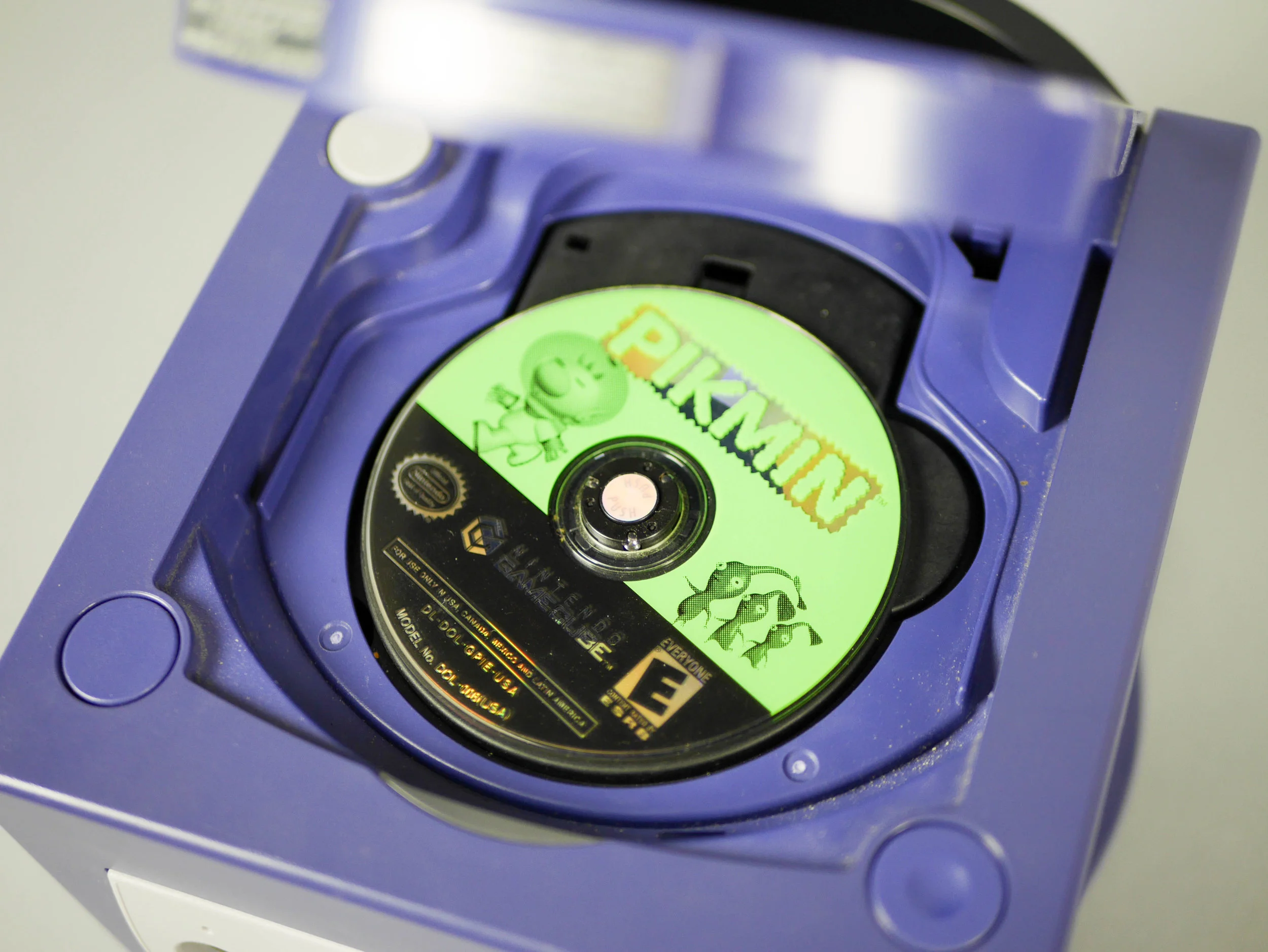
Those miniature 1.5 GB optical discs are unique to the GameCube — compact, charming, and instantly nostalgic.
Who Should Buy a GameCube?
Families & Party Players
Four built-in controller ports and a stack of brilliant multiplayer games make this a superb sofa console for getting everyone involved.
Nostalgic Returners
If you grew up with one, revisiting the library on original hardware is a genuine pleasure — and the games have aged remarkably well.
Retro Collectors
The design-icon status, the range of colours and rarities like the Panasonic Q make this a satisfying centrepiece for any collection.
Picture-Quality Purists
Hunt down a DOL-001 with the component cable for native 480p on titles like F-Zero GX — the crispest way to enjoy the classics.
Frequently Asked Questions
The Verdict
The Nintendo GameCube is proof that focus beats feature-creep. Whilst Sony and Microsoft were building all-purpose media boxes, Nintendo built a tiny, gorgeous, genuinely powerful games machine — one that undercut both rivals on price, out-muscled the PS2 on graphics, and delivered a controller and a library that people still adore a quarter of a century later.
It isn't flawless. There's no DVD playback on the standard models, no internal storage, and the later DOL-101 revision's inability to output progressive scan is a real gotcha for the picture-quality conscious. The rare 480p component cable for the DOL-001 remains frustratingly hard to find. But none of that dents the core appeal: this is a supremely well-designed, robust, efficient console with an unforgettable identity and games that have aged beautifully.
For families wanting effortless four-player fun, for nostalgic returners, and for collectors chasing a bona fide design icon, the GameCube earns a hearty recommendation. If you can, seek out a DOL-001 for that 480p option — but honestly, whichever model you land on, the little purple cube remains one of the most likeable consoles ever made. It's a comfortable 9 out of 10 from me.