
Rhythm Paradise Groove Review: The Return of Nintendo's Cult Beat-Matching Series
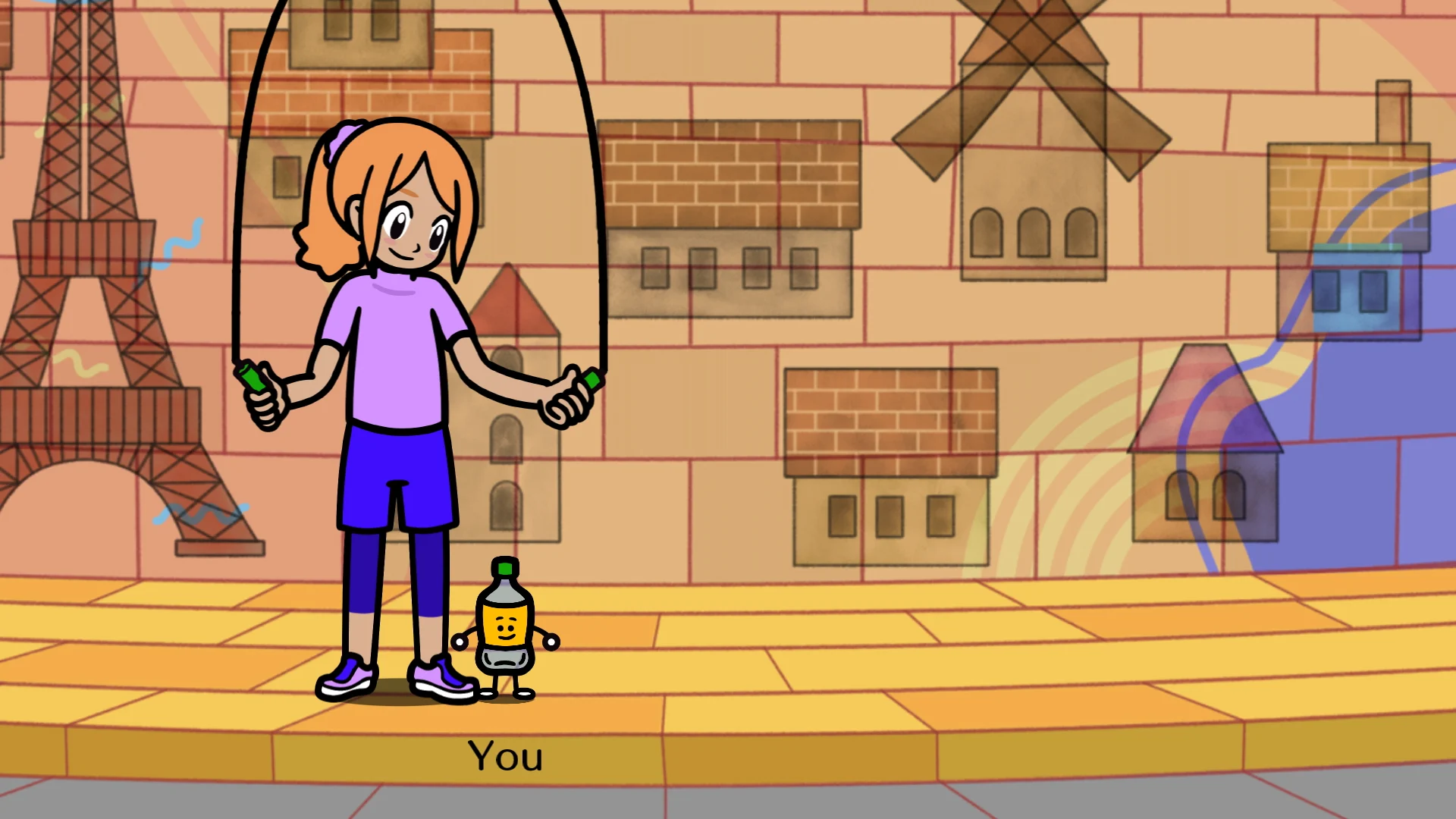
The structure is simple, but the quantity is generous: 80 solo rhythm minigames plus a strong multiplayer selection.
Tsunku♂ is back, the minigames are gloriously strange, and the “just one more go” pull is very real — but your TV settings matter more than you might expect.
1. Rhythm Paradise Groove at a glance
Reviewed from Thursday 9 July 2026, Rhythm Paradise Groove has now been out for a week, and it already feels like one of those Switch games that people will either quietly adore for years or bounce off in ten minutes. That is very Rhythm Paradise, really. Nintendo’s cult rhythm series has never chased the traditional music-game crowd with scrolling note highways, plastic instruments or overblown spectacle. Its magic has always been smaller, sillier and sharper: listen, feel the beat, press the button, laugh at the surreal sketch on screen, fail by a hair, and immediately try again.
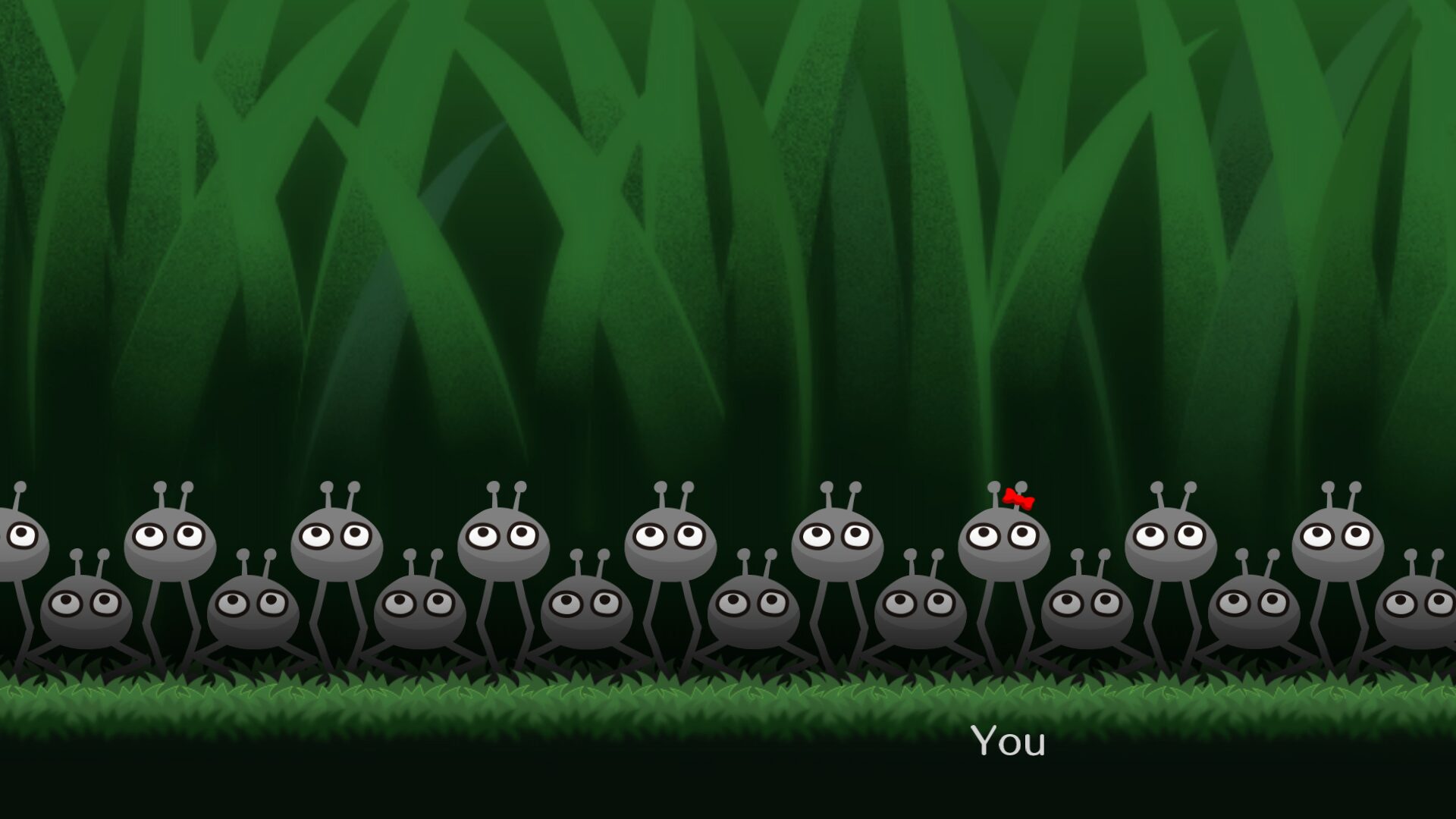
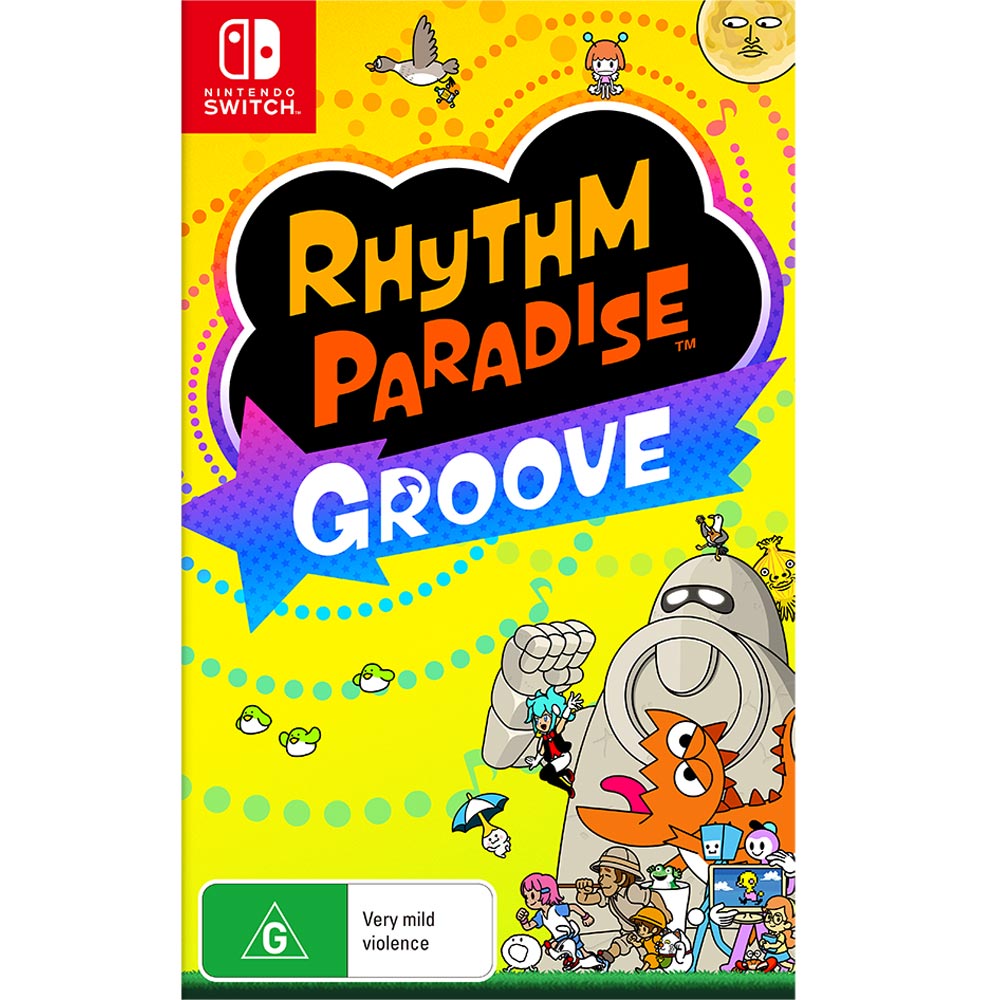
Rhythm Paradise Groove brought Nintendo’s wonderfully odd beat-matching series back to Switch on 2 July 2026.
This 2026 entry is a single Nintendo Switch software title, developed by Nintendo and TNX and published by Nintendo. In PAL regions it is called Rhythm Paradise Groove, whilst North American players know it as Rhythm Heaven Groove. In Japanese, Korean and Chinese markets it is known as Rhythm Tengoku: Miracle Stars. It released worldwide on 2 July 2026, making it the first new game in the series in over a decade. A demo had already arrived on 22 June 2026, offering five single-player games and one multiplayer game, so plenty of players had a chance to test their timing before launch.
The headline answer for returning fans is yes: Rhythm Paradise Groove recaptures the addictive, “one more go” rhythm-loop that made the series special. It does not do that by reinventing the format beyond recognition. Instead, it trusts the old formula, expands the amount of content, adds more party-friendly multiplayer, and gives Tsunku♂ a fresh playground for catchy, peculiar, tightly timed tracks.
It is also a game with one very important practical warning. Docked play can expose TV latency in a brutal way. This is not the sort of rhythm game where being “roughly on time” will carry you through. If your television is adding delay, especially with motion smoothing or other post-processing switched on, Groove can feel unfair even when the game itself is not. In handheld mode, where that chain is much simpler, it feels cleaner and more dependable. For families buying it as a living-room party game, that setup detail is worth taking seriously.
2. Design, personality and that unmistakable Rhythm Paradise weirdness
Rhythm Paradise Groove’s design is best understood as a cabinet of musical toy boxes. Each minigame lasts roughly a minute or so, and each one is built around its own piece of music, its own comic idea and its own tiny rule set. One moment you are learning a new beat pattern; the next, you are trying to hold your nerve as the music starts playing tricks on your expectations. The visuals are not there to dazzle in a technical sense. They are there to give the rhythm a face, a joke and a memorable shape.
That distinction matters. Plenty of rhythm games are primarily visual games with music attached. Rhythm Paradise has always been closer to listening practice disguised as absurd comedy. Groove continues that tradition. The graphics can be funny, cute, strange or deliberately plain, but the real instructions are in the sound. There are no neat lines of icons flying towards a target to tell you exactly when to press. You listen for the phrase, internalise the pattern, and respond.
For children, that makes it unusually good at teaching musical timing without feeling like homework. For adults, it creates that satisfying “I know I can do this” irritation when you miss a perfect run by a fraction. It is the same brain itch that powers the best score-attack games, only here the goal is not speed or violence but groove.
Short, punchy stages
Each rhythm game is about a minute or so long, which makes retries painless and dangerously tempting.
Audio-led timing
The cues come through the music rather than a scrolling note chart, so success depends on listening as much as reacting.
Comic presentation
The cast and scenarios keep the mood light, even when the timing demands become genuinely strict.
Places to breathe
A café and smaller rhythm toys, including a drum kit, give you little breaks between proper challenges.
Groove’s visual style supports the jokes, but the real language of the game is music.
The return of Tsunku♂ is central to why this works. His music gives the game its snap, charm and discipline. He worked on Groove as producer and composer after recovering from laryngeal cancer in 2014, and the result feels both celebratory and exacting. The best tracks have that wonderful Rhythm Paradise quality where a tiny motif lodges itself in your head, then the game keeps reshaping it until you realise you have learnt a surprisingly complex timing pattern almost by accident.
3. Gameplay: fair, demanding and incredibly moreish
The core loop is disarmingly simple. You enter a minigame, hear a rhythm, learn the prompt, and perform your input at the correct moment. Sometimes that means pressing a button on the beat. Sometimes it means recognising an off-beat response. Sometimes it means waiting through silence and trusting your internal count. It looks like a toy, but the timing model is not patronising.
What I like most is that Groove rarely feels arbitrary. It can be strict, and perfect scores require serious precision, but the failure usually teaches you something. If you are early, late or rushing a pattern, the music tells on you. That is why it can be so addictive. After a poor run, your instinct is not “the game cheated me”; it is “I heard it that time — let me fix it”.
This is also where the series’ cult appeal can become a barrier. If you want a rhythm game that clearly shows every input in advance, Groove can feel oddly bare. The graphics are active, but they are not a substitute for listening. Some players will need to unlearn years of watching note charts. Once it clicks, though, it feels marvellous. You stop reacting to pictures and start playing with the track.
ToyScout tip: treat it like clapping along, not reading a chart
If a child or first-time player keeps missing, ask them to ignore the screen for a few attempts and tap along to the music out loud or on their lap. Rhythm Paradise Groove makes much more sense once you hear the pattern before you try to “solve” the animation.
The “just one more go” feeling is strongest because each stage is short. A full restart does not feel like a punishment; it feels like another chance to catch the beat properly. That makes Groove ideal for daily play in small bursts. It is the sort of game you can open for ten minutes and accidentally stay with for much longer because every challenge is just close enough to mastery.
For younger players, I would describe it as accessible but not automatically easy. The controls are straightforward, yet the musical expectations can be exact. That is a good combination for patient children who enjoy improving through repetition. It may frustrate children who mainly want instant success or constant visual instruction. Adults with any musical background will probably recognise the kind of precision being asked for very quickly.
4. Content and modes: 80 solo games, Beatspell and Toybox extras
The amount of content is one of Groove’s biggest wins. There are 80 single-player rhythm minigames, all built around their own short pieces of music. That is a generous number by series standards and gives the game a lovely pick-and-mix feel. Because each stage is compact, the total package feels less like a long campaign and more like a musical sketchbook you gradually master.
The familiar rhythm-game structure is joined by some broader extras. The most interesting is Beatspell, an RPG-like mode where players use rhythm and different button combinations to cast spells and defeat monsters. It is a smart idea because it gives the same timing skills a different framing. You are still listening and inputting to the beat, but the fantasy battle wrapper adds a sense of progression and variety.
There are also more straightforward Toybox levels and smaller rhythm toys to prod at between proper sessions. The drum kit is exactly the sort of thing I like in a family game: not necessarily the main reason to buy it, but a low-pressure way for children to mess about with sound. The café performs a similar role as a softer space between the high-focus challenges.
Important: Rhythm Paradise Groove is not a hardware range or a bundle of accessories. It is a single Nintendo Switch software game. For multiplayer, each player uses either a single Joy-Con horizontally or a Nintendo Switch Pro Controller.
That last controller point is especially helpful for households. Because a single Joy-Con can be used horizontally, many Switch families already have enough controllers for local multiplayer without buying anything else. A Pro Controller is supported too, which is welcome for players who prefer a fuller grip. The game’s short-stage design also means controller swapping is painless when more people are gathered round than the current player count allows.
I would not say Beatspell transforms Rhythm Paradise into a deep RPG, and it should not be judged against full role-playing games. It is better viewed as a themed rhythm mode that gives the package another flavour. The main attraction remains the 80 solo minigames and the multiplayer collection, but the extras help Groove feel like a proper modern release rather than a bare nostalgia revival.
5. Co-op and multiplayer: a brilliant party fit, with one caveat
The editorial question for this review was whether Rhythm Paradise Groove works in co-op. Happily, yes — and not as a token afterthought. Groove includes 30-odd multiplayer games, mixing competitive and co-operative challenges for up to four people. In practice, that is a significant addition because the series’ entire comic timing works beautifully when several people are trying to stay composed at once.
Rhythm games are uniquely funny in a group because failure is so visible and so harmless. When someone has no rhythm, everyone knows. When someone insists they were on time and clearly were not, the room knows that too. Groove leans into that social energy without becoming cruel. The games are short, the rules are easy to grasp, and the tone is daft enough that losing rarely feels serious.
Local multiplayer is one of Groove’s strongest upgrades, with competitive and co-operative games for up to four players.
Co-operative play is at its best when it makes the group listen together. Instead of everyone just chasing individual scores, the stronger co-op stages ask players to lock into a shared pulse. That makes them fantastic for families because the most confident player cannot simply carry everyone through by being loud or fast. The group has to feel the timing together, and that creates plenty of sofa laughter.
The competitive games are a hoot as well. A person’s rhythmical skills are, frankly, a prime target for gentle trash talk. Groove understands that. Because the games are brief, it is very easy to run rematches, rotate players and keep the energy moving. For parties, that matters more than deep rules. Nobody wants a ten-minute explanation before every round; Groove generally gets people playing quickly.
The caveat is the same one that affects solo play: display and audio lag. Multiplayer is most fun on the TV, but docked play is where latency can become troublesome. If your television is not in Game Mode, or if Bluetooth headphones are involved, Groove’s strict timing can feel off. That does not ruin the multiplayer offering, but it does mean the best party setup is a low-lag TV configuration with audio coming through a responsive speaker setup rather than Bluetooth earbuds.
6. Performance, latency and daily use on Nintendo Switch
For an ordinary platformer or adventure game, a little display lag can be mildly annoying. For Rhythm Paradise Groove, it can be the difference between a clean hit and a baffling miss. This is the most important performance issue to understand before buying, especially if the game is mainly destined for docked living-room play.
Across current player and reviewer experiences, the most documented concern has been TV delay. One particularly telling example involved playing a level docked, receiving a low rating, then removing the Switch from the dock and replaying in handheld mode for a perfect score. Even after several runs of the TV delay calibration, the docked setup still felt as though mistakes were being caused by delay and timing issues. That lines up with how unforgiving Groove can be: the game is built around musical precision, not broad timing windows.
The numbers explain why. A display that adds 60 ms of latency means the visual beat you see is already 60 ms behind reality. Many televisions add far more when extra image processing is enabled. Game Mode or Low Latency Mode can cut TV lag from around 50–150 ms down to roughly 5–20 ms. That is a huge difference in a rhythm game. Motion smoothing, in particular, can add tens of milliseconds of delay, so it should be off for Groove.
Audio matters too. If you use wireless headphones, Groove is not friendly to ordinary Bluetooth lag. A 2.4GHz wireless connection is the safer choice because Bluetooth’s tiny delay can completely undermine the game’s demanding timing. For handheld play, the simplest setup is often the best: console speakers or a wired/low-latency audio solution, with the screen right in front of you.
In daily use, Groove suits the Switch beautifully. Its stages are short, retrying is quick, and it is easy to play in bite-sized sessions. This is not a game that demands a two-hour evening commitment. It is excellent for a commute, a lunch break, a child’s post-school wind-down or a quick family “best of three” before tea. Because it does not lean on visual clutter, it also works well as a game to revisit when you are tired of enormous open worlds and endless menus.
I would avoid giving exact battery expectations because that depends on the Switch model, screen brightness and wireless settings. What can be said confidently is that Groove’s structure is portable-friendly. Handheld mode also sidesteps many TV latency problems, so if you care about perfect scores, handheld play may become your favourite way to practise.
7. Price and value in the UK and US
Rhythm Paradise Groove launched at a sensible mid-price rather than a top-end blockbuster price, and that helps its value argument enormously. In the UK, the MSRP is £33.99. At the time of writing on 9 July 2026, Nintendo’s UK store and Amazon UK have it at £33.99, whilst Very and Argos have both been seen at £29.99. In the US, the MSRP is $39.99, with Amazon US at $39.98 and GameStop at $39.99.
Nintendo UK Store
UK MSRP pricing
Amazon UK
Matched UK MSRP
Very / Argos
£4 below UK MSRP
US Retail
Amazon US and GameStop
Value depends on whether your household enjoys repetition-based skill games. If you only play each minigame once, you will miss much of the point. Rhythm Paradise Groove is built for replays, perfect attempts, score chasing, multiplayer rematches and gradual mastery. With 80 solo games, 30-odd multiplayer games, Beatspell, Toybox levels and rhythm toys, the amount of material is strong for the price.
It is particularly good value for families who already own multiple Joy-Con controllers, because up to four people can play locally using a single Joy-Con horizontally or a Pro Controller each. There is no need to treat it like a peripheral-heavy music game. If your Switch household is already set up for local multiplayer, Groove slots in neatly.
The main value risk is personal taste. This is not a broad, cinematic Nintendo adventure. It is a precise rhythm-comedy collection. If someone in your family has no patience for retrying short challenges, they may not get as much from it. But for players who enjoy improving by tiny increments, Groove offers a lot of repeatable joy at a fair price.
8. Rhythm Paradise Groove compared with its demo and wider reception
Rather than pretending Rhythm Paradise Groove has a direct like-for-like rival with the same structure, the more useful comparison is between the demo, the final release and the wider critical picture. The demo, released on 22 June 2026, was a handy taster with five single-player games and one multiplayer game. The final game expands that dramatically to 80 solo minigames and 30-odd multiplayer games, alongside Beatspell, Toybox levels, smaller rhythm toys and the café.
The June demo gave a small sample; the final release is a much broader package.
| Feature | Rhythm Paradise Groove final release | Rhythm Paradise Groove demo | What it means for buyers |
|---|---|---|---|
| Release timing | Released worldwide on 2 July 2026 | Released on 22 June 2026 | The final game is available now; the demo was useful for testing the feel before buying. |
| Solo content | 80 single-player rhythm minigames | 5 single-player games | The full release is a major expansion over the sampler. |
| Multiplayer | 30-odd multiplayer games for up to four people | 1 multiplayer game | Party and family play are much better represented in the full game. |
| Extra modes | Beatspell RPG mode, Toybox levels, rhythm toys and café | Focused sample of the core game | The final package feels more rounded for daily play. |
| Controller setup | Single Joy-Con horizontally or Nintendo Switch Pro Controller per player | Same basic Switch control philosophy | Most Switch households can get started without unusual accessories. |
The critical reception has been strong. Rhythm Paradise Groove sits at 82 on Metacritic, with 90% of reviews at 7.5 or higher. On OpenCritic, it has 84, with 88% of critics recommending it. Major review scores have included IGN at 9/10, Giant Bomb at 4/5, GameSpot at 8/10, Nintendo Life at 8/10 and GFinity at 7/10.
Those scores reflect the same balance I felt playing it: Groove is not flawless, but it is confident, charming and unusually focused. It does not need to be the biggest game on Switch. It needs to be the one that makes you grin, wince, tap your foot and restart instantly after a near miss. On that front, it succeeds.
9. Pros and cons after a week with Rhythm Paradise Groove
The best thing about Groove is how pure its skill curve feels. It trains a real sense of timing. You are not just memorising button prompts; you are learning to hear where the input belongs. That can make the game feel surprisingly personal. When you improve, you really feel it.
The weakest thing is that the experience is more setup-sensitive than many buyers will expect. A family could dock the Switch, leave the TV in its standard picture mode, connect Bluetooth headphones and wonder why everyone is missing. Groove needs a cleaner, lower-lag environment to show its best side. Nintendo includes calibration, but the wider TV and audio chain still matters.
Pros
- 80 single-player minigames give the package real breadth.
- Short stages make retries quick, painless and very addictive.
- Tsunku♂’s music is catchy, funny and tightly built around the timing challenges.
- 30-odd multiplayer games add genuine party value, including co-operative and competitive play.
- Beatspell, Toybox levels, rhythm toys and the café make it feel like a fuller modern release.
- The difficulty is demanding but usually fair, rewarding careful listening rather than guesswork.
Cons
- TV latency can seriously affect docked play if your setup is not tuned properly.
- Bluetooth audio lag is a bad fit for the game’s strict timing.
- Players who rely on visual note charts may find the audio-led design hard to adjust to.
- Perfect scores require a level of precision that can frustrate impatient players.
- Beatspell is a fun extra, but the main appeal remains the core rhythm stages.
For ToyScout readers, the family angle is especially positive. This is not just a solitary score-chasing game. It is a living-room laugh generator, provided the TV setup is sensible. It is also gentle in theme, quick to understand and easy to pass around. The challenge comes from timing rather than complicated controls, which makes it approachable across ages even when it is not always easy.
10. Who should buy Rhythm Paradise Groove?
Rhythm Paradise Groove is not for absolutely everyone, but it is excellent for the right sort of player. If you like games that reward repetition, listening and tiny improvements, it is one of the most satisfying Switch releases of 2026 so far. If you mainly want long-form story, visual spectacle or constant new mechanics, it may feel too stop-start.
Families with rhythm-loving children
The simple controls, funny presentation and short stages make it easy to introduce, whilst the timing challenge gives children something real to practise.
Local multiplayer households
With 30-odd multiplayer games for up to four people, Groove is a strong sofa-party pick for homes that already enjoy Joy-Con play.
Music and rhythm game fans
If you enjoy internalising a beat rather than following a note highway, this is a wonderfully pure test of timing.
Score chasers and perfectionists
Perfect runs demand genuine precision, and the one-minute structure makes mastery feel constantly within reach.
Portable Switch players
Handheld play suits Groove beautifully because the stages are compact and latency is easier to control than on many TV setups.
Maybe skip if you hate repetition
If retrying a short challenge several times sounds annoying rather than motivating, Groove’s core appeal may not land.
I would be particularly happy recommending it as a birthday or summer-holiday game for a Switch-owning household. It is not overly expensive, it supports quick sessions, and it works for both solo play and group play. The main thing I would tell parents is to use the demo-style mindset if possible: let the player try a few rhythms, see whether the listening-based challenge clicks, and do not judge the game solely by the first failed attempt.
11. Rating and final verdict
Rhythm Paradise Groove is at its best when you stop watching for answers and start trusting the beat.
Rhythm Paradise Groove is a confident return for Nintendo’s cult beat-matching series. It has the strange humour, the compact challenge design and the musical sharpness fans wanted, but it also makes a stronger case for multiplayer than past expectations might suggest. The co-op and competitive games are not filler; they are some of the easiest parts of the package to recommend to families.
The big practical issue is latency. Docked play can be fantastic, but only if your TV and audio setup are not fighting the game. Switch the TV to Game Mode or PC Mode, avoid Bluetooth headphones, run calibration, and consider handheld mode for serious perfect attempts. Ignore that advice and Groove may feel harsher than it really is.
ToyScout verdict
Rhythm Paradise Groove is a joyful, demanding and deeply moreish return. It recaptures the series’ “just one more go” magic, offers a generous 80 solo minigames, and turns local multiplayer into a genuine highlight. Buy it if your household enjoys rhythm, silliness and friendly competition — just make sure your TV is in Game Mode before blaming your timing.