
Best Storage Solutions for Displaying and Sorting Your LEGO Collection
The best LEGO storage does more than hide loose bricks. It protects the big adult builds you are proud of, makes a specific element findable before the kettle has boiled, and stops the dining table becoming a permanent branch of the LEGO warehouse.
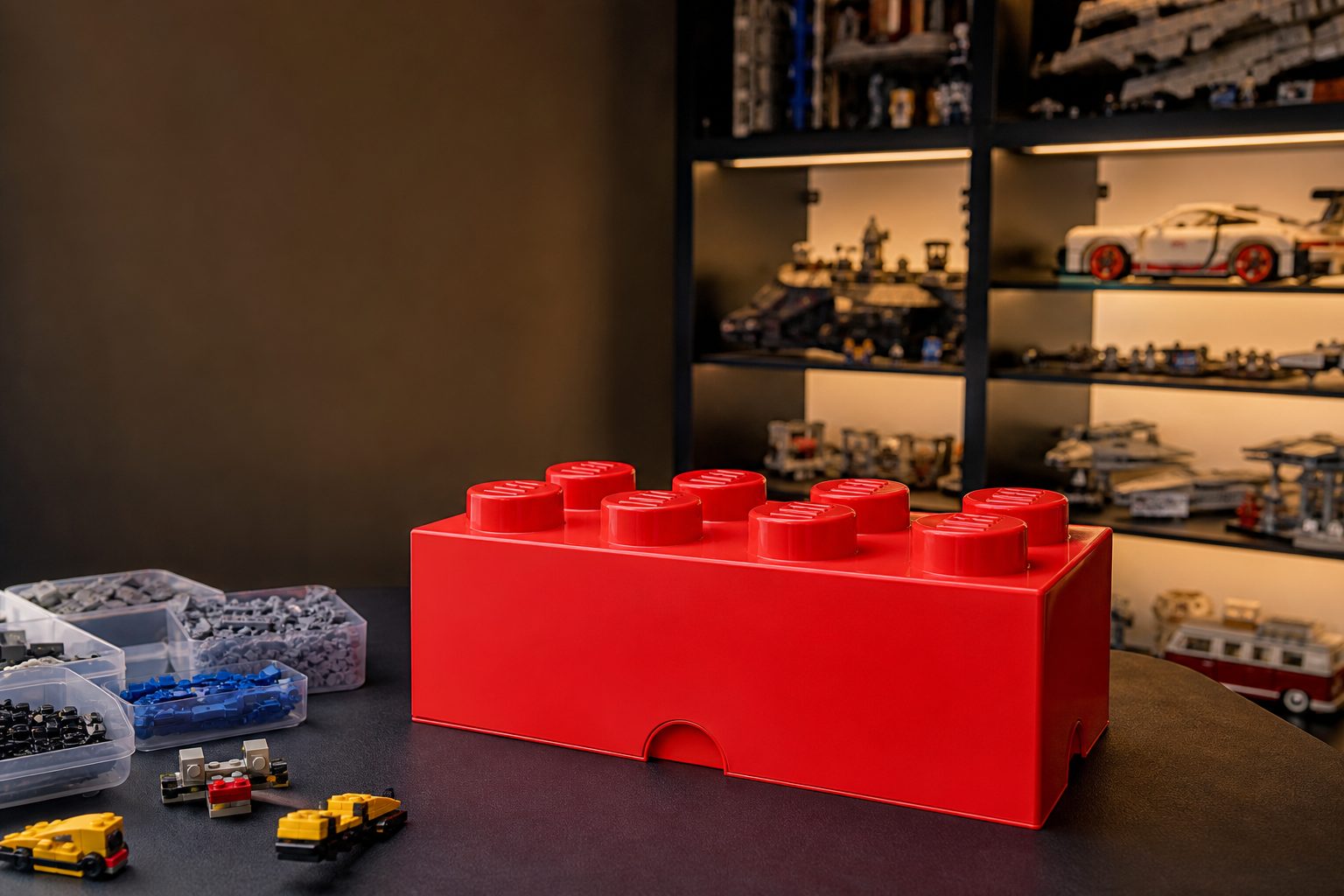
A grown-up LEGO collection works best when the display shelves and the working parts library are treated as two connected systems, not one heroic pile of plastic.
Why proper LEGO storage matters more as your collection grows
There is a charming stage in every LEGO hobby where everything fits in one tub. You can tip it out, rummage for a wheel, find three old biscuits and call it an afternoon. Then one day you acquire a sizeable modular building, a couple of Technic sets, a small army of minifigures and enough transparent cheese slopes to make a jeweller nervous. At that point, "one tub" becomes less a storage plan and more a cry for help.
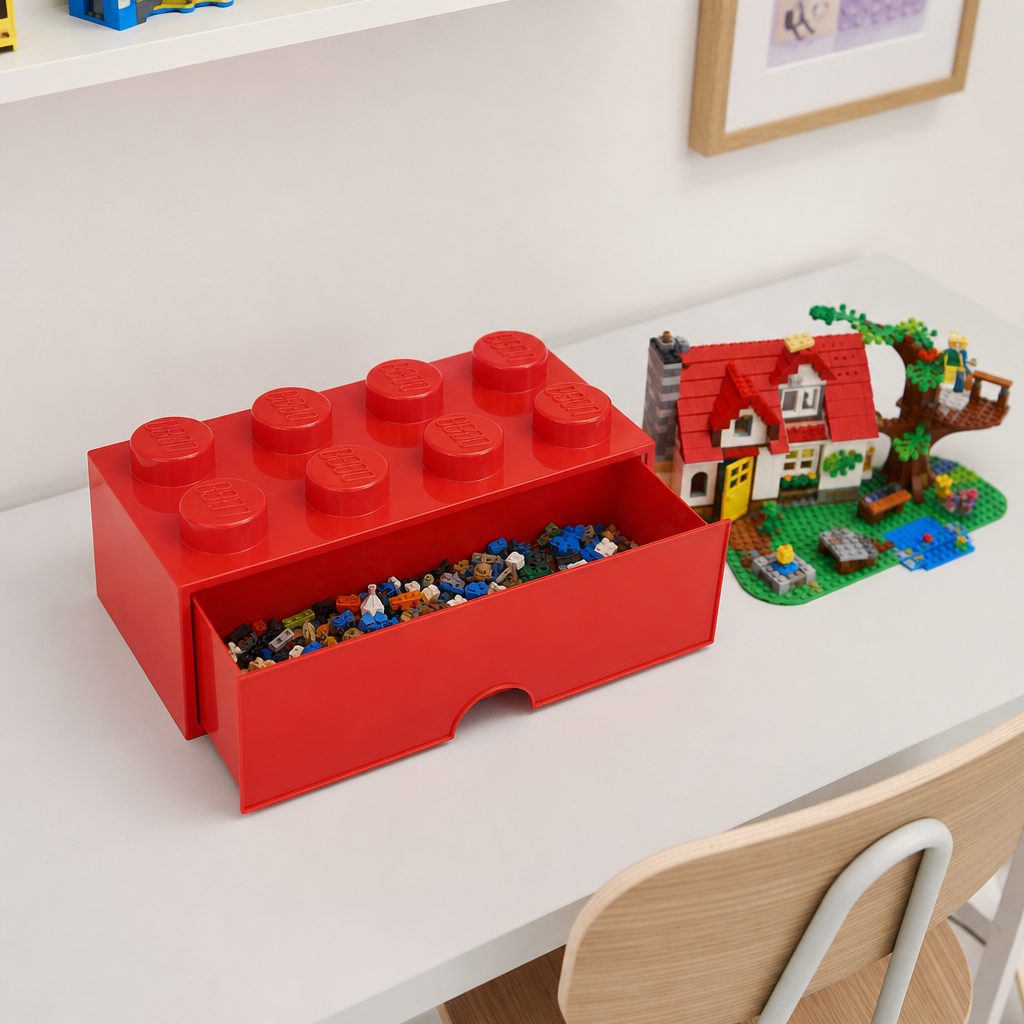
A drawer-led work station keeps frequently used pieces close at hand whilst finished creations can stay safely separate on display.
For adult collectors especially, storage has two separate jobs. The first is access: loose parts need to be sorted in a way that suits how you actually build. The second is protection and presentation: finished models deserve somewhere stable, relatively dust-free and out of harm's way. A solution that is brilliant at one task is not automatically useful at the other. A handsome minifigure case will not tame a bulk Technic collection. A rolling cart full of drawers will not make your favourite display model look like a museum piece.
The sensible approach is modular. Use drawers, trays or bins for active parts; use display cases for figures; reserve roomy storage for broad categories and bulky components. It sounds obvious written down. In practice, it is the difference between spending your building time making something wonderful and spending it asking, for the fifth time, where on earth you put the dark bluish grey brackets.
How we chose the best solutions
This roundup is deliberately not a list of random clear boxes. Those have their place, but they are not automatically the answer to a collection that contains both rare minifigures and a half-built spaceship. I looked for systems that solve a recognisable LEGO problem: keeping categories visible, reducing rummaging, storing large elements without mixing everything back together, moving a project around the house, or displaying figures securely.
Stackability matters. So does the practical shape of a drawer. Shallow drawers tend to make small elements easier to search through, whilst deep drawers are more forgiving for big categories such as wheels, plates or unfinished build sections. The trick is accepting that these jobs are different. Trying to use one deep drawer for every tiny piece is how you end up rediscovering 2008 halfway through looking for a 1×1 round plate.
Searchable, not merely contained
The strongest options make a category easy to scan rather than simply putting a lid on it and hoping for the best.
Protection for prized pieces
Minifigure display cases use individual baseplates and transparent doors to keep figures posed and visible.
Room to expand
A good system should cope when a modest parts box becomes an actual collection. This happens faster than most of us expect.
Useful where you build
Portable sorting boxes and wheeled drawer units are handy when your building surface is shared with the rest of household life.
The storage rule that saves the most time
Sort first by element type or function, not solely by colour. Finding a hinge amongst other hinges is normally quicker than searching every black piece you own for one very particular hinge. Colour sorting can come later, once your collection genuinely needs that extra layer.
The ranked picks at a glance
There is no single winner for every collector, because a minifigure display wall, a family build station and an AFOL parts library are entirely different beasts. The table below is the short version before we get into the useful details.
| Storage solution | Format | Confirmed size or capacity | Best use |
|---|---|---|---|
| LEGO 8-Stud Brick Drawer | Two-drawer stackable unit | 19.7 × 9.8 × 7.1in; 4.7 litres | Stylish general storage |
| LEGO 4-Stud Brick Drawer | Compact stackable drawer | 9.8 × 9.8 × 7.1in | Small, focused categories |
| LEGO Minifigure Display Case | Wall-mountable display case | 16 separate compartments | Displaying minifigures |
| LEGO Storage Sorting Box | Suitcase-shaped organiser | Portable format | Travel and small projects |
| IKEA Trofast System | Frame and removable trays | 6 to 24 shallow drawers | Large expandable collections |
| IRIS Plastic Storage Drawer Rolling Cart | Rolling drawer cart | Short and deep drawer options | Mobile building areas |
| Akro-Mils Cabinets | Small-parts cabinet | Multi-drawer cabinet format | Fine sorting |
| Sterilite 3-Handle Tray Layer Stack Organizers | Layered tray organiser | Three-handle tray format | Medium collections |
| ECR4Kids 10 Drawer LEGO Organizer on Wheels | Wheeled organiser | 10 drawers | Shared play spaces |
Our ranked storage solutions
1. LEGO 8-Stud Brick Drawer — Best for stylish all-round storage
Shop LEGO 8-Stud Brick Drawer on Amazon UK
The LEGO 8-Stud Brick Drawer is the one to buy when you want storage that looks intentional in a home rather than vaguely temporary. Its oversized brick shape is unmistakably LEGO, but the two drawers make it more useful than a novelty container has any right to be. At 19.7 × 9.8 × 7.1 inches, with 4.7 litres of volume, it has enough physical presence to work as a proper modular storage unit on a desk, shelf or cabinet.
It is made from polypropylene and is PVC-free. The oversized studs on top allow units to stack, which is important: one drawer box is a nice accessory; a neatly stacked run of them becomes a genuinely usable system. The available colour range also makes it easy to build your own visual shorthand. You might use one colour for plates, another for wheels and another for a current project. It is not laboratory-grade cataloguing, but it is much better than muttering "I think the clips are in the blue one".
Its limitation is inherent to the design. Two large drawers do not offer the microscopic separation of a proper small-parts cabinet. Use it for broad categories, manuals, minifigure accessories, works-in-progress or medium-sized elements, rather than putting every different 1×1 piece in its own little universe. Always open it on a level surface too: the drawer can tilt when open if it is freestanding.
Pros
- Two drawers in a stackable LEGO-brick format.
- 4.7-litre capacity suits useful, broad categories.
- Durable polypropylene construction is PVC-free.
Cons
- Not the most efficient route to very fine element sorting.
- Needs a level surface when drawers are opened.
2. LEGO 4-Stud Brick Drawer — Best for small collections and desktop categories
Shop LEGO 4-Stud Brick Drawer on Amazon UK
The LEGO 4-Stud Brick Drawer delivers the same visual idea in a much easier-to-place footprint. Measuring 9.8 × 9.8 × 7.1 inches, it is a good answer for collectors with a modest loose-parts supply, children who need a defined place for a building project, or adults who want a handsome desktop drawer for the pieces currently in rotation.
I particularly like this size for categories that become annoying when mixed but do not justify a huge container: minifigure tools, tyres, transparent elements, printed tiles, or all the pieces you have pulled aside for a MOC. It is also a sensible first buy before committing to a wall of storage. A couple of 4-Stud drawers tell you whether the system suits your habits without taking over the room.
Pros
- Compact 9.8-inch square footprint suits desks and shelves.
- Easy to combine with a colour-based household storage scheme.
Cons
- Its smaller format fills quickly with a serious parts collection.
- Still better for broad groups than individual element types.
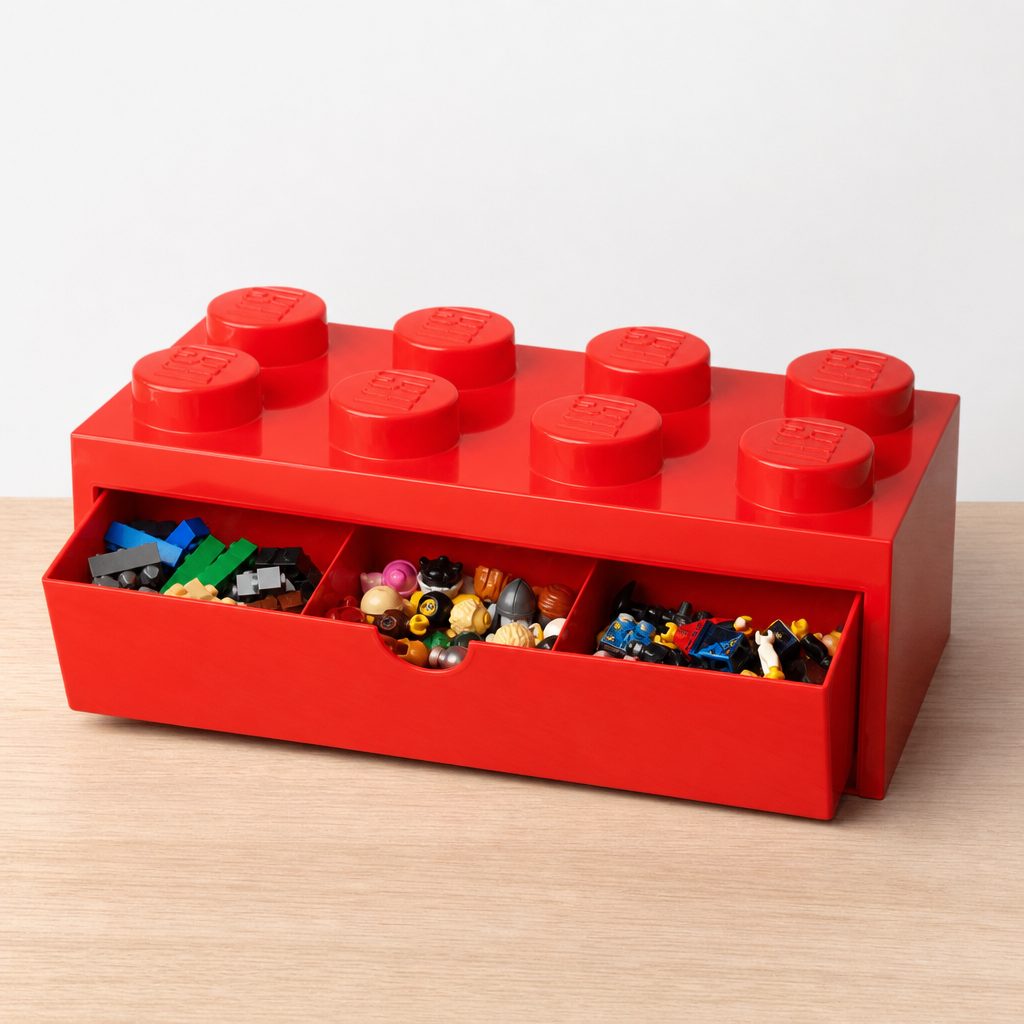
The smaller LEGO Brick Drawer format works neatly for project parts, minifigure accessories and the categories that otherwise wander across a desk.
3. LEGO Minifigure Display Case — Best for displaying minifigures safely
If minifigures are the jewels of your collection, the LEGO Minifigure Display Case is the clear specialist pick. Each black case holds 16 figures in separate compartments, with a grey baseplate in each space to keep them properly posed. The transparent clasp door makes the whole point of collecting visible: your figures stay on display rather than disappearing into a drawer with a dozen capes and one suspiciously loose lightsaber.
It can stand on a desk or mount on a wall using integrated holes, and cases stack too. That flexibility makes it unusually good for collections that grow in uneven bursts. Start with one themed display, then add another when your favourite series gets out of hand. The transparent sides, black top and bottom, and dedicated compartments create a much tidier result than lining figures along an open shelf, where dust and accidental elbows tend to join the party.
Pros
- Dedicated spaces for 16 minifigures.
- Transparent door keeps figures visible whilst protected.
- Can be wall mounted, freestanding or stacked.
Cons
- Designed for minifigures, not large vehicles or builds.
- Compartment-led layout is less suitable for unusual oversized characters.
4. IKEA Trofast System — Best for a large, expandable family collection
Shop IKEA Trofast System on Amazon UK
IKEA Trofast is the practical workhorse of LEGO storage. It is commonly used because it is economical, widely available in many countries and built around removable trays. Depending on the configuration, a Trofast cabinet can hold from 6 to 24 shallow drawers. That is enough flexibility to organise a shared household collection without pretending everyone is going to put every brick back in a single perfect location after a long Saturday build.
The shallow-drawer option is the star. It lets you spread categories out rather than burying them in deep tubs. Families can reserve trays for plates, bricks, wheels, figures, animals and current builds. Adult builders can go further, using a shallow tray as a temporary sorting field whilst building. Pull out only what you need, then return it when you are done. It is less glamorous than official LEGO furniture, admittedly, but it is very hard to argue with the workflow.
Pros
- Configurations can accommodate 6 to 24 shallow drawers.
- Removable trays are excellent for active building sessions.
- Strong choice when multiple people share the collection.
Cons
- More furniture-like than display-led.
- Loose parts remain visible unless each tray is deliberately managed.
5. Akro-Mils Cabinets — Best for meticulous small-parts sorting
Akro-Mils cabinets are for the builder who has passed beyond broad categories and would like to locate a specific part without emptying half a drawer. They are frequently recommended for serious collectors alongside sorting trays, and that pairing is key. Use the trays to separate a haul or dismantled set, then migrate the parts into drawers once you know where they belong.
This is not really the system for making a playroom look serene. It is a workshop solution. And that is praise, not criticism. For a MOC builder, a small-parts cabinet makes the collection feel like an available resource rather than a pile of future frustration. Label consistently, avoid making categories absurdly narrow too early, and leave a little room for each drawer to grow. Your future self will be smug. Deservedly so.
Pros
- Excellent companion to sorting trays for fine categorisation.
- Well suited to collectors who build from loose parts often.
Cons
- Workshop practicality matters more than decorative display.
- Requires labels and a sorting routine to reach its potential.
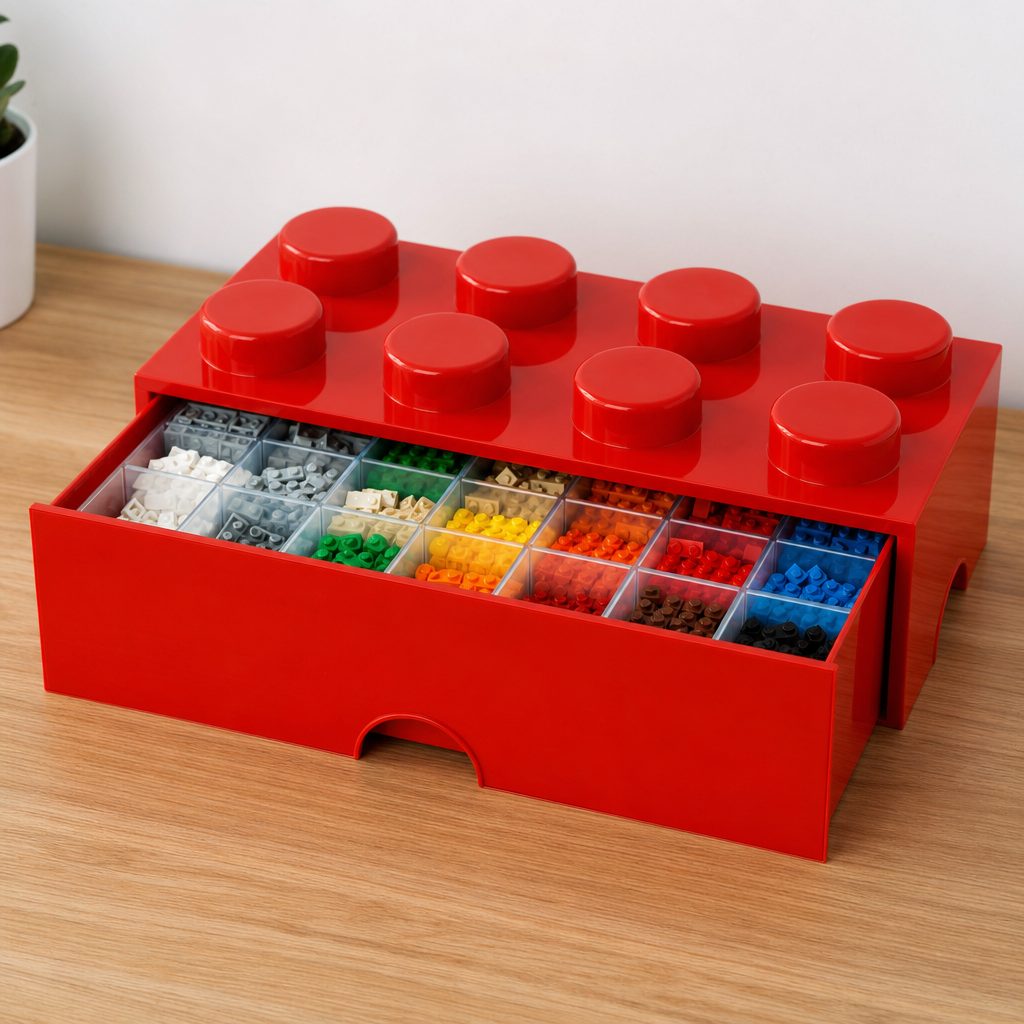
Small-drawer cabinets suit the fine-detail end of the hobby, where brackets, clips and tiny decorative elements deserve their own searchable homes.
6. IRIS Plastic Storage Drawer Rolling Cart — Best for flexible building spaces
The IRIS Plastic Storage Drawer Rolling Cart is a sensible answer when LEGO does not have a permanent room, or when your build area changes from desk to dining table to spare room depending on the day. The rolling format adds a simple but valuable advantage: you can bring the parts library to the build rather than carrying armfuls of loose trays around the house.
Different compatible drawer sizes make it adaptable. Short drawers are better for searching for pieces, whilst deeper drawers suit larger categories. That distinction is worth paying attention to. Put small, frequently searched elements in the short drawers and reserve deep storage for sizeable bricks, large plates, base elements or a half-dismantled model. It is a system that rewards a little thought at setup, then makes ordinary tidying much less theatrical.
Pros
- Rolling cart design moves a collection between rooms.
- Short and deep drawer styles support different categories.
Cons
- More utilitarian than a dedicated display system.
- Requires sensible drawer assignments to avoid duplication.
7. Sterilite 3-Handle Tray Layer Stack Organizers — Best for medium-sized sorting jobs
The Sterilite 3-Handle Tray Layer Stack Organizers are the quietly useful choice for a medium-sized collection or a household that needs a practical project organiser. Their layered tray approach is especially helpful when you are sorting an incoming mixed lot, dismantling a set for parts, or keeping a several-day build contained without assigning it permanent drawer space.
Think of this as a bridge between one big tub and a full cabinet system. It gives you separation without committing a large chunk of furniture to LEGO. The handles also make sense for moving an organised project from the table when dinner is, rather inconveniently, expected to happen there. Not every storage solution needs to be a lifelong infrastructure project. Sometimes it just needs to prevent 800 pieces becoming a carpet hazard.
Pros
- Layered format helps keep a build or sorting task separated.
- Affordable, effective approach for medium sorting needs.
Cons
- Less expandable than a drawer-wall system.
- Not intended as a display solution for finished models.
8. ECR4Kids 10 Drawer LEGO Organizer on Wheels — Best for shared playrooms
Shop ECR4Kids 10 Drawer LEGO Organizer on Wheels on Amazon UK
The ECR4Kids 10 Drawer LEGO Organizer on Wheels is aimed squarely at the reality of shared spaces: more than one builder, plenty of loose pieces and a need to put everything away without turning clean-up into an administrative hearing. Ten drawers give it more immediate separation than a single large bin, while the wheeled format makes it easy to move when the room has other duties.
For younger builders and families, that combination is often more valuable than highly granular categorisation. You can create broad, understandable homes for bricks, plates, figures, special pieces, wheels and works in progress. The aim is repeatability. If a child can remember where a category goes, the system is already doing a good job. Perfection is lovely; an organiser that actually gets used is better.
Pros
- Ten drawers encourage practical category sorting.
- Wheels make it useful in flexible shared rooms.
Cons
- Not as focused on tiny-element sorting as a specialist cabinet.
- Does not replace a dedicated case for collectible minifigures.
9. LEGO Storage Sorting Box — Best for travelling builders and tidy-up time
The LEGO Storage Sorting Box is a suitcase-shaped option built for taking bricks on the move. It is particularly good for smaller children, a holiday project, a visit to grandparents or simply keeping one self-contained build separate from the main collection. That last use is underrated. A portable box can prevent the parts for a current set becoming absorbed into the general brick ecosystem before the build is finished.
It is not a replacement for a full home storage system, and it should not be bought expecting it to organise thousands of pieces by type. What it does well is provide portable, separate storage with less fuss. In a home with a big collection, that can make it one of the most-used pieces of kit precisely because it solves a smaller problem so neatly.
Pros
- Suitcase-shaped format is easy to take between locations.
- Helpful for keeping one smaller project separate and safe.
Cons
- Designed for portability rather than a huge parts inventory.
- Not a display case for completed adult builds.
How the capacity options compare in real life
Numbers do not tell the entire story, but they are useful when deciding whether a solution is a starter purchase or the basis of a long-term system. The 16 individual spaces in the LEGO Minifigure Display Case are a true display capacity: each is a dedicated place, complete with baseplate. The 4.7-litre LEGO 8-Stud Brick Drawer is broader storage. Trofast, meanwhile, is about scaling across a range of 6 to 24 shallow drawers.
This is not a straight "more is better" contest. Twenty-four shallow drawers are superb for sorting, but they demand categories and labels. Six large tubs are far simpler for a young child. Sixteen display spaces are ideal for minifigures but not remotely useful for sorting a pile of plates. Buy for the job, not the biggest number on the box.
For valuable display models, keep storage and display separate wherever possible. Drawer systems are for accessible parts; stable shelves and dedicated display cases are for completed builds and collectable figures. Mixing both jobs in one place usually means neither works brilliantly.
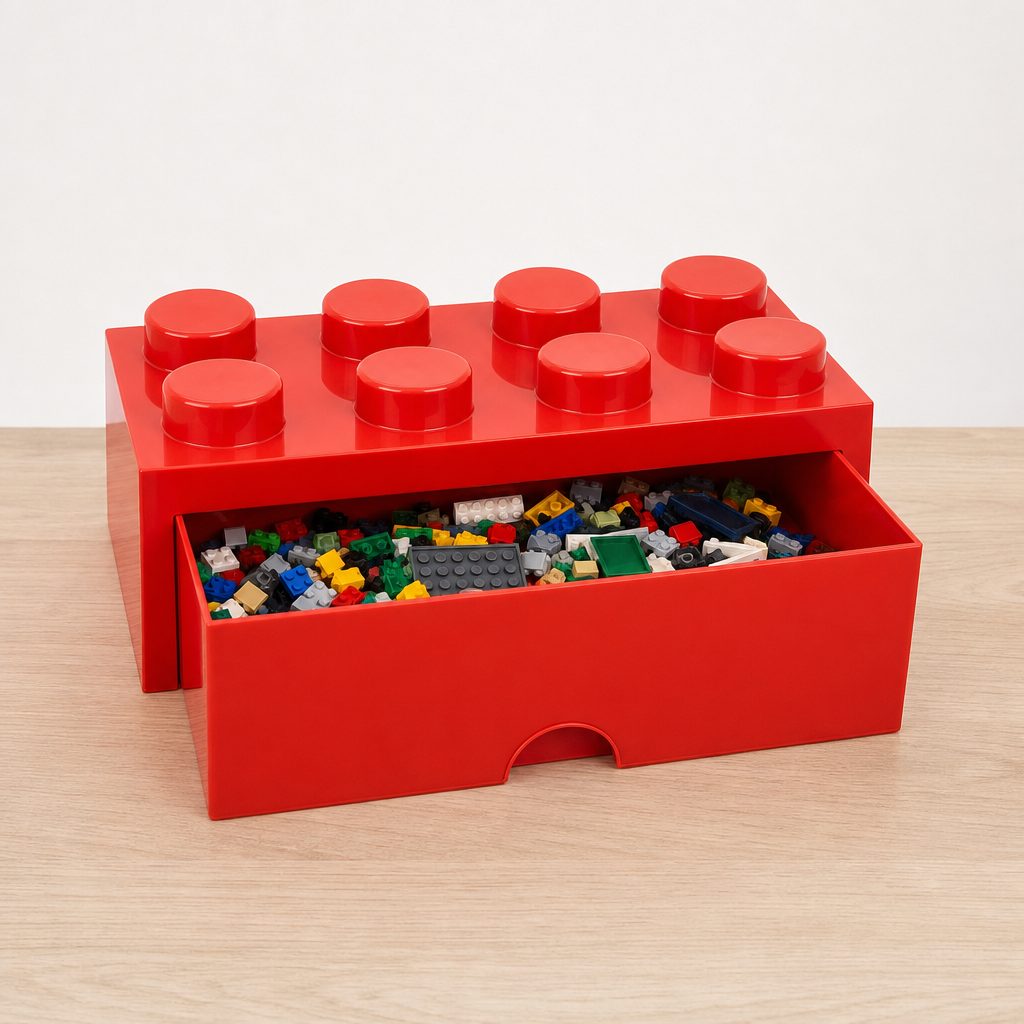
Clear categories matter more than colour-coded perfection: shallow drawers and trays make an active LEGO project easier to stop, resume and finally finish.
Building a system that protects big adult builds
Big adult builds create a slightly different problem from loose bricks. They are awkward to move, vulnerable to dust and surprisingly skilled at attracting the one passing sleeve that will detach a carefully placed antenna. The storage products here are strongest when used around the display rather than as a substitute for it.
Begin by deciding what stays built. Your favourite modular buildings, vehicles and display models should have stable shelf space, ideally away from direct traffic and the general chaos of everyday life. Then use the LEGO Minifigure Display Case for figures that merit individual presentation. Its transparent door and baseplates make it the most natural pick where the figure itself is the collection.
For the build area, a LEGO 8-Stud Brick Drawer can hold spare parts, instructions or a current project's less delicate components. Trofast and rolling carts are better if you build regularly from a broad parts stock. Akro-Mils cabinets come into their own when you want to modify models, replace elements or create original details without turning a shelf display into a scavenger hunt.
One more unglamorous point: do not stack heavy, loose parts on top of an in-progress build just because it seems temporarily convenient. LEGO is sturdy. Elaborate assemblies with long axles, small decorative details or delicate hinges are another matter entirely. Your storage plan should reduce the number of times a completed model has to be moved. That is the real protection benefit.
Sorting strategy: from a mixed tub to a usable parts library
If you are starting from a mixed collection, resist the urge to sort every last piece into its final perfect home in one weekend. That way lies sore knees and an alarming familiarity with every variation of 1×2 plate. Start broad. Separate bricks, plates, modified elements, wheels, minifigure pieces, transparent parts and oversized components. A layered organiser or removable Trofast tray is excellent during this first pass.
Then pay attention to friction. Which drawer do you open constantly? Which category is still too broad? That is the one worth splitting. A large "small modified parts" drawer might eventually become clips, hinges, brackets and bars. But do it only once the quantity makes searching unpleasant. There is no prize for creating a meticulously labelled drawer containing four pieces.
- Sort by broad part family first. This gives you a usable system quickly.
- Give high-volume types their own drawer. Plates, common bricks and wheels often earn that privilege early.
- Separate minifigures from general parts. Display the favourites and contain the rest safely.
- Maintain a project zone. Keep current-build parts in a portable box, tray or dedicated drawer.
- Label only after a category proves itself. Labels should clarify a working habit, not create extra homework.
A surprisingly effective hybrid
For many adult collectors, the sweet spot is a LEGO Minifigure Display Case for prized figures, a few LEGO Brick Drawers for visible everyday storage, and Trofast, IRIS or an Akro-Mils cabinet for the serious loose-parts work. It looks better than an all-plastic workshop and works better than an all-display room.
Best picks for different LEGO collectors
Here is the quick shopping answer. These are not absolute declarations from Mount Brickmore; they are the options that best match the needs of different collectors and households.
Best all-rounder
LEGO 8-Stud Brick Drawer. The best balance of useful two-drawer storage, stackability and display-friendly LEGO design.
Best for minifigure collectors
LEGO Minifigure Display Case. Sixteen dedicated, baseplate-equipped spaces behind a transparent door make it the specialist choice.
Best for big collections
IKEA Trofast System. Configurations holding 6 to 24 shallow drawers give a growing household collection room to breathe.
Best for MOC builders
Akro-Mils Cabinets. A focused small-parts approach for builders who need to retrieve a precise element quickly.
Best for portability
LEGO Storage Sorting Box. A tidy suitcase-shaped organiser for travel, visits and self-contained projects.
Best for shared playrooms
ECR4Kids 10 Drawer LEGO Organizer on Wheels. Ten drawers and wheels suit broad categories and flexible family spaces.
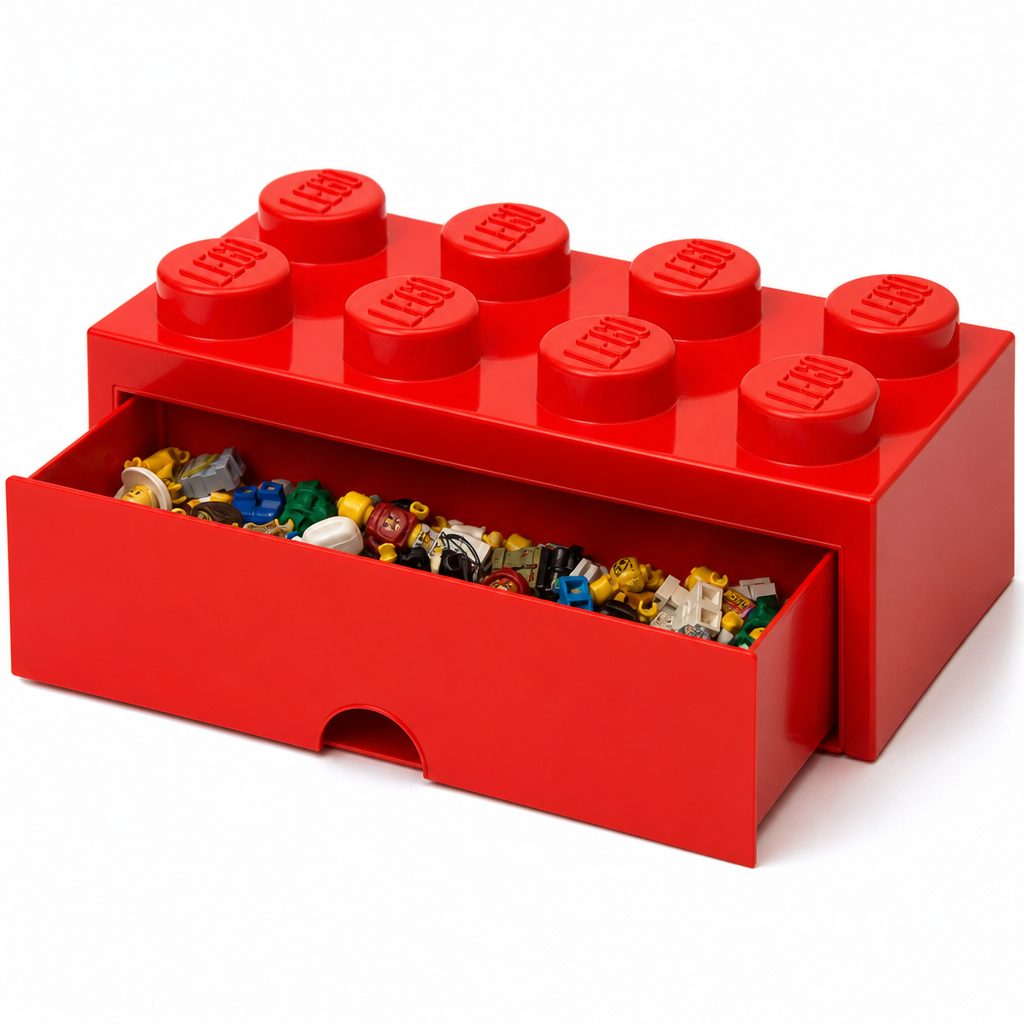
For collectors who display as well as build, a dedicated minifigure case provides order, visibility and a much safer home for favourite characters.
Care, cleaning and long-term organisation
Storage is not a one-and-done job. Collections change. A drawer that began as "transparent parts" can become an unruly biome containing windscreens, gems, windows and approximately 40 things you do not recognise. Give yourself permission to revise it. A ten-minute reset after a substantial build is much kinder than an annual audit that requires snacks, music and a firm cancellation policy for all other plans.
For display pieces, keep doors and transparent surfaces clean using a gentle approach appropriate for plastic. More importantly, keep cases and drawers closed when they are not in use. Dust has a remarkable ability to find open studs. Finished models on shelves benefit from occasional careful dusting, but the less exposed they are, the less often you need to handle them.
When stacking LEGO Brick Drawers, do not treat the studded top as an invitation to build a monument to poor load planning. Stack sensibly, keep drawers on a level surface, and remember that an open drawer changes the balance of a freestanding unit. The official warning is worth following: an open drawer may tilt the box. It is a tiny bit of caution that can save a model, a floor and your mood.
Frequently asked questions
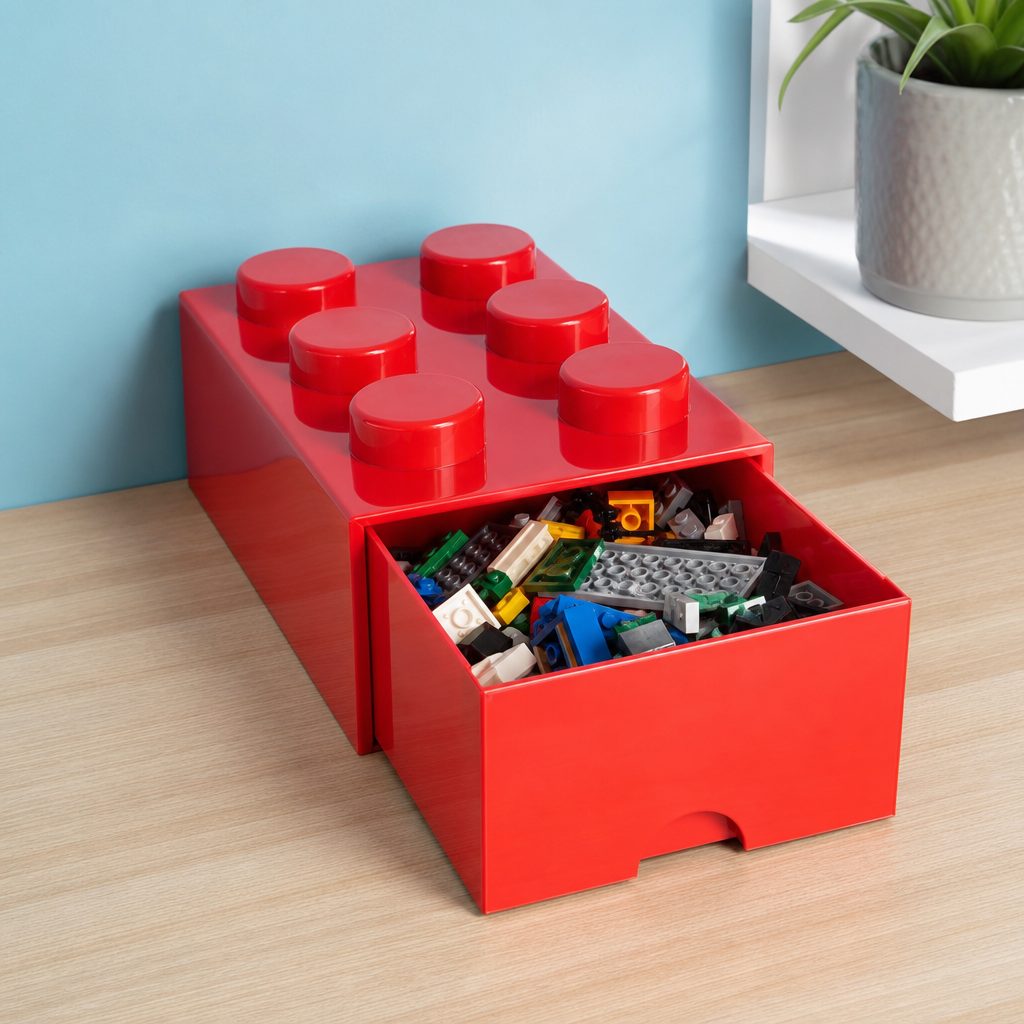
The right LEGO storage system should make returning to a project feel inviting, rather than like beginning a small archaeological excavation.
Final verdict
If you want one attractive, practical answer for everyday LEGO storage, choose the LEGO 8-Stud Brick Drawer. Its two drawers, 4.7-litre capacity and stackable brick design make it the most balanced all-round pick for a home collection.
For collectors whose prized possessions wear tiny capes and carry even tinier accessories, the LEGO Minifigure Display Case is the essential display buy. For a large family or loose-parts collection, the IKEA Trofast System remains the most useful framework, particularly with shallow drawers. And if your LEGO habit has become a genuine building practice, add an Akro-Mils Cabinet for the parts you need to find without a rummage.
The best setup is rarely one product. It is a thoughtful mix: display what you love, drawer-store what you use, sort only as finely as you need, and keep one portable zone for whatever is currently covering the table. Your LEGO will look better, build sessions will feel calmer, and the carpet may finally be allowed to retire from active service.