Xbox Series X at £799: Is It Still Worth Buying After the Price Hike?
Microsoft's flagship console has weathered three price rises since May 2025, and the latest one — live from 1 August 2026 — pushes the disc model to a headline £799. I've spent a good while living with the Series X to work out whether it still earns a place under your telly, or whether the maths has quietly stopped adding up.
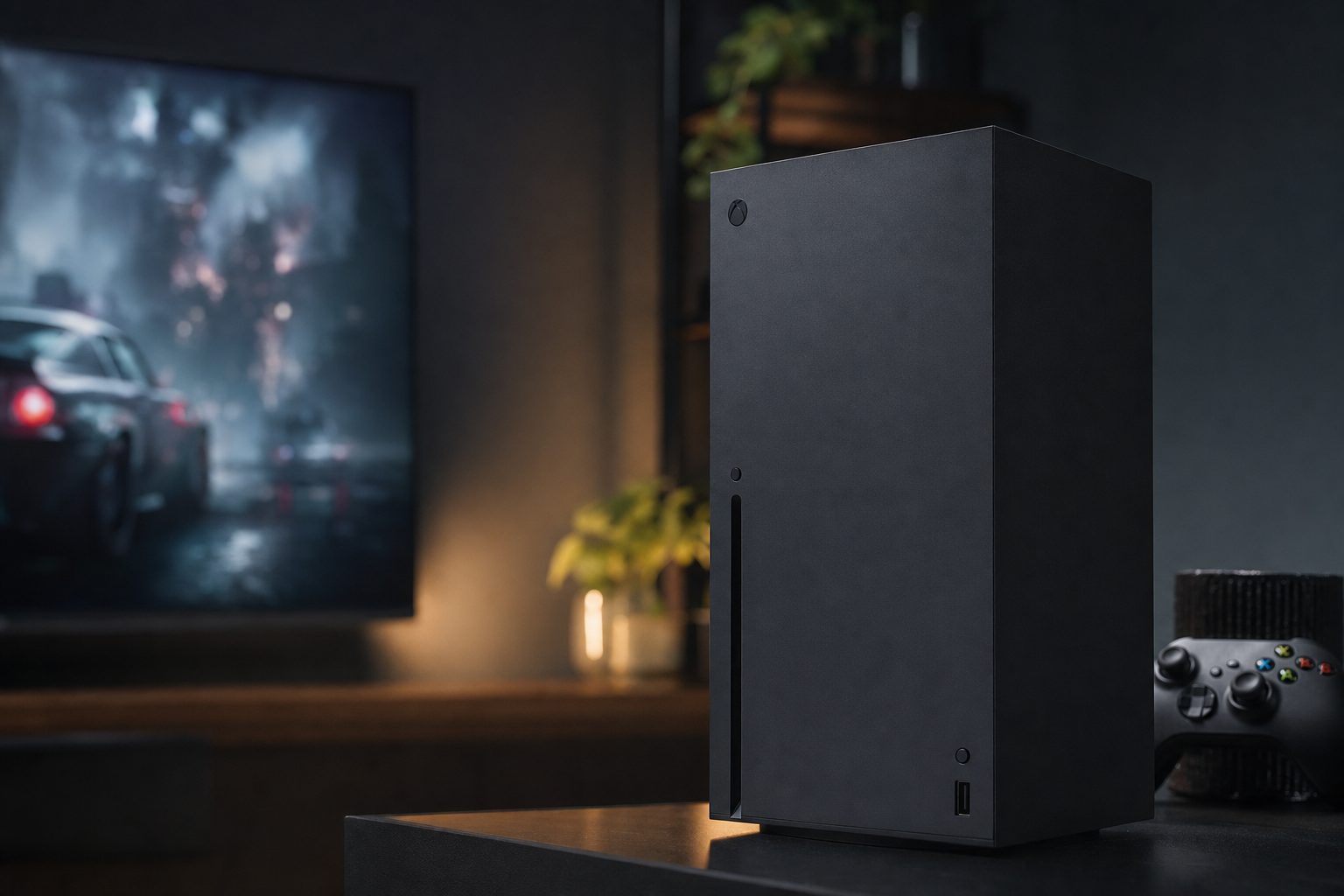
The Xbox Series X remains a monolithic slab of matte black — but at £799 the conversation has shifted from raw power to value.
Let's not dance around it: £799 is a lot of money for a games console. When the Series X launched back in November 2020 it cost $499, and it felt like a genuine bargain for the horsepower on offer. Fast forward to the summer of 2026 and Microsoft has raised prices three separate times since May 2025, leaving the flagship a full $300 dearer than day one over in the States. The UK has not been spared.
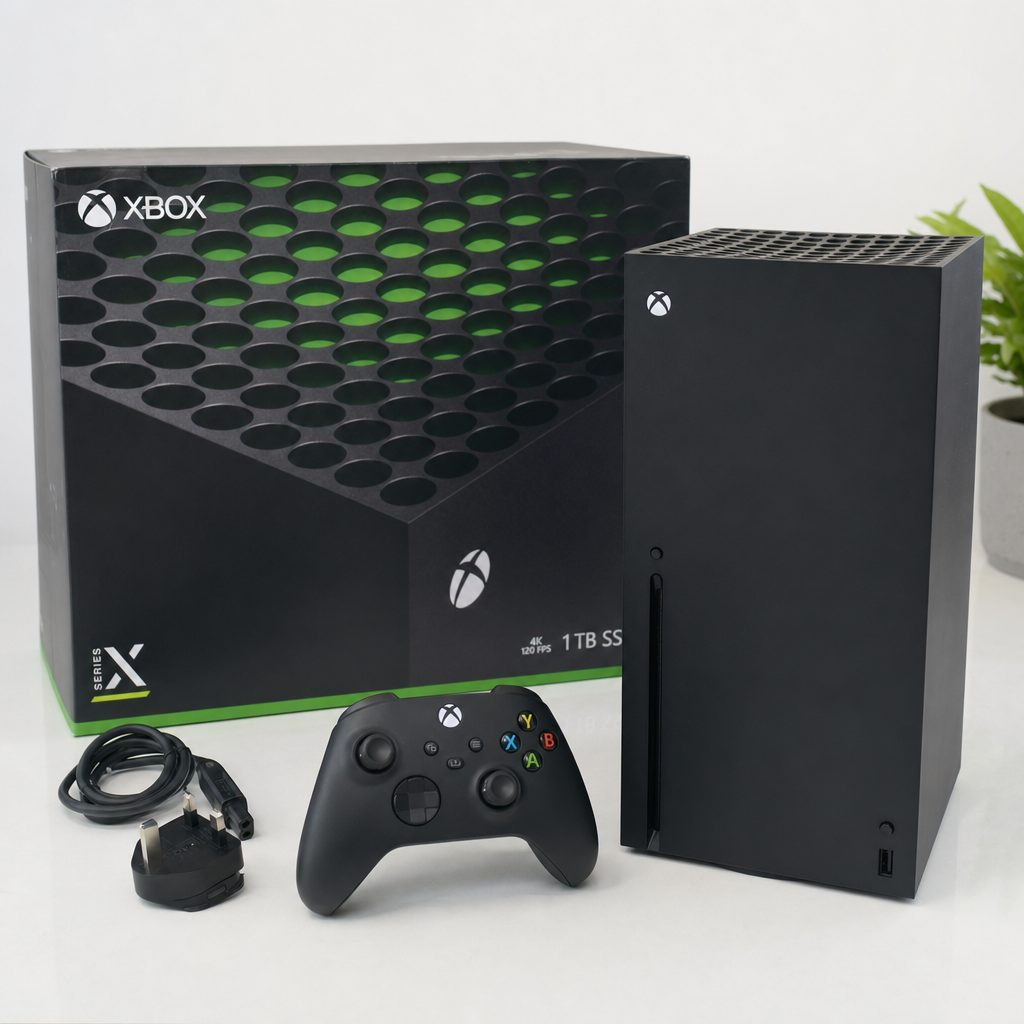
The verdict: a superb machine that now demands a considered decision rather than an impulse buy.
So the question isn't really "is the Series X a good console?" — it plainly is, and I'll get to exactly why. The real question is whether it's a good buy now, in a landscape where Game Pass has been completely restructured, Call of Duty has quietly slipped off the day-one menu, and the price of entry has crept ever upward. That's what this review is about. I'll walk you through the hardware, the everyday experience, the value picture, and — crucially — who should still hand over the cash.
The Short Version
If you're pushed for time, here's the gist. The Xbox Series X is still one of the most capable pieces of gaming hardware you can put in your living room. It delivers genuine 4K gaming, near-instant loading, and the single best backward-compatibility library in the business. The hardware itself hasn't got any weaker — if anything, firmware updates have made it quieter and more efficient over the years.
What has changed is the price and the software ecosystem around it. At £799 for the disc model, this is now a premium purchase that needs justifying, and the Game Pass restructure of April 2026 has muddied what used to be a knockout value argument. It's still a brilliant machine. It's just no longer the obvious no-brainer it once was.
Specs at a Glance
Before we get into how it feels to use, let's lay out exactly what's inside that black tower. Six years on from launch, these numbers still hold up remarkably well — this was clearly built with longevity in mind.
The headline figure everyone remembers is that 12 teraflops GPU — twelve trillion floating-point operations a second — paired with a custom 16GB GDDR6 memory pool running at 560 GB/s. There's HDMI 2.1 on the back for high-refresh 4K, three USB 3.2 ports, an Ethernet port for those of us who don't trust Wi-Fi mid-match, and a proprietary storage expansion slot for adding capacity down the line.
Design and Build: The Monolith Holds Up
Physically, nothing about the Series X has changed since 2020, and honestly it didn't need to. It's a matte-black rectangular tower measuring 15.1cm square at the base and standing 30.1cm tall, tipping the scales at a hefty 4.45kg. That weight tells you something: this is a dense, well-built object with a serious cooling apparatus inside.
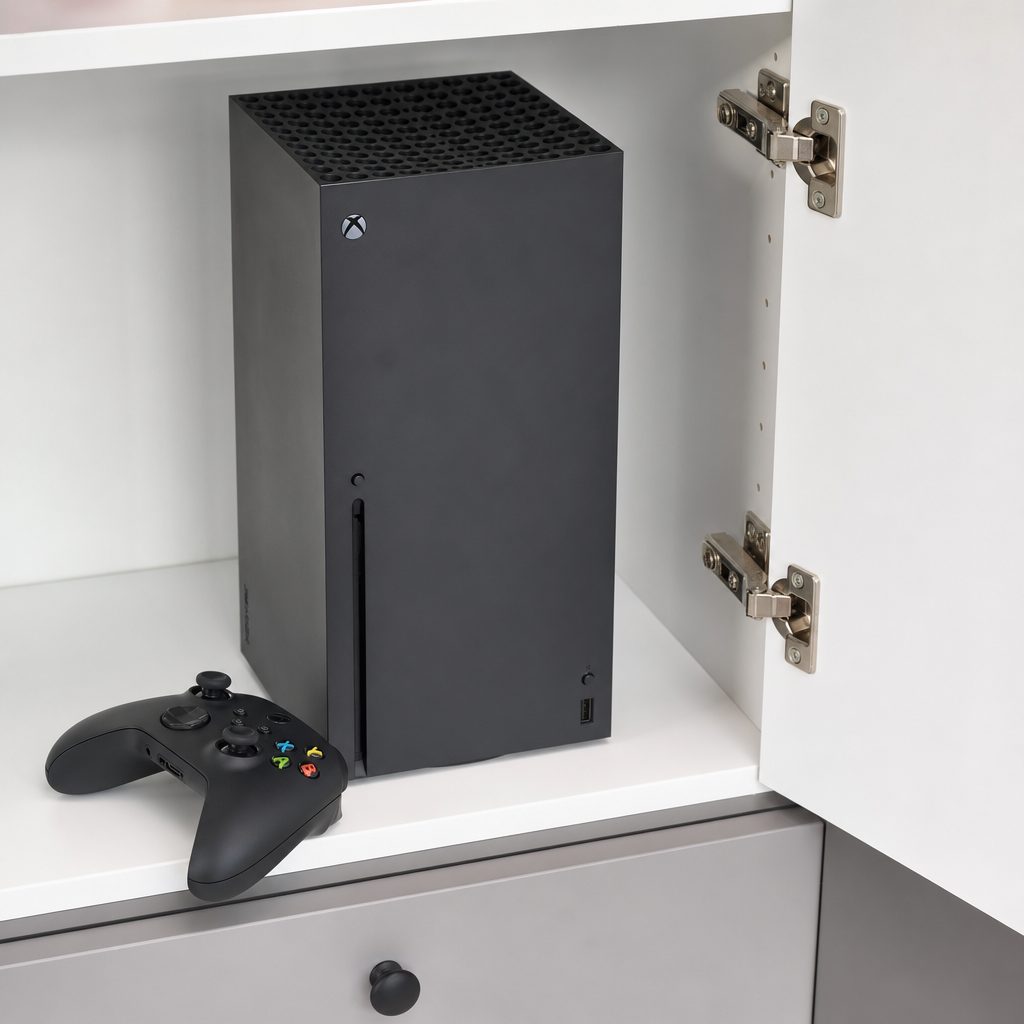
That square footprint of 15.1cm makes the Series X easy to tuck into a cabinet — but the 30.1cm height means you'll want to check your shelf clearance first.
The vertical design is love-it-or-hate-it. Some people find it an elegant, understated block; others reckon it looks like a slightly menacing air purifier. I've come round to it — the top vent with its subtle green accent is a nice touch, and the whole thing disappears into a dark AV cabinet far better than a lot of its rivals. You can lay it flat, though it's designed with vertical orientation in mind and takes up less floor space that way.
Build quality is genuinely excellent. There's no creaking, no cheap plastic flex, and the ports are solidly seated. This feels like a device engineered to survive a full console generation and then some, which — given it's now well into its life — it clearly has.
Sensor-Driven Cooling
The fan is controlled by numerous internal sensors that modulate speed dynamically, keeping the machine cool without ever ramping up into jet-engine territory.
Whisper-Quiet Operation
Reviewers have repeatedly noted it runs about as quietly as the old Xbox One X. During long sessions it genuinely fades into the background.
No Throttling
There have been no reported thermal throttling issues across the machine's life — sustained performance stays consistent even during extended play.
Performance: Still Genuinely Fast
Here's where the Series X earns its keep. On paper this is the most powerful console Microsoft has ever made, and in practice it delivers. Titles like Forza Horizon 5 and Starfield hit native 4K at 120fps in their performance modes, whilst the broader library comfortably delivers 4K at 60fps with ray tracing switched on. Hardware-accelerated ray tracing and variable refresh rate (VRR) support are baked in, so if you've got a modern HDMI 2.1 telly, the Series X will happily feed it.
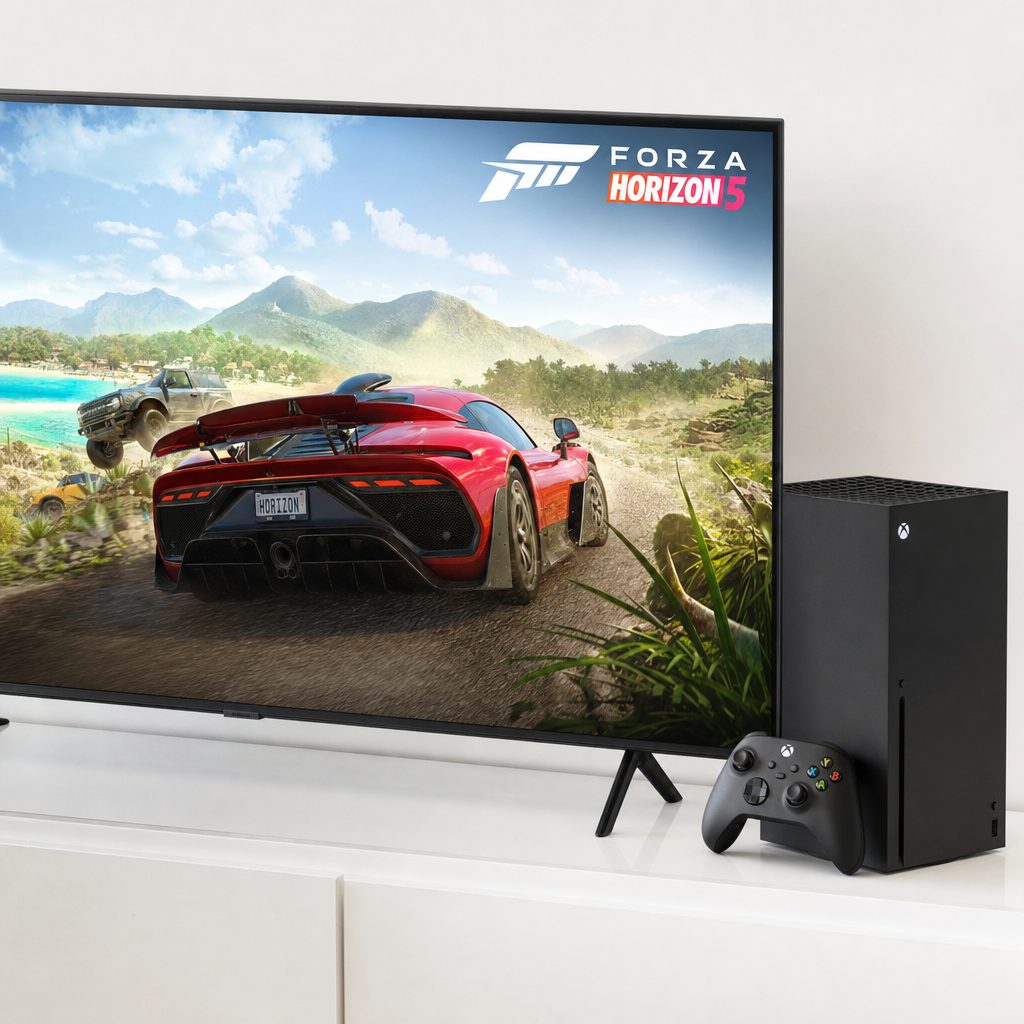
Native 4K at 120fps in performance mode is on the menu for titles like Forza Horizon 5 — the Series X still has serious legs.
Loading is the unsung hero here. The custom Velocity Architecture SSD means games boot and level-load with minimal waiting — the days of staring at a progress bar for a minute are long gone. Combined with Quick Resume, which lets you jump between five or more games in seconds without losing your place, the moment-to-moment feel of using the Series X is slick in a way that still impresses.
How It Stacks Up in Raw Numbers
The Series X sits at the top of the console pile on spec sheet, but I want to be honest about what that actually means in practice. Here's a relative look at where it lands.
Digital Foundry's frame-by-frame analysis of multiplatform games shows the Series X and PS5 trading minor wins title by title. There's no decisive, generation-defining gap between them — the Series X's lead is typically a single-digit-to-mid-teens percentage edge that rarely changes which version players actually prefer.
So whilst the Series X runs its CPU at a fixed 3.8 GHz (3.66 GHz with simultaneous multithreading engaged) versus the PS5's variable frequency capped at 3.5 GHz, the real-world difference is far smaller than the numbers suggest. Both machines are excellent. If you're choosing purely on which pushes marginally more pixels, you'll be splitting hairs.
Everyday Living With It
A console isn't just benchmarks — it's the thing you switch on after a long day. And here the Series X is a genuine pleasure. Power consumption averages 180–200W during gameplay, spiking within a 45–220W range depending on what you're doing, which is fair for the performance on offer. Recent firmware updates have actually improved power efficiency over the years, and the machine idles far more sensibly than it once did.
The dashboard is snappy, Quick Resume is the feature I'd miss most if I switched away, and Dolby Atmos plus 3D spatial audio support means it slots neatly into a proper home cinema setup. The Ultra HD Blu-ray drive on the standard model is a quietly brilliant bonus — it doubles as a capable 4K film player, which is worth remembering when you're weighing it against the disc-free Digital Edition.
Pro Tip
If you buy physical games or own a 4K Blu-ray collection, spring for the standard disc model rather than the Digital Edition. The optical drive lets you buy pre-owned games cheaply and play 4K films — two things the all-digital version simply can't do, and two ways to claw back some of that premium price over time.
Backward Compatibility: The Secret Weapon
This, for me, is one of the strongest arguments for the Series X in 2026. It plays games from four generations of Xbox hardware — the original Xbox, Xbox 360, Xbox One, and Series X titles — often with enhanced performance, better resolution, and faster loading than the originals ever managed. If you've built up a library over the last two decades, the Series X honours it.
Smart Delivery ties this together neatly: buy a game once and you get the version optimised for whatever hardware you're playing on, no double-dipping required. It's the kind of consumer-friendly thinking that, frankly, makes the price hike sting a little less.
The Range: Which Xbox Should You Actually Get?
There are three machines to weigh up, and choosing the right one matters more than ever now that prices have climbed. The 2TB Galaxy Black Special Edition, for the record, was sunset on 1 August 2026, so that's no longer part of the conversation.
| Feature | Series X (Disc) | Series X Digital | Series S |
|---|---|---|---|
| GPU | 12 TFLOPS, 52 CUs | 12 TFLOPS, 52 CUs | 4.0 TFLOPS, 20 CUs |
| RAM | 16 GB GDDR6 | 16 GB GDDR6 | 10 GB GDDR6 |
| Storage | 1TB SSD | 1TB SSD | 512GB / 1TB SSD |
| Optical Drive | Ultra HD Blu-ray | None | None |
| Target Resolution | Native 4K / 120fps | Native 4K / 120fps | 1440p / 60fps, 4K upscaled |
| Size vs Series X | Full size | Full size | ~60% smaller by volume |
| 4K Blu-ray Playback | Yes | No | No |
The Series S deserves a fair word here. Yes, it's dramatically less powerful — 4 teraflops against the Series X's 12, and 10GB of RAM versus 16 — and it targets 1440p rather than true 4K. But it's about 60% smaller, digital-only, and still handles Quick Resume and the same Game Pass library. It's had a significant price rise too, mind, so it's no longer the pocket-money option it once was. But if 4K isn't a priority and space is tight, it remains the sensible entry point.
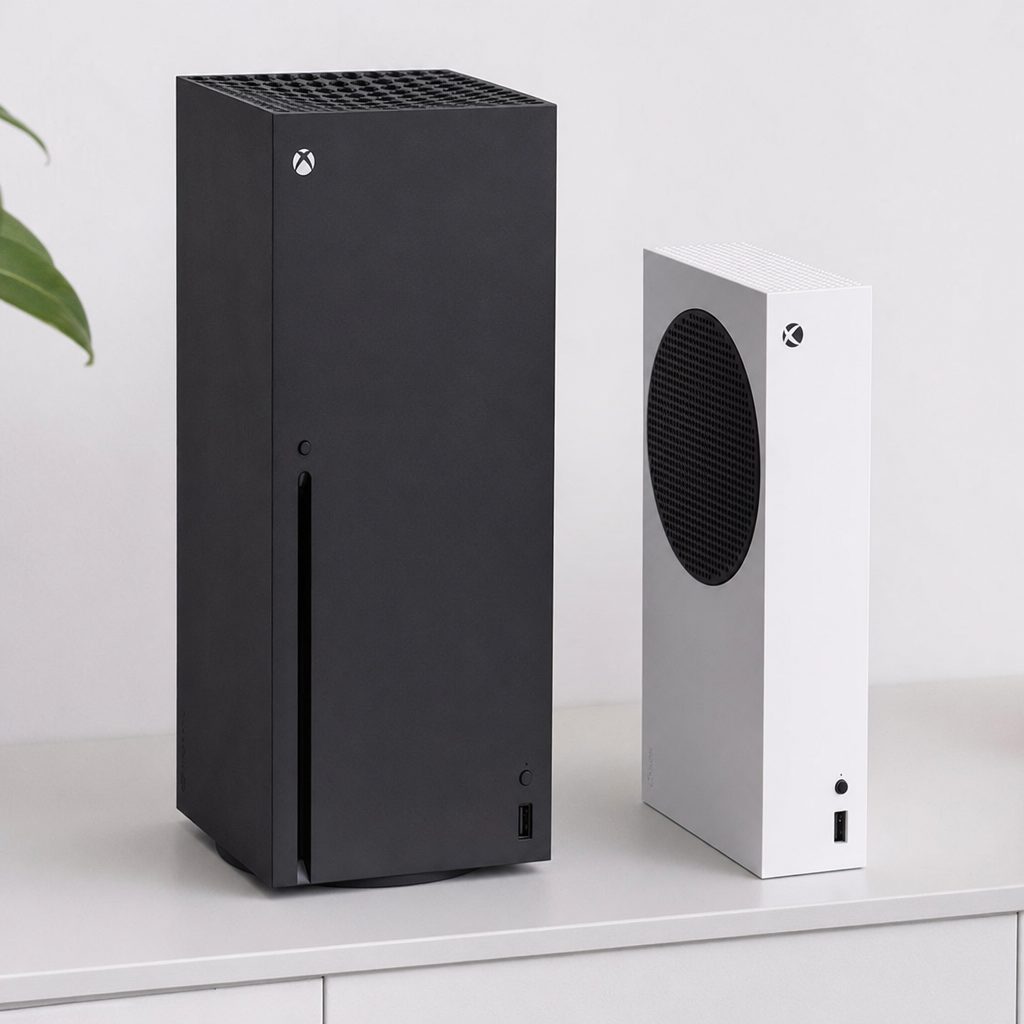
The Series S (right, for scale) is roughly 60% smaller by volume — a genuinely tidy machine, though its price has climbed too.
The Game Pass Question — Where the Value Story Changed
For years, the killer pitch for Xbox was simple: buy the console, subscribe to Game Pass, and get an enormous library including every first-party game on day one. As of April 2026, that pitch has been rewritten, and if you're buying a Series X today you absolutely need to understand the new lay of the land.
Game Pass now comes in four tiers. Here in the UK, Ultimate sits at £16.99/month and Premium at £10.99/month. Interestingly, the restructure actually lowered some prices — Ultimate dropped from $29.99 to $22.99 in the US, and PC Game Pass fell from $16.49 to $13.99. So it's not purely bad news.
Four Tiers
Essential (50+ games), Premium (200+ games), PC Game Pass (300+ PC games), and Ultimate (500+ games) — there's now a tier for most budgets and habits.
"Play Later" Releases
Certain high-profile third-party AAA titles have been reclassified as "Play Later" releases, arriving on the service 3–6 months after their retail launch rather than on day one.
Call of Duty Delay
The big one: new Call of Duty games no longer land on Game Pass Ultimate at launch, shifting instead to a delayed window of roughly one year.
Game Pass had grown into a serious business by this point — annual revenue reached nearly $5 billion. That scale is precisely why Microsoft has been rebalancing the tiers and pulling the biggest third-party launches out of day-one inclusion; the economics of giving away every blockbuster instantly no longer stack up for them.
What does this mean for you as a buyer? If your dream was to pay £799 for the console and then get every huge game the day it launches for a flat monthly fee, that era is over. Call of Duty and various AAA third-party titles now require patience or a separate purchase. Game Pass is still tremendous value for the sheer breadth on offer — first-party Microsoft titles still land on day one — but the "everything, immediately" promise has been dialled back.
Pros and Cons
The Good
- Top-of-the-pile console power: 12 TFLOPS, 16GB GDDR6, 560 GB/s bandwidth
- Genuine native 4K gaming, up to 120fps in performance modes
- Near-instant loading via the Velocity Architecture SSD
- Quick Resume across 5+ games is a daily quality-of-life winner
- Four generations of backward compatibility — the best in the business
- Whisper-quiet, no thermal throttling, and more efficient after years of firmware updates
- Ultra HD Blu-ray drive doubles as a 4K film player (disc model)
The Not-So-Good
- £799 for the disc model is a steep ask after three price rises since May 2025
- Now $300 dearer than its 2020 launch price
- Game Pass no longer includes Call of Duty on day one
- Some AAA third-party games pushed to "Play Later" (3–6 months late)
- Real-world performance lead over the PS5 is marginal, not decisive
- Large, heavy (4.45kg) — needs proper shelf clearance
Buying in 2026: New, Refurbished, or Pre-Owned?
With the price where it now sits, it's genuinely worth thinking about how you buy rather than just whether. The Series X is still in production and widely available new at the major UK retailers — Amazon, Game, ShopTo and the Microsoft Store all stock it. But given the price climb, the refurbished and pre-owned markets are more attractive than ever.
A manufacturer-refurbished or well-graded second-hand Series X can shave a meaningful chunk off that £799, and because the hardware is so robustly built and has no reported throttling issues, a used unit is a lower-risk buy than with a lot of electronics. If you spot a bundle with a couple of games or a spare controller thrown in, that can also soften the blow considerably.
Xbox Series X (1TB Disc Edition)
Check the latest price and any current bundles on Amazon.
Who Should Buy the Xbox Series X?
The 4K Enthusiast
You've got a proper HDMI 2.1 telly with VRR and want native 4K at high frame rates. The Series X is built precisely for you.
The Xbox Loyalist
You've a big back-catalogue spanning the last four Xbox generations. Backward compatibility here is unmatched — your library comes with you.
The Physical Collector
You buy discs, trade games in, and own 4K Blu-rays. The standard disc model's optical drive is worth every penny of the difference over the Digital Edition.
The Budget-Minded
If £799 makes you wince, look at the Series S or a refurbished Series X. Both get you into the same Game Pass ecosystem for less.
Who Should Probably Hold Off
If your gaming diet is basically Call of Duty and the latest AAA third-party blockbusters day one, the Game Pass changes hit you hardest, and the value case wobbles. Similarly, if you're a casual player who fires up a console once a fortnight, £799 is an awful lot to justify. And if you already own a PS5, the marginal performance difference isn't remotely enough reason to switch camps.
Frequently Asked Questions
The Verdict
The Xbox Series X remains a genuinely excellent console — the hardware has aged beautifully and, if anything, the experience has improved since launch thanks to steady firmware refinement. Native 4K at up to 120fps, near-instant SSD loading, whisper-quiet cooling, and the best backward-compatibility library going all add up to a machine that's a joy to live with.
What's changed is the calculus around it. At £799 for the disc model — $300 more than its 2020 debut after three rises since May 2025 — this is now a premium purchase that has to be justified rather than an easy yes. The April 2026 Game Pass restructure, with Call of Duty pushed to a delayed window and other AAA titles moved to "Play Later", has trimmed back what used to be the strongest value pitch in gaming.
Bottom line: if you want the most capable console experience, care about 4K and physical media, and have a library to bring across, the Series X still earns a strong recommendation — ideally bought refurbished or in a bundle to soften the sting. If you're a casual player or live for day-one blockbusters, take a hard look at the value first. It's a brilliant console at an awkward price. Score: 8.1/10.