
PS5 Pro Review: Is the Premium Console Worth It a Year On?
Released in November 2024 and now well into its second year, the PS5 Pro promised to end the fidelity-versus-frame-rate compromise for good. With far more games optimised for it and a hefty price hike behind us, I've spent months living with Sony's flagship to work out who should actually buy one in 2026.
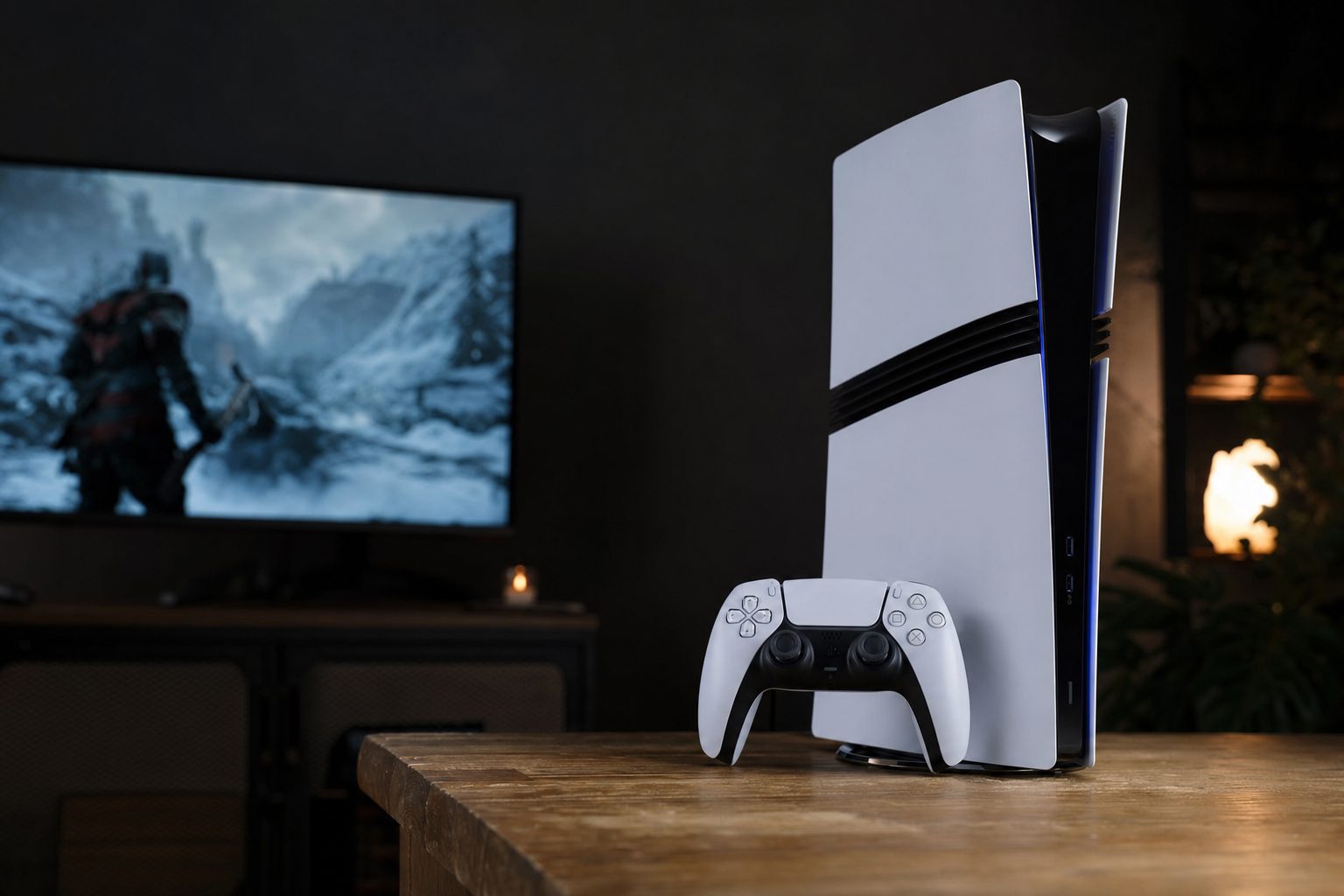
The PS5 Pro sits at the very top of Sony's current-generation line-up — but is the premium worth paying now the games have caught up?
When Sony first unveiled the PS5 Pro back in the autumn of 2024, the reaction was, shall we say, mixed. A lot of the conversation was about the eye-watering price and the fact that you didn't even get a disc drive in the box. Fast forward to today — Saturday 11 July 2026 — and the picture has changed considerably. Not because the console got cheaper (spoiler: it got a good deal more expensive), but because the software has finally caught up. The whole promise of the Pro rested on developers doing the work to support it, and after roughly twenty months on the market, far more of them have.
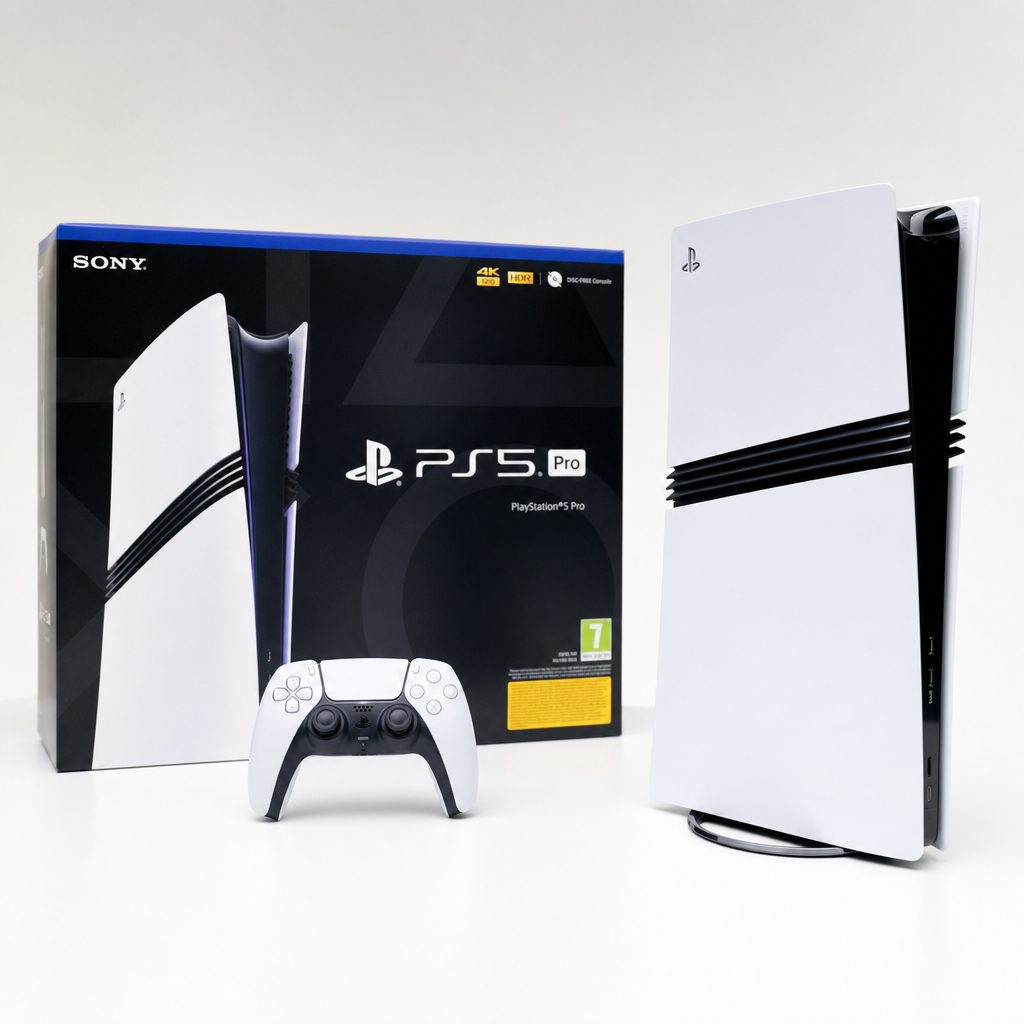
The Pro's headline upgrade is its GPU — 67% more compute units than the base PS5 and roughly 45% faster rendering overall.
So this is the review I always wanted to write: not a launch-day first-impressions piece based on a handful of patched games, but a mature, hindsight-informed look at whether the Pro's substantial premium is justified now that the library has matured. I've used it as my main console for months, run it side by side with a standard PS5, and paid close attention to where it genuinely transforms the experience and where you're paying a lot for very little. Let's get into it.
PS5 Pro at a Glance
Before we dig into the nuance, here's the shape of the machine. The PS5 Pro is fundamentally a beefed-up version of the standard console, and Sony was refreshingly honest about where the extra money went: almost entirely into the graphics side of the equation. The CPU is broadly the same, the game library is identical, and the DualSense controller in the box is the one you already know. What's changed is the raw rendering muscle and a clever bit of machine-learning image reconstruction called PSSR.
The GPU is where the story really lives. It packs 60 compute units versus the base machine's 36, which works out at 67% more compute hardware. Combine that with memory that's 28% faster (18 Gbps versus 14 Gbps) and Sony's claim of around 45% faster rendering overall starts to look believable. The architecture is interesting too: it blends the RDNA 2 foundation of the base PS5 with newer AMD features specifically to accelerate ray tracing and the machine-learning workloads that power PSSR. Ray-tracing performance can hit double, and occasionally triple, the throughput of the standard console.
What Sony very deliberately didn't upgrade is the processor. It's the same 8-core, 16-thread Zen 2 chip as the base PS5, with only a modest high-frequency mode bolted on. That decision has real consequences for how the Pro behaves in certain games, and we'll come back to it because it's central to understanding what your money does and doesn't buy.
Design and Build: Familiar but Refined
Pull the Pro out of the box and it looks unmistakably like a member of the PlayStation 5 family, just a bit taller and with three of those signature vent slashes across the black centre section rather than the smooth panels of the slim edition. It measures roughly 388 × 89 × 216 mm and weighs in at about 3.1 kg. Interestingly, its height matches the original launch PS5 while its width lines up with the current slim model — so it's a chunky bit of kit, but not the monster the original console felt like when it first landed in living rooms.
The thing I appreciate most about the Pro's design, though, isn't how it looks — it's how it behaves once it's running. Sony has clearly learned lessons across the generation. Teardowns of the Pro confirm it runs both cooler and quieter than the launch PS5, and the later CFI-7121 revision is around 3–4% more power-efficient again, with refined heatsink contact for better thermal transfer. In practice, verified owners consistently report that fan noise is barely audible during gameplay, and there's no coil whine even under sustained load. That last point matters more than you'd think — the original PS5 could get properly loud when it was working hard, and having a flagship that stays serene during a graphically punishing set-piece is genuinely lovely.
Whisper-quiet operation
Fan noise is barely perceptible in normal play, and there's no coil whine even during long, demanding sessions. It's the most composed PlayStation I've owned.
Cooler than launch hardware
Teardowns confirm improved thermals over the original PS5, and the CFI-7121 revision squeezes out a further 3–4% efficiency gain.
No disc drive in the box
The Pro is digital-only out of the box. The detachable disc drive is an £80 optional extra, and there's no vertical stand included either.
Generous connectivity
Two SuperSpeed USB-A ports, three USB-C ports (one SuperSpeed), an M.2 slot for storage expansion, Gigabit Ethernet, HDMI 2.1 and Wi-Fi 7.
A quick reality check on the box contents: there's no disc drive and no vertical stand included. If you want to play physical games or stand the console upright, budget for both accessories separately. It's a point that still rankles at this price.
Port-wise there's little to complain about. You get two SuperSpeed USB-A ports (10Gbps), a trio of USB-C ports — two Hi-Speed and one SuperSpeed 10Gbps — plus the M.2 expansion slot, the disc drive connector, and Gigabit Ethernet. The wireless side is properly future-proofed too, with Wi-Fi 7 support and Bluetooth 5.1. Add HDMI 2.1 and the ability to output up to 8K, and there's nothing here you'll be wishing for in a couple of years.
PSSR: The Secret Sauce (When It Works)
If the GPU is the muscle, PSSR — PlayStation Spectral Super Resolution — is the brain. It's a machine-learning-based image-reconstruction technique, and it's the single most important feature to understand before you decide whether the Pro is worth it. Here's the elevator pitch: instead of forcing the console to render every pixel at full 4K, PSSR renders the game at a lower internal resolution and then uses a trained neural network to reconstruct a sharper, higher-resolution image on the fly. Done well, you get something that looks like native 4K (or better) while freeing up huge amounts of GPU headroom for higher frame rates or fancier effects.
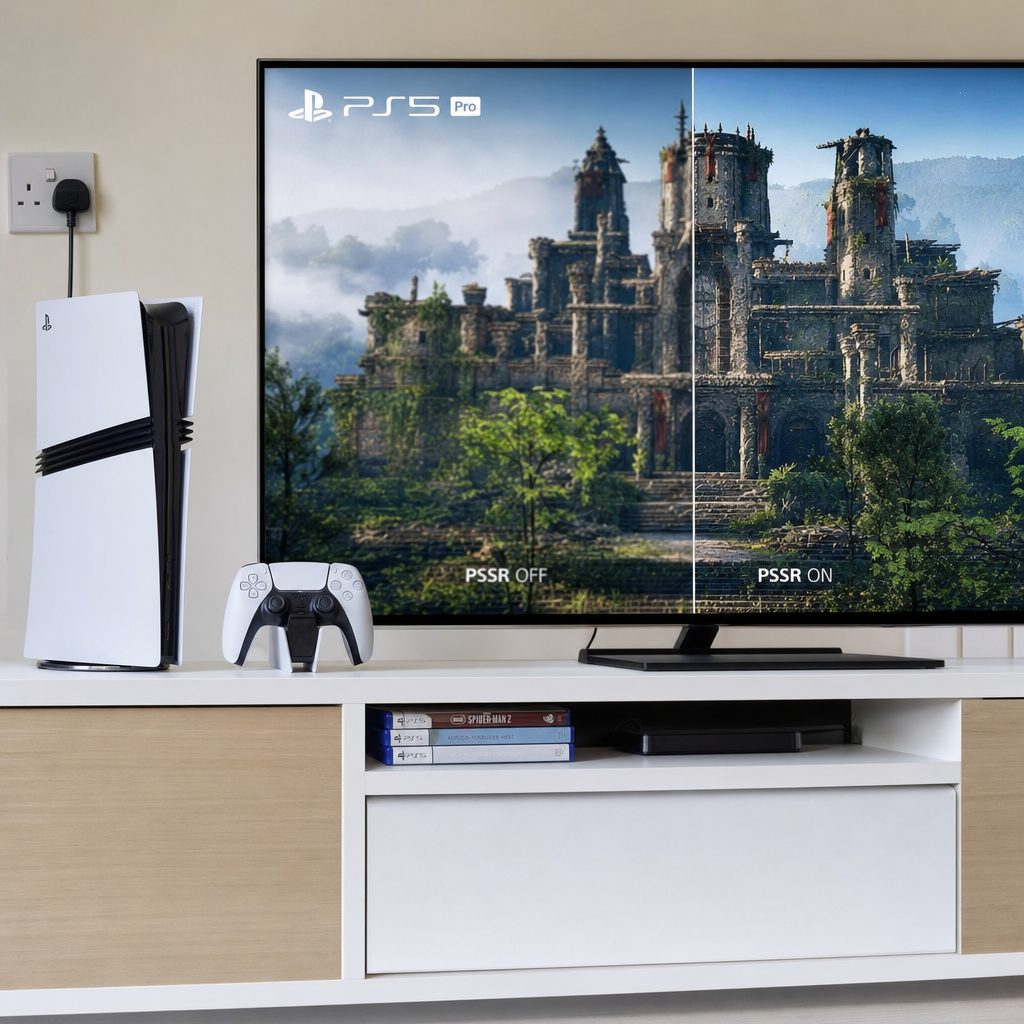
PSSR uses a trained neural network to reconstruct a sharper image from a lower internal resolution — when developers tune it well, the results can be transformative.
When it works, it genuinely is a bit magic. Digital Foundry's analysis confirms that PSSR delivers sharper geometry, reduced shimmering and improved texture clarity compared to native 4K on the base PS5 — and crucially, it's at its best in motion-heavy scenes, which is exactly where the base console's own upscaling tends to fall apart. In the standout titles, the jump in clarity is transformative; you sit there noticing detail in foliage and distant architecture that simply wasn't legible before.
But — and this is a significant but — PSSR is only as good as the developer's implementation. In some games it introduces artefacts around fine detail, foliage or transparency effects, where the neural network guesses wrong and you get shimmer or fizzing where there shouldn't be any. The quality depends heavily on per-game tuning, and that's precisely why a launch-window review of the Pro told you very little about the machine you'd actually be living with. Through 2025 and into 2026, results became noticeably more consistent as developers got to grips with it and Sony refined the toolset. It's still variable game to game, but the baseline is far higher now than it was at launch — which is the whole reason the Pro makes more sense today than it did on day one.
What "optimised for Pro" actually means
Look for the "PS5 Pro Enhanced" label. On these titles the developer has done the work — PSSR is properly tuned, ray tracing is dialled in, and you get the best of what the hardware offers. On unpatched games you still get the "Game Boost" uplift, but you won't see the transformative results. The label is your buying signal.
Performance: Ending the Fidelity vs Frame-Rate War
Here's the problem the Pro was built to solve. On the base PS5, so many big-budget games force you into an uncomfortable choice: a 30fps "Quality" mode with full resolution and ray tracing, or a 60fps "Performance" mode that strips back the resolution and effects to hit that smoother frame rate. You can have it pretty, or you can have it smooth. Not both. It's a compromise millions of us have grudgingly made for years.
The Pro's whole reason for existing is to let you stop choosing. And by and large, it delivers. In enhanced titles you can expect 30–50% better performance, and the console frequently manages to deliver those Quality-mode visuals at Performance-mode frame rates. In real-world testing it consistently held 4K gameplay at 60 to 120fps with ray tracing enabled — the kind of thing the base machine simply can't do. Tom's Guide noted a noticeably sharper 4K image and, at times, up to 20% more frames per second in supported titles.
The most satisfying outcome, in my experience, is when the Pro takes a game's compromised fidelity mode and turns it into a clean, locked 60fps that keeps the ray tracing and the resolution. When that happens, you feel it instantly — the game just looks and moves the way you always wished it would. And where a title already had a strong image, the Pro simply sharpens it further and stabilises the frame rate. Either way, it's an upgrade you notice from the sofa, not just in a slow-motion pixel-peeping comparison video.
The Zen 2 Bottleneck You Need to Know About
Now for the honest caveat, and it's an important one. Because Sony reused the base PS5's Zen 2 CPU with only a modest boost mode, the Pro's gains are heavily skewed towards GPU-bound scenarios. If a game is limited by graphics — resolution, ray tracing, effects — the Pro flies. But if a game is limited by the processor — think physics-heavy simulations, dense crowd rendering, complex AI, or certain 120fps targets — the improvement is far smaller, sometimes barely there at all.
This is the single most misunderstood thing about the Pro. It is a graphics upgrade, full stop. If the game you most want to play smoother is held back by CPU work rather than the GPU, the Pro may not fix it. Check whether the titles you actually care about are GPU-limited before you spend.
This is why I always tell people to think about their actual library rather than the marketing. A visually lavish single-player showpiece? The Pro is exactly the machine for it. A frenetic simulation-heavy strategy game or an online shooter chasing rock-solid 120fps? You might find the uplift underwhelming. It's not a flaw so much as a design decision, but it's one you need to factor into your buying maths.
Everyday Use and Backwards Compatibility
Living with the Pro day to day is a thoroughly pleasant experience, and a lot of that comes down to the things that aren't flashy. The 2TB SSD is a real boon — it's double the base console's storage, which in a world of 100GB-plus game installs is the difference between constant housekeeping and just installing what you fancy. It also drastically reduces load times, so getting into a game is near-instant. Combined with that near-silent cooling, the whole thing just feels like a premium, unhurried piece of kit.
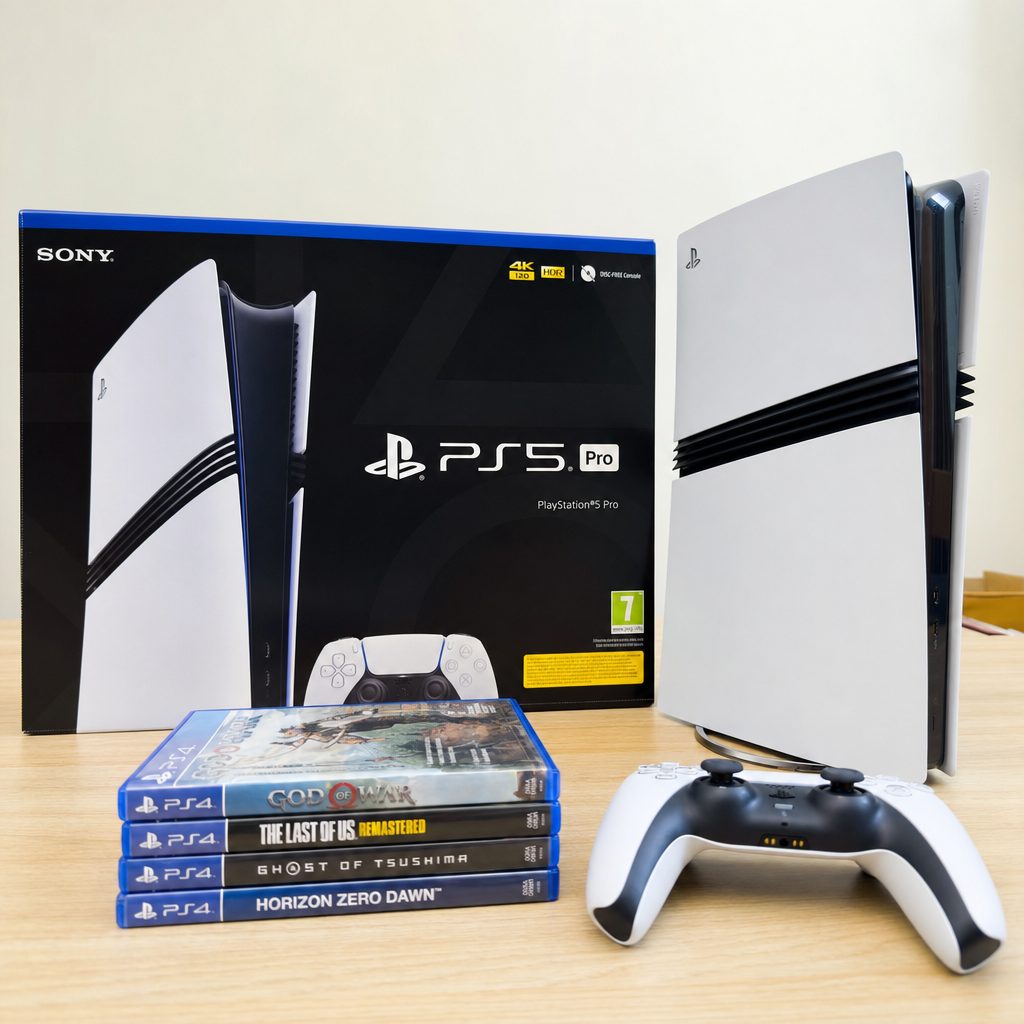
PS5 Pro Game Boost applies to over 8,500 backward-compatible PS4 titles, and select PS4 games get an Enhanced Image Quality option too.
The backwards-compatibility story is stronger than a lot of people realise. PS5 Pro Game Boost applies to more than 8,500 backward-compatible PS4 games, giving many of them a smoother, more stable performance profile without any patching required. On top of that, an Enhanced Image Quality option is available for select PS4 titles, bumping up their resolution. If you've got a deep PS4 backlog you never quite got round to finishing, the Pro is a genuinely lovely way to revisit it — those older games can look and run better than they ever did on the hardware they were made for.
Power draw, meanwhile, is well controlled in practice. Although the console is rated for a maximum of 390W, in real-world gaming it typically pulls around 200W. That's still more than the base machine, so it's not nothing on your energy bill over a year of heavy use, but it's a long way short of the headline figure and nowhere near what a comparable gaming PC would demand for similar results.
The Good
- Frequently delivers Quality-mode visuals at Performance-mode frame rates — the compromise is gone
- PSSR looks superb in well-tuned games, with sharper geometry and less shimmering than native 4K on base PS5
- Ray tracing runs at up to 2–3× the base console's throughput
- Runs cooler and quieter than any previous PS5 — genuinely near-silent
- 2TB SSD and drastically reduced load times make daily use a joy
- Game Boost improves over 8,500 PS4 titles for free
- Future-proofed with Wi-Fi 7, HDMI 2.1 and 8K output
The Not-So-Good
- Same Zen 2 CPU as base PS5 — CPU-limited games see far smaller gains
- PSSR quality is still variable and depends entirely on developer tuning
- No disc drive or vertical stand in the box — both are pricey extras
- Substantial price increases have made an already-premium console much dearer
- Identical game library to the standard PS5 — no exclusives
- Gains are meaningless without a good 4K (ideally HDMI 2.1) display
How It Compares
The Pro doesn't exist in a vacuum, so let's put it next to the two machines most people will actually cross-shop it against: the standard PS5 and a gaming PC. The comparison below focuses on what matters for a buying decision rather than a spec-sheet arms race.
| Feature | PS5 Pro | Standard PS5 | Comparable Gaming PC |
|---|---|---|---|
| GPU compute | 60 CUs, ~16.7 TFLOPS | 36 CUs (67% fewer) | Varies — higher available at cost |
| CPU | 8-core Zen 2 + boost mode | 8-core Zen 2 (same chip) | Typically much stronger |
| Memory | 16GB GDDR6 @ 18Gbps | 16GB GDDR6 @ 14Gbps | Depends on build |
| Storage | 2TB SSD | Smaller SSD, expandable | Fully configurable |
| Ray tracing | Up to 2–3× base PS5 | Baseline | Strong at higher price tiers |
| Upscaling | PSSR (ML-based) | Standard techniques | DLSS / FSR depending on GPU |
| Noise | Near-silent, no coil whine | Can be louder under load | Highly variable |
| Disc drive | Optional extra | Available on disc model | Optional |
| Game library | Identical to base PS5 | Identical to Pro | Vast, but different ecosystem |
The takeaway is clear enough. Against the standard PS5, the Pro is a pure graphics-and-comfort upgrade — same games, same CPU, but a dramatically stronger GPU, faster memory, more storage, quieter running and PSSR. Against a gaming PC, the Pro's pitch is simplicity, silence and a fixed platform developers optimise directly for, whereas the PC offers more raw flexibility and CPU horsepower at the cost of complexity and, usually, higher spend to match the experience. Neither of those alternatives makes the Pro pointless; they just define who it's for.
Price and Value: The Elephant in the Room
There's no getting around it — the Pro has become a considerably more expensive proposition than it was at launch, and the value conversation has to reckon with that honestly.
How the price has moved
The Pro launched on 7 November 2024 at £699.99 in the UK. In the United States it started at $749.99, rose by $50 in August 2025, then jumped a further $150 in April 2026 to $899.99. That last increase in particular reshaped the whole value question — the Pro now sits far above the standard console rather than being a step up.
At current pricing the standard PS5 is a good deal cheaper than the Pro, and here's the uncomfortable arithmetic: in the United States the Pro at $899.99 represents roughly a 48% premium over the standard disc model — for an identical CPU, identical memory capacity and an identical game library. You're paying that premium purely for the GPU uplift, PSSR, the larger SSD and the quieter chassis. Then, if you want physical games, the disc drive is an £80 extra, and the vertical stand is another £30 on top. Kitted out fully, the real out-the-door cost climbs meaningfully above the sticker.
PS5 Pro (UK MSRP)
£699.99
Digital-only. Disc drive and stand sold separately.
Optional Disc Drive
~£80
Detachable, essential if you want physical games.
Optional Vertical Stand
~£30
Not included in the box despite the price.
Is it worth it? That genuinely depends on your setup and what you play. If you own a good 4K television — ideally one with HDMI 2.1 — and you love graphically ambitious single-player games, the Pro delivers something you simply cannot get from the standard console: those lavish visuals running smoothly, with the fidelity-versus-frame-rate compromise finally lifted. That's a real, tangible benefit you'll enjoy every time you switch it on. If you're gaming on a 1080p set, or you mostly play competitive titles where CPU headroom matters more than pixel count, the maths gets much harder to justify. The value isn't in the badge — it's in the specific combination of a demanding library and a display capable of showing off what the Pro does.
Prices shift with bundles and retailer promotions — check the latest price and any current bundles on Amazon before you buy.
Who Should Buy the PS5 Pro?
Rather than a blanket recommendation, it's far more useful to match the machine to the person. Here's how I'd break it down after months of use.
The 4K enthusiast
You've got a proper 4K HDR telly, ideally with HDMI 2.1, and you want your games to look their absolute best. This is exactly who the Pro was built for — the upgrade is unmistakable on the right screen.
The single-player storyteller
You live for cinematic, visually rich adventures. GPU-bound showpieces are where the Pro shines brightest, turning compromise modes into clean, ray-traced 60fps.
The new-to-PlayStation buyer
If you're buying your first PS5 now and the extra spend fits your budget, going straight to Pro spares you an upgrade later — and you get the bigger SSD and quieter chassis into the bargain.
The peace-and-quiet fan
If a noisy console has always bugged you, the Pro's near-silent, coil-whine-free running is a genuine quality-of-life win in a shared living room.
Who Should Skip It
Equally, plenty of people should save their money. If you already own a standard PS5 and you're happy with it, the Pro is a hard sell — the games are identical, and unless you're regularly frustrated by having to choose between modes, you're spending a lot to solve a problem you've already made peace with. If you play mostly on a 1080p display, most of the Pro's benefits are invisible to you. And if your favourite games are CPU-limited — heavy simulations, crowd-dense titles, competitive shooters chasing 120fps — the shared Zen 2 processor means you may not get the uplift you're hoping for. In those cases the standard PS5 gives you the same library for meaningfully less.
The Verdict Rating
The Pro is a superb piece of hardware held back, in the value column at least, by pricing that has drifted well upward since launch. On pure capability it's the finest console Sony has made — quieter, faster, and now, with a mature library behind it, far more consistently rewarding than it was at launch. The only reason it doesn't score higher is that the premium asks a lot for a machine that shares its CPU and its entire game library with a much cheaper sibling.
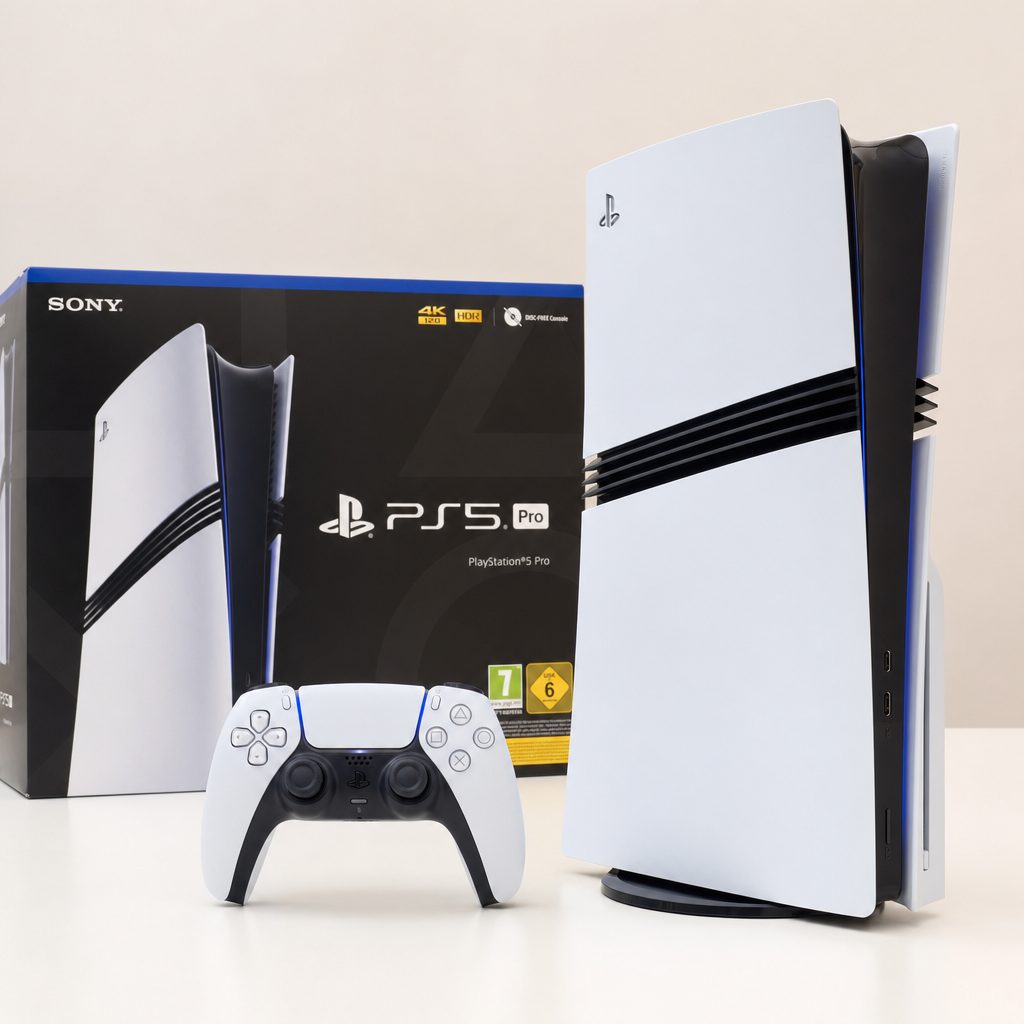
Twenty months on, the Pro finally delivers on its promise — but only for the right owner with the right screen.
Final Verdict
A year and a half after launch, the PS5 Pro is a much easier console to recommend than it was on day one — not because anything changed in the box, but because the software finally caught up. With far more titles carrying the "PS5 Pro Enhanced" label and PSSR maturing into something genuinely impressive, the machine now consistently does what it always promised: it deletes the fidelity-versus-frame-rate compromise and gives you gorgeous, smooth, ray-traced gaming that a standard PS5 simply cannot match.
The sticking point remains the price. Successive increases have pushed the Pro into properly premium territory, and it shares its CPU and its entire game library with a console that costs considerably less. That makes it a specialist purchase rather than a default one. If you own a good 4K HDMI 2.1 display and you love graphically ambitious games, it's a joy that pays you back every session. If you're on a 1080p set, or you chase CPU-heavy performance, the standard PS5 is the smarter buy. Judge it by your telly and your library, not by the badge — and if it fits, the Pro is the best-feeling console in the house.
Frequently Asked Questions
All told, the PS5 Pro in mid-2026 is a very different recommendation than the cautious one it earned at launch. The hardware was always capable; the games are finally worthy of it. If your setup and your taste in games line up with what the Pro does best, it's a properly special console — just go in clear-eyed about the price and about the fact that this is a graphics upgrade, not an all-round one. Get that match right, and you'll be delighted every time you switch it on.