
PS5 Pro vs Xbox Series X: Which Powerhouse Console Should You Buy Now?
One is Sony's no-compromise, AI-upscaled flagship. The other is Microsoft's dependable 4K workhorse that has quietly aged into a bargain. I've dug into the specs, the numbers and the real-world value to help you spend your money wisely in 2026.
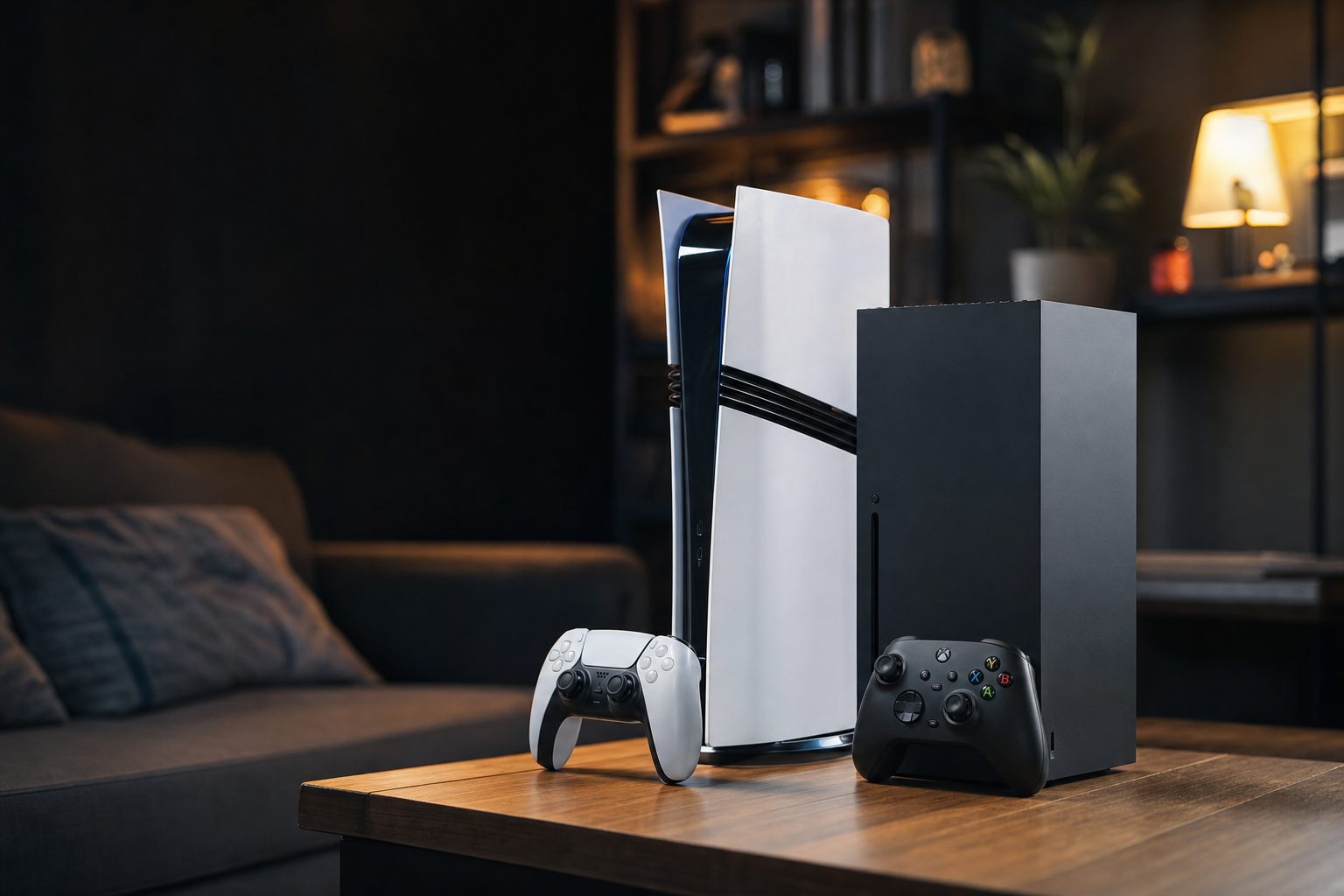
The PS5 Pro and Xbox Series X sit at opposite ends of the price ladder in 2026 — but which one earns your money?
If you've been circling these two consoles for weeks, you're not alone. The PlayStation 5 Pro and the Xbox Series X represent two very different philosophies about what a modern console should be — and in 2026, with prices having shifted more than once, the decision is genuinely harder than the raw spec sheets suggest.
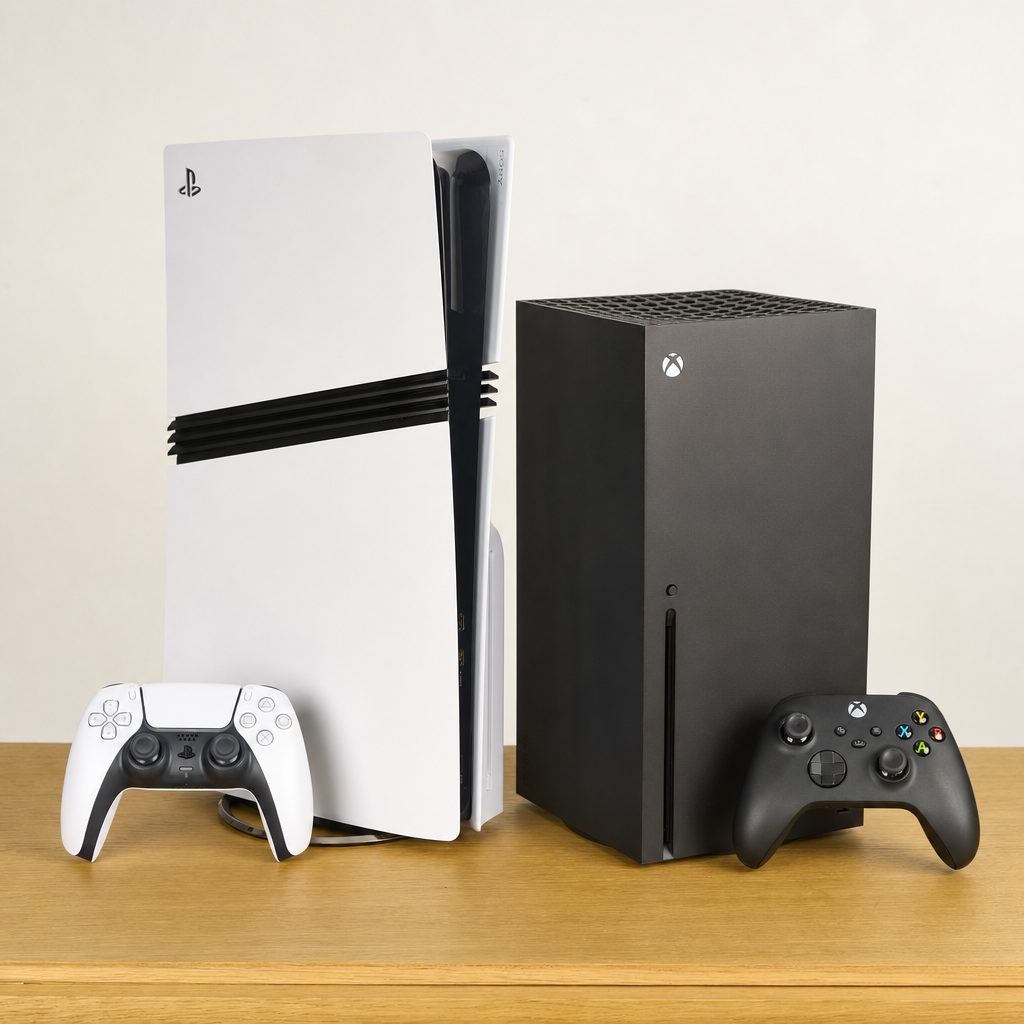
On paper the PS5 Pro's 16.7 TFLOP GPU dwarfs the Series X — but raw numbers only tell part of the story.
The short version? The PS5 Pro is the most powerful mainstream console you can currently buy, and it has the frame rates and ray tracing to prove it. The Xbox Series X, meanwhile, launched all the way back in November 2020 and has quietly become the sensible-money choice — still a properly capable 4K machine, and often available for a fraction of the Pro's asking price. Let's break it all down, category by category.
Meet the Two Contenders
Before we start comparing gigaflops and frame counts, it's worth remembering where each of these machines sits in its family tree. The PS5 Pro is a mid-generation refresh — it arrived on 7 November 2024, roughly four years into the PS5's life, as a premium performance variant rather than a brand-new generation. It's the console for people who want everything cranked up.
The Xbox Series X, by contrast, has been with us since 10 November 2020. That makes it the elder statesman here by a full four years. It's still Microsoft's flagship, and it's still on sale new, but it's very much a known quantity at this point — a mature platform with all its quirks ironed out. Microsoft even announced an Xbox Series X25 Limited Edition during the Xbox Games Showcase 2026, with a release planned for November, so the hardware clearly isn't going anywhere.
Raw Performance: The Power Gap
Let's not bury the headline: the PS5 Pro is the more powerful machine, and it isn't especially close. Its custom AMD RDNA-based GPU packs 60 compute units and delivers 16.7 TFLOPs, which works out to roughly 45% faster rasterisation than the base PS5 and comfortably more grunt than the Series X's 12.0 TFLOPS. The Xbox's GPU runs 3,328 shading units, 208 texture mapping units and 64 ROPs at a frequency of 1,825 MHz — a very respectable configuration for its era, but one designed in 2020.
Where things get interesting is ray tracing. The Series X was among the first consoles to offer hardware-accelerated ray tracing, and at launch that was genuinely cutting-edge. But the PS5 Pro's ray-accelerator design is far more modern, processing the same ray-tracing workloads far more efficiently and delivering up to roughly 2× the ray-tracing throughput of the base PS5. Reflections, shadows and global illumination all benefit.
Both consoles lean on the same CPU foundation — an eight-core AMD Zen 2 design (sixteen threads on the Pro). Sony describes a "boosted performance mode" that pushes clock speeds higher when a game needs it, whilst Microsoft's custom Zen 2 chip was pitched as offering four times the CPU power of the Xbox One X. In practice, the CPUs are close enough that the graphics silicon does most of the heavy lifting when it comes to separating the two.
The memory picture favours the Pro too. It carries 16GB of GDDR6 running up to 576 GB/s — that's 28% faster memory than the base PS5 — plus an extra 2GB of DDR5 dedicated to background tasks so the fast memory isn't clogged with system housekeeping. The Series X uses 10GB of GDDR6 across a 320-bit interface as its gaming pool, out of 16GB total system RAM.
What the numbers actually mean
TFLOPs make for great headlines, but they don't translate one-to-one into a better gaming experience. A 16.7 vs 12.0 gap sounds enormous, yet in many cross-platform games running in a standard performance mode you'd struggle to tell them apart on a normal telly. The Pro's advantage shows up most in the toughest titles and in ray-traced modes — exactly where the base hardware starts to sweat.
Resolution, Frame Rates and PSSR
This is where the PS5 Pro really stakes its claim. The whole point of the machine is to let you have your cake and eat it: high resolution and high frame rates and ray tracing, rather than having to pick two out of three. PS5 Pro-compatible games can run at 60fps, or up to 120fps, with ray tracing and AI-enhanced 4K resolution.
The secret sauce is PlayStation Spectral Super Resolution (PSSR) — Sony's AI-powered upscaling technology, driven by dedicated machine-learning silicon inside the Pro. Rather than brute-forcing native 4K, PSSR intelligently reconstructs a sharper image while freeing up headroom for higher frame rates. Independent testing by Digital Foundry confirmed that PSSR delivers sharper geometry, reduced shimmering and improved texture clarity compared with native 4K rendering on the base PS5 — and the difference is most obvious in fast, motion-heavy scenes.
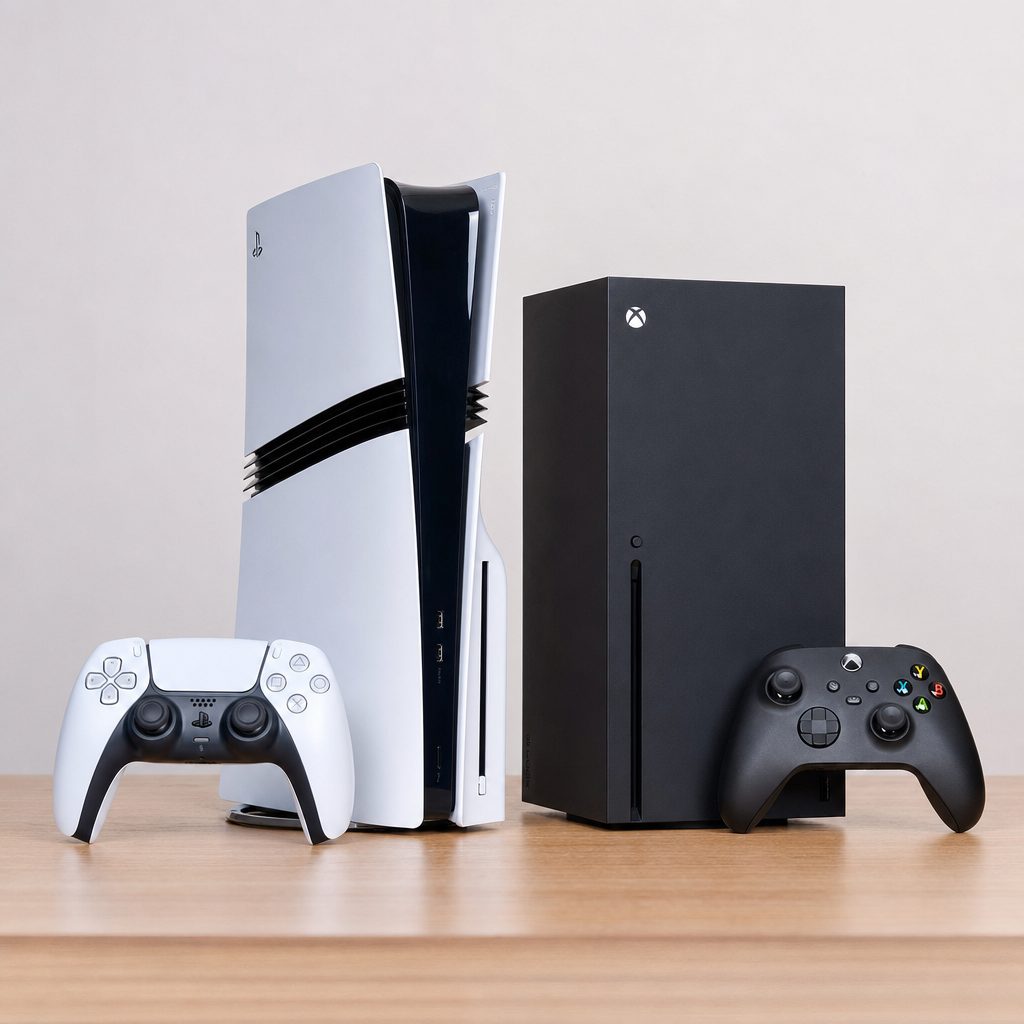
PSSR upscaling lets the PS5 Pro chase near-4K clarity and high frame rates at the same time — a trick the Series X can't match in hardware.
Some concrete examples help. On the PS5 Pro, Marvel's Spider-Man 2 runs at native 4K, 60fps with ray tracing enabled. Final Fantasy VII Rebirth's performance mode now hits 4K, and Horizon Forbidden West pushes an 8K checkerboard image with enhanced ray tracing. In real-world testing, the Pro consistently delivered 4K gameplay at 60 to 120fps with ray tracing on — something the original PS5 genuinely struggles with in the most demanding titles.
The Series X is no slouch here. It was designed to nominally render games in 2160p (full 4K) at 60fps, and for the vast majority of the library it hits that target happily. It also supports HDMI 2.1 variable refresh rate and low-latency modes, so on a compatible TV you get lovely tear-free, responsive gameplay. What it lacks is a hardware-level answer to PSSR — there's no dedicated ML upscaler, so in the heaviest ray-traced scenarios it simply can't reach the same heights the Pro can.
PSSR (PS5 Pro)
AI upscaling that reconstructs near-4K detail whilst freeing performance for higher frame rates — verified sharper than base PS5 native 4K.
Quick Resume (Series X)
Teleport seamlessly between up to four different titles and pick up instantly where you left off — one of Xbox's genuinely brilliant features.
Auto HDR (Series X)
Uses machine learning to convert games — including older ones — to high-dynamic-range rendering, adding richness with zero effort.
Ray Tracing (Both)
Both support hardware ray tracing, but the Pro's newer accelerators handle it far more efficiently than the Series X's 2020-era hardware.
Design, Storage and Everyday Living
There's a philosophical fork here that matters more than you'd think. The PS5 Pro ships as an all-digital console with no disc drive — if you want to play discs or rip your existing collection, you buy the optional disc drive accessory separately and clip it on. The Xbox Series X, by contrast, includes a full UHD Blu-ray disc player right out of the box, which doubles as a rather good 4K movie player for your telly.
Storage is another practical difference. The Pro's 2TB SSD is double the base PS5's, which is genuinely welcome given how bloated modern game installs have become — and it's expandable via a PCIe Gen4 x4 M.2 NVMe slot. The Series X comes with a 1TB SSD as standard (a 2TB option exists), and also supports storage expansion. In day-to-day use, that extra terabyte on the Pro means fewer agonising decisions about which games to delete.
If you own a stack of physical discs — or you like buying pre-owned games cheaply and reselling them — the Series X's built-in drive is a real convenience the Pro charges extra to match. Factor the cost of the disc drive accessory into any PS5 Pro budget if that's you.
On noise and cooling, Sony did good work with the Pro: quieter fans and optimised heat dissipation mean it runs noticeably more hushed than the original PS5 under load. That said, the larger 60-CU GPU running at higher memory speeds draws more power than the base console, and under heavy load in Pro Enhanced titles it pulls noticeably more wattage than a PS5 Slim. The Series X, meanwhile, has a rated maximum power draw of 200W and uses a clever split motherboard architecture for even temperature control — that iconic monolith shape (301mm × 151mm × 151mm) hides a genuinely well-engineered cooling system.
Connectivity and Future-Proofing
The PS5 Pro is the more forward-looking box on connectivity. It's the first PlayStation with Wi-Fi 7, alongside HDMI 2.1, Ethernet, dual USB-C, dual USB-A and Bluetooth 5.1. That Wi-Fi 7 support is a nice touch if you have a modern router and rely on wireless for downloads and cloud play.
The Series X keeps things simpler with HDMI 2.1, Ethernet and USB 3.1, plus hardware-accelerated ray tracing and spatial audio support. It's not bleeding-edge in 2026, but everything you actually need for 4K/120 gaming is present and correct — HDMI 2.1 is the one that matters most for connecting to a modern TV, and both consoles have it.
| Feature | PlayStation 5 Pro | Xbox Series X |
|---|---|---|
| Released | 7 November 2024 | 10 November 2020 |
| GPU compute | 16.7 TFLOPs, 60 CU (RDNA-based) | 12.0 TFLOPS, 1,825 MHz |
| CPU | 8-core / 16-thread Zen 2, boosted mode | Custom 8-core Zen 2 |
| RAM | 16GB GDDR6 (up to 576 GB/s) + 2GB DDR5 | 16GB total (10GB GDDR6 gaming pool) |
| Storage | 2TB SSD, PCIe Gen4 expandable | 1TB SSD (2TB option), expandable |
| Ray tracing | Modern accelerators, ~2× base PS5 | 2020-era hardware RT |
| AI upscaling | PSSR (dedicated ML silicon) | None in hardware; Auto HDR only |
| Disc drive | Optional accessory (extra cost) | UHD Blu-ray included |
| Wireless | Wi-Fi 7, Bluetooth 5.1 | Standard Wi-Fi |
| Peak targets | 4K/60–120fps + RT via PSSR | Nominal 4K/60fps, VRR support |
| Standout feature | Highest performance ceiling on console | Quick Resume across four games |
Game Libraries and Subscriptions
Hardware is only half the equation — the games and services you'll live with day to day matter just as much, and this is where the two platforms diverge sharply.
PlayStation leans heavily on its first-party exclusives and, crucially, on the "PS5 Pro Enhanced" badge. Titles carrying that label — the likes of Marvel's Spider-Man 2, Final Fantasy VII Rebirth and Horizon Forbidden West — receive specific patches that unlock the Pro's extra power for higher resolutions, better ray tracing and steadier frame rates. If you care about a game looking its absolute best, PlayStation is where the showcase experiences live.
Xbox's pitch is different and, for a certain type of player, more compelling: value through subscription. Game Pass remains the strongest argument for buying an Xbox, giving you a rotating library of titles — including Microsoft's own first-party games on day one — for a monthly fee rather than £60–£70 a pop. If you're the kind of player who likes to sample lots of games rather than obsess over a handful, that changes the maths dramatically. The Series X also plays nicely with backwards compatibility and features like Quick Resume, which lets you hop between up to four games instantly.
PS5 Pro strengths
- The most powerful mainstream console you can buy today
- PSSR delivers genuinely sharper images than base PS5 native 4K
- 4K/60–120fps with ray tracing in demanding games
- Roomy 2TB SSD as standard, expandable
- Wi-Fi 7 and quieter running than the original PS5
- Strong stable of PS5 Pro Enhanced showcase titles
PS5 Pro compromises
- No disc drive included — the accessory costs extra
- Draws more power under load than a PS5 Slim
- Significantly pricier since the April 2026 increase
- Benefits vary game to game; not every title is Enhanced
Series X strengths
- Capable native 4K/60 gaming across the library
- UHD Blu-ray drive built in — great for films and discs
- Game Pass offers outstanding value for varied players
- Quick Resume across four games is superb
- Auto HDR breathes life into older titles
- Typically far cheaper than the PS5 Pro
Series X compromises
- 2020-era hardware; no AI upscaling equivalent to PSSR
- Lower performance ceiling than the Pro
- Standard 1TB storage fills quickly
- Fewer platform-defining exclusives than PlayStation
Value for Money in 2026
Here's where the picture flipped over the course of this year. Sony's price increase on 2 April 2026 pushed the PS5 Pro up considerably, and it now sits a full $250 above the standard 1TB Xbox Series X in the United States. In the UK the Pro carries a substantially higher ticket than the Series X — and remember, that Pro price doesn't include a disc drive.
The Series X, being an older design that has enjoyed years of manufacturing maturity, is frequently the sharper deal. Microsoft did announce price adjustments across the range, but a Series X remains far more attainable than the Pro, and savvy shoppers regularly find the console below its official store price. For a lot of families and casual players, that gap is the whole ballgame.
The real cost of "the best"
Buying the PS5 Pro is buying the ceiling — the best a console can currently do. But the Series X delivers a large slice of that experience for a good deal less money, and it throws in a disc drive for nothing. Unless you're specifically chasing PSSR-enhanced ray tracing at high frame rates, the value argument leans hard towards Xbox.
Because pricing shifts around promotions and bundles, it's always worth checking current offers before you commit.
Check the latest price and any current bundles on Amazon.
How They Score
Boiling everything down into a single figure is always a little reductive, but it's a useful way to see how each console stacks up against what it's trying to be. The Pro is judged as a premium flagship; the Series X as a mature, value-focused 4K machine.
Who Should Buy Which?
There's no single winner here — there's a winner for you. Here's how I'd steer different types of buyer.
Buy the PS5 Pro if…
You want the very best-looking games money can buy, you own a good 4K TV (ideally with 120Hz), and PlayStation exclusives are your priority. PSSR and higher ray-traced frame rates are exactly what you're paying for.
Buy the Xbox Series X if…
Value matters and you'd rather spend the difference on games. Game Pass, a built-in disc drive and dependable 4K/60 make it the smart-money choice for most households.
For families & casual players
The Series X wins comfortably. Lower cost, Game Pass variety, Quick Resume for jumping between games, and a disc drive for pre-owned bargains and movie nights.
For enthusiasts & tinkerers
The PS5 Pro is the toy for you — maximum headroom, expandable storage, Wi-Fi 7 and the highest ceiling on any console right now.
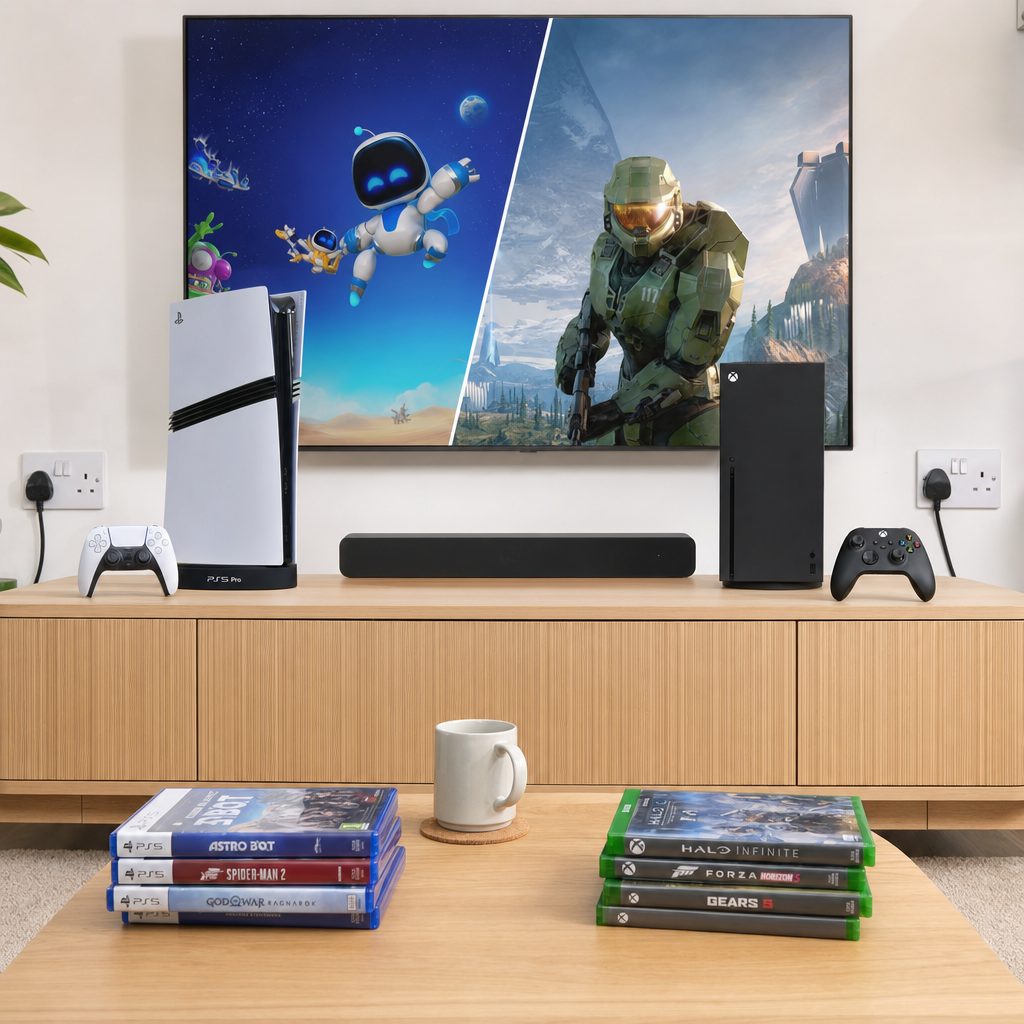
There's no universal winner — the right console depends entirely on your budget, your TV and how you like to play.
Frequently Asked Questions
The Verdict
These two consoles aren't really competing for the same shopper. The PS5 Pro is a no-compromise flagship — the most powerful mainstream console on sale, with PSSR upscaling and ray-traced performance the Series X simply can't reach. If you have a great TV, love PlayStation's exclusives and want the ceiling raised as high as it goes, it's a triumph. Just be ready for the price, and remember to budget for the disc drive if you want one.
The Xbox Series X, meanwhile, has aged into the smart-money hero. It launched back in 2020, but a mature 4K/60 machine with a built-in Blu-ray drive, brilliant Quick Resume and the extraordinary value of Game Pass makes it the console I'd point most families and value-minded players towards without hesitation.
So: chasing the absolute best pictures at any cost? The PS5 Pro. Want a fantastic all-rounder that leaves money in your pocket for games? The Xbox Series X. Both are cracking machines — just aimed at different wallets and different priorities.