Unsafe 'Squishy Dumpling' Toys Seized Across UK in 2026 Crackdown
Trading Standards teams from Glasgow to Cardiff have seized thousands of gel-filled squishy dumpling toys found to contain benzene or lacking basic safety markings.
What you need to know
- Trading Standards teams across at least seven UK regions have seized more than 3,500 squishy dumpling toys in 2026 for failing safety standards
- The OPSS issued an official recall on 25 June 2026 for a squishy dumpling sold by Samsons Cash and Carry Ltd after lab tests found benzene levels of 20mg/kg
- Six children have been treated at a Glasgow hospital — some needing surgery — after microwaving the toys following a dangerous TikTok trend
Thousands of toys seized as nationwide enforcement action targets gel-filled squishies
Trading Standards officers across the UK have seized more than 3,500 unsafe gel-filled "squishy dumpling" toys during a wave of enforcement activity running from spring into summer 2026 — and one product has already been subject to an official government recall after laboratory testing found a toxic chemical in its outer layer.
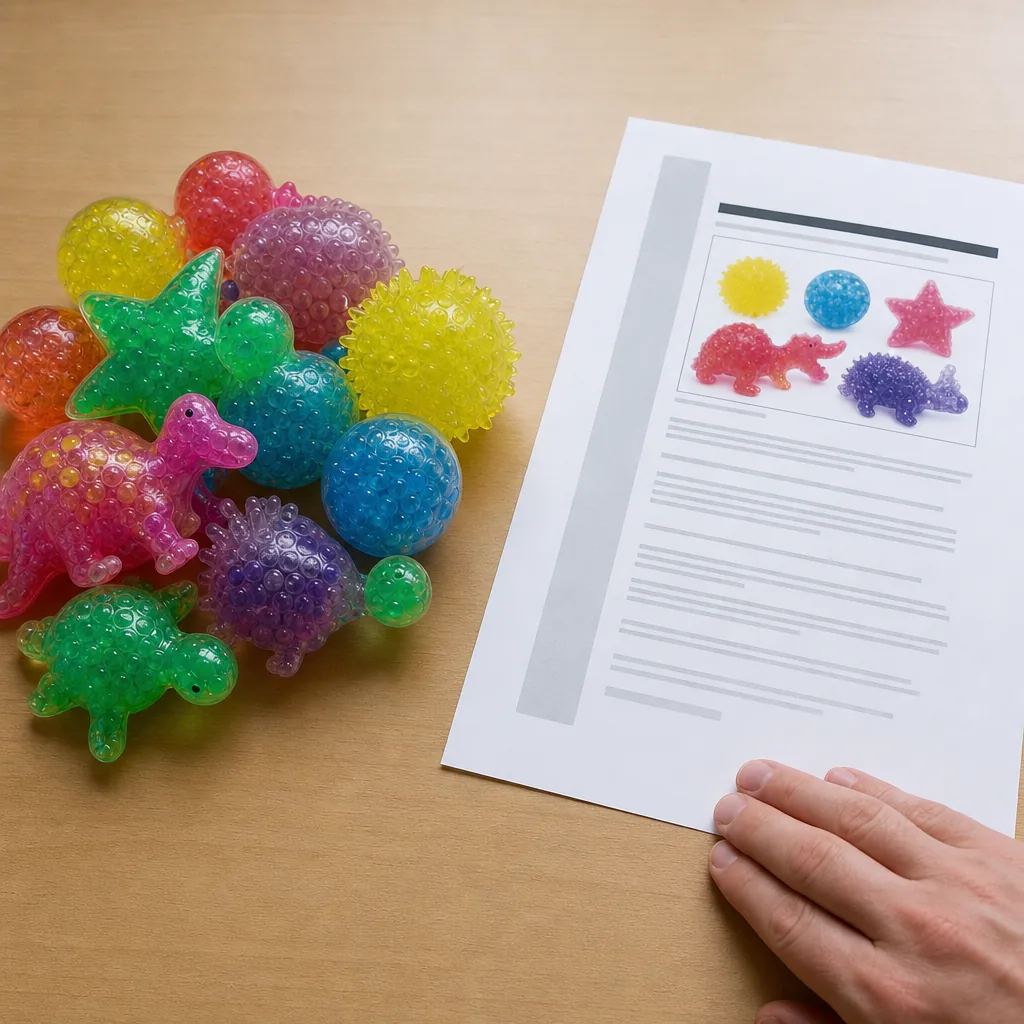
The scale of the crackdown is striking. Gloucestershire Trading Standards seized 1,968 toys — including copies of popular squishy dumpling and NeeDoh products — following inspections carried out over three months, with the NeeDoh copies also suspected to be counterfeit. Milton Keynes followed with 711 gel-filled toys confiscated after around 100 inspections across the city last week alone, according to figures published on 30 June 2026. Reading Trading Standards impounded over 320 of the sensory toys; Cheshire West and Chester removed 361 squishies from a shop in Ellesmere Port; and Rhondda Cynon Taf Council in Wales reported that 224 unsafe squishy toys were voluntarily surrendered by traders on 2 July 2026. Enforcement action has also been carried out in Warrington and in Renfrewshire, Scotland, where squeezy dumpling toys — often sold in small plastic steamer baskets — and "salted butter" bar squishy toys were among those removed.
Official recall: benzene found at serious levels
On 25 June 2026, the UK's Office for Product Safety and Standards (OPSS) published an official product recall — reference number 2606-0196 — for a product called "Squeezy Dumplings", distributed by Samsons Cash and Carry Ltd, based in Cardiff. The recalled item is a soft plastic dumpling sold inside a plastic basket-style container, made in China, and carrying no batch number, model number, or other identifying information on its packaging.
The risk classification is listed as serious, and the hazard type is chemical. The OPSS recall notice states:
"The product presents a serious chemical risk because the outer layer contains an excess concentration of benzene (20mg/kg)."
Benzene is a substance linked to cancer. At lower exposure levels, it can cause irritation to the eyes, nose, and throat; at higher levels, it may cause a burning sensation in the digestive tract and skin irritation. The OPSS notice also flags that improvements are required to the product's labelling and marking. Samsons Cash and Carry Ltd recalled the product from end users.
What officers found on the ground
Across the various regional seizures, Trading Standards officers identified a consistent pattern of failures. Many toys emitted a strong chemical odour. Imitation versions of popular branded products — including NeeDoh and Squishy Dumplings — were found without legally required traceability information, such as the name and address of a UK importer or manufacturer. Crucially, many lacked the CE or UKCA markings that demonstrate compliance with UK toy safety standards. Officers in Rhondda Cynon Taf specifically noted that many toys were non-compliant with the Toy Safety Regulations 2011.
Beyond chemicals, poorly constructed squishy toys also carry a physical risk: badly made versions can split or break under pressure, creating a choking hazard — particularly for younger children.
The microwaving trend: real children, serious injuries
Running in parallel to the chemical safety concerns is a separate but related danger driven by social media. A viral trend — spreading across TikTok and other platforms — encourages children to microwave their squishy toys to make them softer and more satisfying to squeeze. The physics behind the resulting injuries are straightforward and alarming: heating the toy traps pressure inside its sealed gel core, and when a child squeezes it, or a weak point gives way, the toy can rupture explosively, spraying gel that reaches temperatures of over 200°F (approximately 93°C).
Six children have been treated at the Royal Hospital for Children in Glasgow for injuries linked to the trend in the past eight months, with some requiring surgery including skin grafts. Joseph Erskine, aged eight, from Clackmannanshire, needed weeks of treatment and a skin graft after a squishy toy he microwaved burst across his chest and hand in May. A ten-year-old girl in Bristol was left with facial burns on 4 May 2026 after encountering the trend on TikTok. Burns specialists have warned that injuries from heated squishy toys can be especially severe because the gel can remain extremely hot and adhere to the skin, prolonging the burn.
Many of these toys carry packaging warnings not to heat, freeze, or microwave the product — but children are ignoring them because online videos actively encourage the opposite. TikTok has told the BBC that content promoting dangerous behaviour is removed when found. NeeDoh manufacturer Schylling says it has partnered with social media companies to have misuse content taken down.
A problem years in the making — now at a new scale
This is not the first time squishy toys have drawn the attention of UK enforcement bodies. As far back as January 2020, a market trader was fined for possessing dangerous squishy toys with a view to supply, and was found to have applied fake CE mark stickers to the products. The 2026 wave, however, is markedly larger in scale and geographically far more widespread.
In a further development, the OPSS published seven related sensory toy recalls on 21 July 2026. Those toys — withdrawn by PMS International — were flagged because the sand inside may be contaminated with a small quantity of asbestos, making them a separate but concurrent concern for anyone buying novelty sensory toys this summer.
- If you own a squishy dumpling toy with no UK importer name, no UKCA or CE marking, or a strong chemical smell, stop using it and do not give it to children.
- Never microwave squishy toys, regardless of what you see online.
- Check the OPSS product recall database at gov.uk for the latest withdrawn products.
Why it matters
These toys are sold cheaply and widely — in market stalls, discount shops, and online — often without the CE or UKCA markings that signal basic safety compliance. Parents who have already bought squishy dumpling products should check for a UK importer's name and address on the packaging; if it's absent, that alone is a red flag. The benzene finding in the recalled product is particularly serious: even low-level benzene exposure carries long-term health risks, and children who handle, chew, or repeatedly squeeze these toys face the greatest exposure. The microwaving trend adds a second, acute danger on top of the chemical one.