
Best Building and Construction Toys That Feed a LEGO Habit
LEGO remains a spectacularly good building toy, but it is not the only box capable of turning a quiet afternoon into an ambitious engineering project. These alternatives and companions bring vehicles, magnets, circuitry, tiny detail and gloriously odd structures to young builders' shelves.
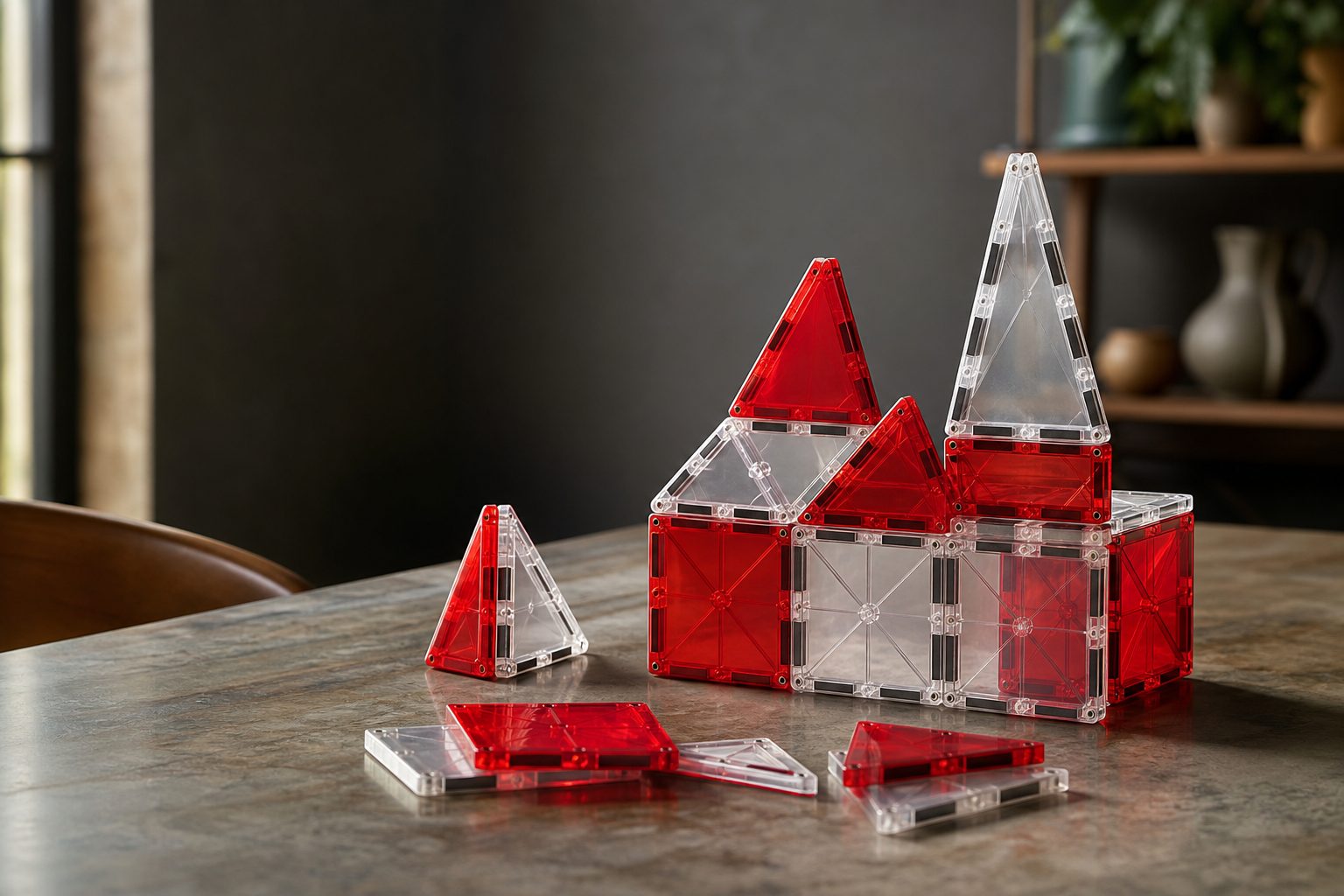
A mixed building table makes the point rather nicely: LEGO does not need to be the only route into thoughtful, hands-on construction play.
Why look beyond the brick?
There is a particular kind of child who does not really "play with LEGO" so much as establish a small construction firm on the living-room floor. They sort pieces by colour, repurpose last week's spaceship into a café, and regard an instruction booklet as merely the opening suggestion. If that sounds familiar, buying another LEGO set is never a bad answer. It is just not the only answer.
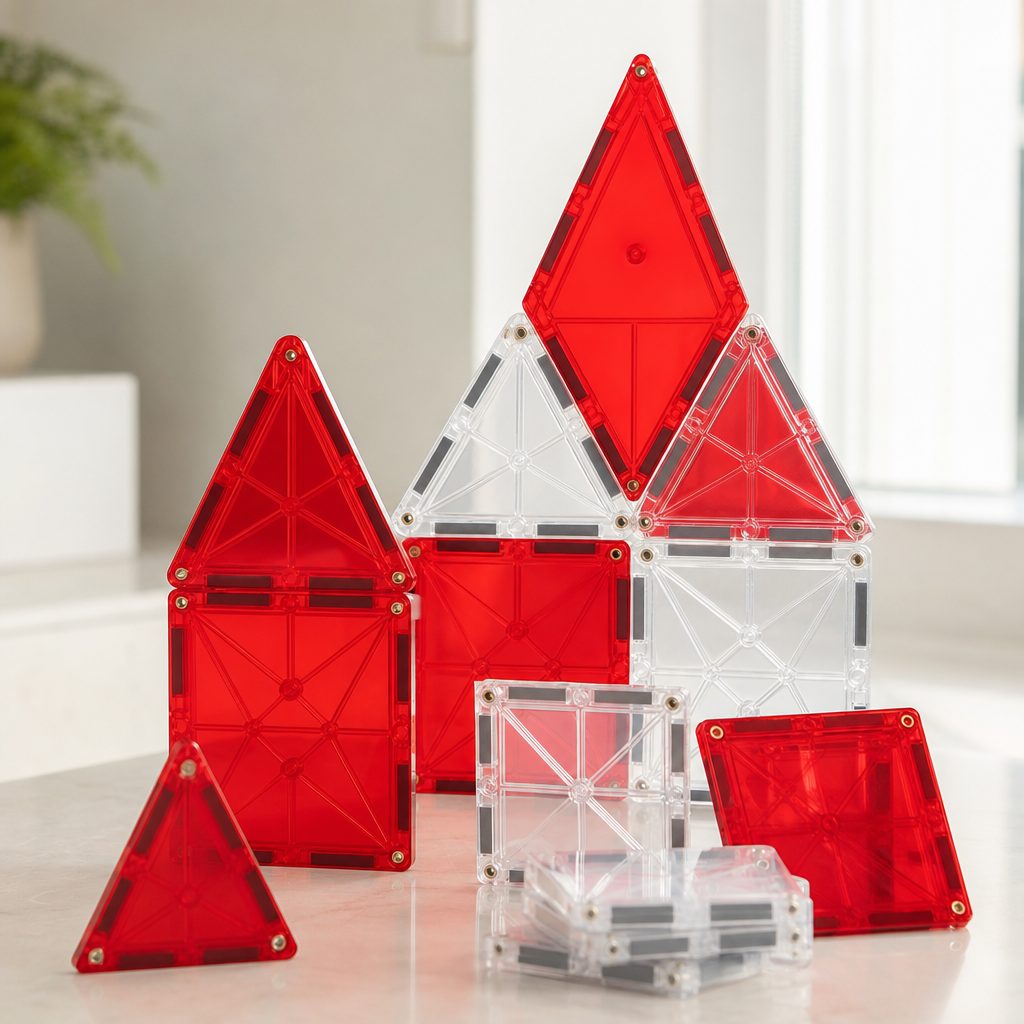
Construction toys earn their keep when they encourage a builder to try a different structure, connection or idea rather than simply make the same model again.
The wider construction-toy world gives young builders different problems to solve. CaDA introduces steering systems and functional machinery. COBI brings a very different subject matter to brick building. Magna-Tiles takes construction upright, translucent and architectural. Snap Circuits turns a completed model into a lesson in what electricity can actually do. Then there are K'Nex, ZOOB, Lincoln Logs, Nanoblock, Mega Construx and traditional wooden blocks: all of them ask hands and brains to work in slightly different ways.
That variety matters. A keen builder can love LEGO's precise studs whilst also benefiting from a toy that rewards balance rather than stacking, movement rather than display, or experimentation rather than following numbered steps. Think of this guide less as a mission to replace the brick and more as permission to widen the workshop.
A useful rule: choose the construction system that fills a gap in the toy box. A child with lots of detailed display models may enjoy magnets or mechanisms; a child who only builds from pictures may flourish with open-ended blocks and connectors.
How I chose the picks
This is a companion guide, not a contest in which one brand is declared king of all building. That would be silly. A six-year-old arranging a colourful magnetic castle and an older child working through a model with steering are doing different, equally worthwhile things.
I have prioritised systems with a clear identity. The best alternatives should not merely look a bit like LEGO from across the room. They should offer a satisfying construction experience of their own: recognisable parts, a reason to revisit the box, and enough possibility that the finished model does not feel like the end of the game.
Different engineering questions
Some systems focus on connection and structure; others invite moving parts, steering, electrical experiments or spatial balance.
Room for invention
The strongest building toys make children feel clever when they abandon the instructions. That is usually where the real repeat play begins.
Shared building potential
Good construction play can be solitary and absorbing, but the best systems also cope when a sibling arrives with a very strong opinion about bridges.
A distinct physical feel
Magnets, rods, logs, small blocks and ball joints all teach hands something different. That is a feature, not a complication.
A parent's sanity-saving tip
Do not introduce every construction system at once. Give a new set some uncluttered floor space and a proper first session. If it is buried under several tubs of bricks, the child will understandably choose the familiar thing with the minifigures.
The ranked picks
1. CaDA Technic-Style Building Sets — Best for budding engineers
CaDA is the most direct recommendation here for a builder who has reached the point where a static car is no longer enough. The brand is associated with steering systems and functional machinery, which changes the building conversation from "does it look right?" to "does it work?" That is a lovely escalation for children who enjoy understanding why a vehicle turns, how a mechanism transfers motion, or why one tiny connection can make a whole build wobble.
It is also a natural bridge for fans of LEGO Technic-style construction, because the attraction is familiar: beams, connectors, mechanisms and a model that feels more like a machine than a sculpture. CaDA parts are described as compatible with LEGO parts, making it a potentially interesting companion for a household already full of bricks. That said, compatibility should be treated as an invitation to experiment, not a promise that every mixed-brand build will feel identical in the hand.
Pros
- Steering systems and functional machinery give builders a mechanical challenge.
- Compatible LEGO parts can broaden an existing build collection.
- Particularly appealing when static display models have started to feel a little tame.
Cons
- Mechanism-led builds can be less forgiving than simple brick stacking.
- The appeal is strongest for children who genuinely enjoy technical problem-solving.
- Mixed-brand building works best with patience and a willingness to test connections.
2. Magna-Tiles 32-Piece Set — Best for open-ended magnetic building
Magna-Tiles is a superb palate cleanser for a child used to clicking small pieces together one at a time. This 32-piece set contains 32 translucent, colourful shapes, and the magnetic format changes the tempo completely. A tower can become a house, then a tunnel, then a pretend animal hospital before anyone has had time to ask where the instructions went.
Where brick systems tend to reward detail and secure locking connections, magnetic tiles encourage large, visible forms. Children can make a wall, see that it needs support, and solve the problem by adding a wider base. It is construction play made wonderfully obvious. Adults like that too, because you can see the learning happening without turning the afternoon into a lecture on structural engineering.
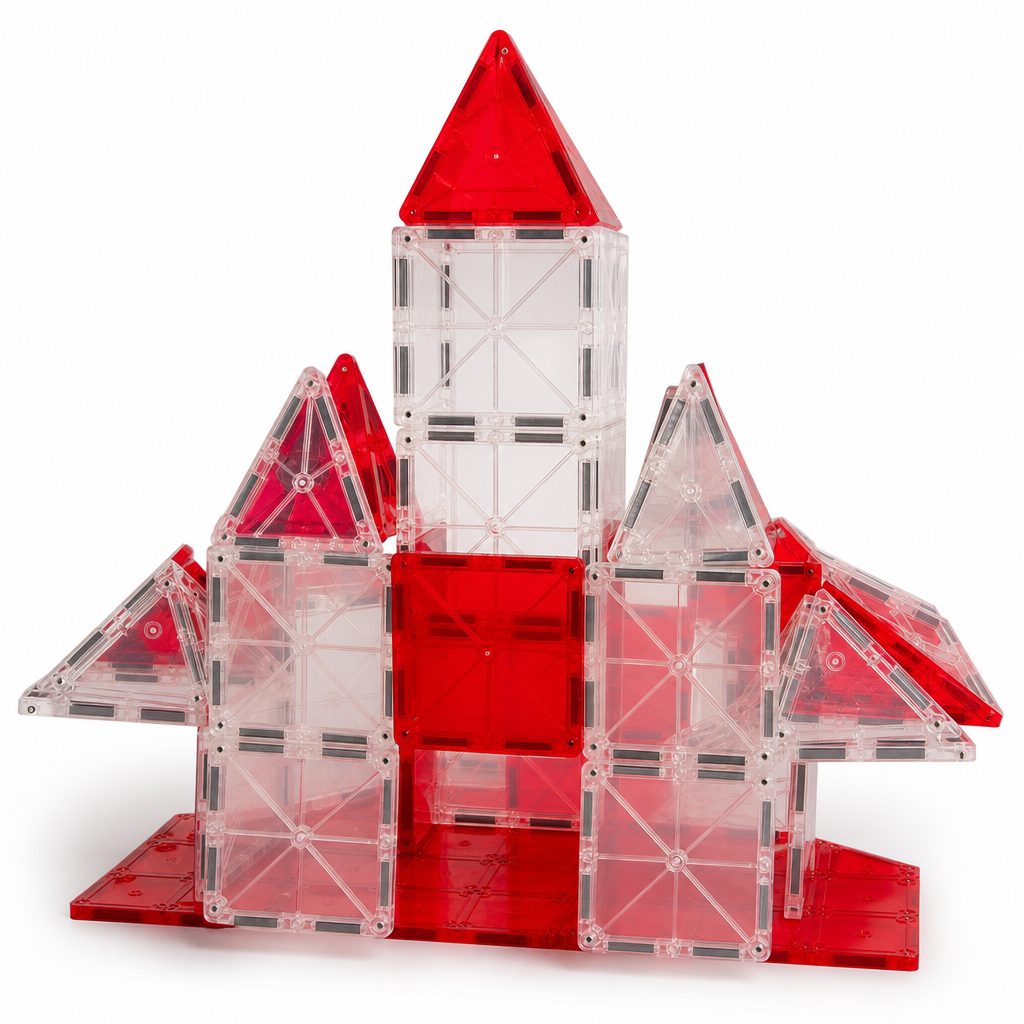
Magna-Tiles encourage children to think in walls, roofs and wide bases — a refreshingly different kind of construction problem from a small-brick model.
3. Snap Circuits — Best for children who ask how things work
Snap Circuits belongs in this roundup because it takes the satisfaction of connecting pieces and adds consequence. Complete the circuit correctly and something happens. That simple moment is enormously powerful. A young builder who enjoys LEGO mechanisms often responds brilliantly to the idea that the model can demonstrate a real principle rather than merely represent one.
This is less about creating a permanent model for display and more about repeated experiments. The value lies in assembling, observing, changing one connection and seeing what changes. In practical terms, it can work particularly well alongside a brick-building hobby: one toy scratches the urge to design a vehicle or building, the other feeds the curiosity about what makes an electrical system function.
4. COBI Construction Sets — Best for detail-focused brick fans
COBI is one of the names to consider when a young builder still wants the familiar satisfaction of brick-based construction but is ready to explore a different catalogue and different subjects. It is an especially useful companion rather than a radical departure. The core activity remains recognisable: sort, assemble, follow a model's shape emerging from many small parts, then admire the result from a few angles that make you feel briefly like an industrial designer.
The reason to choose COBI is not that it should replace LEGO in a household where LEGO is beloved. It is that a child's interests are often more specific than a single brand's range. A construction enthusiast may be delighted to discover another route into detailed builds. It broadens the shelves without asking them to relearn the basic pleasure of the brick.
5. K'Nex Building Sets — Best for tall, moving creations
K'Nex has long earned its place in construction rooms because rods and connectors encourage very different geometry from a conventional block. Builders can make lightweight structures that stretch upward and outward, and that alone is a useful change of pace. A child accustomed to chunky, dense models may be fascinated by the idea that a large construction can emerge from a network of comparatively slender pieces.
It also creates useful conversations about bracing, symmetry and movement without requiring anyone to use those words. Build a tall shape. Watch it sway. Add support. Try again. That is real design thinking, delivered with considerably fewer spreadsheets than adult engineering tends to involve.
Think upwards
K'Nex rewards ambitious height and span, helping builders move beyond compact brick models.
Learn through structure
The relationship between rods and connectors makes support and balance feel tangible rather than abstract.
Rebuild without fuss
A structure that fails is not wasted play. It is usually the start of the better version.
6. ZOOB Building Sets — Best for poseable, organic models
ZOOB is a terrific antidote to the notion that all building must be square, rigid and symmetrical. Its pieces connect through joints, making it suitable for creatures, vehicles and oddball inventions that can bend, pose and evolve as they are being built. If your child constantly tries to add arms, tails, wheels and "a bit here because it looks cooler" to a standard model, this is very much their sort of thing.
The free-form nature can be liberating for children who find a long instruction sequence daunting. Rather than worrying whether piece 47 has been attached in exactly the right orientation, they can begin with a body shape and follow an idea. It may not produce a display-perfect model every time. Frankly, that is the point.
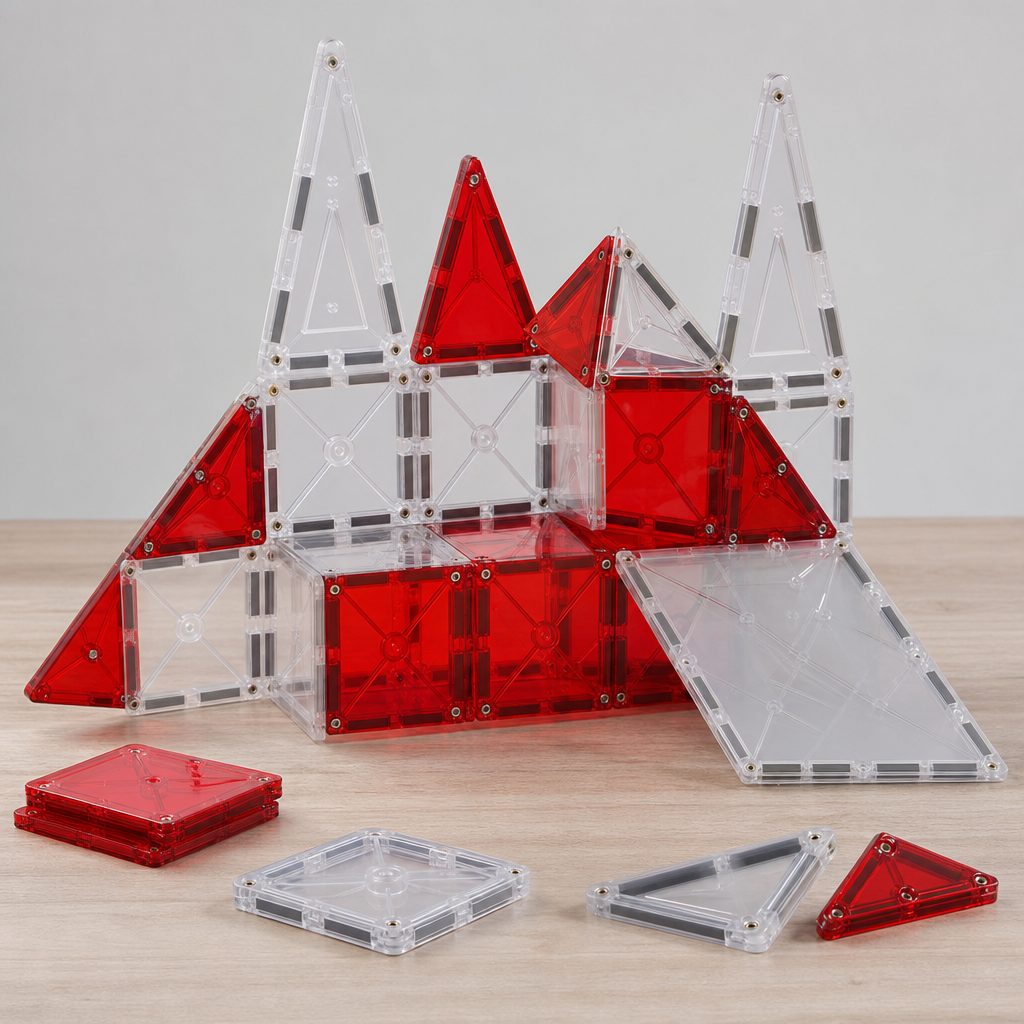
Flexible connector systems such as ZOOB invite expressive builds: creatures, vehicles and inventions that can be changed as quickly as the story around them.
7. Mega Construx Building Sets — Best for collectors who enjoy themed builds
Mega Construx is another sensible choice for a child who wants to remain in the world of brick building whilst exploring a different flavour of set. The attraction is familiar but not identical: detailed construction, themed models and the satisfaction of completing something recognisable from a collection of small components.
For households already deep into LEGO, Mega Construx can make a good "second lane". It lets a builder branch into another collection without forcing them to abandon the habits they enjoy: sorting parts, carefully working through a build, and finding a place on the shelf for the finished result. It is a companion purchase for a child who likes building with purpose and likes their models to represent something.
8. Nanoblock — Best for patient builders who love tiny detail
Nanoblock is for the child who has looked at a normal brick build and thought, "Yes, but could it be fiddlier?" In the nicest possible sense. These miniature building blocks offer a more concentrated building experience, one driven by small-scale detail and careful placement rather than broad, speedy construction.
This makes Nanoblock a strong option for older, patient builders and for families who enjoy construction as a quiet, focused activity. It is not the one I would choose to occupy a group of excitable children before tea. It is the one I would choose for someone who enjoys methodical concentration, tiny architectural details and the deep satisfaction of making something impressive from very small pieces.
9. Lincoln Logs — Best for screen-free classic construction
Lincoln Logs are wonderfully unfashionable in the best way: simple, tactile pieces that invite a builder to create a cabin, alter it, add to it and start again. There is no pressure to make a technical marvel. No tiny decorative piece that vanishes into the carpet's mysterious fourth dimension. Just the straightforward pleasure of arranging logs into a structure that begins to look like a place.
For younger children, or for a family wanting a calmer counterpoint to highly detailed construction sets, that simplicity is a virtue. Lincoln Logs can help a child understand overlapping structure and stable walls through play that feels almost storybook-like. They also make an excellent shared activity, because adults can build alongside children without feeling as though they need a degree in advanced spaceship assembly.
10. Melissa & Doug Wooden Blocks — Best for the youngest imaginative builders
Melissa & Doug wooden blocks are the least flashy choice here and one of the most useful. They are not trying to reproduce a famous vehicle, teach circuitry or become a collector's display piece. They are blocks: the original construction toy, still doing a surprisingly good job after all these years.
For very young builders, wooden blocks provide an uncluttered lesson in stacking, balance, shape and cause-and-effect. A tower falls because its base was narrow. A bridge needs support. A block can be a phone, a biscuit, a garage or an extremely important dinosaur bed depending on the game. That adaptability makes them a superb foundation before a child moves into systems with more specialised connections.
How the leading options differ
The useful question is not "which one is best?" but "which kind of building has my child not tried yet?" Magna-Tiles, for example, is about immediate structure and broad visual ideas. CaDA is about functional machinery. Snap Circuits turns assembly into experimentation. K'Nex and ZOOB encourage a builder to think beyond the rigid cube. The table below focuses on what each route brings to a LEGO-heavy household.
| Pick | Construction style | Confirmed detail | Best reason to add it beside LEGO |
|---|---|---|---|
| CaDA Technic-Style Building Sets | Brick-based mechanical construction | Steering systems, functional machinery and compatibility with LEGO parts | Introduces more function-led engineering challenges. |
| Magna-Tiles 32-Piece Set | Magnetic shape construction | 32 translucent, colourful shapes | Makes large, open-ended structures quick to test and rebuild. |
| Snap Circuits | Electronic construction | Circuit-focused building format | Connects hands-on assembly with practical experimentation. |
| K'Nex Building Sets | Rods and connectors | Rod-based construction system | Encourages tall, light and structural designs. |
| ZOOB Building Sets | Jointed construction | Flexible connector system | Offers poseable, organic forms that bricks do not naturally favour. |

The best companion toy is usually the one that changes the question a child asks: from "what can I copy?" to "what might happen if I try this?"
Choosing by your child's building personality
Some children build for the finished object. They want a vehicle, a building or a creature they can put on a shelf and point at with the entirely justified pride of a small architect. Others build for the process. They will begin with a plan, abandon it after five minutes, and end up with a launch pad for a penguin. Both approaches are healthy. They simply suit different toys.
Best for budding engineers
CaDA Technic-Style Building Sets. Choose this for children fascinated by steering, moving systems and the logic behind machines.
Best all-rounder
Magna-Tiles 32-Piece Set. A strong choice for creative building without the pressure of a long instruction-led project.
Best for curious experimenters
Snap Circuits. Ideal when a child wants to know what makes a model do something rather than simply look impressive.
Best for imaginative forms
ZOOB Building Sets. The pick for flexible creatures, unusual vehicles and proudly strange inventions.
Best for younger builders
Melissa & Doug Wooden Blocks. Straightforward, open-ended construction that leaves lots of room for pretend play.
Best for detail lovers
Nanoblock. A more concentrated, small-scale challenge for patient hands and focused minds.
| Shopper need | ToyScout pick | Why it wins that role |
|---|---|---|
| Best all-round companion | Magna-Tiles 32-Piece Set | Its 32 translucent, colourful shapes encourage quick, imaginative structural play. |
| Best for a LEGO Technic fan | CaDA Technic-Style Building Sets | Steering systems and functional machinery provide a natural next challenge. |
| Best for screen-free experimentation | Snap Circuits | It turns connecting pieces into a practical exploration of circuits. |
| Best classic choice | Lincoln Logs | Simple construction and storytelling appeal remain the whole charm. |
| Best for an older perfectionist | Nanoblock | Tiny blocks reward patience, precision and a fondness for detail. |
Building toys work better when they can coexist
A common mistake is treating every new construction toy as an attempted replacement for the old favourite. Children do not usually think that way. They are perfectly happy for a magnetic-tile castle to become the headquarters for brick-built vehicles, or for a wooden-block bridge to form part of an elaborate imaginary town. The systems do not need to connect physically to coexist creatively.
In fact, that mix can be the point. LEGO can provide tiny furniture, figures and detailed vehicles. Magna-Tiles can provide huge walls and windows. Wooden blocks can create roads, hills or foundations. K'Nex can become the very tall thing at the back that nobody is allowed to touch because it is apparently "load-bearing". You are not buying clutter if the child sees materials rather than isolated toys.
Storage advice worth following
Keep each building system in its own clearly labelled container, even if the finished creations end up in the same imaginary world. Mixed play is brilliant; hunting through a tub for one specialised connector is considerably less brilliant.
What to avoid when buying a LEGO alternative
First, avoid buying a system purely because it is cheaper-looking, more colourful or promises an enormous model. A construction toy earns repeat play through its connection method and creative range, not the drama of the box photograph. If the child dislikes the feel of the pieces or finds the building logic frustrating, a huge set simply becomes a huge sorting problem.
Second, do not overestimate the importance of direct compatibility. CaDA is described as compatible with LEGO parts, and that can be genuinely useful. But a toy does not need to connect to LEGO physically to be a good companion. Magna-Tiles, Snap Circuits, K'Nex and wooden blocks offer value precisely because they are different. They extend play habits instead of duplicating them.
Finally, be realistic about attention span. Nanoblock will delight a patient builder and bore a child who wants dramatic results in five minutes. Magna-Tiles may be ideal for the fast-moving inventor but feel too loose for someone who wants a dense, permanent model. There is no wrong construction personality. There is only the wrong tub for that particular child.
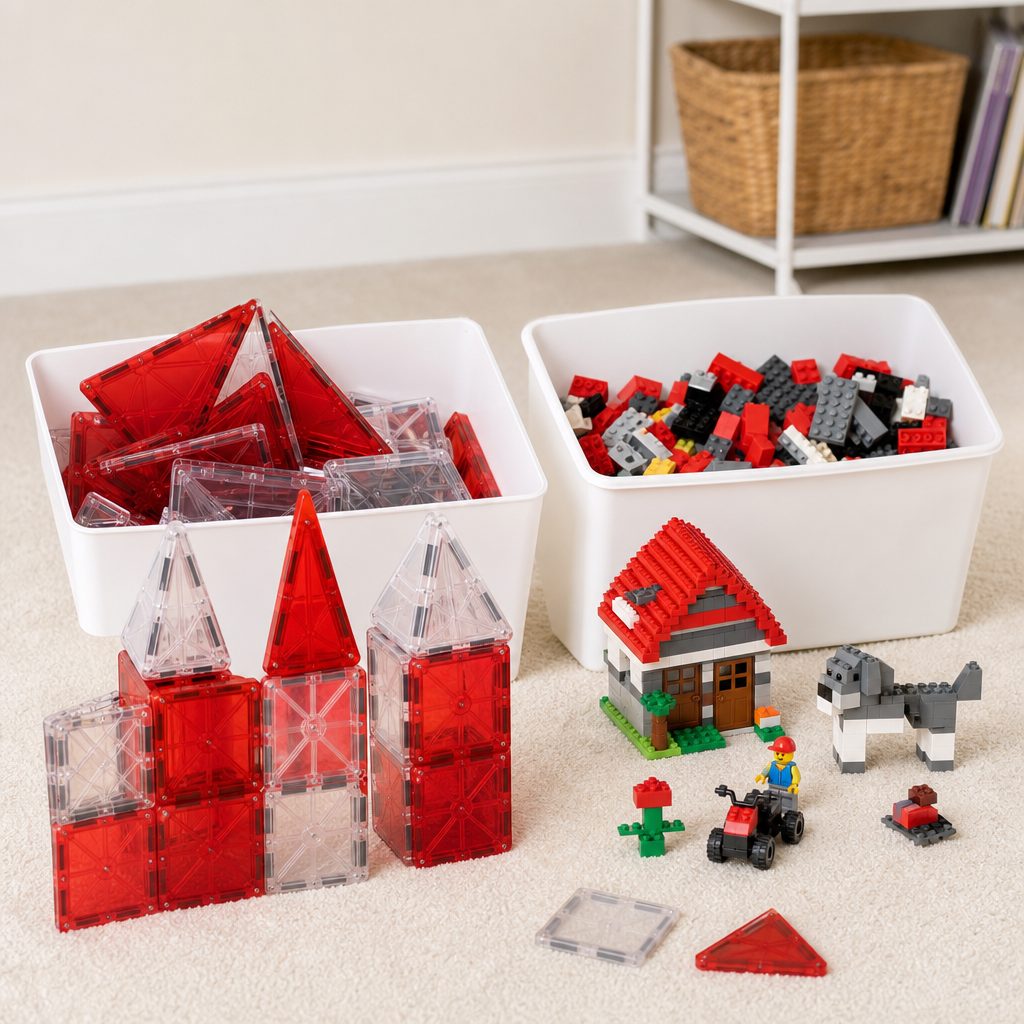
Separate storage keeps specialised pieces usable, whilst a shared play area lets magnetic tiles, blocks and brick-built characters become part of one big world.
My practical shortlist
If you are buying one companion for a child with an established LEGO habit, start with the kind of play they already gravitate towards. Pick CaDA if they talk about wheels, steering and mechanisms. Pick Magna-Tiles if they build big scenes and rebuild constantly. Pick Snap Circuits if their favourite question is "but how does it work?" Pick K'Nex if they love ambitious structures, and ZOOB if every model somehow acquires legs.
For a calmer, more traditional route, Lincoln Logs and Melissa & Doug wooden blocks remain excellent. They are not lesser because they are simpler. Quite the opposite: they leave more interpretive work to the child. Mega Construx and COBI are sensible for builders who still want a familiar brick-based rhythm, whilst Nanoblock is the special-interest option for somebody who enjoys careful, intricate work.
The healthiest construction collection is not necessarily the largest. It is the one that has a few genuinely different ways to build. A child who can stack, lock, magnetise, connect, balance and experiment has more creative options than a child with five boxes that all behave exactly the same way.
Frequently asked questions
No. Most work best as companions. LEGO is excellent at detailed, stud-based construction; the toys here add different experiences such as magnets, circuitry, rods, flexible joints and traditional stacking.
CaDA is the clearest fit because it is associated with steering systems and functional machinery. Its parts are also described as compatible with LEGO parts, making it particularly interesting for existing technical builders.
The Magna-Tiles 32-Piece Set uses 32 translucent, colourful magnetic shapes. Rather than creating dense, locked-together models, children can rapidly make upright walls, roofs, tunnels and geometric forms.
Snap Circuits is the standout for cause-and-effect experimentation because its construction format centres on circuits. Magna-Tiles and ZOOB are also excellent for children who prefer testing ideas over following a fixed model.
Magna-Tiles, ZOOB, Lincoln Logs and Melissa & Doug wooden blocks are the most naturally open-ended choices in this guide. They invite children to begin with an idea rather than a long sequence of steps.
Not necessarily. Nanoblock is best viewed as a patient, detail-driven alternative. It will suit builders who like precision and concentrated projects more than children seeking a quick, broad construction session.
Absolutely, even where parts do not physically join. A child can make a setting from wooden blocks or Magna-Tiles, add a K'Nex structure, then populate it with brick-built vehicles and characters. Shared imagination does not require shared connectors.
For broad creative play, Magna-Tiles is the easiest recommendation from this list because its magnetic shapes make building immediate and visible. For a child with a strong interest in mechanisms, CaDA is the more targeted choice.
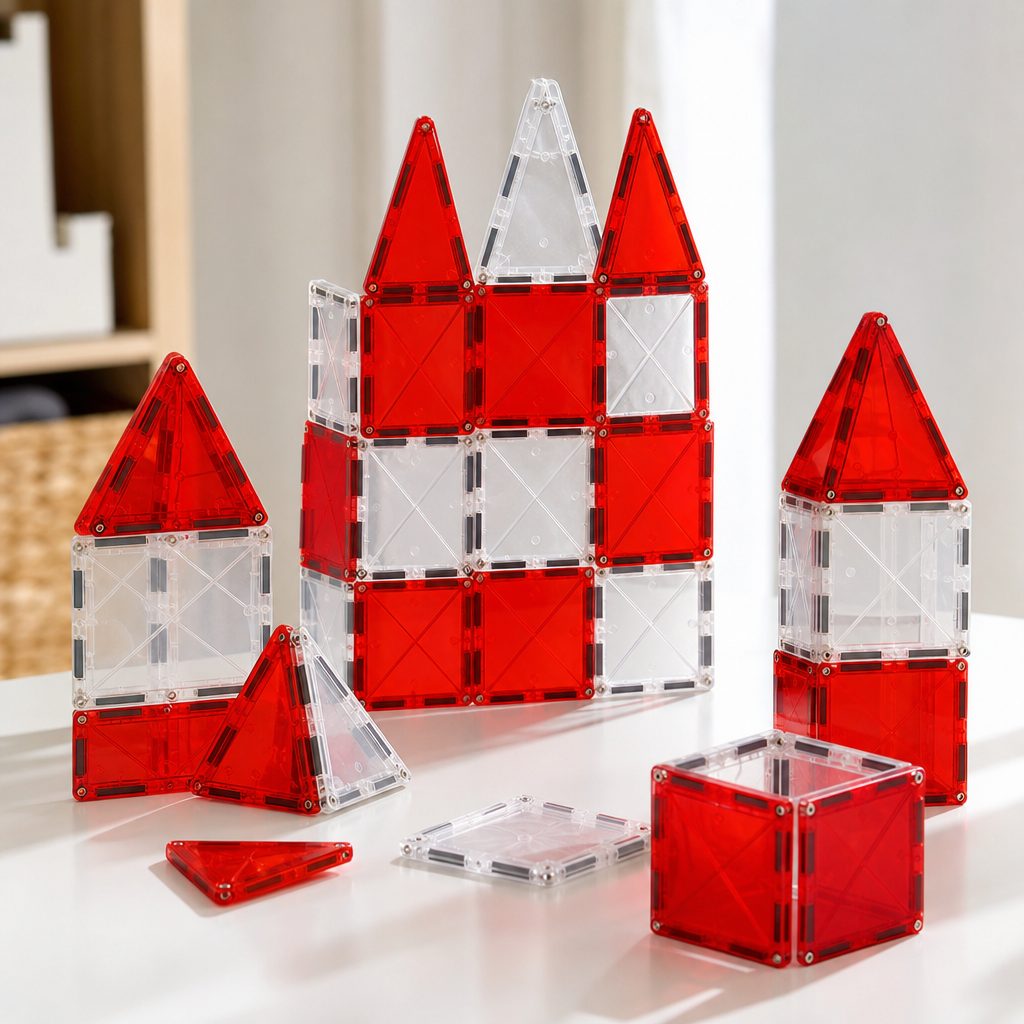
The ideal construction collection gives children more than one way to turn an idea into something they can see, test, knock down and build again.
The bottom line
LEGO remains a brilliant centrepiece, but a LEGO habit is not something to cure. It is something to feed intelligently. Add CaDA Technic-Style Building Sets for mechanical curiosity, choose the Magna-Tiles 32-Piece Set for open-ended magnetic construction, and look to Snap Circuits when the next question is likely to be "how does this work?"
For the right child, K'Nex, ZOOB, COBI, Mega Construx, Nanoblock, Lincoln Logs and Melissa & Doug wooden blocks can each become the favourite box in the cupboard. That is the joy of construction play: there is always another tower to improve, another vehicle to redesign, and another oddly specific building emergency to solve before dinner.