
Best STEM Building Toys That Actually Teach Kids Something
Construction and coding toys judged on genuine educational value versus screen-free fun — split by age group, with honest notes on which ones earn their shelf space and which just look clever on the box.
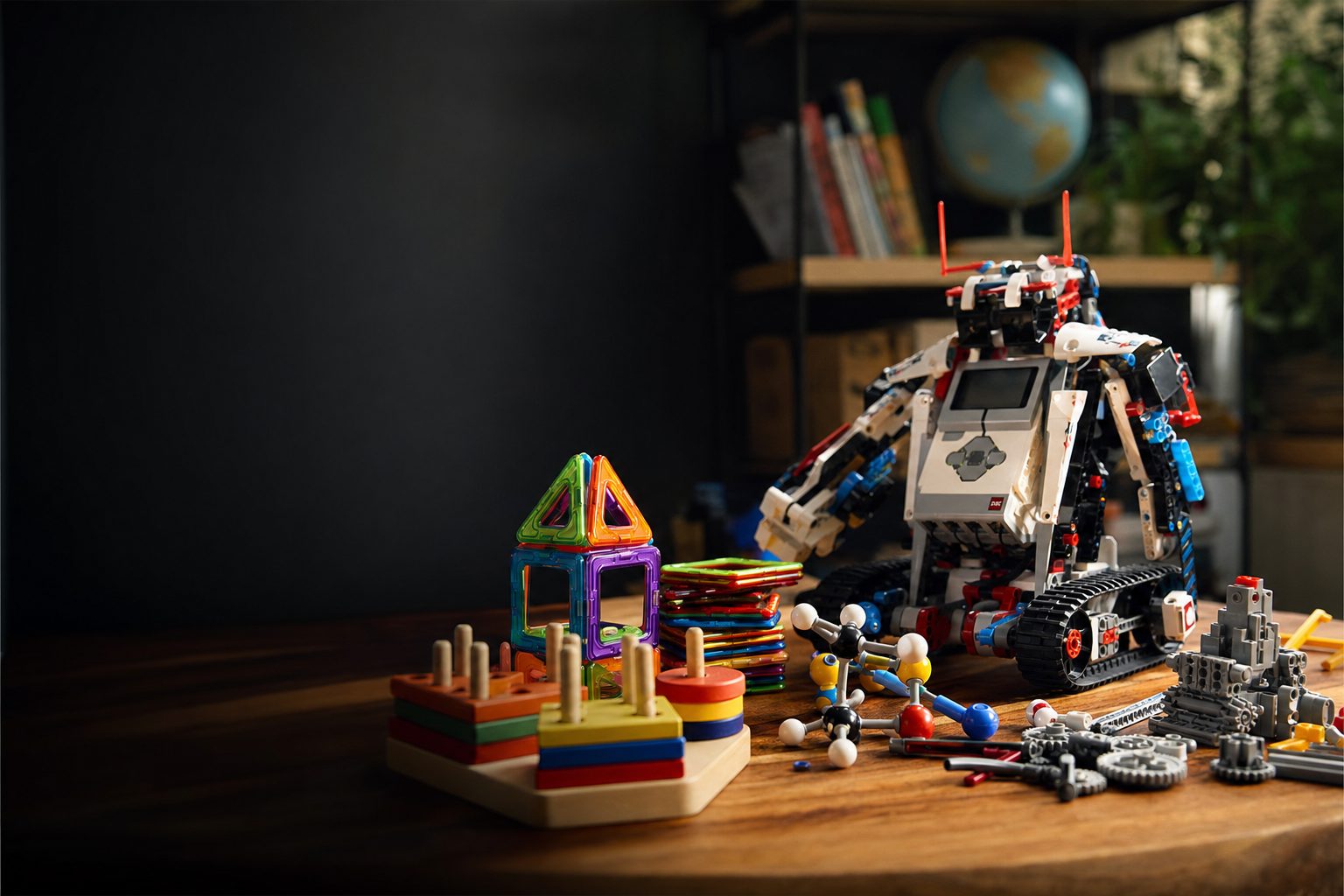
STEM building toys span from toddler-friendly magnetic tiles to near-1,000-piece programmable robots — and educational value varies enormously between them.
Walk down any toy aisle in 2026 and you'll be smacked in the face with the letters "STEM" plastered across roughly nine boxes out of ten. It has become the toy world's equivalent of "artisan" on a sandwich — a word that sounds important but frequently means nothing. Plenty of so-called STEM toys are just ordinary building blocks with a science-y sticker and a 40% price bump.
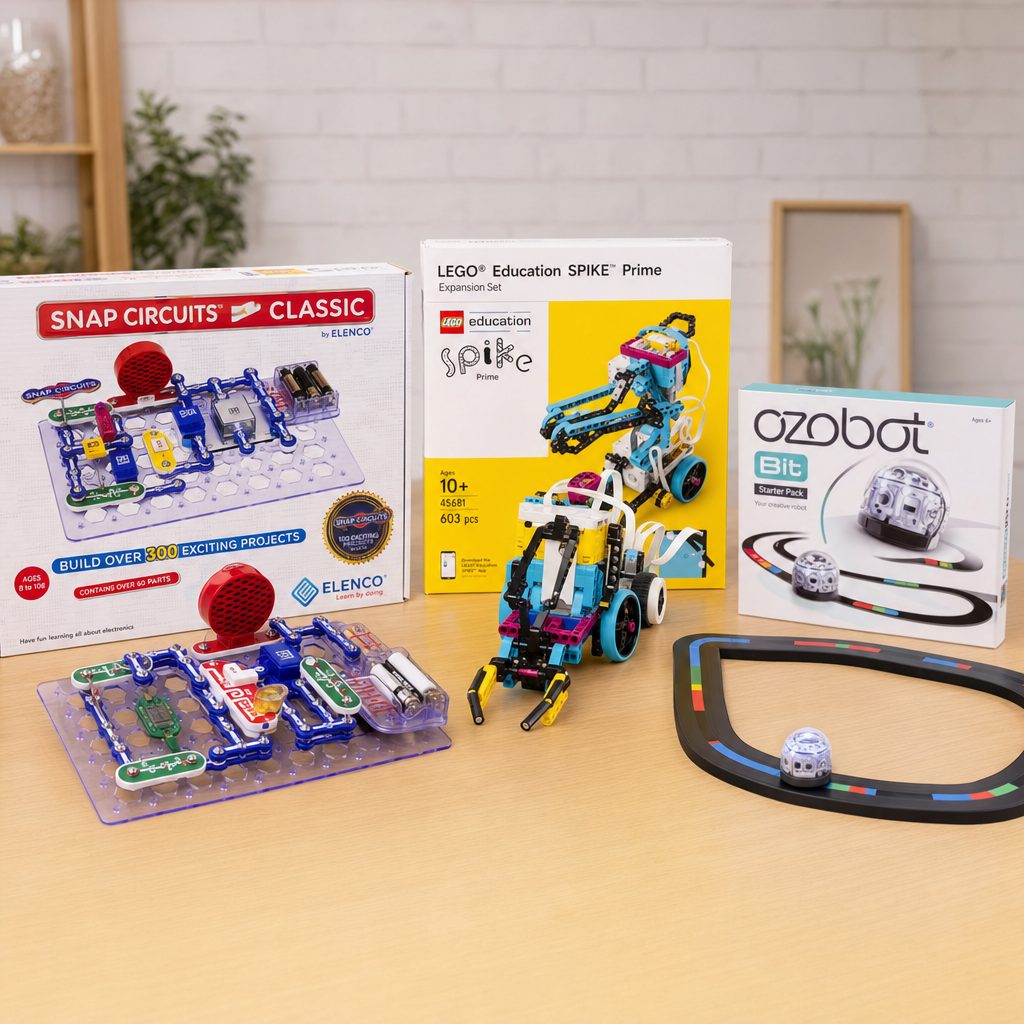
Three very different approaches to the same goal: teaching real skills through play, from snap-together circuits to programmable robots.
So I set out to separate the genuinely educational from the merely marketed. The three toys in this guide keep turning up across serious reviews and, crucially, they teach something a child actually retains — whether that's how a circuit closes, why a triangle holds a roof up better than a square, or how a few lines of drag-and-drop code make a motor spin. I've split them roughly by age because a brilliant toy for an eight-year-old can be a choking hazard or a source of pure frustration for a three-year-old.
Below you'll find ranked picks, each with its own pros and cons, one big comparison table, and a plain-English "who should buy this" breakdown at the end. Let's dig in.
How I Judged These STEM Building Toys
Before the picks, a quick word on the yardstick. Not every toy that carries the STEM badge deserves it, so I weighed each on four things that actually matter to parents rather than marketing departments.
Genuine learning transfer
Does the child come away understanding a real principle — electricity, geometry, logic, sequencing — rather than just following a numbered instruction sheet?
Screen-free versus screen-led
Some of these are entirely hands-on; others lean on an app. Both can work, but parents deserve to know which camp a toy sits in before it lands under the tree.
Longevity and replay value
A toy that's genuinely used for years earns its price. A one-weekend wonder does not, however educational the packaging claims to be.
Age-appropriateness
The right challenge level matters. Too easy and it bores; too hard and it frustrates. I've flagged the sweet-spot age for each.
The golden rule of STEM toys
The best educational toys teach without announcing that they're teaching. A child stacking Magna-Tiles learns that triangles are stronger than squares for roofs without anyone ever saying the word "geometry". That quiet, discovery-led learning is what you're really paying for.
The Three Picks at a Glance
Here's the shortlist before we go deep. Each is best-in-class for a particular age band and a particular type of learner, which is why they sit alongside each other rather than competing head-on.
| Feature | Snap Circuits Jr. SC-100 | Magna-Tiles Classic 100-Piece | LEGO Mindstorms Robot Inventor 51515 |
|---|---|---|---|
| Best for | First electronics (8+) | Open-ended building (3–99) | Serious robotics & coding |
| Piece / part count | 30 parts, 100+ projects | 100 tiles | 949 pieces |
| Age range | 8 and up | 3 to 99 | Older children & teens |
| Screen involved? | None — fully hands-on | None — fully hands-on | Yes — app-based coding |
| Core skill taught | Circuitry & electronics | Spatial reasoning & geometry | Coding (Scratch & Python), engineering |
| Power | 2 × AA (not included) | None needed | Rechargeable battery included |
| Reviewer score | 9.9 | — | — |
| Notable awards | Toy of the Year, NAPPA Gold | — | — |
1. Snap Circuits Jr. SC-100 — Best for a Child's First Taste of Electronics
Shop Snap Circuits Jr. SC-100 on Amazon UK
If I had to pick one toy that most reliably turns a curious kid into someone who genuinely understands electricity, it's the Snap Circuits Jr. SC-100 from Elenco Electronics. It's deceptively simple: chunky plastic components that snap onto a plastic grid base, no soldering, no tools, no fiddly wires to strip. And yet within an afternoon a child can build a working FM radio, a doorbell, a burglar alarm or a digital voice recorder.
What makes it work educationally is the "learn by doing" structure. Each of the 100-plus projects is a real, functioning circuit. When the fan spins or the siren wails, the child sees cause and effect immediately — and starts to grasp why the components have to be arranged the way they are. That's the difference between following instructions and actually learning.
The parts mount on plastic modules that snap together with ease, which matters more than it sounds. Cheaper electronics kits tend to use loose crocodile clips or breadboard wires that little fingers fumble and lose. Here, everything clicks satisfyingly into place, and the patented Circuit Safe® device — unique to Snap Circuits branded products — is what lets you hand this to an eight-year-old and walk off to make a cup of tea without hovering anxiously.
It's no surprise this is used in schools, libraries, museums and STEM programmes around the world, or that it's earned a shelf full of gongs: Toy of the Year, Parent's Choice Recommended, Good Housekeeping's Best Toy and NAPPA Gold among them. That 9.9 reviewer score is about as close to universal acclaim as toys get.
Pros
- Genuinely teaches electronics through real, working circuits
- No soldering, no tools, no loose wires — everything snaps together
- Circuit Safe® patented safety device for supervised independence
- 100+ projects means weeks of fresh content, not one afternoon
- Endorsed by educators and used in schools worldwide
- Fully screen-free hands-on learning
Cons
- Requires 2 × AA batteries that aren't included in the box
- Age 8+ means it's not suitable for younger siblings
- Small components need a tidy storage system or bits go walkabout
Buying tip
Widely available and frequently called the best value in STEM toys for the 8-plus crowd, this is the sort of toy where the "starter" kit is genuinely enough. Once a child outgrows the 100 projects, Elenco's larger Snap Circuits sets slot in on top, so you're not buying a dead end.
2. Magna-Tiles Classic 100-Piece Set — Best for Open-Ended Building at Any Age
Shop Magna-Tiles Classic 100-Piece Set on Amazon UK
If the Snap Circuits kit is the specialist, the Magna-Tiles Classic 100-Piece Set from Valtech is the all-rounder — the rare toy that genuinely spans ages 3 to 99 and gets used for years rather than weeks. It's a box of 100 translucent geometric tiles in six colours that snap together with embedded magnets, and from that deceptively simple premise children build towers, houses, castles and structures nobody designed for them.
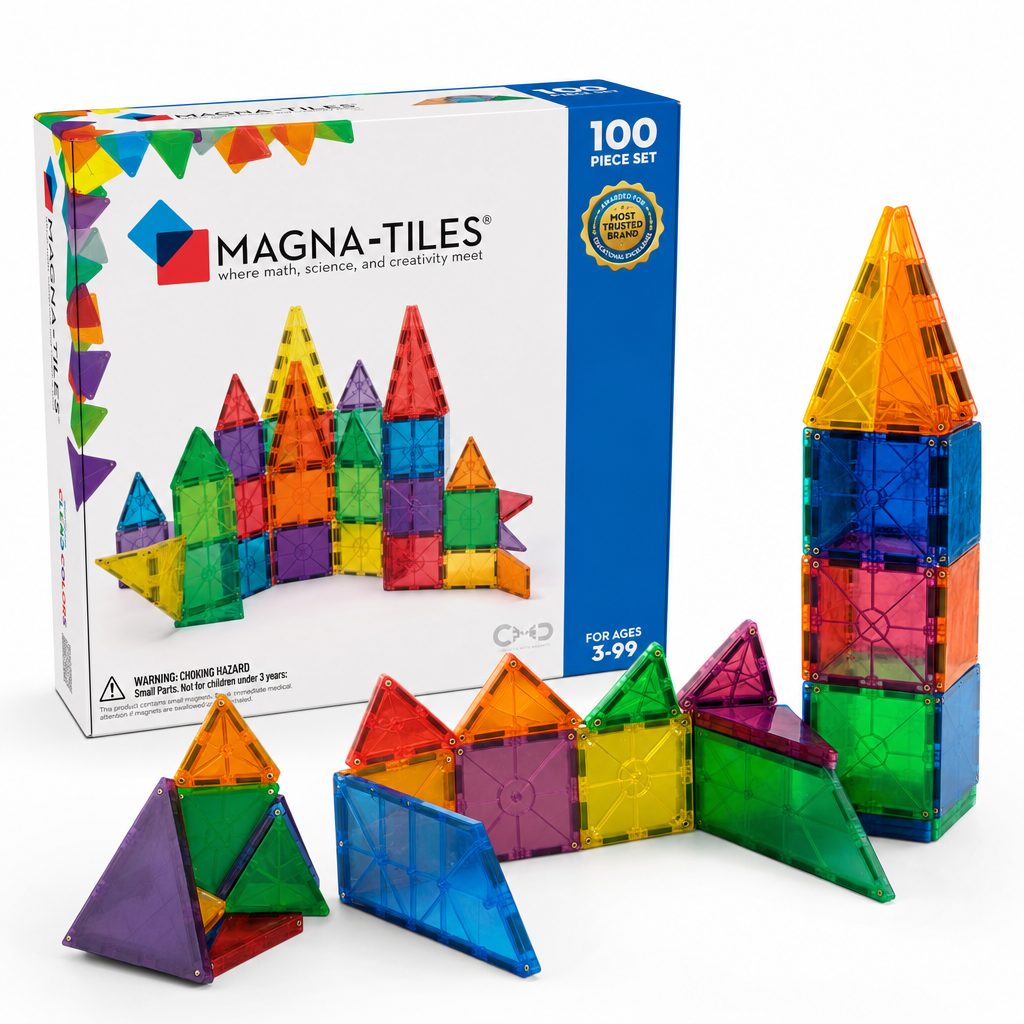
Translucent magnetic tiles teach spatial reasoning, geometry and structural engineering — all without a single instruction sheet or screen.
The educational magic here is entirely stealthy. There's no manual, no numbered steps, no app. A child simply builds — and in the process absorbs spatial reasoning, geometry and the basics of structural engineering. Try to roof a square tower with flat tiles and it flops; reach for triangles and suddenly it holds. Nobody has to explain load-bearing shapes; the tiles teach it through repeated, satisfying trial and error.
The tile mix is well judged: 4 large squares, 50 small squares, plus 46 triangles split into 20 equilateral, 11 right-angled and 15 isosceles. That variety is what lets bigger builds actually work — you need the right angles to close a roof or ramp a bridge. It's also why the smaller 32- and 48-piece sets feel limiting quite quickly; the 100-piece box is widely regarded as the sweet spot where a child can build something genuinely ambitious without running out of tiles halfway up.
On safety and durability, Valtech has clearly done its homework. The tiles are made from food-grade, non-toxic MABS plastic, free from BPAs, phthalates and latex. The magnets are deliberately chosen to allow easy tile separation — frustration-free for small hands — whilst fastening rivets keep those magnets safely locked inside, and the signature lattice pattern helps prevent cracking. These are built to withstand countless hours of playtime, which is exactly what they get.
Pros
- Genuinely used for years — spans ages 3 to 99
- Teaches geometry and structural engineering with zero instruction
- Completely screen-free, open-ended play
- Food-grade, non-toxic MABS plastic, free from BPAs and phthalates
- Magnets tuned for easy separation and locked in with rivets
- Durable lattice design resists cracking
Cons
- Smaller 32 and 48-piece sets feel limited quickly — the 100 set is the one to get
- Among the pricier open-ended building toys
- No guided challenges for children who prefer structure
The "3 to 99" age rating isn't marketing fluff. Toddlers stack and knock down; older children engineer symmetrical structures; and plenty of parents admit to quietly building alongside them. Few toys earn that breadth honestly, but this is one of them.
3. LEGO Mindstorms Robot Inventor 51515 — Best for Serious Coding and Robotics
Shop LEGO Mindstorms Robot Inventor 51515 on Amazon UK
At the top end sits the LEGO Mindstorms Robot Inventor 51515 — nearly a thousand pieces (949, to be exact) of programmable robotics that bridges physical building and real coding. This is the pick for an older, motivated child or teen who's ready to move beyond passive play into designing, building and programming machines that move, sense and respond.
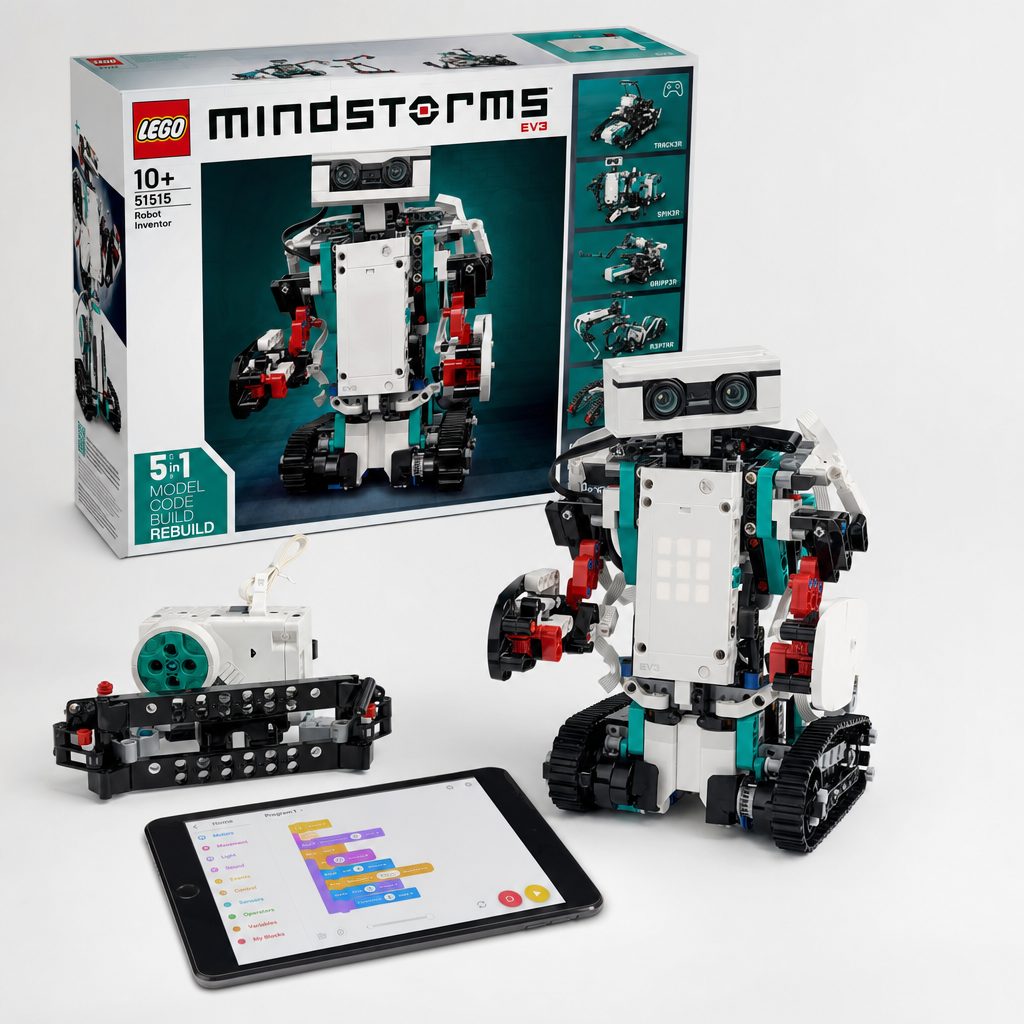
The Robot Inventor 51515 pairs 949 LEGO pieces with a programmable hub, motors and sensors — plus Scratch-based and Python coding through a free app.
The set builds five unique, motorised robots — Charlie, Tricky, Blast, M.V.P. and Gelo — each showcasing different mechanical and coding concepts. Blast stands over 14 inches (36cm) tall; Gelo stretches over 9 inches (24cm) long. But the instructions are really just the starting point. The genuine value emerges once a child stops following the builds and starts designing their own creations, combining motors and sensors in ways nobody planned.
The brains of the operation is the intelligent Hub — a programmable unit with a 5×5 LED screen, a six-axis gyro and a built-in speaker, powered by a rechargeable battery that ships in the box. Around it sit four medium motors and a combined colour and distance sensor with a break-out interface. That hardware is what turns a LEGO model into a robot that can detect obstacles, follow lines or react to its surroundings.
Coding happens through the free LEGO Mindstorms Robot Inventor app. Beginners work in a drag-and-drop environment based on Scratch, with more than 50 activities and missions to work through, plus digital building instructions. Crucially, the app also supports Python — so as a child's confidence grows, they can graduate from block coding to writing real text-based code without ever changing platform. That progression from Scratch to Python is genuinely valuable and rare at this level.
A note on the platform's history
The Robot Inventor 51515 launched to replace the long-running LEGO Mindstorms EV3, arriving by the end of 2020. It has since carried the "retiring soon" label that LEGO applies to sets nearing the end of their production run. If you're buying in 2026, it's worth checking availability — but the platform, its app and its Scratch-to-Python learning path remain a benchmark for what a coding-and-robotics toy can teach.
Pros
- Teaches real coding — Scratch drag-and-drop plus genuine Python support
- 949 pieces with programmable hub, motors and sensors
- 5 guided robot builds plus unlimited custom designs
- Rechargeable battery included — no endless AA hunt
- 50+ app activities and missions to work through
- Free, well-supported coding app
Cons
- A significant investment — the priciest pick here by far
- Requires an app and screen, so not screen-free
- Too advanced for younger children
- Nearing the end of its production run — check current availability
Educational Value Scorecard
Here's how the three stack up on the things that actually matter for learning. These are my considered ratings after weighing the specifications, the awards, the reviewer consensus and — most importantly — how each toy teaches rather than merely entertains.
The benchmark bars below tell the same story a different way — showing where each toy's strongest educational claim lands. Snap Circuits wins on that near-perfect reviewer score; Magna-Tiles wins on sheer breadth of age range; Mindstorms wins on the depth and ceiling of what it can teach.
Screen-Free Fun Versus Screen-Led Learning
This is the tension at the heart of the whole category, and it's worth being honest about it. Two of my three picks — Snap Circuits Jr. and Magna-Tiles — are entirely screen-free. There's no app, no tablet, no login. For parents already fighting the screen-time battle on every other front, that's a genuine relief and a real point in their favour.
The Mindstorms Robot Inventor is the exception. Its coding lives in an app, and that's non-negotiable — you can't program those robots without a screen involved. But here's the nuance: it's screen-use, not screen-consumption. A child isn't passively watching; they're writing code, testing it, watching it fail, and fixing it. That's a fundamentally more valuable relationship with a screen than scrolling videos, and I'd argue it's exactly the sort of screen time worth encouraging.
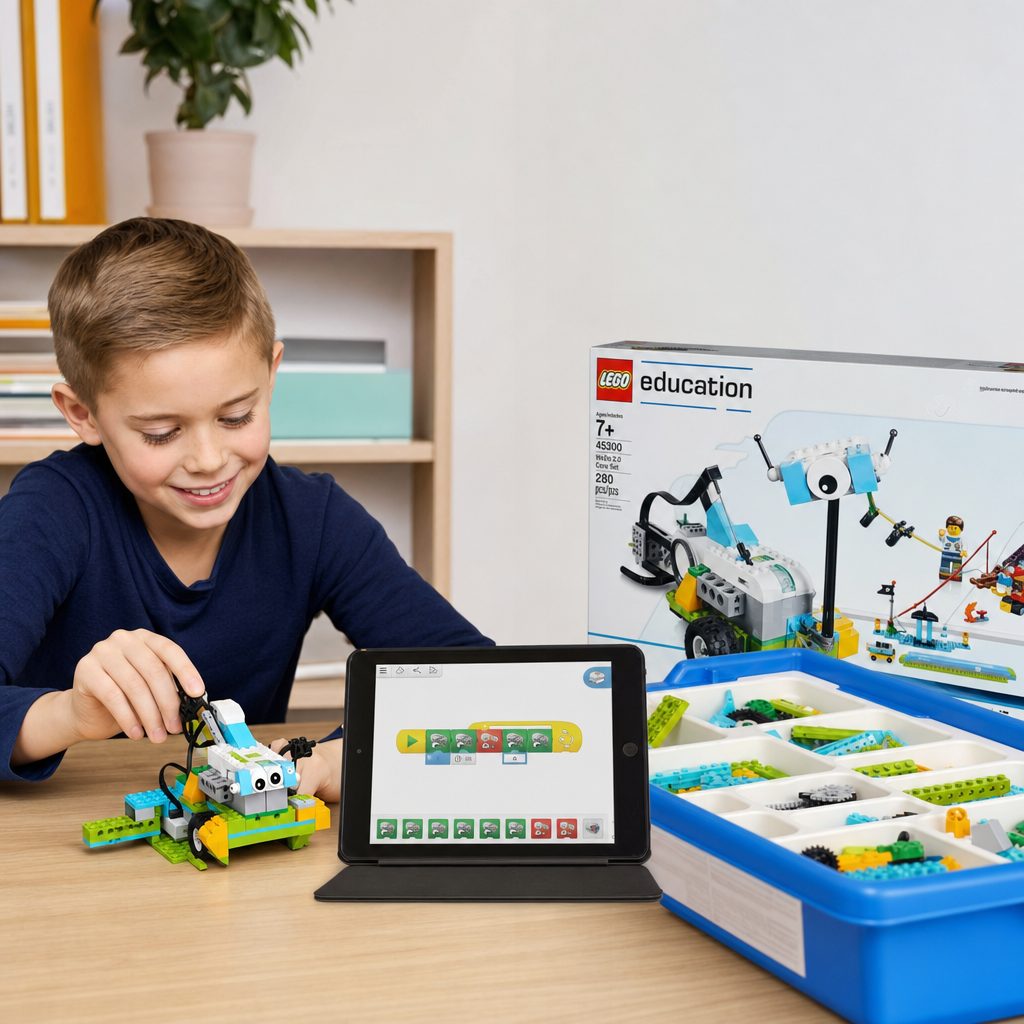
Screen-free building and screen-led coding aren't rivals — they're different tools for different stages of a child's development.
My honest steer: if a child is under eight, lean screen-free with Magna-Tiles or work up to Snap Circuits. If they're older, already comfortable with tablets, and showing real interest in how things work, the Mindstorms app is screen time you can feel genuinely good about.
Which Age Group Gets the Most From Each
Age matters more than almost any other factor with STEM toys, because the right challenge level is the difference between a treasured favourite and a shelf ornament. Here's how the three map onto the years.
Ages 3–7: Magna-Tiles Classic
The obvious starting point. Toddlers stack and topple; older ones start engineering deliberately. Rated from age 3, it grows with the child rather than being outgrown.
Ages 8+: Snap Circuits Jr. SC-100
The sweet spot for a first real dive into electronics. The 8+ rating is sensible — younger children lose the small components and miss the concepts.
Older children & teens: Mindstorms 51515
For those ready to code, iterate and design. The Scratch-to-Python path means it keeps challenging a child for years as their ability climbs.
Building a STEM journey
There's a neat progression across these three. A child can start with Magna-Tiles at three or four, graduate to Snap Circuits around eight to learn how electricity actually behaves, then step up to Mindstorms as a pre-teen to combine building, electronics and coding into one. That's a decade of genuine learning across three purchases.
Common Pitfalls When Buying STEM Toys
A few hard-won lessons that'll save you money and disappointment, whether you buy one of these picks or something else entirely.
Don't pay the "STEM tax" for ordinary blocks
If a toy is just building blocks with a science sticker and no distinct learning mechanism, you're paying extra for a word. The picks here each teach a specific, identifiable skill.
Beware sets that feel limited quickly
The smaller Magna-Tiles sets are the classic example — 32 or 48 tiles run out fast, and children hit a ceiling on what they can build. The 100-piece set is the one worth having.
Check what's actually in the box
Snap Circuits needs two AA batteries that aren't included — a small thing that's ruined many a Christmas morning. Mindstorms, to its credit, includes a rechargeable battery.
Mind the product lifecycle
The Mindstorms 51515 has been nearing the end of its production run, so availability can vary. Check before you commit, especially if you're after new rather than second-hand stock.
Who Should Buy Which
If you'd rather skip straight to the answer, here's the plain-English verdict for each type of buyer.
Best for first electronics
The Snap Circuits Jr. SC-100. For an 8-plus child curious about how gadgets work, nothing else delivers 100+ real working circuits with this little fuss — and that 9.9 score is well earned.
Best all-rounder
The Magna-Tiles Classic 100-Piece Set. Screen-free, spans ages 3 to 99, and teaches geometry and structural engineering without ever mentioning either. The safest bet if you're buying one toy for a wide age range.
Best premium / money-no-object
The LEGO Mindstorms Robot Inventor 51515. For an older child ready to code and build robots, its Scratch-to-Python path and 949 pieces offer the deepest learning ceiling here.
Best screen-free choice
Either the Magna-Tiles Classic or the Snap Circuits Jr. — both are fully hands-on with no app in sight, ideal for households cutting down on screen time.
Best for aspiring coders
The Mindstorms 51515, hands down. The move from block-based Scratch to genuine Python is the single most future-relevant skill on this page.
Best value pick
The Snap Circuits Jr. SC-100 — repeatedly singled out as the best value in STEM toys for the 8-plus crowd, with a learning payload well above its footprint.
Frequently Asked Questions
The Bottom Line
There's no single "best" STEM building toy — because the right one depends entirely on your child's age and what they're ready to learn. But there is a best pick for each stage, and all three here genuinely teach rather than merely market.
For a first, screen-free, all-ages foundation, the Magna-Tiles Classic 100-Piece Set is hard to beat — it quietly teaches geometry and engineering and lasts for years. For an eight-year-old ready to understand how electricity works, the Snap Circuits Jr. SC-100 is the standout, with its near-flawless 9.9 score, 100-plus real circuits and shelf of awards. And for an older child aiming higher, the LEGO Mindstorms Robot Inventor 51515 offers the deepest learning ceiling, bridging building, robotics and real coding from Scratch through to Python — just check its availability, as it's been winding down.
Buy the one that matches where your child is now, and you'll get a toy that earns its place on the shelf. Buy all three across the years and you've got a decade-long STEM journey that starts with stacking tiles and ends with programming robots.
Shop Best STEM Building Toys That Actually Teach Kids Something on Amazon UK
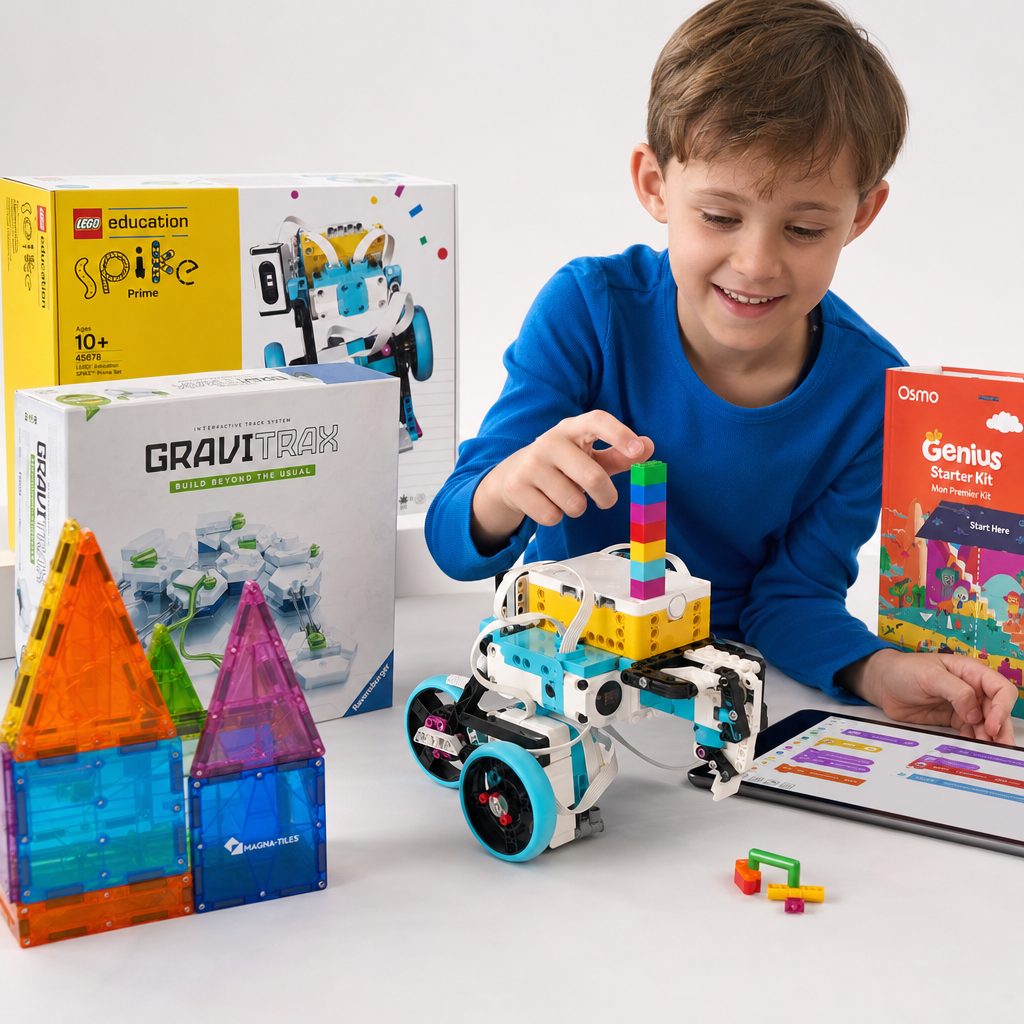
From first tiles to programmed robots — the best STEM toys don't announce that they're teaching. They just let children discover.