
DJI Neo Review: The Pocket Drone That Can Follow You Without a Controller
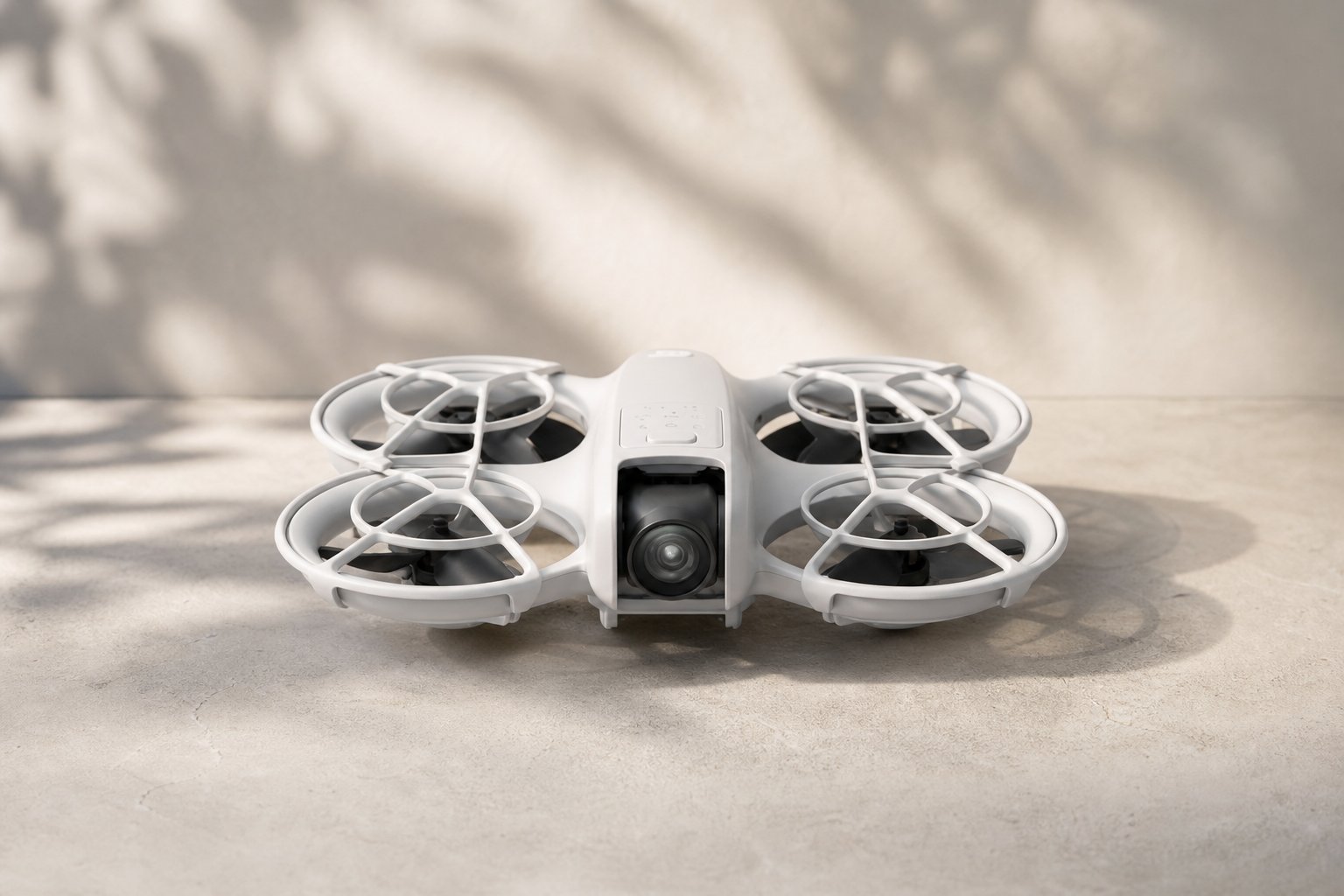
The DJI Neo makes the most sense if you want short, polished aerial clips without beginning every outing with a controller. Its palm launch, subject tracking and stabilised 4K video are genuinely useful conveniences. The trade-off is simple: with a maximum flight time of about 18 minutes, it is made for quick moments rather than long filming sessions.
The useful answer is that the DJI Neo is a strong fit for casual family outings, walks and everyday video where getting a shot matters more than operating a traditional drone. You can take off from your palm, have the drone track a subject, then land it back in your hand without using a remote control. That removes a lot of the ceremony from aerial filming.
It is not the right choice for someone planning extended shoots or looking for a drone primarily because they want the most advanced flying controls. DJI quotes a maximum flight time of approximately 18 minutes. That is enough for several deliberate clips, but not a great deal of room for wandering, retakes and experimentation in one uninterrupted flight.
The key reason to choose DJI Neo
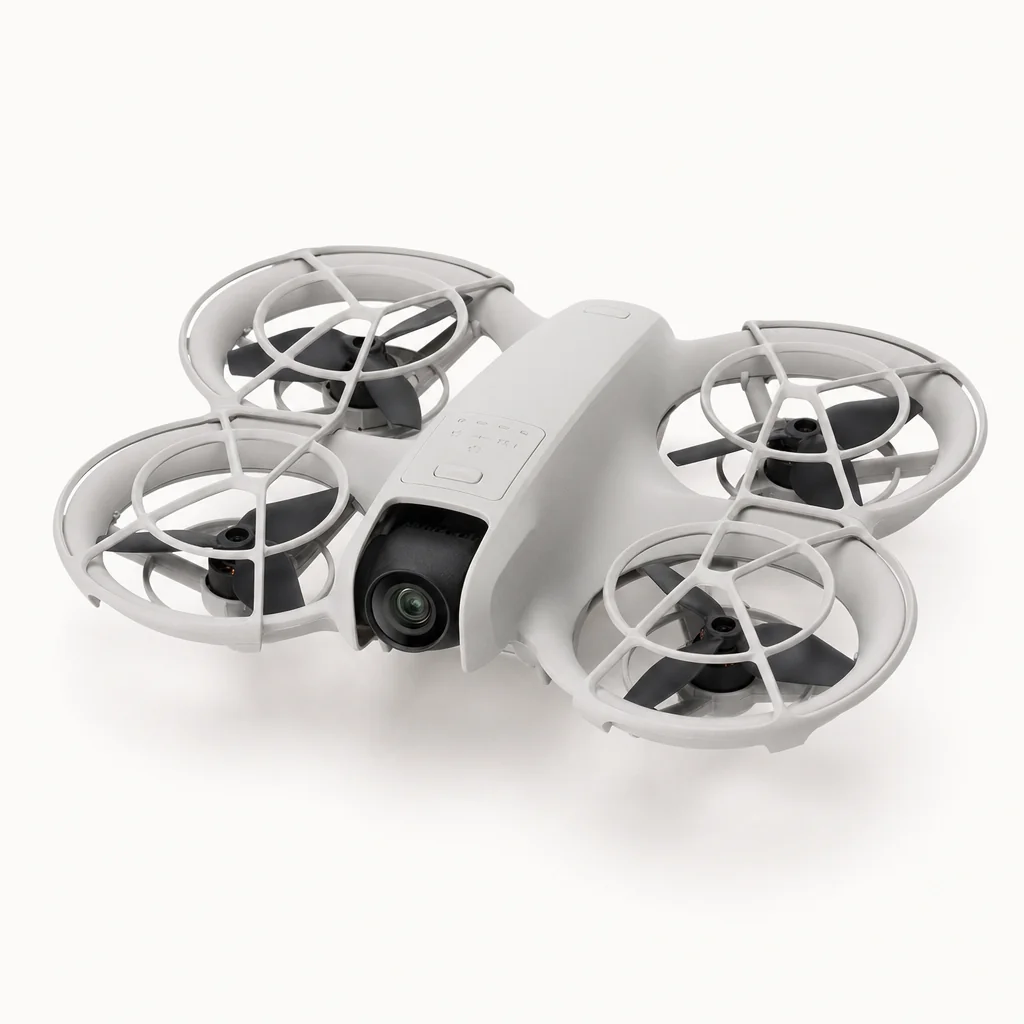
Choose the DJI Neo for spontaneity. Its appeal is not simply that it is compact; it is that palm launch, palm landing and subject tracking make it far easier to capture a short aerial moment when you would otherwise leave a drone packed away.
What works in its favour
- Palm take-off and landing can be done without a remote control.
- Subject tracking is designed to keep a person as the focus of a clip.
- It records ultra-stabilised 4K video.
- DJI describes it as its lightest and most compact drone to date.
Where expectations matter
- The quoted maximum flight time is approximately 18 minutes.
- A short flight window makes it less suited to long, uninterrupted filming.
- Its best features are geared towards quick clips, not necessarily every type of drone use.
What is the DJI Neo?
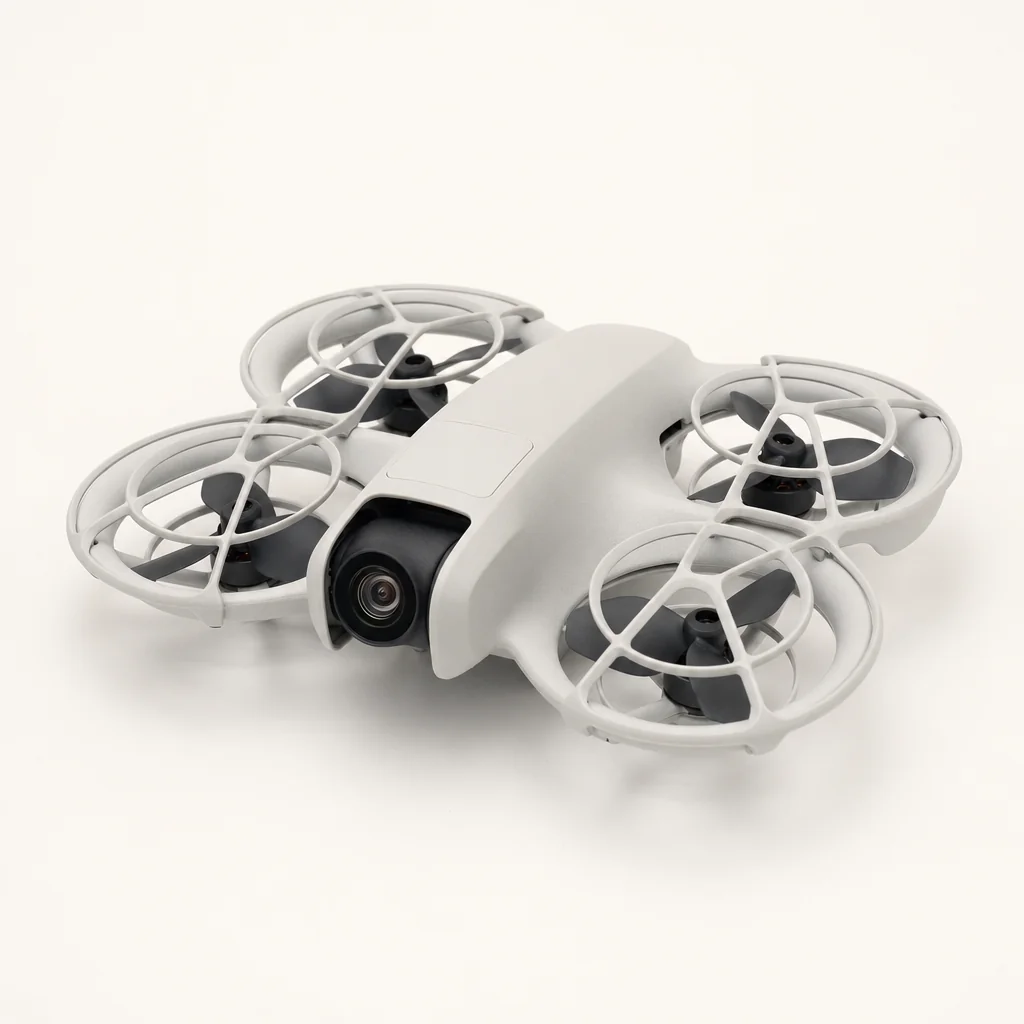
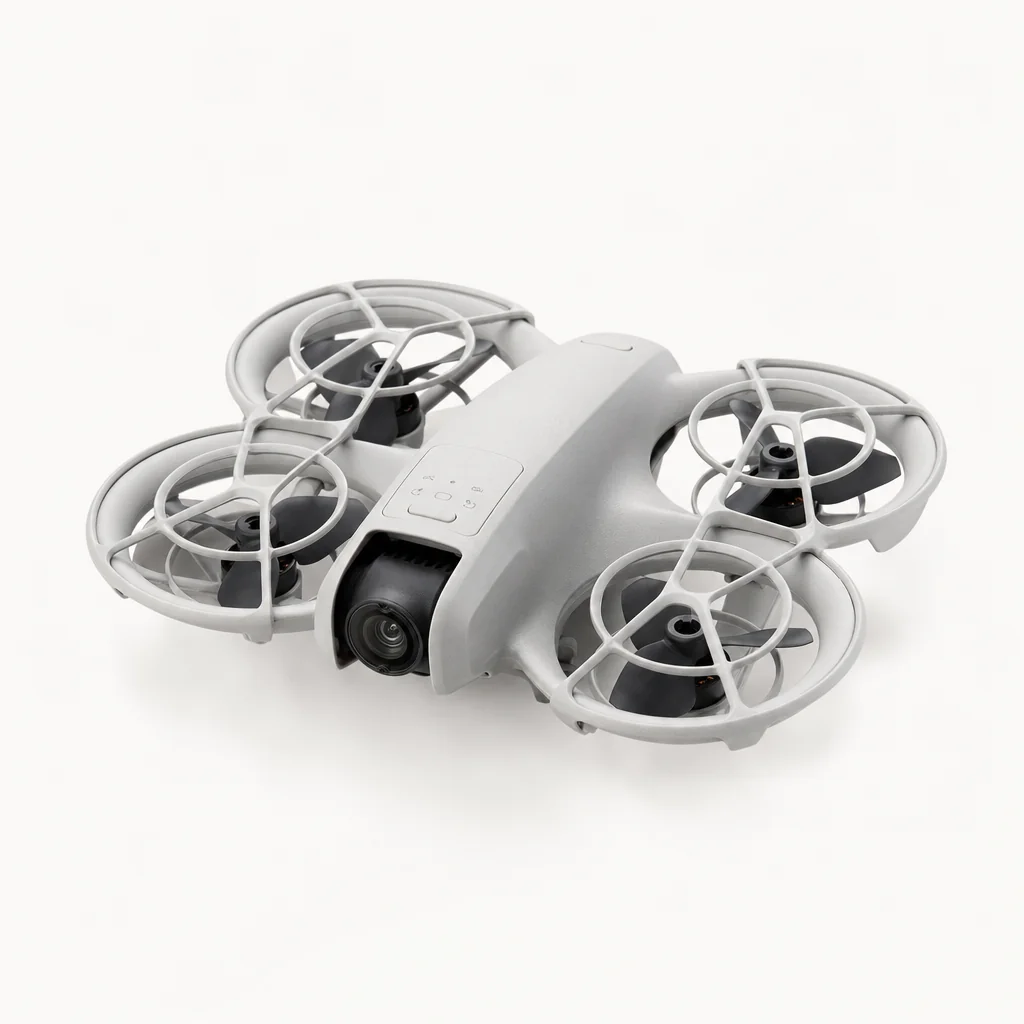
The DJI Neo is a compact camera drone intended to make aerial video less intimidating and less equipment-heavy. DJI describes it as the lightest and most compact drone in its range to date. More importantly for most buyers, it can take off from, and return to, the palm of your hand without a remote control.
That is the feature to focus on. Plenty of people like the idea of aerial footage but do not want to carry a controller or spend time setting one up for a brief clip. With the Neo, the basic proposition is much more direct: launch, capture a shot, and bring it back down to your hand.
It also records ultra-stabilised 4K video. Stabilisation matters here because the whole point of a small, quick-launch drone is to produce footage that looks more deliberate than a hurried phone video. The 4K capability gives you a high-resolution starting point for family videos and social clips, whilst the stabilisation is there to help keep the result smooth.
How you actually control the DJI Neo
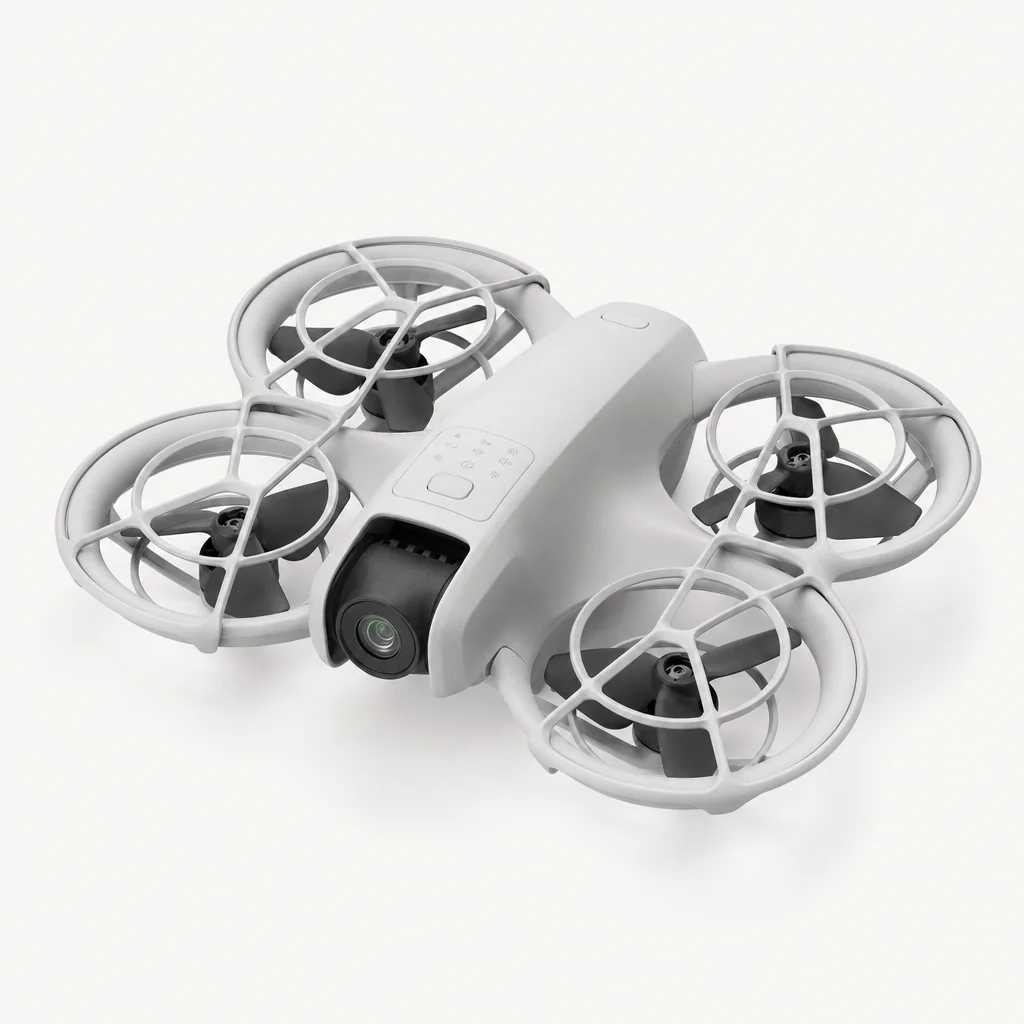
"No controller" does not mean "no control". It means the DJI Neo has been designed to work in a more immediate way for certain shots. You can launch it from your palm and land it back in your palm without a remote. For a short clip, that can be the difference between actually using a drone and deciding it is too much effort.
Palm launch and landing
The DJI Neo can lift off from your hand and return to it without a remote control. This is its clearest advantage for quick, low-fuss use.
Subject tracking
The drone supports subject tracking, allowing it to follow a person for a moving shot rather than requiring them to remain in one fixed spot.
QuickShots and other control options
DJI lists QuickShots alongside multiple control options, giving the Neo more flexibility than its controller-free launch alone suggests.
The important distinction is between convenience and capability. The Neo is compelling because it makes the simple route easy. If your usual aim is a brief clip of a walk, a family day out or an outdoor activity, that is often exactly what you need. If you enjoy the process of precise drone piloting, the controller-free approach may be less central to your decision.
Flight time and everyday use
DJI gives the Neo a maximum flight time of approximately 18 minutes. Treat "maximum" as the useful ceiling rather than a promise that every outing will deliver a full 18 minutes of recording time. Either way, it tells you clearly what sort of product this is: a compact drone for intentional, shorter flights.
That need not be a deal-breaker. A good aerial clip is often only seconds long, and subject tracking means the Neo is aimed at capturing those moments efficiently. But it does change the buying calculation. If you expect to spend long periods in the air, film several locations back-to-back or record an event from above, the limited maximum flight time will become the defining compromise.
Its compact design makes the Neo especially appealing when space and convenience are priorities. It is easier to justify bringing along when the plan is simply to have the option of an aerial perspective, rather than making drone filming the main activity.
Who the DJI Neo suits
Families capturing occasions
A sensible fit for adults who want a quick aerial view of an outdoor moment without making a controller part of the occasion.
Casual video creators
Well suited to people who value stabilised 4K footage, subject tracking and a fast route from idea to recorded clip.
Minimal-kit buyers
A good match if the attraction of a drone is having a compact camera drone readily to hand, rather than carrying a larger filming setup.
For families, the sensible role is as an adult-operated camera device rather than something to treat like an ordinary toy. Its strongest use is creating a perspective that a phone or standard camera cannot reach, then getting out of the way again.
What to know before buying DJI Neo
The DJI Neo's maximum flight time is approximately 18 minutes. Buy it for short, purposeful footage and the convenience of controller-free palm operation, not for lengthy filming sessions.
The main practical limitation is not image resolution or tracking. It is time in the air. A compact drone can be wonderfully easy to bring with you, but it cannot turn a brief flight window into an all-afternoon activity.
Also be clear about why you want one. If the answer is "I want a simple way to get a few interesting clips of us outdoors," the Neo's feature set is unusually well targeted. If the answer is "I want to learn detailed drone operation and film for as long as possible," a larger DJI drone with a longer flight time may be a better category to investigate.
There is another honest alternative for some households: do not buy a drone at all. An action camera offers a very direct way to record family activities, whilst a smartphone gimbal can make handheld phone footage smoother without adding an aircraft to the kit. Neither replaces the Neo's aerial viewpoint, but both can be the better answer if that viewpoint is only an occasional wish.
DJI Neo verdict
The DJI Neo is worth considering for its specific trick: it makes short aerial filming feel far less involved. Palm launch and landing, subject tracking and stabilised 4K recording are a persuasive combination for casual use. Buy it if convenience is your priority and brief flights meet your needs. Look elsewhere if long flight time is the reason you want a drone.
Sources
- DJI Neo product page — compact design, palm operation, 4K video, tracking and QuickShots.
- DJI Neo specifications — maximum flight time of approximately 18 minutes.