
Potensic ATOM Review: The DJI Alternative That Costs Far Less
The Potensic ATOM remains a sensible pick if you want stabilised 4K aerial video without moving straight into a pricier compact drone. It has the essentials that matter for filming — a Sony sensor, a proper three-axis mechanical gimbal and a quoted 32-minute flight time per battery — but you must buy an SD card before it can record anything.
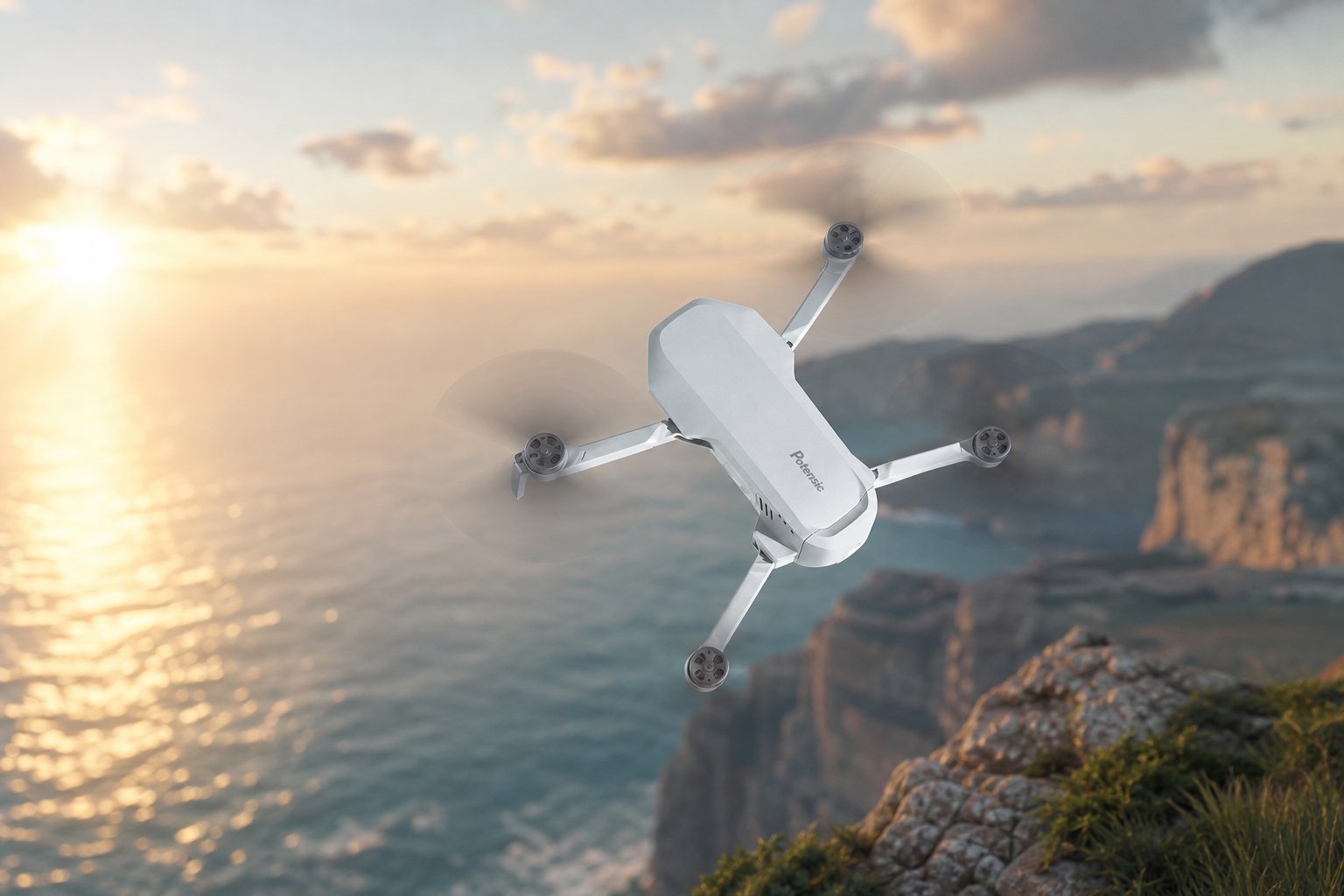
Launched in September 2023, the Potensic ATOM was pitched as a more affordable route into camera-drone flying. That basic appeal still makes sense. It is not trying to be a toy with a camera clipped on; it is a compact aircraft designed around taking 4K video and 12MP photographs.
The important distinction is the gimbal. A three-axis mechanical stabilisation system physically keeps the camera level as the drone moves, which is the feature that separates smoother-looking aerial clips from footage that feels visibly shaken about by every change in direction. For family holidays, walks and hobby photography, that is far more useful than a long list of novelty modes.
The short buying answer
Choose the Potensic ATOM if a stabilised 4K camera and straightforward battery options are your priorities, and you are happy to add a suitable memory card. The standard package covered the core flying kit; the storage card was the meaningful extra.
What the Potensic ATOM does well
Potensic specified the ATOM with a Sony CMOS camera sensor capable of recording 4K video at 30 frames per second and taking 12MP stills. The camera sat on a three-axis mechanical gimbal with a tilt range from 20 degrees upward to 90 degrees downward. In practical terms, that gives you the usual forward-looking view, a straight-down perspective for overhead shots, and a little upward framing when the scene calls for it.
Its quoted battery life was 32 minutes per battery, while the stated transmission range was up to 6km. Those are manufacturer specifications rather than a promise of how long or how far every flight will be. Conditions, surroundings and the way you fly all matter. Still, 32 minutes is a useful starting point for planning a short filming session rather than treating a drone flight as a quick two-minute novelty.
For hovering, Potensic said the ATOM combined GNSS with a downward vision system and infrared sensing. That collection of systems was intended to help the drone hold its position more steadily while you concentrate on composition.
Reasons to choose it
- 4K/30fps video and 12MP photos from a Sony CMOS sensor.
- A three-axis mechanical gimbal for stabilised footage.
- Quoted 32-minute battery life per battery.
- GNSS, downward vision and infrared sensing support stable hovering.
Things to budget for
- There is no internal storage for photos or video.
- A compatible removable SD card is essential before filming.
- The one-battery standard kit will naturally mean shorter sessions than a three-battery bundle.
Potensic ATOM bundles and what is included
The standard Potensic ATOM kit included the drone, remote controller and one battery. It also came with four pairs of spare propellers, eight spare screws, a gimbal protector, screwdriver, USB-C cable and three smartphone adapter cables. That is a genuinely practical collection of basics: the gimbal protector matters for transport, and having replacement propellers and the correct screws in the box avoids an immediate accessories order after minor propeller damage.
One battery in the standard kit
Potensic quoted up to 32 minutes of battery life. It is enough for a planned flight, but it does not leave much room for a second attempt if the first footage is not quite right.
Three-battery configurations
UK Amazon listings included three-battery versions advertised with up to 96 minutes of total flight time. That makes more sense for longer outings, provided you are prepared to manage the batteries and charge them in advance.
Storage is separate
The ATOM had no internal storage. It used a removable SD card, with support reported for cards up to 128GB rated UHS-3. Put this on the shopping list from the start rather than discovering it when you are ready to record.
Space reported pricing of £279 for the standard kit and £379 for the Fly More Bundle when it reviewed the drone. Those were reported prices rather than a guide to what any retailer charges today, but they explain the ATOM’s original position: it was deliberately aimed at shoppers looking for a lower-cost alternative to premium compact camera drones.
Who the Potensic ATOM suits
The ATOM suits the buyer who wants to learn camera-drone flying with equipment that is focused on the end result: steady aerial clips and still photos. It is also a reasonable fit for someone who wants a compact drone for occasional trips but does not want to pay purely for a more familiar badge on the front.
It is best approached as a proper camera drone, not as an impulse toy for the garden. Take time to set up the controller, fit the gimbal protector for transport and make sure the SD card is installed before leaving home. Spare propellers are welcome, but they are not a substitute for careful flight planning.
Flying a camera drone in the UK comes with responsibilities. Check and follow the current Civil Aviation Authority rules before each flight, including the requirements that apply to you, the location and the way you intend to fly.
For a family purchase, an adult should remain the person making the decisions around where and when it is flown. The product information did not list a manufacturer age rating, and drone flying is not the same kind of activity as opening a board game at the kitchen table. It needs space, attention and a sensible approach to local rules.
Camera quality and recording reality
On paper, the ATOM’s camera package is well judged for the price-conscious aerial-video buyer. The Sony CMOS sensor, 4K/30fps recording and three-axis gimbal address the three things most people notice first in drone footage: detail, smoothness and controlled framing.
The gimbal’s downward 90-degree tilt is particularly useful. It lets you capture an overhead view without having to tip the aircraft itself into an awkward position. The slight upward tilt is less important day to day, but it gives more freedom when framing taller subjects or the horizon.
There is one non-negotiable practical limitation: no internal memory. An independent review found that the ATOM depended entirely on a removable SD card. Buy a card before your first flight, choose one that meets the stated UHS-3 requirement and keep it somewhere you will remember to pack. Without it, there is nowhere to save the 4K video or 12MP photos that are the point of buying this model.
Is the Potensic ATOM a worthwhile DJI alternative?
“DJI alternative” is a useful shorthand, but it should not mean buying blindly on price alone. The strongest case for the Potensic ATOM is not that it copies every premium-drone feature. It is that it paired a stabilised Sony-sensor camera with 4K recording, a quoted 32-minute battery life and a properly equipped starter kit at a historically lower entry price.
The standard bundle is the value-led choice if your flights will be occasional and brief. You get the aircraft, controller, charging cable, protection for the gimbal and replacement propellers. Add the SD card and you have what you need to start recording.
A three-battery configuration is the more practical choice for anyone who expects to make a day of it. The headline 96 minutes is the combined quoted time for three batteries, not one continuous flight, but extra batteries reduce the pressure to make every clip perfect first time.
Should you buy the Potensic ATOM?
Yes, if you want a capable, stabilised 4K camera drone and prefer to keep the initial spend lower than many premium compact options. The Potensic ATOM’s appeal is simple: it put the useful filming hardware first. Buy the bundle that matches how long you actually want to be out flying, and do not forget the UHS-3 SD card — it is essential, not optional.