
VolantexRC Ranger 600 Review: The Beginner RC Plane That Almost Flies Itself
The VolantexRC Ranger 600 had been around long enough by 2026 to earn its reputation as a friendly little trainer rather than a flashy newcomer. With a 600mm wingspan, a forgiving gyro and a one-button return feature, it promised the bit beginners actually want: more time flying and less time retrieving a plane from a hedge.
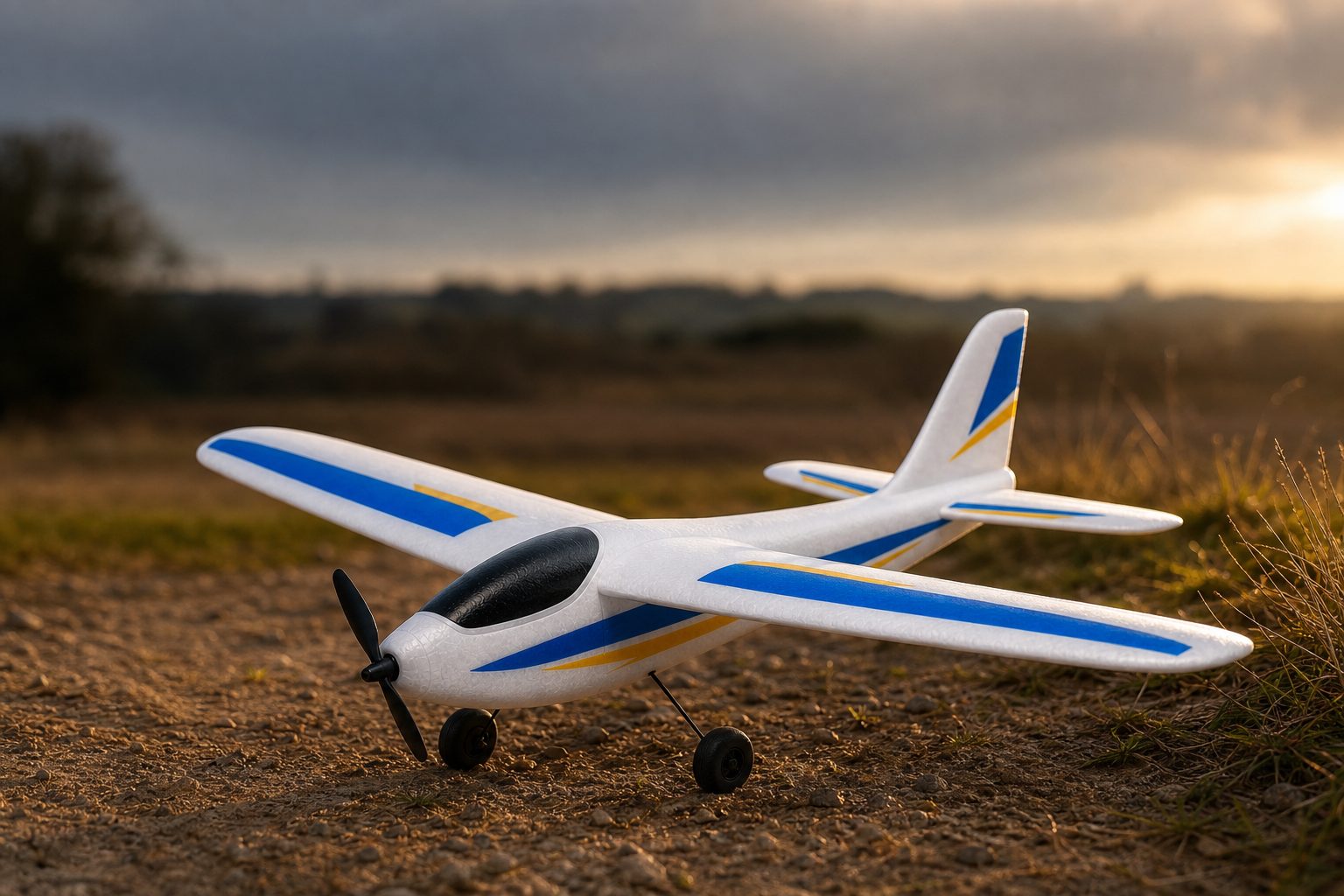
The original three-channel VolantexRC Ranger 600 is a compact EPP foam trainer designed to make a first proper RC flight feel far less intimidating.
1. The short version
There is a particular kind of first RC-plane purchase that looks cheap, exciting and enormously likely to end its afternoon in a tree. The original VolantexRC Ranger 600 was built to reduce that possibility. It is a tiny ready-to-fly glider-style aircraft with three channels, a 6-axis XPilot flight-control system and three assistance levels. In its easiest setting, the electronics do a remarkable amount of the steadying work.
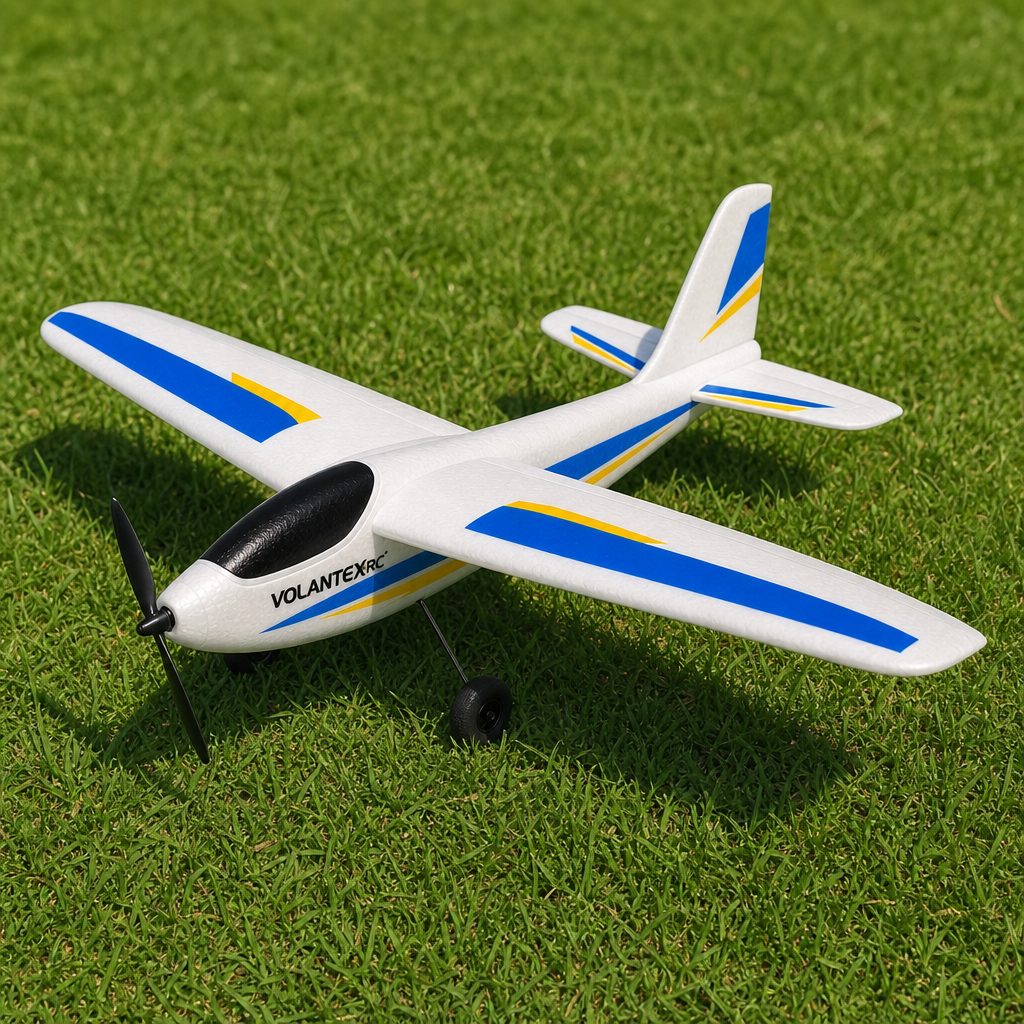
Its 600mm wingspan puts the Ranger 600 firmly in the small-field trainer category: portable enough to bring along, but best flown well away from people, roads and obstacles.
That does not mean it is magic. No 59g foam aeroplane can repeal wind, remove the need for a sensible flying field or teach someone where the sun is before they launch. But the Ranger 600 made the first few sessions feel manageable in a way many basic toy-shop planes did not. It will suit a child or adult who wants a proper radio-controlled flying experience without beginning with a large, expensive model and a complicated assembly manual.
The key word is trainer. This is not the version for somebody dreaming of crisp rolls, dramatic loops and a miniature Red Arrows routine over the local park. Later Ranger 600 variants added four-channel control and, in some cases, stunt functions. The original model's appeal is much simpler: it lets a nervous beginner learn the rhythm of launching, climbing, turning, gliding and landing.
Field note: The Ranger 600's quoted control distance was over 200 metres, but that is not an invitation to fly it until it becomes a dot. New pilots should keep any small RC aircraft close enough to judge its direction confidently.
2. VolantexRC Ranger 600 specifications at a glance
The original Ranger 600 kept its hardware deliberately modest. That was sensible. Every gram matters on a small electric glider, and a simple three-channel layout gives a newcomer fewer things to think about whilst their thumbs are still negotiating with their brain.
The supplied USB charging cable and integrated ESC keep the package approachable. The plane used two 1.3g servos, while the receiver and speed controller were integrated. That matters less as a headline specification than it does in practice: there are fewer separate bits for a first-time owner to understand before they can fly.
3. What "almost flies itself" really means
It is easy for manufacturers to make stabilisation sound mystical. The Ranger 600's XPilot system is not a tiny pilot living in the fuselage, sadly; it is a 6-axis gyro system designed to help the aircraft remain level and resist unwanted movement. For a beginner, that changes the experience considerably.
In Beginner mode, the assistance is at its fullest. Rather than immediately amplifying every slightly panicked stick movement, the plane aims to remain composed. Letting the controls return towards centre gives the aircraft a chance to settle. This is precisely the sort of safety net that keeps an early mistake from becoming a long walk through wet grass.
Three assistance levels
Beginner gives full assistance, Intermediate provides partial assistance, and Expert removes that helping hand for manual control.
One-button return
The return function is a confidence-building backstop when a new pilot has allowed the plane to drift farther away than intended.
Three-channel simplicity
Throttle, steering and pitch are enough to learn the core flying skills without introducing aileron control immediately.
Ready-to-fly format
The Ranger 600 was designed to get newcomers airborne without a lengthy building project first. For many families, that is half the battle won.
The more useful way to think about XPilot is as training wheels rather than autopilot. You still have to make the sensible choices: launch into clear air, add enough throttle to climb, turn smoothly and land before the battery is drained. The gyro cannot make a bad site suitable, and it cannot make a tiny plane large enough to see at an excessive distance. What it can do is make the learning curve far less sharp.
Pro tip: start with tiny control inputs
In Beginner mode, treat the sticks as suggestions rather than levers in a crane. A gentle correction, followed by a moment to see what the Ranger does, teaches far more than holding a direction and hoping for the best.
4. Design and durability for real family use
The original Ranger 600 used EPP foam. That is an excellent material choice for a learning aircraft because it stays light and has useful flexibility when a landing is more of an unscheduled meeting with the ground. At 59g, the Ranger is not carrying the same momentum as a much bigger model, which is very much in its favour when a novice gets the approach wrong.
There is a caveat here. "Durable foam" should not be translated as "invincible foam". Repeated hard impacts, a careless launch into a fence or a collision with a solid object can still spoil anyone's day. EPP gives this model a better chance of shrugging off ordinary beginner mishaps than brittle plastic would, but it is not a licence to fly around playground equipment. Quite apart from the plane, that would be a dreadful idea.
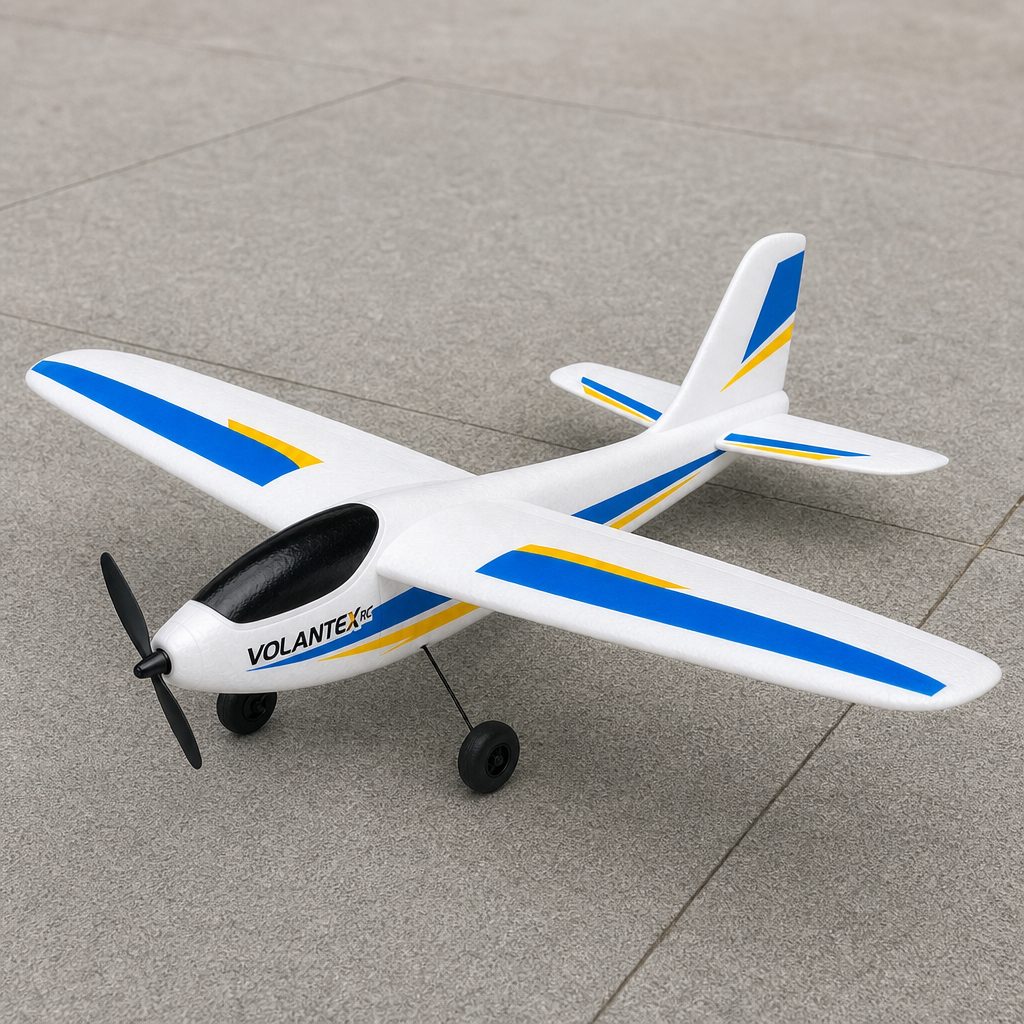
The Ranger 600's lightweight EPP foam construction was intended to absorb the small knocks that are part of learning, rather than turning every imperfect landing into a repair session.
Its compact size is a practical win at home. A 600mm wingspan aircraft is easier to carry to an open field and easier to store than a large trainer. On the other hand, compactness is not always kindness. A small plane becomes harder to orientate as it gets farther away, particularly against a bright sky. Keep it nearby, fly in good visibility and resist the temptation to see whether the quoted radio range really can be tested from the next postcode.
5. Flying performance: gentle, stable and best in calm air
The Ranger 600's personality is glider-like. It is happy climbing under power, but it also rewards a pilot who eases off and lets it glide. Under suitable conditions, this kind of lightweight aircraft can spend time in the air with zero throttle. That makes the first lessons feel less frantic. You can pause, watch the plane's attitude and learn what a turn actually does instead of constantly chasing altitude.
The trade-off is obvious enough: a 59g model is affected by breezes. XPilot stabilisation can help smooth the aircraft's reaction, but it cannot add mass or make gusts disappear. A calm morning or still evening is vastly preferable for the first flights. If the grass is waving enthusiastically and your coat is trying to leave without you, save the Ranger for another day.
Pros
- Full Beginner assistance makes first flights far less daunting.
- One-button return offers a reassuring recovery feature.
- Light EPP foam construction is well suited to routine learner bumps.
- Three-channel controls keep the first lessons focused and comprehensible.
- Its gliding character encourages smoother, more thoughtful flying.
Cons
- The original three-channel layout is not the model for aerobatic ambition.
- Small size makes orientation harder once it has travelled far away.
- Lightweight aircraft and blustery conditions remain a frustrating pairing.
- Realistic battery management matters more than the best-case headline figure.
- A large, clear open space is still essential, despite the clever electronics.
6. Battery life and the daily flying routine
On paper, the original 3-channel Ranger 600 was quoted at 15 to 20 minutes from its 3.7V 360mAh Li-Po battery. That is an appealing number for a small ready-to-fly model, particularly when the aircraft is gliding efficiently rather than running the motor continuously. Charging took approximately 60 minutes through USB.
For ordinary family use, though, I would plan more conservatively. Real-world normal-use figures of around five to eight minutes were sensible where the aim was to protect the battery. Another reported run delivered around 12 minutes of powerful flight, extending to 14 minutes on standby. These figures are not contradictory so much as a useful reminder that throttle use, wind and flying style change the result enormously.
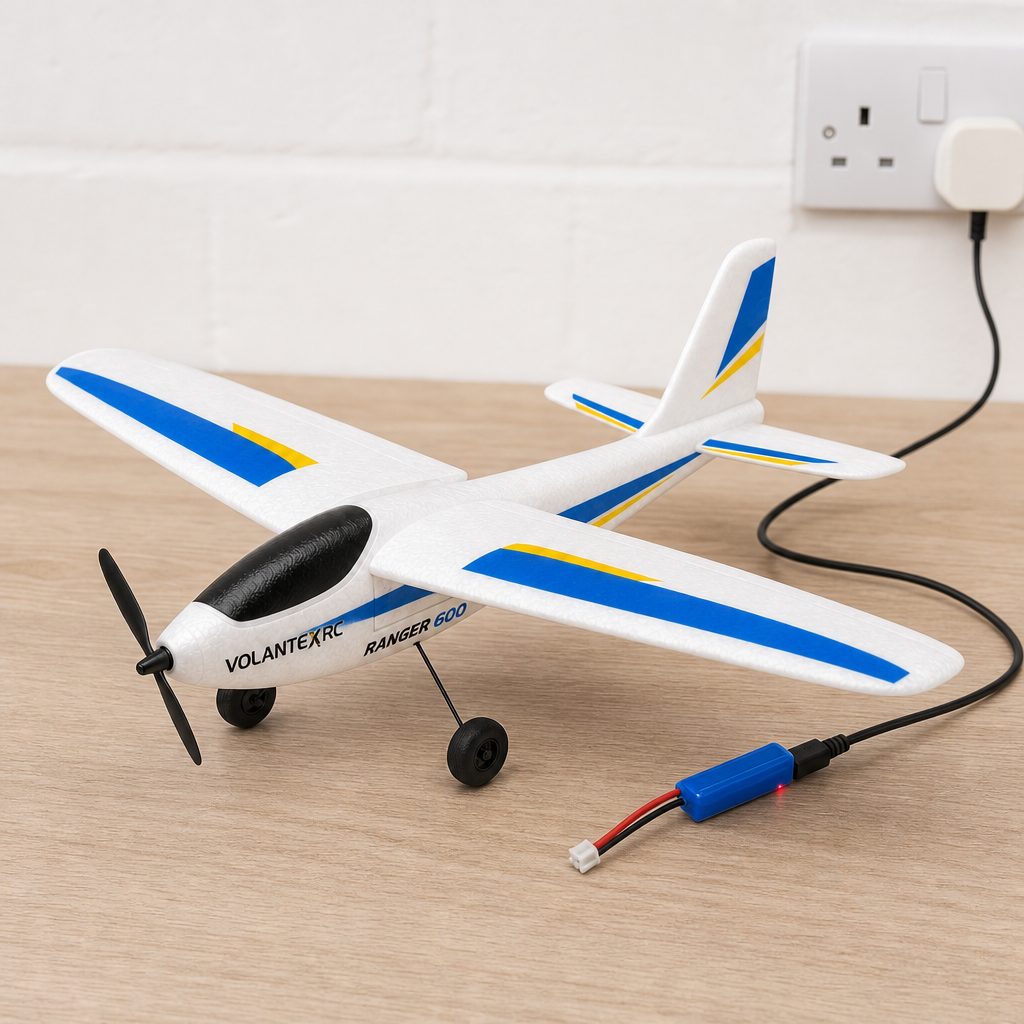
The USB-charged 3.7V battery keeps the Ranger 600 simple to live with, although a sensible short-flight routine is kinder to a small Li-Po than chasing every final minute.
That shorter planning figure is not a flaw; it is just mature ownership. A child gets a much happier second flight if the first one ended deliberately, with enough power left to land calmly, rather than by discovering the battery limit while the model is a long way downfield. Charge the battery where you can keep an eye on it, allow it to cool after flight, and build sessions around several unhurried attempts rather than one heroic sortie.
7. What it was like as a first family RC plane
The Ranger 600 made the most sense as a shared learning toy. One person can launch whilst another holds the transmitter, then the roles can swap once everyone is comfortable. That turns the inevitable first-wobbly-flight nerves into a little family activity instead of a performance test. There will still be the occasional "left, no, your other left" moment. That is part of the package.
I particularly like the progression built into the three flight-assistance levels. It gives the aircraft some life after the very first day. Start at full assistance, move to partial assistance when level flight and simple turns stop feeling mysterious, then try Expert only when the pilot can already make calm corrections without the gyro doing all the emotional labour.
Age is less important than judgement, coordination and supervision. A younger child may enjoy the process enormously with an adult handling launches and acting as spotter. An older child, teenager or adult beginner can take more responsibility for pre-flight checks and landings. Either way, this is a proper flying model, not something to use close to pets, people, traffic or houses.
Best setting: a large open area such as a baseball field was cited as suitable for this class of beginner aircraft. In the UK, look for the same essentials: open ground, clear visibility and a generous buffer from people and obstacles.
8. Ranger 600 vs Ranger 600 Stunt, Ranger 600S and Ranger 600 V2
VolantexRC used the Ranger 600 name across several related models, and that is worth understanding before buying. They were not simply different stickers on the same plane. The original reviewed here was the straightforward three-channel trainer. The Stunt and later versions shifted the balance towards four-channel control and extra capability.
| Feature | Ranger 600 original | Ranger 600 Stunt | Ranger 600S | Ranger 600 V2 |
|---|---|---|---|---|
| Channels | 3-channel | 4-channel | 4-channel | 4-channel |
| Weight | 59g | 71g | — | — |
| Battery provision | 3.7V 360mAh Li-Po | Two 400mAh batteries | — | — |
| Flight-time claim | 15–20 minutes | — | Up to 30 minutes | — |
| Standout design or feature | XPilot gyro and one-button return | Aileron servo, flatter wings and two spare props | Rear pusher propeller and XPilot stabilisation | XPilot gyro and one-key aerobatics |
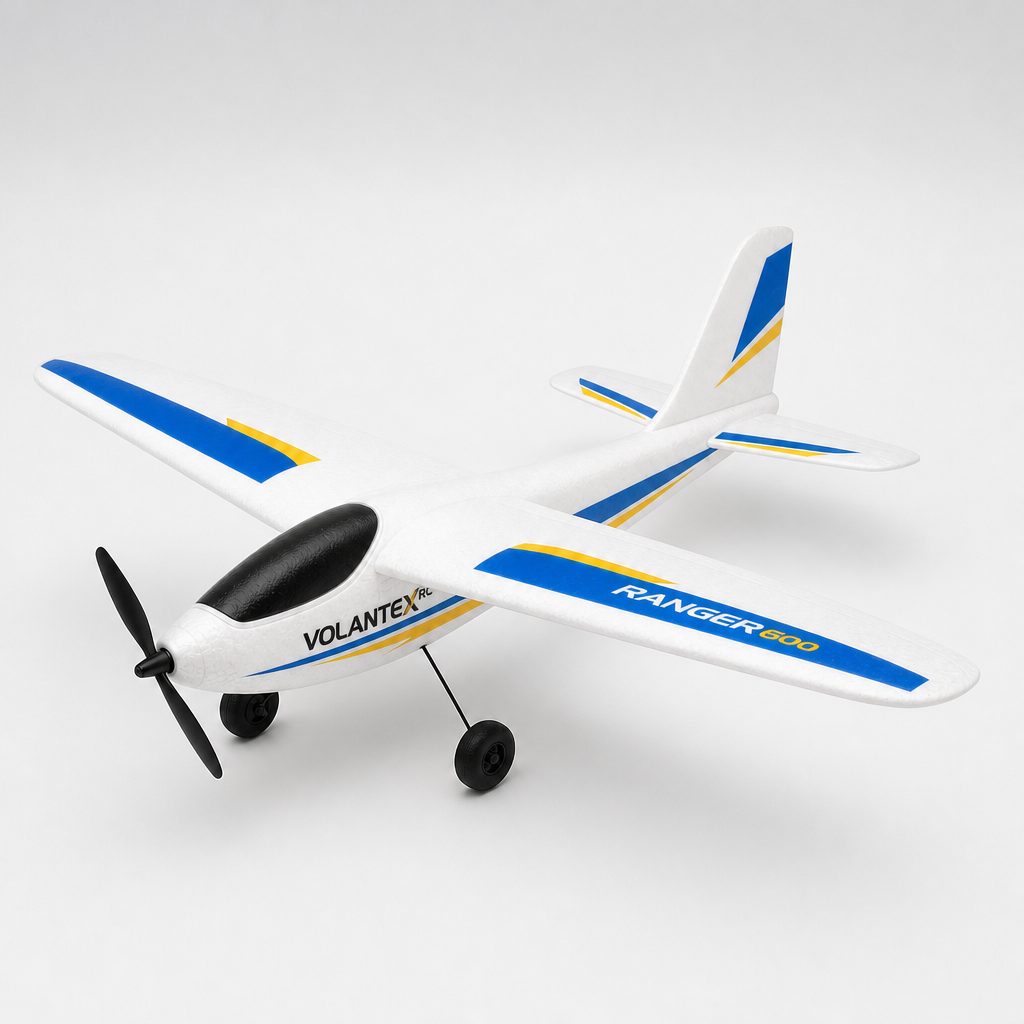
The wider Ranger 600 family moved from the original trainer's simple three-channel format towards four-channel flying, pusher-prop protection and stunt-oriented features.
The Ranger 600 Stunt is the more natural option for a learner who already knows they want aileron control and a more aerobatic path. It included two 400mAh batteries and two spare propellers, which is a practical bundle for active use. The Ranger 600S is especially interesting for crash-prone newcomers because its pusher configuration moved the propeller to the rear, helping to protect it from nose-first ground strikes.
The V2 added one-key aerobatics and was described as capable in windy conditions, but it is still a small foam plane rather than a reason to ignore weather. For the purest first-timer, I would choose the original Ranger 600's simpler control scheme. For somebody who will quickly outgrow that simplicity, the four-channel versions make a stronger long-term case.
9. Which Ranger 600 is best for each sort of buyer?
There is no universal winner here because each version answers a slightly different question. The original is the least intimidating place to start; the later models make more sense once "keep it level" has stopped being the entire mission.
VolantexRC Ranger 600 original
Choose the three-channel model for full-assist learning, straightforward controls and the gentlest route into fixed-wing RC flying.
VolantexRC Ranger 600 Stunt
The four-channel layout and aileron servo suit a beginner who wants to develop beyond the basics rather than stay with simple turns.
VolantexRC Ranger 600S
The rear-mounted pusher propeller is the sensible pick for learners worried about repeated nose-first arrivals.
VolantexRC Ranger 600 V2
One-key aerobatics and four-channel control make the V2 the better fit for pilots who want more than gentle trainer flying.
10. Is the VolantexRC Ranger 600 worth buying now?
As an established beginner model, the original Ranger 600 held up well for the person it was designed for. It is not a precision hobby aircraft for an experienced pilot, and it never pretended to be. Its value is in lowering the barrier between "I would like to try RC flying" and an actual successful flight that does not end in confusion after six seconds.
The strongest reason to choose it remains the combination of assistance levels, light EPP construction, a modest 600mm size and a genuinely beginner-friendly three-channel layout. If the recipient is likely to fly once or twice and simply wants the thrill of getting a plane airborne, this is a much more sensible proposition than jumping straight to an advanced four-channel aircraft.
The main reason to skip it is equally clear. If the intended pilot already has some stick time, wants to learn aileron control quickly or is buying with stunts in mind, the Ranger 600 Stunt, 600S or V2 will probably remain engaging for longer. The original teaches the fundamentals beautifully, but its deliberate simplicity is ultimately its ceiling.
11. ToyScout rating
The score below is for the original three-channel Ranger 600 as a beginner-focused ready-to-fly plane. It reflects what the model was trying to do, not whether it can outperform more advanced four-channel aircraft at their own game.
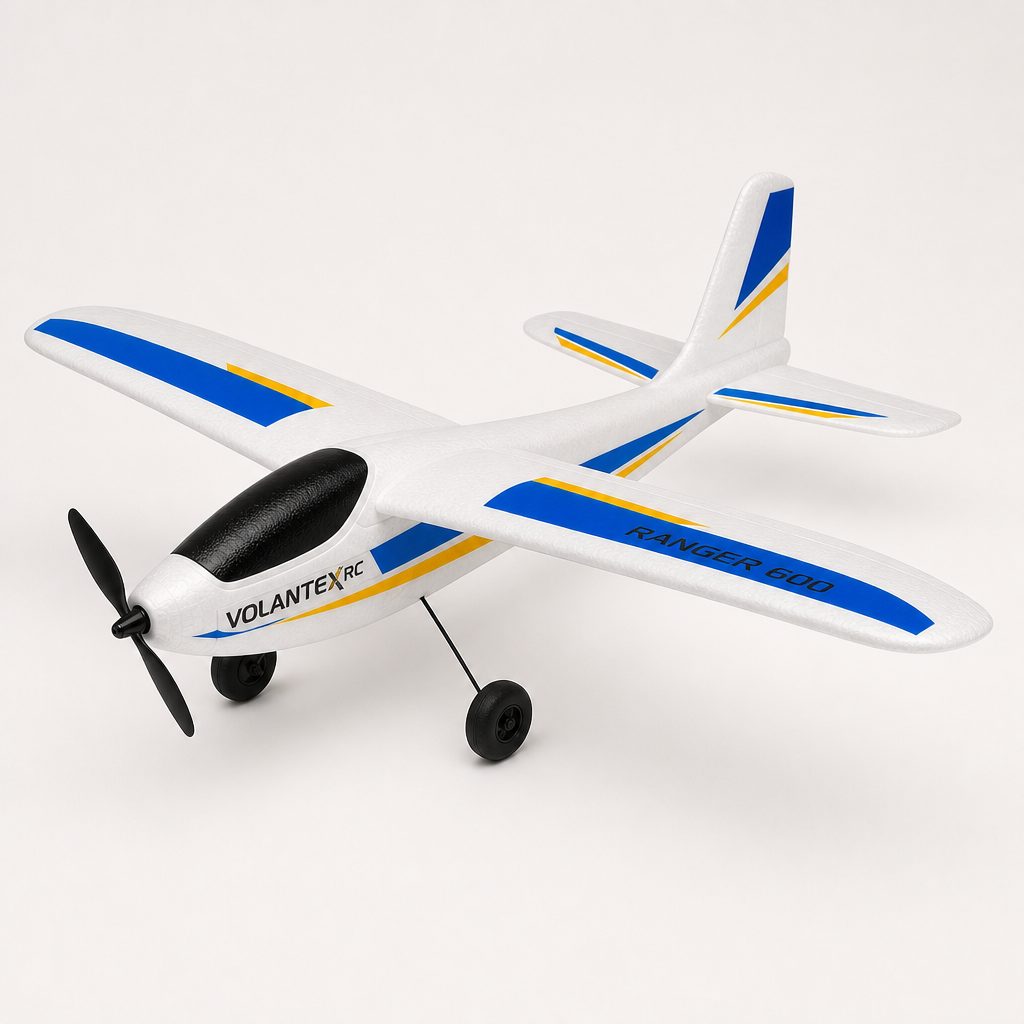
For its intended role, the original Ranger 600 remained a reassuring first fixed-wing RC plane: small, light, stabilised and built around the idea that learning should be fun.
12. VolantexRC Ranger 600 FAQ
Yes. The original model's three-channel control system, full Beginner assistance mode and 6-axis XPilot stabilisation were specifically well suited to a first-time flyer. A large, calm and open flying area is still essential.
It has a 600mm wingspan and measures 460mm in length. At 59g flying weight, it is compact enough to transport easily but should be kept close enough for the pilot to see its direction clearly.
The original 3-channel model was quoted at 15 to 20 minutes, but normal-use reports of five to eight minutes are a more cautious way to plan a session. One reported test produced around 12 minutes of powerful flight and 14 minutes with standby use.
The 3.7V battery took approximately 60 minutes to charge using the included USB cable. It is sensible to let the battery cool after flying before charging again.
The original three-channel Ranger 600 is primarily a stable trainer. For stunt-focused flying, the four-channel Ranger 600 Stunt or Ranger 600 V2, which included one-key aerobatics, are more appropriate versions of the range.
It is designed as a beginner aid to bring the aircraft back when it has drifted farther away than the pilot is comfortable with. It is a useful confidence feature, not a substitute for flying in a safe open space and keeping the plane visible.
The EPP foam construction is flexible and light, helping it cope with the ordinary bumps that happen whilst learning. It is more forgiving than a brittle model, but it can still be damaged by repeated hard impacts or collisions with solid obstacles.
Choose the original if simple three-channel learning is the priority. Choose the four-channel Ranger 600S if you want a rear pusher propeller, which better protects the prop and motor during nose-first landings, plus a longer stated flight-time potential of up to 30 minutes.
13. Final verdict
VolantexRC Ranger 600: a genuinely friendly first flight
The original VolantexRC Ranger 600 earned its place as a beginner favourite because it concentrated on the things that matter on day one: stable assistance, uncomplicated controls, forgiving EPP foam and a manageable size. It did not remove the need for care or a calm flying field, but it made learning feel achievable rather than terrifying.
Buy it for a first-time pilot who wants to understand the basics of fixed-wing RC flying without being thrown straight into advanced controls. Look to the Ranger 600 Stunt, Ranger 600S or Ranger 600 V2 if four-channel progression, propeller protection or aerobatics matter more. For gentle family flying, though, this little trainer came very close to delivering exactly what its name promised: an aeroplane that almost flew itself.