Get Fit at Home: Fitness Boxing 3 on Switch 2 Reviewed
Does the new CameraPlay form-correction and GameShare group workouts finally turn Imagineer's rhythm-boxing series into a genuinely useful home fitness tool? I've put the Switch 2 Edition through its paces to find out.
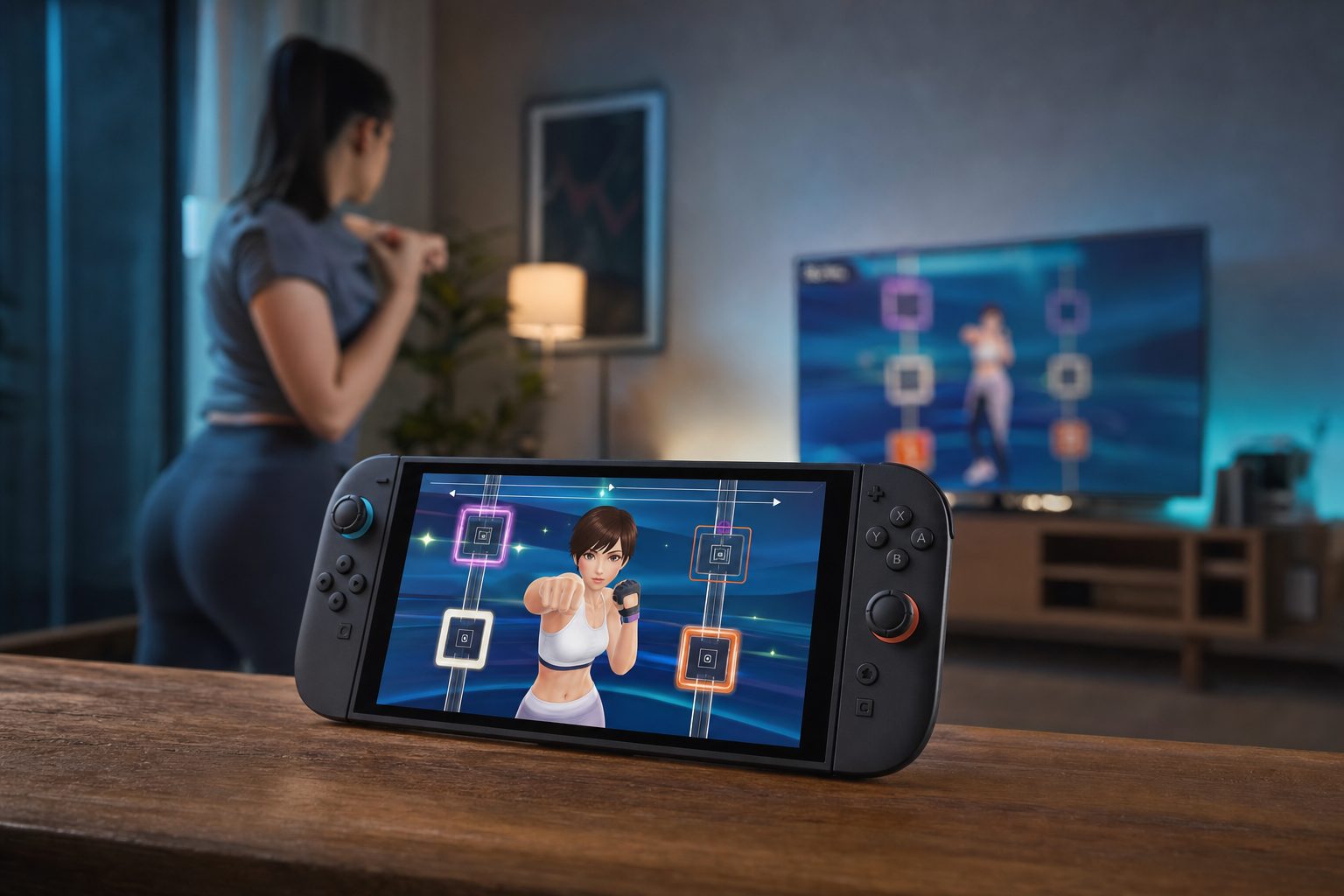
Fitness Boxing 3 arrives on Nintendo Switch 2 with a range of workout options.
If you've ever tried to keep a January fitness resolution going past the middle of the month, you'll know how quickly enthusiasm fades once the novelty wears off. That's the exact problem the Fitness Boxing series has been quietly chipping away at since it first landed on the original Switch, and with the Nintendo Switch 2 Edition of Fitness Boxing 3: Your Personal Trainer — released worldwide digitally on 16 July 2026 — Imagineer has thrown two genuinely interesting features into the mix: a camera-based form-correction system called CameraPlay, and GameShare group workouts for up to four people.
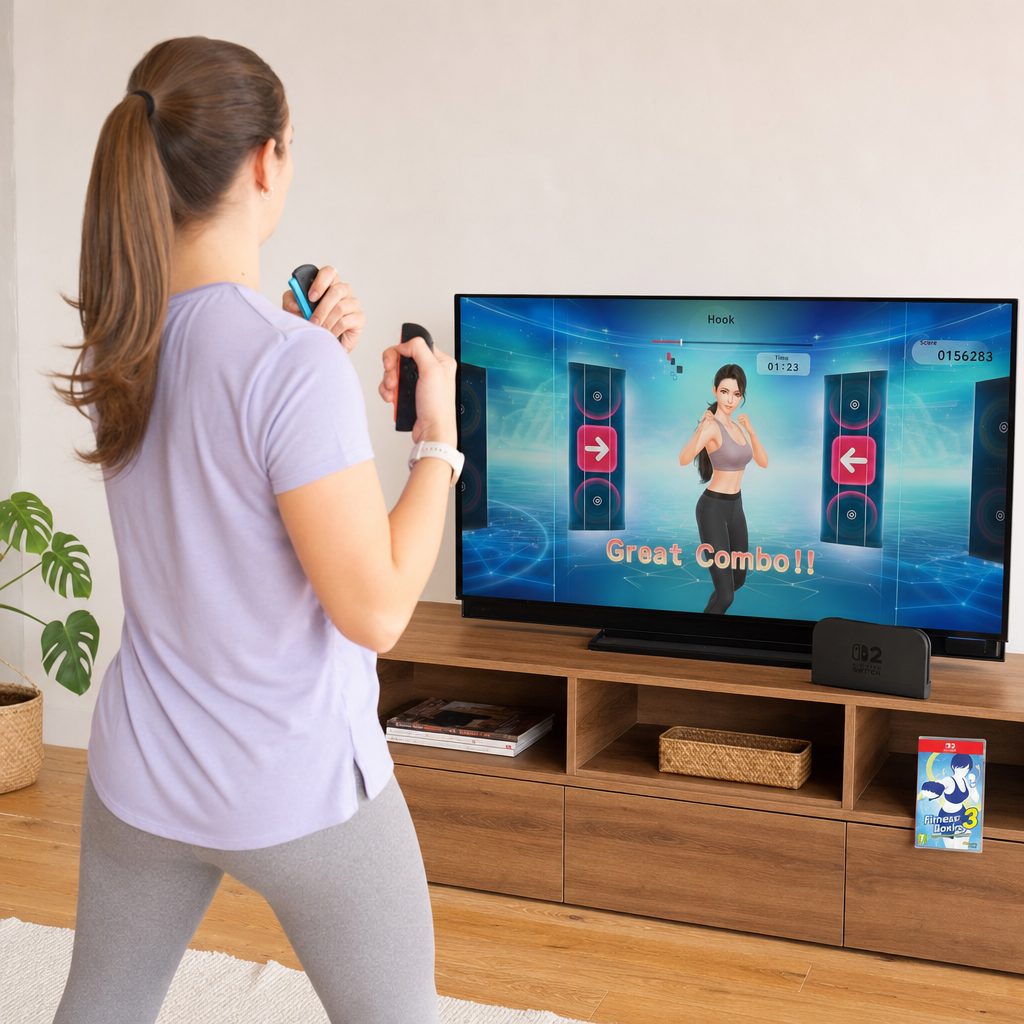
You hold a Joy-Con in each hand and follow the on-screen boxing instructor.
The base game, Fitness Boxing 3: Your Personal Trainer, originally came out on 5 December 2024 for the original Switch. The Switch 2 Edition builds on that same foundation with a faster frame rate, enhanced resolution, and a handful of new modes. I've spent a good while working it into my own morning cardio routine, so in this review I'll cover how it feels day to day, whether those headline features actually earn their keep, who it suits, and how it stacks up against the wider "fitness at home" crowd.
What Exactly Is Fitness Boxing 3?
At its heart, Fitness Boxing 3 is a rhythm game dressed up as a personal trainer. You hold a Joy-Con in each hand, an on-screen instructor demonstrates a routine — jabs, straights, hooks, uppercuts, ducks and weaves — and you follow along in time with the music. The Joy-Con motion detection tracks your punches, and you're scored on how well you land them to the beat. Think of it as a boxing-flavoured cousin of the old rhythm-and-dance games, but with a genuine sweat at the end of it.
The series has always leaned hard on the "personal trainer" framing rather than just being a punch-along mini-game, and the third entry doubles down on that. You get a Personal Program tailored to your physical condition each day, offering one-on-one style support, plus a stable of voiced virtual instructors who provide constant encouragement, feedback and — through the returning Box and Bond feature — a bit of light personality and backstory too.
Design and Presentation
Presentation is where the Switch 2 Edition earns its first tick. The faster frame rate and enhanced resolution make a real, tangible difference to a game that lives or dies on your ability to read on-screen prompts at speed. When you're following a fast combo, the smoother motion means the instructor's arms are easier to track, and that in turn makes it easier to time your own punches. It's not a flashy, headline-grabbing upgrade, but it's exactly the sort of quiet polish that a rhythm-fitness title benefits from.
The nine fully voiced virtual instructors are the visual centrepiece, and they come with customisable outfits and hairstyles — a small touch, but one that helps you build a bit of attachment to whichever trainer you pick as your regular. That attachment matters more than it sounds, because a big part of sticking with any home fitness routine is looking forward to showing up. Having a trainer whose energy you actually enjoy makes the difference between a chore and a habit.
Pro Tip
Spend your first week trying a different instructor each day before settling on a favourite. Their coaching styles and voice feedback vary noticeably, and the right match genuinely improves your motivation to come back tomorrow.
The Audio Is a Genuine Weak Spot
I'll be honest here, because it's the one area where I can't sugar-coat things: the music. The 30 instrumental songs are described as being inspired by pop tunes, but the results sound like bad polyphonic ringtones from the early 2000s. If you grew up with a Nokia 3310, you'll know exactly the tinny, synthetic quality I mean. For a game whose entire rhythm structure depends on you locking into a beat, it's a shame the tracks themselves aren't more pleasant to listen to. It doesn't break the game — you quickly stop paying close attention to the melody and focus on the rhythm — but it's a persistent, low-level annoyance that a bit more production budget could have solved.
The rest of the audio picture is far stronger. The mix of noises, haptic rumble through the Joy-Con, and voice feedback from your trainer combines to make every workout feel genuinely good. Land a clean combo and you get a satisfying thump of rumble and an encouraging shout; the feedback loop is tight and rewarding, and it's a big reason the game feels more like exercise than admin.
CameraPlay: The Headline Feature, Examined
This is the feature that had me most curious, and it's the one the editorial brief specifically asked me to scrutinise. CameraPlay uses a Nintendo Switch 2 Camera or a compatible USB camera — sold separately, so factor that into your budget — to display your own image on screen during a session. The idea is that you can compare your movements to the instructor's in real time and correct your form on the fly, which the developer pitches as leading to safer and more effective exercise.
Does it work? Broadly, yes — and it's the most practical addition in the whole package. Being able to glance at yourself mid-session and see that your guard has dropped, or that your uppercut is more of a floppy wave than a punch, is legitimately useful. Home fitness has always suffered from the "am I even doing this right?" problem, and seeing yourself next to a proper demonstration goes a long way to solving it. For anyone worried about picking up bad habits or straining something through sloppy technique, that visual mirror is reassuring.
The caveat is the "sold separately" camera. This isn't a system that magically works with your Switch 2 out of the box — you'll need to buy the Nintendo Switch 2 Camera or a compatible USB webcam, plus you'll want a sensible spot to position it so it captures your full upper body. If you're tight on space or don't fancy the extra outlay, CameraPlay becomes an optional extra rather than a core experience. It's excellent when you have it set up; it's simply absent when you don't.
Real-Time Form Comparison
Your own image sits on screen alongside the instructor, letting you spot dropped guards, lazy punches and poor posture as they happen.
Safer, More Effective Sessions
Correcting form on the fly reduces the risk of picking up bad habits — a genuine benefit for solo home exercisers with no coach in the room.
Camera Required Separately
You'll need a Nintendo Switch 2 Camera or compatible USB camera, which isn't included with the game.
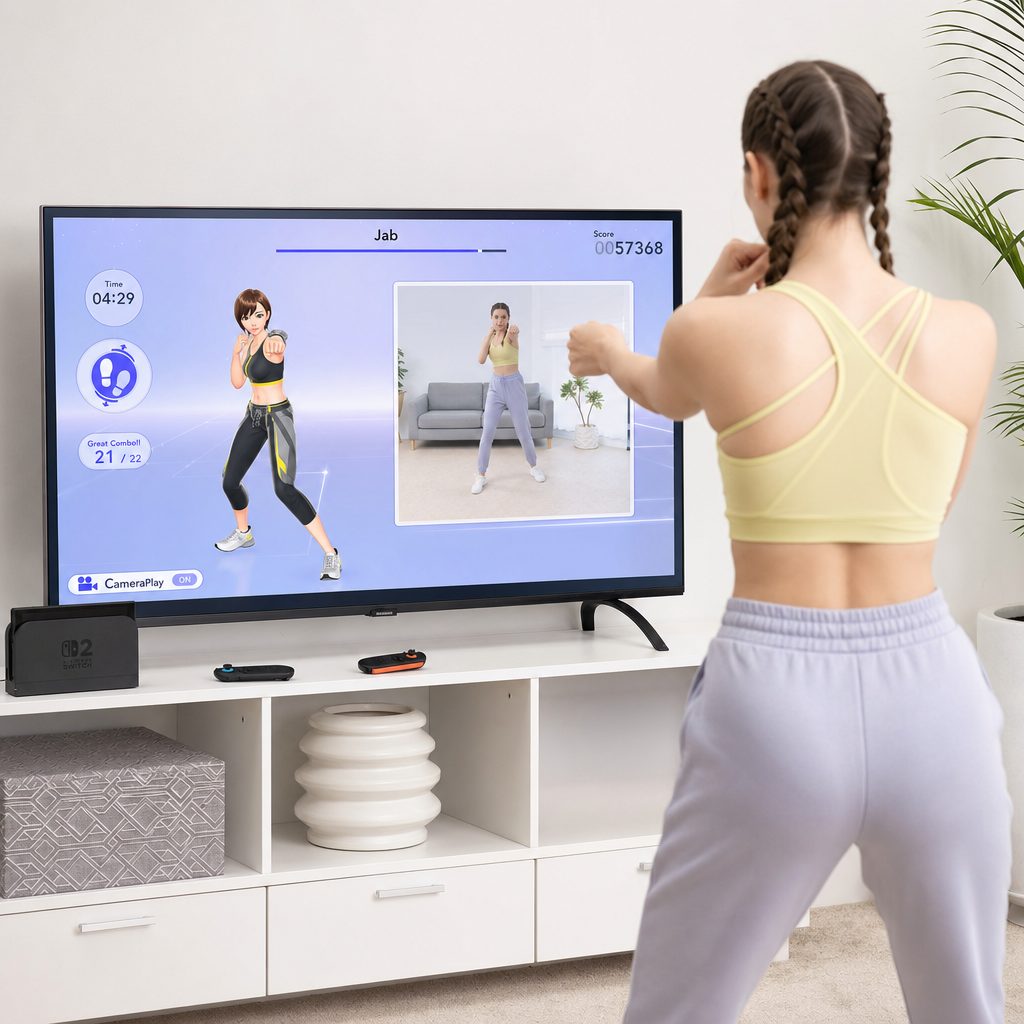
Camera play puts your own image on screen so you can monitor your form during exercise.
GameShare Workouts: Getting the Household Involved
The second headline feature is GameShare, which lets up to four people exercise together locally via wireless. Crucially, you can share the game with anyone who has a Nintendo Switch or Switch 2 system — so a single copy can get the whole household or a group of friends boxing along together, even if only one of you actually owns the game.
In practice this is where Fitness Boxing 3 comes alive socially. The Shared Communication Battle lets up to four players go at it simultaneously, and there's a Score Battle option for the competitively minded. There's something genuinely motivating about a bit of friendly rivalry — I found myself pushing harder in a four-way score battle than I ever would have alone, purely because I didn't want to come last. For families, flatmates or workout buddies, it turns a solitary routine into a shared event, and that communal push is one of the most reliable ways to keep people coming back.
GameShare means you don't need four copies of the game for a four-player session — one owner can share the experience locally with up to three others who have their own Switch or Switch 2 console.
Modes, Progression and Everyday Use
Beyond the two new headline features, the Switch 2 Edition carries over and expands a solid roster of modes. Here's how the day-to-day experience breaks down.
Daily and Quick Workouts
The bread and butter of the game. You can pick a Daily Workout that adapts to your condition, or fire off a Quick Workout when you're pushed for time. Sessions come in 20, 30 or 40-minute versions, and you can dial the intensity between Light, Regular and Heavy. That flexibility is one of the game's strongest practical points — on a busy morning I could bang out a 20-minute Light session, and on a weekend I could commit to a full 40-minute Heavy grind. Being able to slot it into whatever time you have is exactly what keeps a home fitness habit alive.
Mitt Drills and Sit Fit Boxing
Mitt Drills let you practise combos alongside your instructor, drilling the movements until they feel natural. Sit Fit Boxing, meanwhile, is a lovely inclusive touch — it lets you work up a sweat without leaving your seat, which opens the game up to people with mobility limitations or anyone who simply wants a lower-impact option. It's a reminder that this series is genuinely trying to be a fitness tool for a broad audience, not just an able-bodied party game.
Advanced Scoring and Boost Up
New for the Switch 2 Edition, Advanced Scoring Mode (also referred to as Advanced Judgment) takes the timing of your hits into account, evaluating not just whether you punched but how precisely you landed it to the beat. It adds a satisfying layer of skill for returning players who've already got the basics down. Boost Up, meanwhile, gradually increases the speed of the workout with each round, accelerating the BPM up to a punishing 200. It's a brilliant way to ramp up the challenge and the calorie burn without needing a whole new routine — and it turns a familiar session into something that genuinely tests you.
Box and Bond
Box and Bond returns as the game's personality hook. Spend enough time training with a single instructor and you unlock special sessions where they share thoughts and feelings, chat about their hobbies, likes and dislikes. You unlock all five sessions by sticking with the same trainer. It's fluff, but it's charming fluff, and it feeds directly into that habit-building loop — you keep coming back partly to learn more about your trainer. It's a clever bit of retention design dressed up as friendliness.
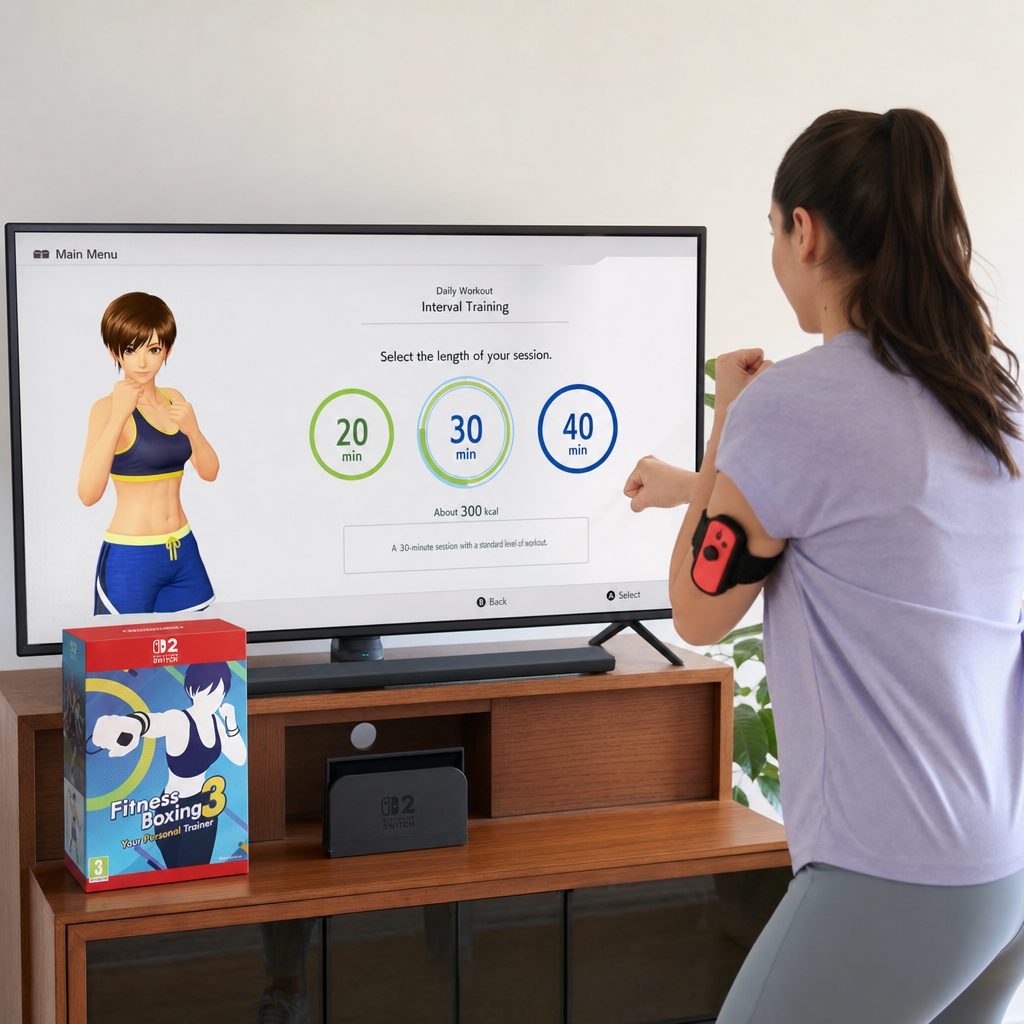
Session lengths of 20, 30 or 40 minutes were available to suit different fitness levels.
How It Performs as Actual Exercise
This is the question that matters most: does it actually get you fit? In my experience, used consistently, yes — it works well as a training tool, and I comfortably incorporated it into a morning cardio routine. The combination of continuous movement, the Boost Up speed ramps and the Heavy intensity setting means you can absolutely get your heart rate up and break a proper sweat.
The immediate feedback is the secret sauce. That blend of sound effects, haptic rumble and voice encouragement keeps you engaged in a way that a silent follow-along video simply can't. When exercise feels rewarding moment to moment, you push harder and you last longer, and that's precisely what Fitness Boxing 3 delivers.
A word of realism, though. Like any fitness game, it only works if you actually turn up. The daily program, the trainer bonds and the multiplayer are all clever tools designed to get you to come back — but the game can't do the discipline for you. If you're the sort who'll happily commit to a 20-minute session before work, this is a superb aid. If you buy it hoping the software alone will motivate you where nothing else has, temper your expectations.
How It Compares to Other Home Fitness Options
Fitness Boxing 3 doesn't exist in a vacuum. Here's how the Switch 2 Edition lines up against two obvious alternatives in the home fitness gaming space.
| Feature | Fitness Boxing 3 (Switch 2 Edition) | Ring Fit Adventure | Nintendo Switch Sports |
|---|---|---|---|
| Core activity | Rhythm boxing with real punches | Resistance & full-body RPG adventure | Casual motion sports (incl. boxing) |
| Form correction | Yes — CameraPlay (camera sold separately) | No visual mirror | No visual mirror |
| Local multiplayer | Up to 4 via GameShare | Limited | Up to 4 locally |
| Structured daily programme | Yes — adaptive Personal Program | Yes — adventure progression | No structured fitness plan |
| Session flexibility | 20 / 30 / 40 min, 3 intensity levels | Variable, level-based | Match-length, casual |
| Seated / low-impact mode | Yes — Sit Fit Boxing | Limited | No |
| Extra accessory needed | Camera optional; Joy-Con required | Ring-Con & leg strap included | Leg strap for some modes |
The takeaway is that Fitness Boxing 3 occupies a distinct niche. Ring Fit Adventure remains the more complete full-body workout because it involves your legs and core through squats, running and resistance, and it bundles its accessories in the box. Nintendo Switch Sports is the more casual, family-party option. Fitness Boxing 3, by contrast, is the most focused, structured and coaching-led of the three — it's the one that behaves most like a proper trainer standing in your living room, especially now that CameraPlay lets it watch you back.
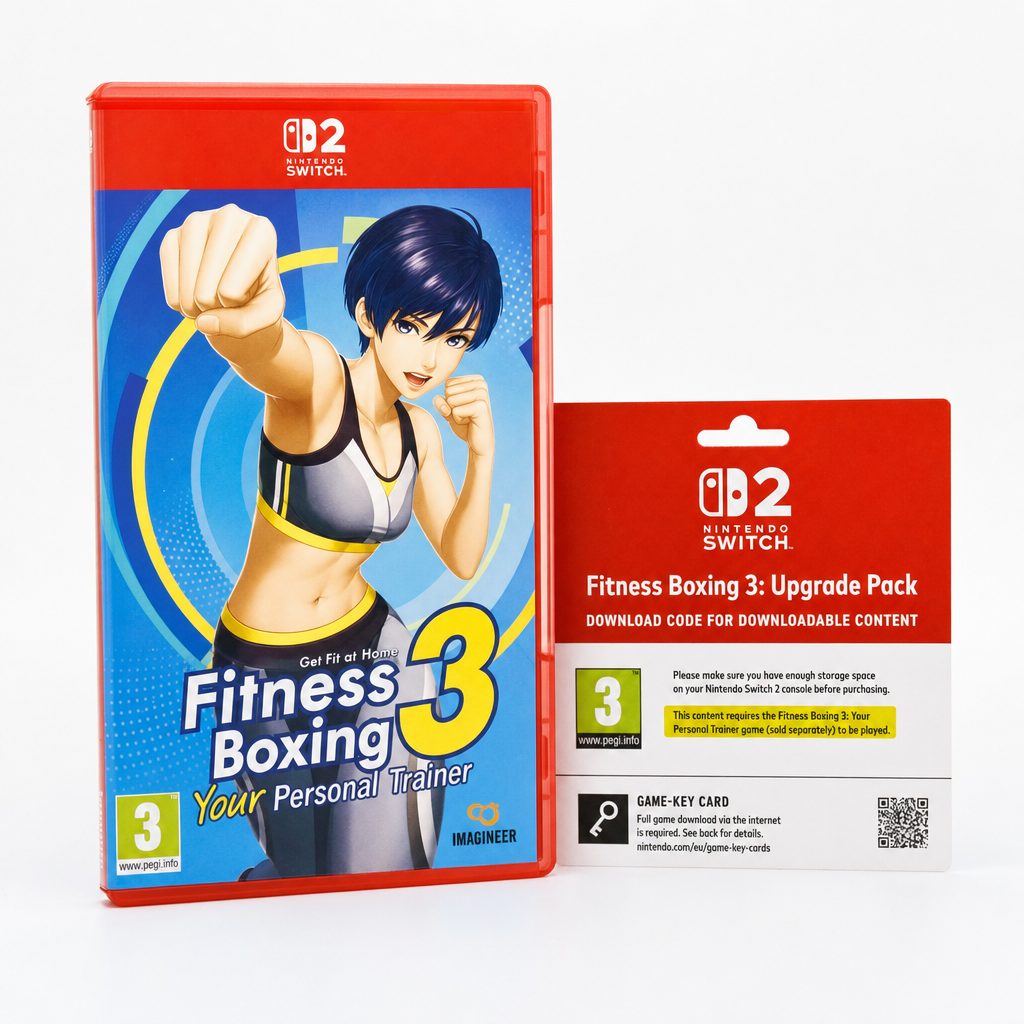
The Switch 2 edition launched digitally on the Nintendo eShop.
Pros and Cons
Pros
- Works genuinely well as a training tool — easy to build into a daily cardio habit
- CameraPlay form correction is the standout practical addition for solo exercisers
- GameShare lets up to four people work out together from a single copy
- Superb moment-to-moment feedback via rumble, sound and voice cues
- Flexible 20/30/40-minute sessions with three intensity levels
- Faster frame rate and enhanced resolution make prompts easier to read
- Inclusive Sit Fit Boxing seated mode broadens who can play
- Boost Up (up to 200 BPM) adds real challenge for returning players
Cons
- Music sounds like bad polyphonic ringtones from the early 2000s
- CameraPlay needs a camera that's sold separately
- Only 30 instrumental tracks may feel repetitive over time
- Motivation still depends entirely on your own discipline
- Less of a full-body workout than resistance-based rivals
Pricing and Availability
The Fitness Boxing 3: Nintendo Switch 2 Edition was released digitally on the Nintendo eShop for Switch 2 worldwide on 16 July 2026, with Nintendo handling publishing outside Japan. If you already own the original Fitness Boxing 3 on Switch, an Upgrade Pack is available so you can move up to the enhanced Switch 2 features without repurchasing the whole game.
It's also worth remembering there's a free demo of the standard Fitness Boxing 3 on the Nintendo eShop, which is the smartest possible way to test whether the core rhythm-boxing loop clicks with you before committing.
Check the latest price and any current bundles on Amazon.
Money-Saving Tip
Already own Fitness Boxing 3 on the original Switch? Look into the Upgrade Pack rather than buying the full Switch 2 Edition — it's the cheaper route to the faster frame rate, CameraPlay, GameShare and Boost Up.
Who Should Buy It?
Home Fitness Regulars
If you want a structured, coaching-led routine you can commit to daily, this is one of the best gaming options going.
Households & Groups
GameShare four-player workouts make it a brilliant shared activity for families, flatmates and friends.
Form-Conscious Beginners
If you've got a camera, CameraPlay's real-time mirror is genuinely reassuring for anyone learning technique.
Low-Impact Exercisers
Sit Fit Boxing means those wanting a seated or gentler workout aren't left out.
Who should probably look elsewhere? If you want a genuine full-body workout with legs, core and resistance built in, Ring Fit Adventure is a more rounded choice. And if you're a music-first player who can't tolerate weak audio, the ringtone-grade soundtrack may grate more than it does for those of us who tune it out and focus on the beat.
Frequently Asked Questions
The Verdict
Is It a Genuinely Useful Home Fitness Tool?
Yes — and that's the honest headline. The editorial question was whether CameraPlay form-correction and GameShare workouts make Fitness Boxing 3 on Switch 2 a genuinely useful home fitness tool, and after living with it, my answer is a clear yes with a couple of caveats.
CameraPlay is the most practical addition the series has ever had. Being able to see your own movements and correct your form in real time solves a real problem for solo home exercisers, and it's exactly the sort of feature that helps beginners build good habits rather than bad ones. The only sting is that the camera is sold separately, so the full experience carries a small extra cost. GameShare, meanwhile, transforms the game socially — four-player workouts from a single copy make it a brilliant shared household activity, and the friendly competition genuinely pushes you harder.
Add in the excellent moment-to-moment feedback, the flexible session lengths, the inclusive Sit Fit Boxing mode and the punishing Boost Up ramps, and you've got a fitness tool that works — provided you supply the discipline to turn up. The ringtone-grade music is a persistent disappointment and the workout is less full-body than a resistance rival, but neither undermines the core. If you'll actually use it, Fitness Boxing 3 on Switch 2 is one of the most useful home fitness titles on the platform, and the new features earn their place.
For UK shoppers weighing up a home fitness game that behaves like a real personal trainer, this is an easy recommendation — grab the free demo first, decide whether you want the camera for CameraPlay, and if the rhythm-boxing loop clicks, you'll have a workout companion that's genuinely worth showing up for.