
Retro Reborn: The Best Modern Board Games for Fans of the Classics

A modern games table still has the reassuring ritual of a classic family game night: a shared board, a small pile of snacks and at least one person insisting that the rules surely cannot mean that.
If Monopoly, Cluedo, Risk and Catan are the games you already know, you do not need to leap straight into a hobby game with a rulebook the size of a takeaway menu. These contemporary designer games keep the best bit of the classics — competition, table talk and a satisfying little engine of decisions — whilst leaving behind much of the waiting around.
Why modern board games feel familiar, not frightening
There is a slightly misleading idea that "modern board games" are only for people who own tiny plastic drawers labelled with mysterious words. They are not. Plenty of today's best tabletop games begin with an idea anyone who grew up with the classics already understands: claim routes, collect sets, make a plan, spot an opportunity, block somebody else just enough to make them narrow their eyes at you.
The difference is mostly in the housekeeping. Contemporary designers have become much better at removing the bits that make older games drag. You are less likely to be knocked out early and spend the evening watching. You are less likely to roll badly for an hour and conclude that fate has a personal issue with you. And you are more likely to have an interesting choice even when it is not your turn. A small miracle, frankly.
This guide is aimed at the household that has worn out its familiar favourites, or at the person buying a gift for someone who says they "aren't really into board games" before becoming fiercely invested in a cardboard railway line. Every game below has a recognisable hook. That is important. The quickest route to a brilliant games night is not a lecture about mechanisms; it is a game somebody wants to start playing.
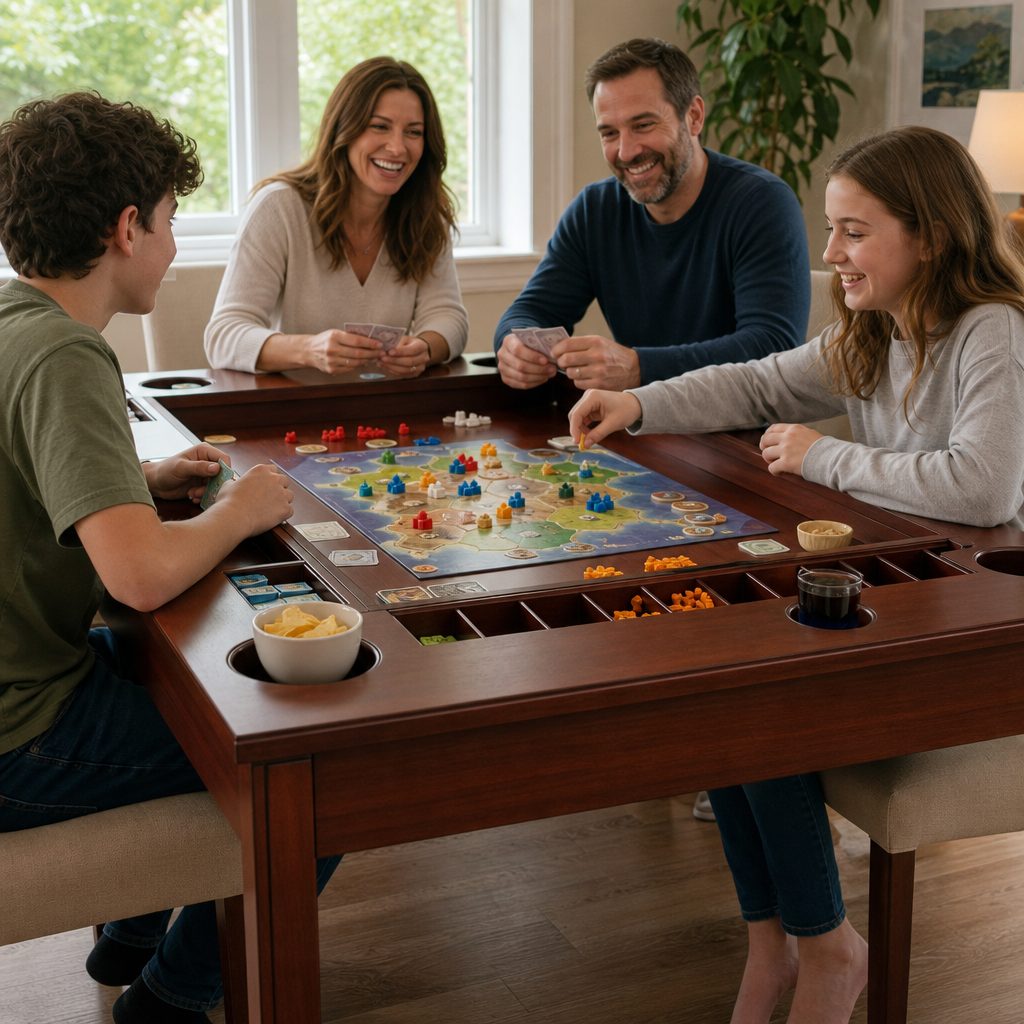
Modern gateway games tend to make their central idea visible on the table, so new players can understand the point of the game before they have memorised every detail.
A useful reset for Catan fans: you do not have to replace the game you love. Think of these as neighbouring doors rather than a declaration that the old favourite was somehow wrong. Catan remains a sociable, important game; this list simply gives your shelf more ways to create that same lively feeling.
What to keep from the classics — and what to leave behind
Classic games endure because they create stories. You remember the hotel that changed the mood of Monopoly. You remember the accusation in Cluedo that sounded convincing until it really, really was not. You remember the exact moment in Catan when nobody would trade you a brick. A good contemporary game should still give you those stories. It should simply get to them with fewer pauses and fewer rules that exist mainly because the game has always had them.
If you liked claiming territory
Look for games where the board changes because of player choices. Routes, regions and shared spaces make competition easy to see without making the rules intimidating.
If you liked building wealth
Seek games with satisfying collections and useful upgrades. The best versions let your plan grow without leaving another player powerless.
If you liked deduction and tactics
A modern game can give you a neat puzzle each turn whilst still letting you react to the people around the table. That balance is where the fun lives.
If you liked negotiation
Choose games that leave room for conversation, reading the room and occasional friendly mischief. Silence is not compulsory just because a game is strategic.
The simplest buying rule
Buy for the people who will actually sit down with you, not for an imaginary future games group that loves complex rules, quiet concentration and sorting components into matching containers. Your real group is the one that matters.
The ranked picks
These are not replacements in the harsh sense. They are upgrades in particular directions. Some bring the friendly route-building tension that makes Catan work. Some keep Monopoly's pleasure in building a position, but make the journey more active. Others are ideal when you want a proper game without making a weeknight feel like a committee meeting.
1. Days of Wonder Ticket to Ride — Best for the easiest step beyond Catan
Ticket to Ride is the recommendation I reach for when somebody says they enjoy board games but is not convinced they want a "board-game board game". Its railway theme is immediately legible: you collect what you need, connect places on a map and try to complete your plans before somebody occupies the route you had quietly assumed was yours. A dangerous assumption. A very human one.
For Catan players, the appeal is the way it turns simple resources into visible ambition. You are not merely gathering colours; you are looking at the board, imagining a connection and deciding whether to reveal your intentions or keep them tucked away. It is easy to explain in ordinary language, but it creates enough tension that experienced players still pay attention. That is a difficult trick to pull off.
Why it works
- The board tells newcomers what they are trying to do almost immediately.
- Route competition creates drama without requiring a confrontational theme.
- It suits mixed groups where some people want strategy and others want a relaxed chat.
Consider first
- A blocked route can feel personal, even when it was plainly the right move.
- Players who want constant trading and negotiation may find it more self-directed than Catan.
- The tension is gentle rather than spectacular, which will not suit every group.
2. Space Cowboys Splendor — Best for Monopoly fans who hate the long wait
Splendor keeps a deeply familiar pleasure from classic economic games: gathering the right things, improving your position and watching a modest plan turn into something rather more impressive. It does that with a wonderfully clean presentation. Each turn feels like you are either taking a useful step or setting up the next one. There is very little ceremonial shuffling about.
If Monopoly appealed because you liked accumulating advantages rather than because you enjoyed circling a board for ages, Splendor is the sharper destination. It replaces sprawling property paperwork with a compact engine of choices. You can see what other people are pursuing, you can feel a race developing, and you can make a tactical move that is mildly annoying to somebody else without having to announce that you have bankrupted them. Progress.
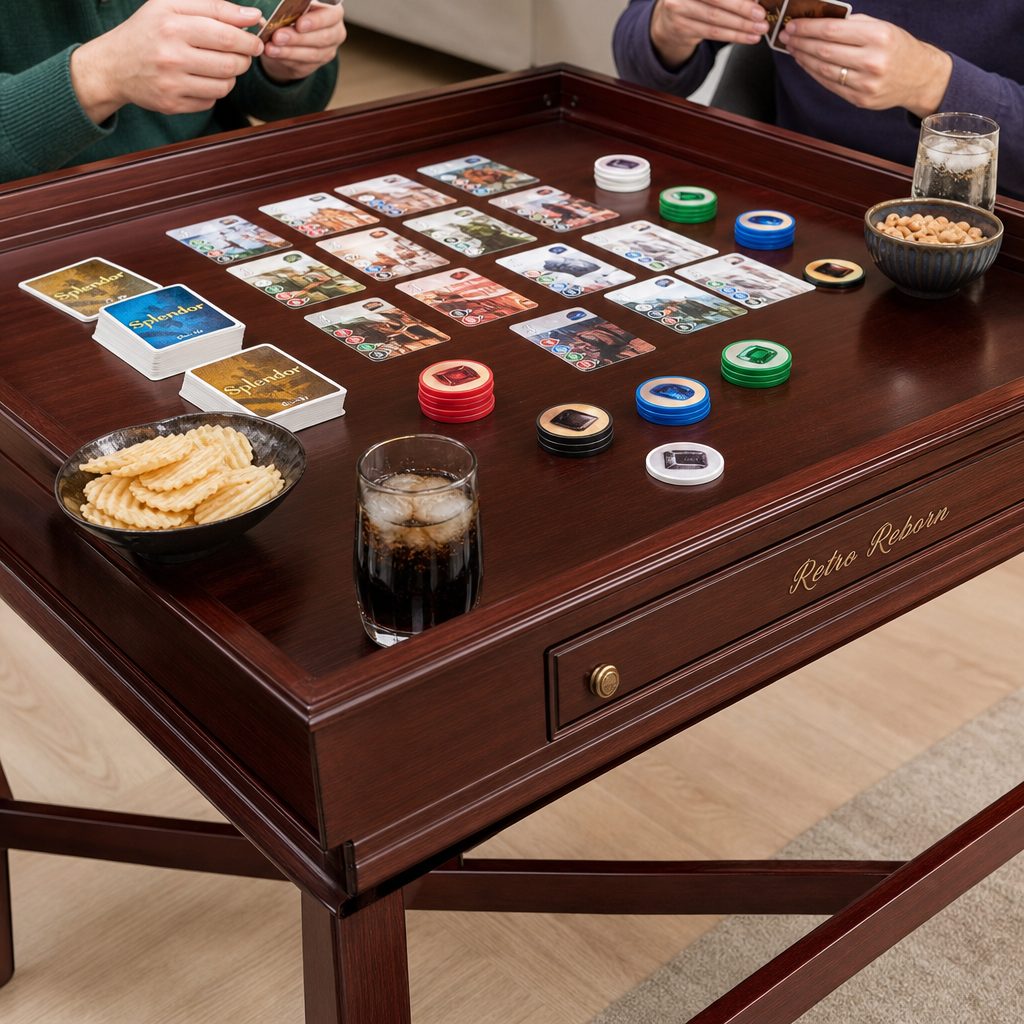
Splendor is a strong bridge from familiar economic games because its appeal is visible: collect what helps, improve what you can do and keep an eye on the opportunities everyone else can see.
3. Plan B Games Camel Up — Best for loud family game nights
Camel Up is for the table that does not need another solemn contest of furrowed brows. It is a racing game with betting, sudden reversals and the sort of shared anticipation that makes even people who claim to be "just watching" lean forward. If your fond memories of classics are more about laughter than long-term planning, this is the pick with the broadest grin.
It has the delicious uncertainty of a good race, but gives players decisions around their predictions. That means the outcome does not feel like random noise. You are weighing what may happen, deciding how bold to be and watching the game cheerfully undermine your confidence. A bit like backing a family member in a pub quiz, really.
Why it works
- It creates shared excitement, which makes it excellent for non-gamers and guests.
- The race format feels instantly familiar even to people who rarely play modern games.
- Its sense of occasion is ideal for a birthday, holiday or busy family gathering.
Consider first
- People seeking a serious, deeply controlled strategy experience may want more calculation.
- The unpredictable moments are the point, so players who dislike surprises should choose elsewhere.
- Its playful tone will not replace a thoughtful trading game for a dedicated Catan group.
4. Rio Grande Games Power Grid — Best for fans of proper economic competition
Power Grid is the pick for people who enjoyed the business side of Monopoly, or who found themselves most interested in Catan's resource timing and trading decisions. It takes the idea of building an economic position and makes every choice matter. Expansion has a cost. Resources matter. Timing matters. Doing a sensible thing now may make a later move wonderfully awkward for everyone else.
This is a more considered step than Ticket to Ride or Splendor. It asks the table to pay attention and rewards players who enjoy looking ahead. The pleasure is not in flashy surprises; it is in recognising that a choice which seemed merely fine has quietly put you in a stronger position. For the right group, that is catnip. For a tired Friday evening after a week of emails, perhaps less so.
5. alea The Castles of Burgundy — Best for thoughtful classic-game strategists
The Castles of Burgundy is often the point where someone who thought they only liked familiar family games discovers that they actually love a good puzzle. It offers a series of decisions that gradually build into a satisfying personal plan. Rather than asking you to dominate the table in a single dramatic sweep, it lets you assemble a small, clever kingdom of choices.
The appeal for a classic-game fan is that progress remains tangible. You can see your plans developing. You can spot an appealing option before another player takes it. You can alter course when the board gives you a better possibility. It feels richer than the classics without being cold or abstract once you have started playing. The first explanation requires a little patience; after that, the game begins doing the teaching itself.
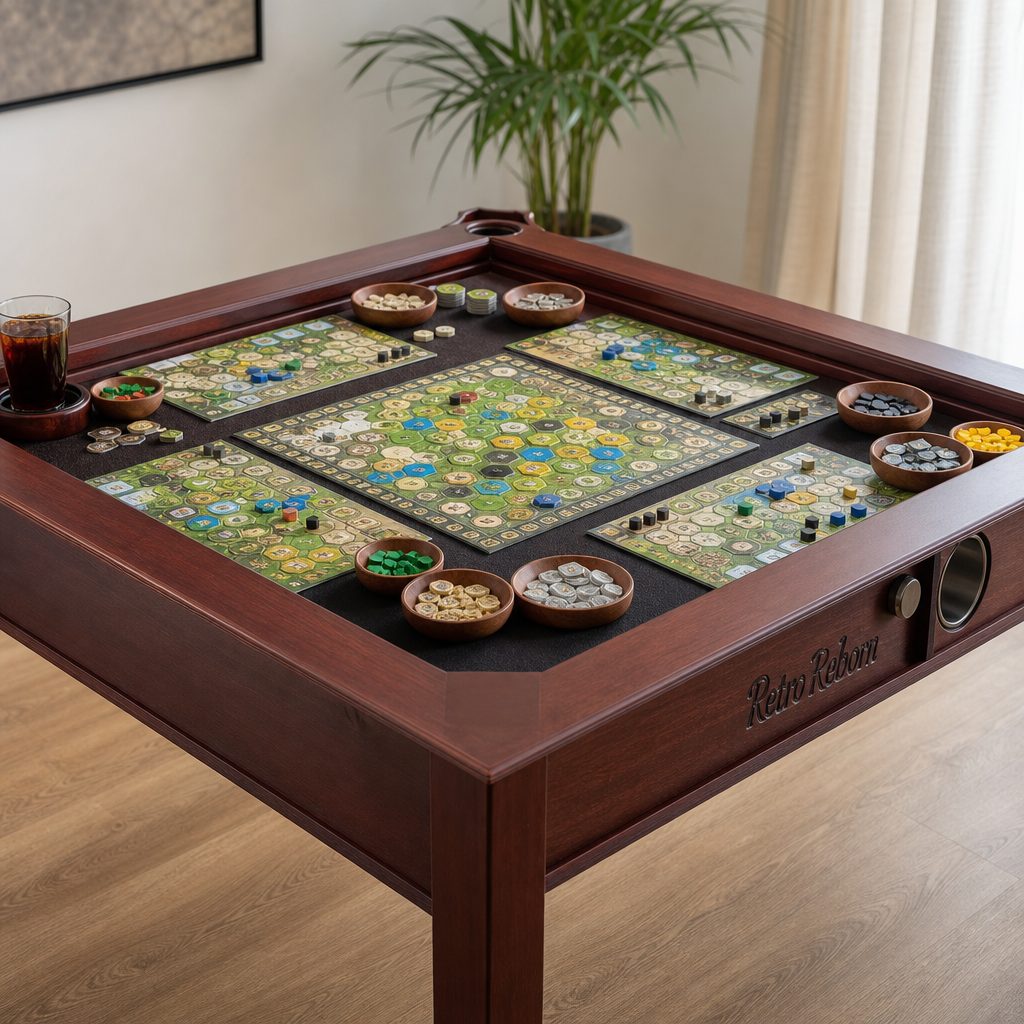
The Castles of Burgundy is a good example of a modern strategy game that rewards careful planning whilst keeping every turn rooted in a visible, satisfying personal tableau.
6. Renegade Game Studios Acquire — Best for fans of boardroom brinkmanship
Acquire has a special appeal for anyone who remembers Monopoly not as a family endurance test but as a chance to wheel, deal and make a move that changes the fortunes of the whole table. It is a classic design in its own right, but its continuing presence alongside modern games shows just how well its central idea has lasted: businesses grow, companies collide and timing is everything.
This is less about amassing a pile of things and more about reading the state of play. You want to see what a placement could trigger, what a merger might mean and when a position that looks modest could become extremely valuable. The theme may sound businesslike, but the feeling is gloriously social. Players notice what one another are doing. There are consequences. Nobody is simply taking their turn in a private corner.
7. Flatout Games Cascadia — Best for a calmer, cosy strategy night
Cascadia is the choice for households that want the satisfaction of building something clever without the sharper elbows of direct competition. It has the approachable, lay-things-out-and-watch-them-grow appeal that makes classic tile and pattern games enduring favourites, but it gives that idea a modern polish. Decisions remain meaningful, yet the table atmosphere is usually more thoughtful than combative.
I particularly like it for players who have been put off strategy games by the fear of being crushed by somebody with a very specific plan. Cascadia still rewards attention. You will still look at what is available and wish somebody else had not taken exactly the thing you wanted. But the game's heart is in creating your own satisfying arrangement, not in setting fire to another person's afternoon. That has its place too, of course. Just not every time.
Why it works
- A welcoming fit for couples, quieter groups and players who prefer constructive competition.
- Its visual, spatial decisions make the game feel intuitive on the table.
- It offers meaningful replay value because no two developing layouts need feel identical.
Consider first
- It is not the first choice if your group wants bluffing, deals and dramatic confrontation.
- Players who prefer a shared central board may find the focus more personal.
- The quieter mood is a feature, but it will not suit every party setting.
8. Catan — Best for keeping the trading-table classic alive
Catan belongs in this guide because it remains the bridge many households already own. It is the game that taught an enormous number of people that board games could be social strategy rather than a slow march round a square. The resource gathering, settlement building and bargaining give it a distinctive live-wire quality. You are never entirely sure whose plan is about to become everyone else's problem.
In a roundup full of newer directions, Catan is the reminder not to confuse "older" with "obsolete". Its limitations are also plain with the benefit of hindsight: poor luck can sting, blocked development can frustrate, and a table may occasionally decide that one player is too far ahead and should receive no help whatsoever. Yet those rough edges are part of its story-making power. Keep it if your group still enjoys it. Use the other games here to discover which part of Catan you want more of next.
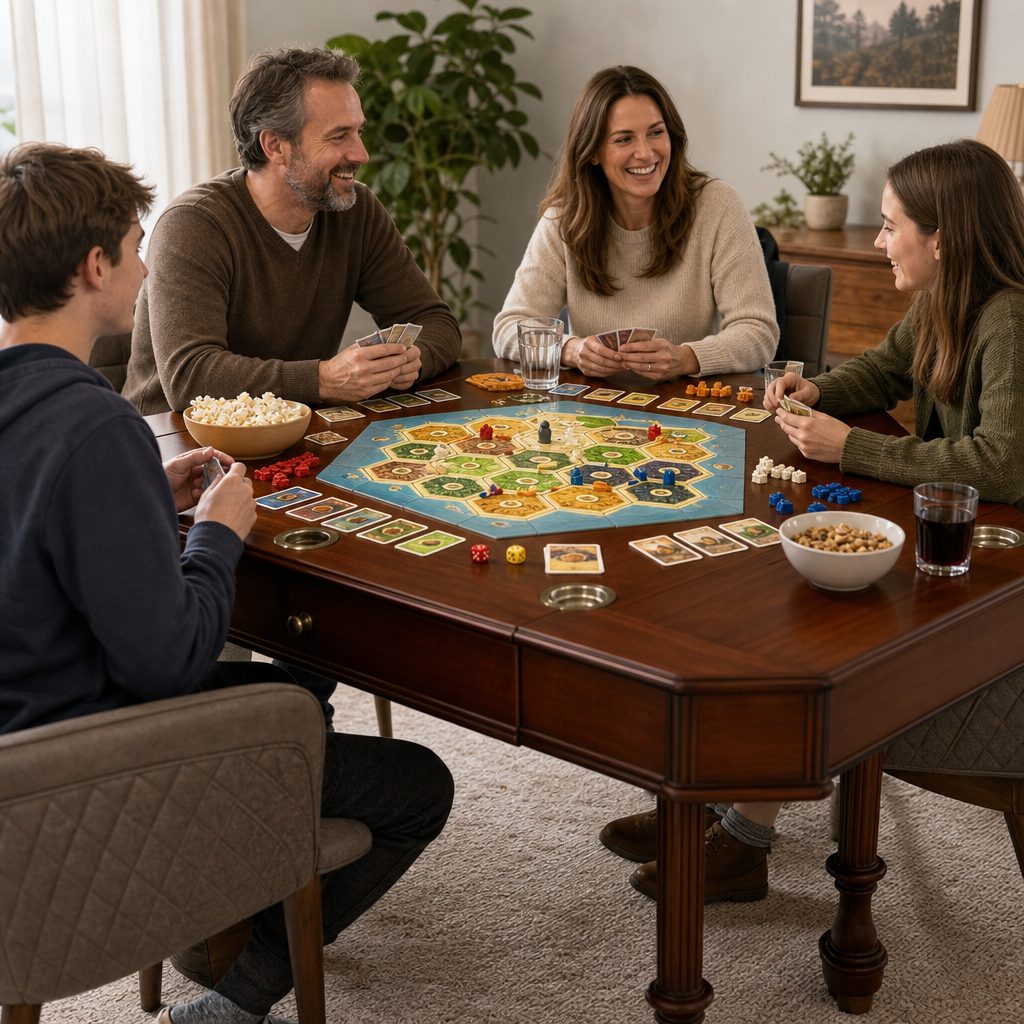
Catan remains a useful reference point: its trading, visible building and changing map explain why many players still want games that create conversation rather than silent optimisation.
How the picks compare at a glance
There is no single "best modern board game" because a noisy family gathering, a strategic couple and a long-standing Catan group are not asking for the same experience. The table below concentrates on the qualities that matter when moving on from household classics: the style of interaction, the emotional pace and the sort of player most likely to ask for another go.
| Game | Classic-game connection | Table mood | Best first audience | Decision style |
|---|---|---|---|---|
| Days of Wonder Ticket to Ride | Route claiming and visible competition | Friendly tension | Catan and family-game players | Plan routes, collect what helps, adapt |
| Space Cowboys Splendor | Building an economic position | Focused and approachable | Monopoly fans who want less downtime | Collect, improve, race for opportunities |
| Plan B Games Camel Up | Race-night excitement and bets | Loud, unpredictable, sociable | Families and party-minded groups | Predict, risk, react |
| Rio Grande Games Power Grid | Economic timing and expansion | Serious but interactive | Strategic Catan or Monopoly players | Plan ahead, manage pressure, compete |
| alea The Castles of Burgundy | Building a satisfying long-term position | Thoughtful and rewarding | Players ready for a deeper puzzle | Choose, combine, develop |
| Renegade Game Studios Acquire | Business deals and changing fortunes | Competitive and social | Fans of negotiation and timing | Read the table, place carefully, capitalise |
| Flatout Games Cascadia | Tile-laying and visible growth | Calm and satisfying | Couples and lower-conflict groups | Build patterns, weigh options, refine |
| Catan | Trading, building and resource pressure | Talkative and occasionally spicy | Groups who enjoy bargaining | Trade, expand, respond to the map |
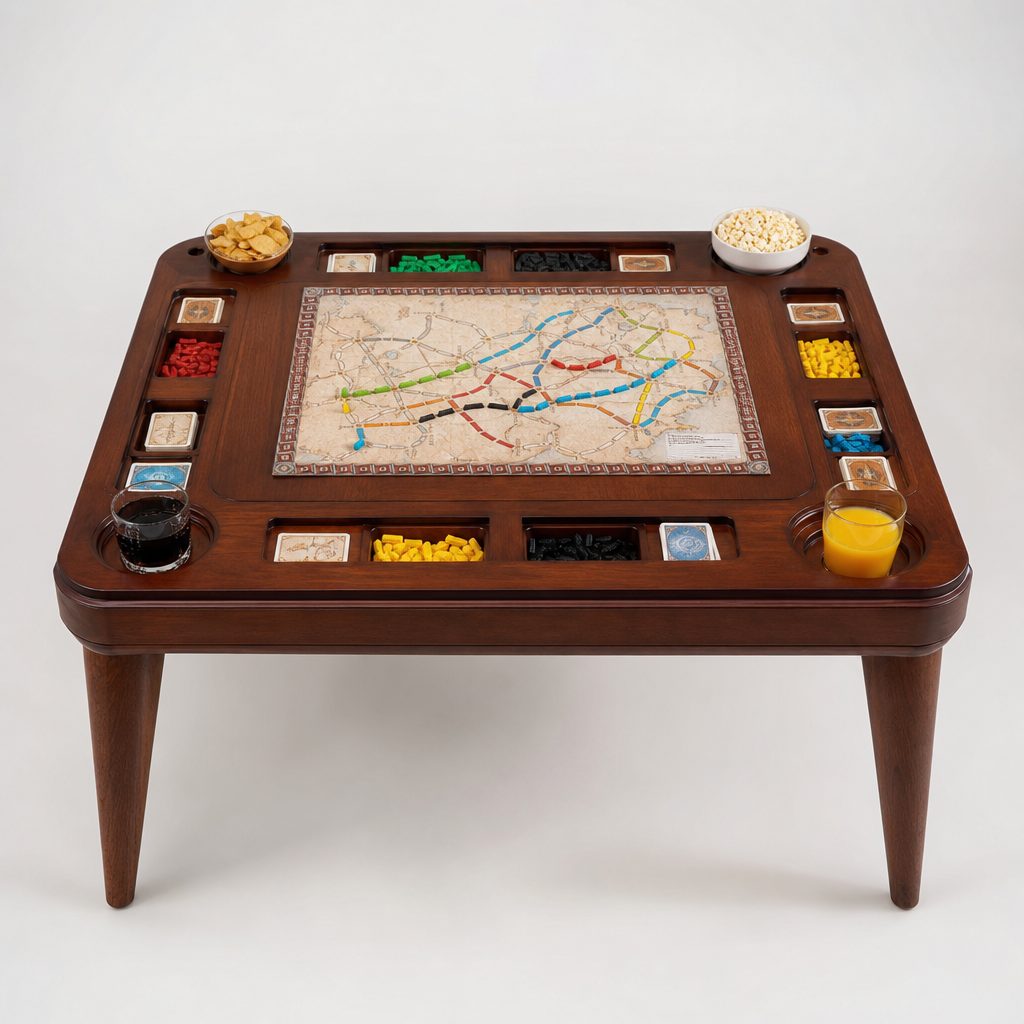
A comparison is most useful when it starts with the kind of evening you want, rather than the assumption that every group needs the same amount of competition.
Choose your first modern game by the feeling you want
The most common buying mistake is choosing the game that sounds cleverest rather than the game that matches the room. A game can be excellent and still be a poor fit for your particular group. I have seen strategic games sit untouched because the household wanted laughter, and lightweight games disappoint because everyone had arrived keen for a proper contest. Neither game was at fault. The matchmaking was.
Start with your favourite classic moment
Was it making deals in Catan, growing rich in Monopoly, accusing people in Cluedo, or simply cheering at a fortunate roll? Choose a modern game that preserves that feeling rather than its exact rules.
Be honest about appetite for rules
Some groups enjoy learning together. Others want the explanation over before the kettle has boiled. Ticket to Ride, Splendor and Camel Up are safer first moves when simplicity is the priority.
Decide how sharp you want competition to be
Acquire and Power Grid offer more direct pressure. Cascadia offers a gentler shared evening. Neither approach is superior; it is simply worth knowing whether your cousin enjoys being blocked.
Buy one game with a distinct job
Do not start by building a library of similar titles. Choose a route game, a lively family game or a richer strategy game, then let your group tell you where to go next.
Teaching tips that stop the rules explanation becoming the game
A good teach is not a performance. You do not need to explain every possibility before anyone touches a component. In fact, that is often the quickest way to make people mentally leave the table whilst remaining physically present. Start with the point of the game, show what a turn looks like, then explain the details when they matter.
For Ticket to Ride, say that you are building railway connections. For Splendor, say that you are gathering what lets you gain better opportunities. For Camel Up, say that you are predicting a chaotic race more accurately than the other people at the table. These summaries are not simplifications that insult the game. They are the invitation. Once players understand why their choices matter, the rules have somewhere to land.
My favourite teaching habit: play an openly guided first round. Let everyone ask what they are considering. Mention a sensible option and an interesting alternative. The aim is not to win the tutorial; it is to make sure everyone wants to play again without you.
Explain the objective first
Players retain rules better when they know what success looks like. "Build routes" is more useful than beginning with the contents of the box.
Demonstrate one turn
Show the rhythm before discussing edge cases. Most people learn a game by doing, not by admiring a complete verbal catalogue of exceptions.
Protect the first session
Give newcomers a little grace over a missed opportunity. Ruthless brilliance can wait until everybody knows why the move was clever.

A clear first teach should get players making a real choice quickly; the best learning aid is usually an early turn that feels like it mattered.
Which games belong on which shelf?
There is a temptation to treat board games as a ladder, as though every player begins with Monopoly and eventually graduates into something increasingly complex. Real life is much messier and much nicer than that. Some people will adore Camel Up forever because it makes their group laugh. Some will find their happy place in a quieter Cascadia evening. Some will want the tension of Power Grid every time they have a free night.
That is why the strongest collection has variety. Ticket to Ride gives you an accessible centrepiece. Splendor is a neat, focused alternative when you want something brisk and satisfying. Camel Up is the reliable social spark. Power Grid and The Castles of Burgundy provide more thoughtful destinations when your group begins asking for a little extra depth. Acquire is there for the people who enjoy the table politics. Cascadia keeps the mood gentler. And Catan remains the old friend who started the conversation.
Do not overbuy on day one
One game that reaches the table repeatedly is more useful than a stack of unopened possibilities. Play it, learn what your group talks about afterwards, then choose the next game to answer that particular enthusiasm.
Best-for awards: the quick shortlist
If you only want the very short answer, begin here. These are not claims that every other game is inferior; they are the clearest matches for particular kinds of buyer. The best purchase is the one that gets opened, taught and requested again.
Best all-rounder
The easiest recommendation for a household stepping beyond the usual classics.
Days of Wonder Ticket to RideBest for a lively family night
Choose this when laughs, reactions and shared suspense matter more than quiet calculation.
Plan B Games Camel UpBest for Monopoly fans
A cleaner, more focused way to enjoy the pleasure of building a stronger position.
Space Cowboys SplendorBest for serious Catan fans
For players ready to lean further into timing, economy and competitive planning.
Rio Grande Games Power GridBest calm strategy game
Ideal when your group wants meaningful choices without an aggressively competitive atmosphere.
Flatout Games CascadiaBest for table schemers
For players who enjoy reading intentions, seizing opportunities and discussing the consequences.
Renegade Game Studios Acquire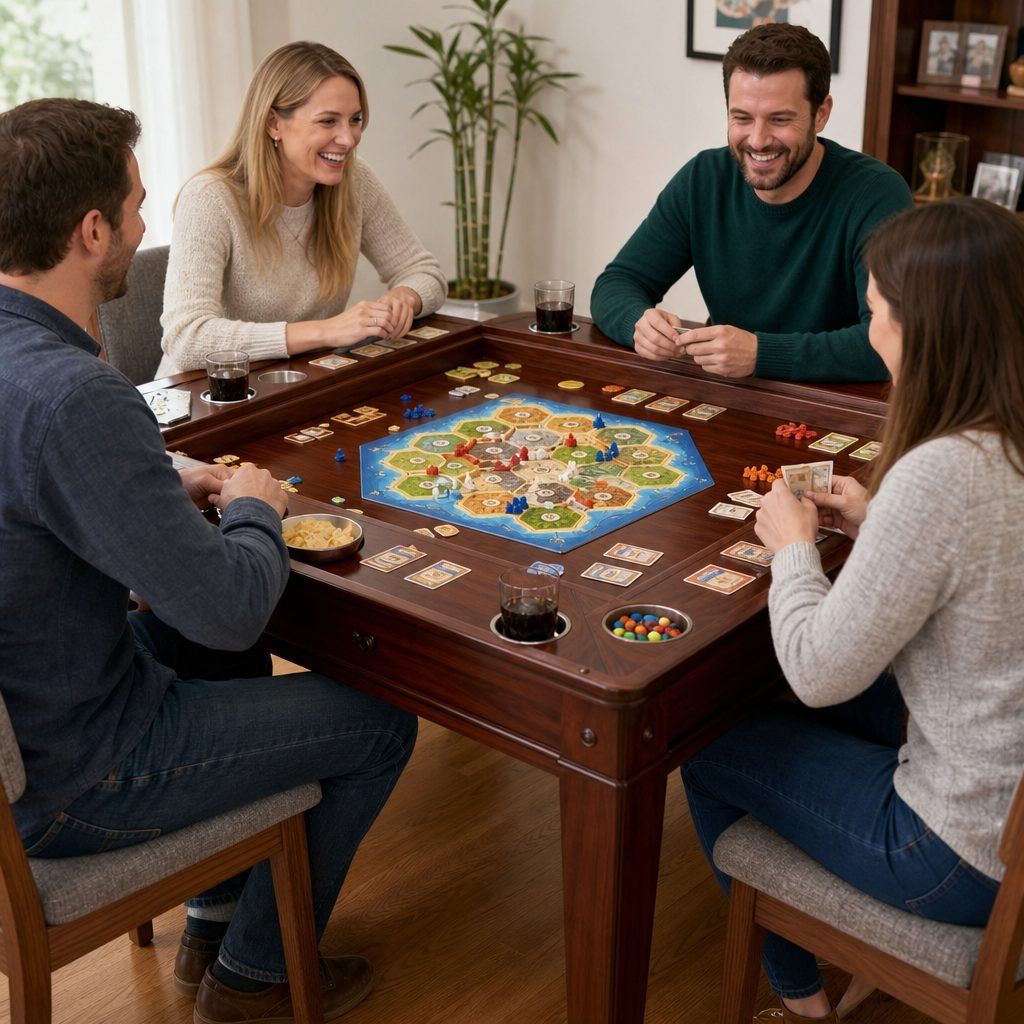
The right game is less about proving how serious a gamer you are and more about finding the kind of shared experience your group will gladly repeat.
What makes a game a good gift for a classic-game fan?
When buying for somebody else, resist the urge to choose the title with the most impressive-looking box. The better question is what they already enjoy doing at the table. A Catan fan who loves deals and interaction may appreciate Acquire more than a quiet solo-feeling puzzle. A Monopoly fan who loves building up a position may click with Splendor. Somebody whose main contribution to games night is an enthusiastic running commentary should probably receive Camel Up.
Theme matters too, but not in the way people sometimes think. You do not need to find someone's lifelong passion in cardboard form. You simply need a theme that makes the first explanation easier to accept. Railways make sense. A race makes sense. Building a little landscape makes sense. Once a person trusts the game, they are much more willing to explore the clever parts underneath.
Finally, think about the social contract. Some families delight in direct blocking and mischievous decisions. Others become slightly frosty if someone takes the one thing they wanted, even in a game expressly designed around taking things other people want. There is no shame in buying the gentler option. The point is a good evening, not an audition for the World Championships of Pointedly Saying "Interesting Move".
Frequently asked questions
Days of Wonder Ticket to Ride is the safest first choice for most groups. It keeps the visible board development and tension over space that Catan players recognise, but its main idea is simple enough to explain without a long preamble. Choose Rio Grande Games Power Grid instead only if your group actively wants a more thoughtful economic contest.
It is a very good alternative for people who enjoy gathering advantages and watching a plan grow, but dislike lengthy turns or being stuck in a losing position for too long. It does not recreate Monopoly's property-trading atmosphere; it offers a tidier economic race with more consistent involvement.
Plan B Games Camel Up is particularly welcoming for a social group because everyone understands the broad idea of a race and can enjoy the spectacle even before they become tactically confident. Days of Wonder Ticket to Ride is the better option if those newcomers would enjoy a calmer, more strategic evening.
No. Many modern games still use uncertainty because surprise is fun. The usual difference is that they give you more ways to respond to changing circumstances. A good decision can still matter even if the table refuses to cooperate with your original plan.
Flatout Games Cascadia is the most natural fit here. It gives each player a satisfying space to develop whilst retaining enough shared decision-making to stop the experience feeling like two separate puzzles. alea The Castles of Burgundy is the next step if both players want more strategic depth.
Catan remains the obvious choice if outright trading is the feature your group loves most. Renegade Game Studios Acquire is a strong next destination for players who enjoy watching one another's plans, reacting to a changing shared situation and making business-minded decisions with real consequences.
Absolutely not. The classics are classics because they work for particular groups and occasions. These games broaden your options. Keep Catan for trading and conversation, bring out Camel Up for high-energy gatherings, and choose a more focused strategy game when the mood calls for it.
Space Cowboys Splendor is the cleanest answer. Its decisions become more interesting as players gain confidence, but the central idea remains easy to hold in your head. The Castles of Burgundy is an excellent later choice when that player wants a fuller strategic puzzle.
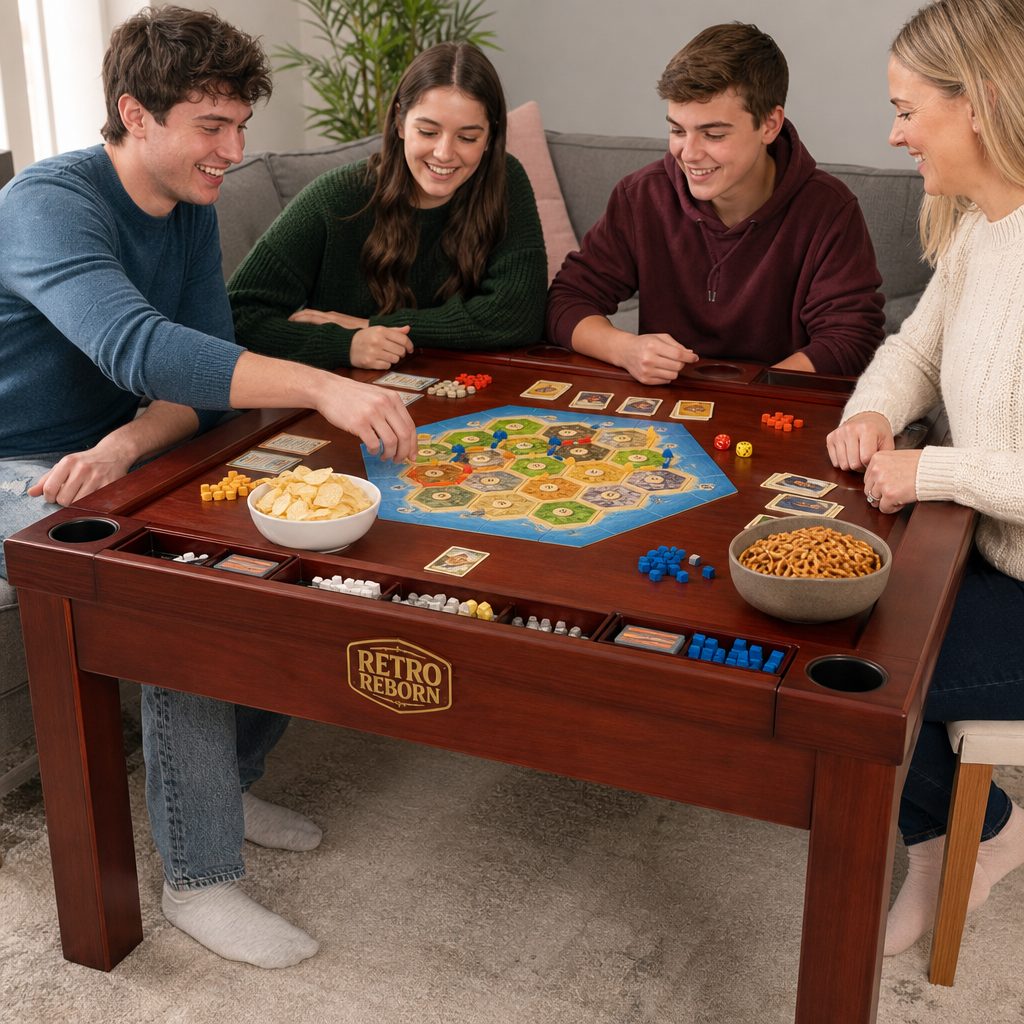
The best modern board game is the one that makes people ask for a rematch before the pieces have gone back in the box.
The final verdict
For most households making the jump from Monopoly, Catan and the other familiar cupboard staples, Days of Wonder Ticket to Ride is the best place to begin. It is approachable, visibly competitive and full of those small decisions that turn into stories by the end of the evening.
Choose Space Cowboys Splendor if you want an elegant economic game with less faff. Choose Plan B Games Camel Up if games night should be noisy and gloriously unpredictable. Choose Rio Grande Games Power Grid, alea The Castles of Burgundy or Renegade Game Studios Acquire when your group is ready for more demanding strategy and sharper decisions. And choose Flatout Games Cascadia when the ideal evening is calm, clever and pleasantly low-conflict.
The old favourites did not need replacing. They simply opened the door. These are the games waiting on the other side of it.